Profile and significance
Hunter Henderson is an American freeski slopestyle and big air specialist whose name has become synonymous with technical progression and thoughtful preparation. Born in Durham, New Hampshire, and raised on the icy laps of the Eastern United States, he has turned early-season park laps and long days in training facilities into world-level results. A bronze medal at the Winter Youth Olympic Games in slopestyle, a fourth place in big air at the same event in Leysin, and multiple top-ten finishes on the FIS World Cup circuit mark him out as far more than a promising rookie. Henderson is also known for becoming one of the first skiers to land 1600-degree double cork spins in all four take-off directions, a benchmark that underlines his place in the sport’s progression.
Alongside his results, Henderson’s profile is boosted by a mature approach to mental preparation, a TEDx talk he gave as a teenager on chasing elite performance, and a sponsorship portfolio that includes global heavyweights like Red Bull. As part of the U.S. Freeski Team’s slopestyle and big air squad, he sits at the heart of one of the most competitive national programs in freeskiing and is increasingly visible in both contests and film projects.
Competitive arc and key venues
Henderson’s path into elite freeskiing began almost as soon as he could stand on skis. Weekend trips to Sunday River in Maine gave him his first taste of snow, and it did not take long before he was hunting for side hits, bumps and trees instead of following the traditional lesson plan. His parents leaned into that energy, eventually steering him toward the freestyle program at Waterville Valley in New Hampshire. There, time in weekend programs evolved into full-time study and training at Waterville Valley Academy, where long days on trampolines and airbags hardened his work ethic and fed his obsession with “qualifying” new tricks before they ever touched snow.
A pivotal chapter came when the family spent a season in Utah and Henderson and his older sister Grace were enrolled in a freeski program at Park City Mountain. What was supposed to be a mogul-oriented freestyle pathway turned into full immersion in slopestyle and big air, exposing him to elite coaching, big jump lines and a deep local scene. The blend of East Coast grit and Park City infrastructure proved potent. By his mid-teens he had joined the U.S. team pipeline and stepped onto the NorAm and Revolution Tour circuits, eventually winning overall honours on the FIS NorAm U.S. Revolution Tour with slopestyle and big air victories in Calgary.
Internationally, Henderson announced himself with a bronze medal in freeski slopestyle and a fourth place in big air at the Winter Youth Olympic Games in Switzerland, competing on the jumps and rails above Leysin. As he moved into senior competition, he added World Cup starts and steadily climbed the rankings, stacking multiple top-ten and top-five finishes. A sixth place in slopestyle at the 2023 FIS Freestyle World Championships in Bakuriani, Georgia, confirmed that he could contend on one of the sport’s biggest stages, even in challenging conditions. More recently, he has balanced a busy World Cup schedule with invitations to specialty events like Red Bull Unrailistic and his own Henderson Invitational at Waterville, a pro-am competition designed to give back to the East Coast scene that shaped him.
How they ski: what to watch for
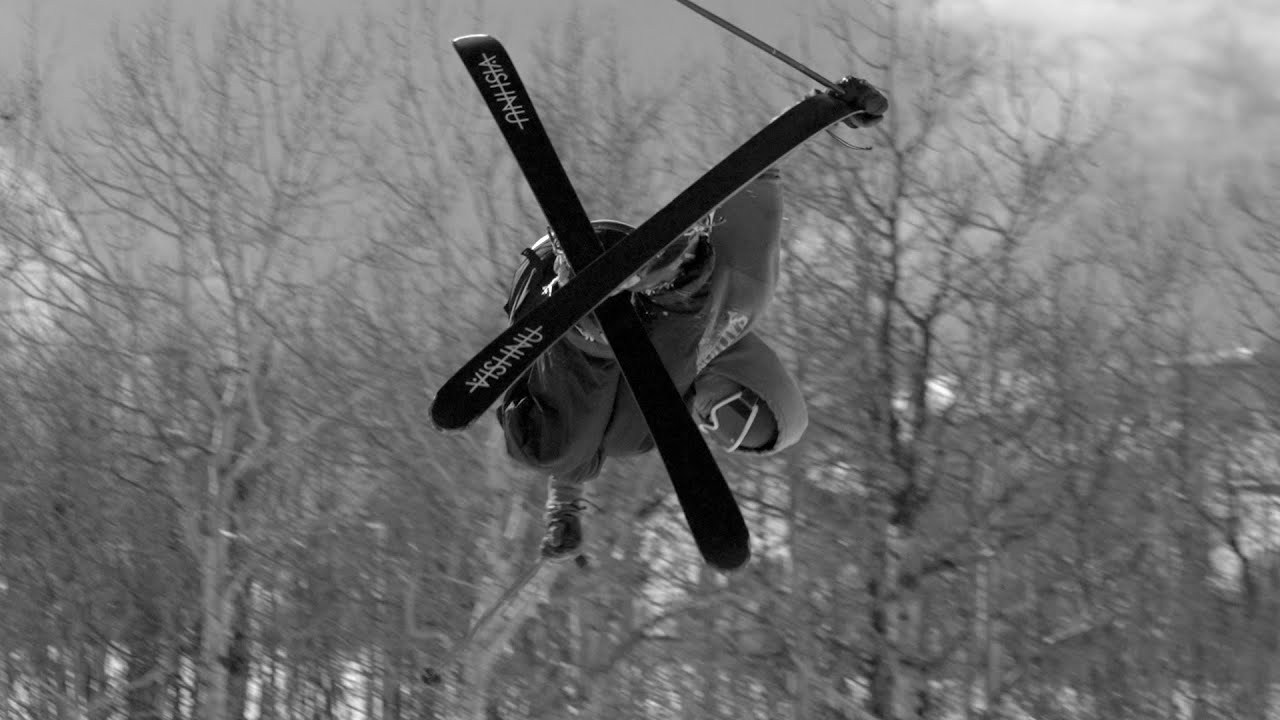
Henderson’s skiing is defined by control in complex tricks rather than showmanship for its own sake. The headline feat of putting down 1600-degree double corks in all four directions hints at his core strength: an unusual ability to manage big rotation and off-axis flips while staying composed in the air. Viewers should pay attention to how early he spots his landings and how little he flails; even in off-axis, high-spin tricks his arms tend to stay quiet and his torso remains centered.
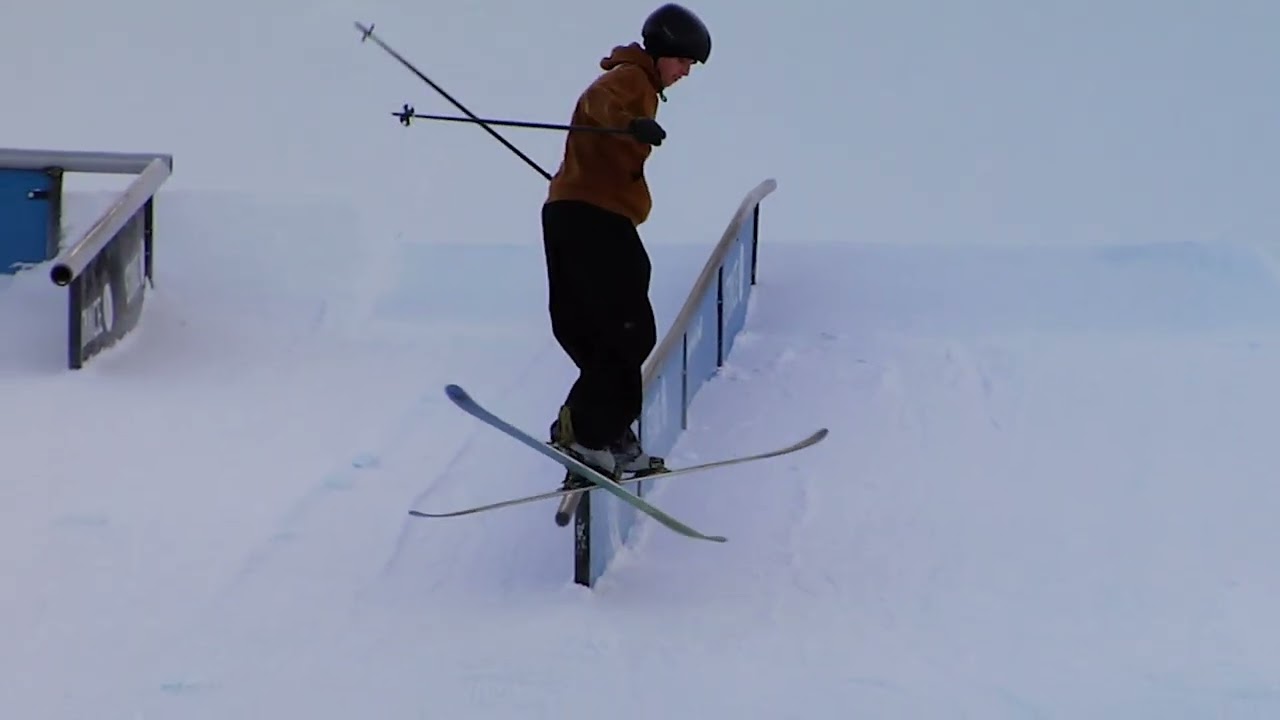
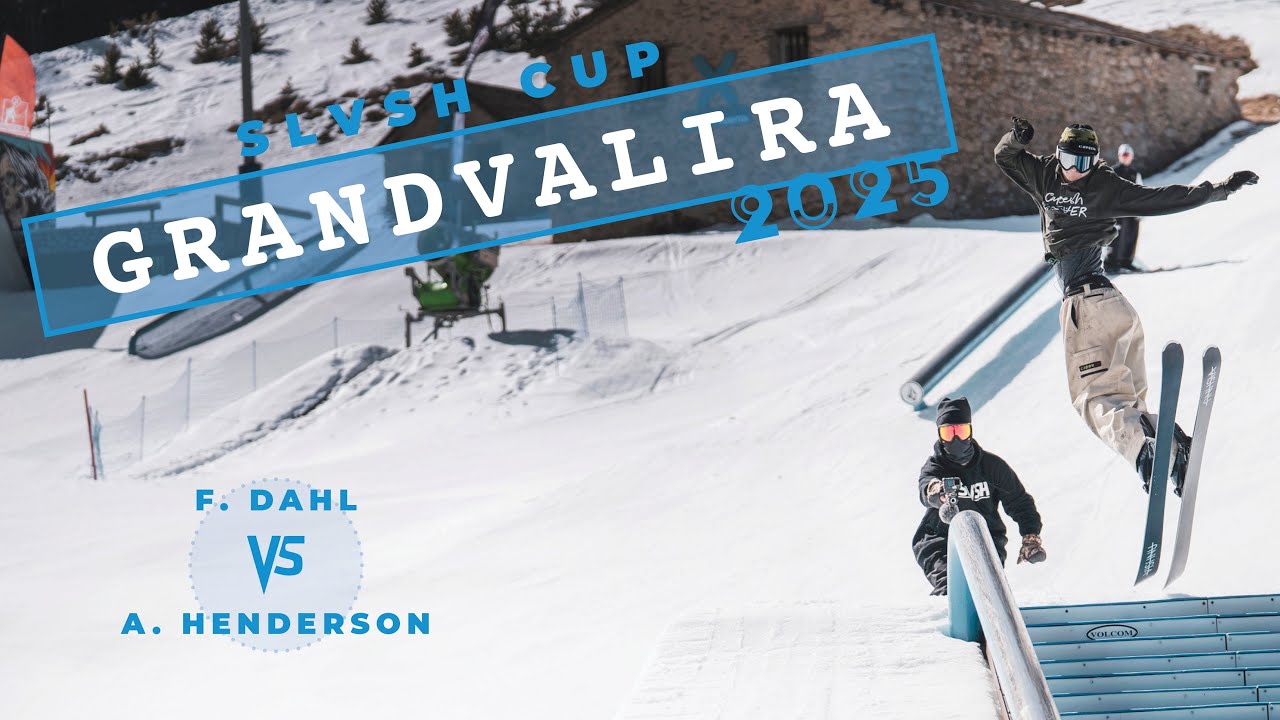
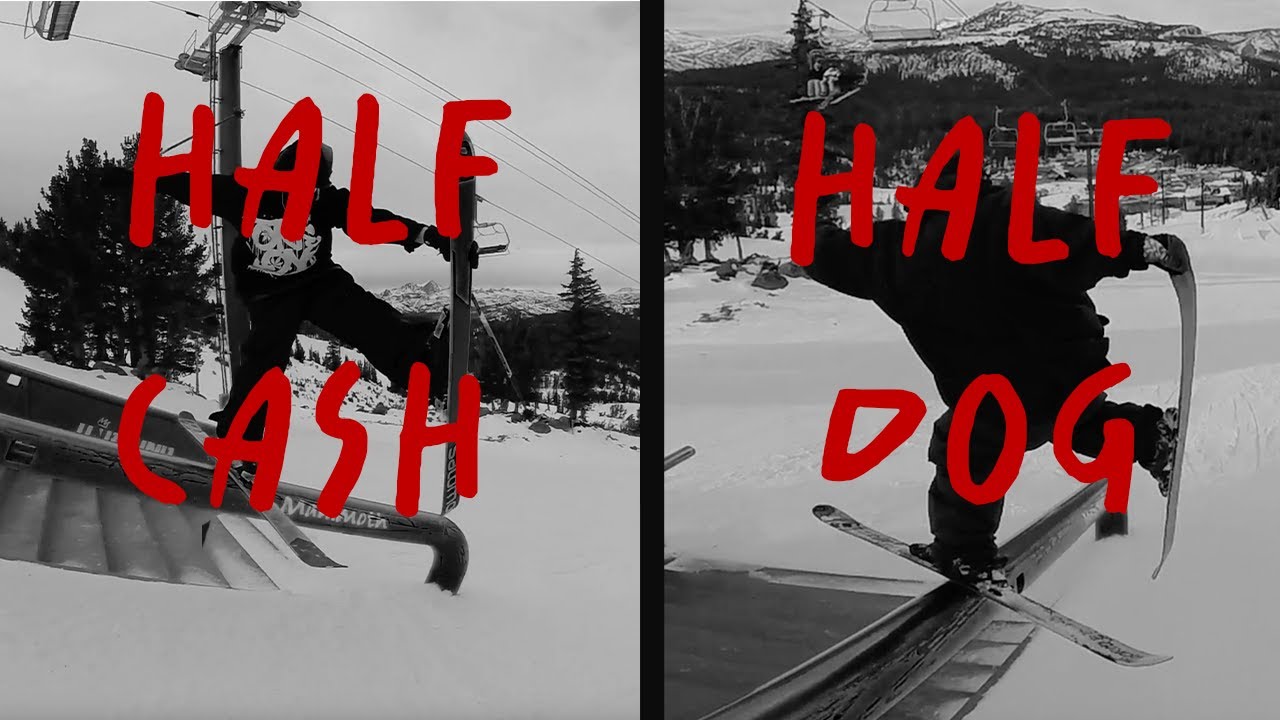
On rails, he prefers clean, technical lines over gimmicks. Switch-ups and pretzel variations are linked with calm body language, and he often uses subtle edge control instead of exaggerated arm swings to manage direction changes. In slopestyle runs, this means his rail sections rarely look rushed; instead, there is a clear rhythm from the first feature through to the last landing, making it easier for judges and viewers to follow the trick story of the run.
Another hallmark is Henderson’s deliberate mental routine. He has spoken openly about visualisation and psychology, describing how he runs through tricks in detail in the start gate, sometimes moving slightly as he imagines each rail and jump. When you watch him drop in, that shows up as runs that look pre-planned rather than improvised, with speed management and take-off timing tuned to the centimeter. For progressing skiers, his skiing is a good example of how mental rehearsal and repetition on airbags can translate into confident execution on snow.
Resilience, filming, and influence
Henderson’s career has not been a straight upward line. A significant knee injury early in his competitive journey forced him off snow and into lengthy rehab, something he has described as the toughest year of his life. That period, however, sharpened his appreciation for the sport and accelerated his interest in mental training. He leaned on the support of the U.S. team, family and friends, and returned to competition with a renewed focus on longevity rather than short-term risk.
Beyond contests, Henderson has begun to leave a mark in film. His project “Up & Go” represents his first dedicated backcountry film, following him over two seasons as he stepped away from the start gate to chase natural terrain in Utah, Wyoming, British Columbia, Alaska and Japan. The film shows him adapting his big-air skill set to pillows, windlips and iconic backcountry jumps, including a rebuilt version of the famous Magma II feature near Brighton Resort in Utah. For fans, it is a chance to see how his contest polish translates when the landings are not perfectly groomed and the consequences are higher.
Back home in New Hampshire, the Henderson Invitational at Waterville is another piece of his influence. Co-created with Grace, it blends invited pros with hungry regional riders on a creative, high-density course at the bottom of High Country. The event channels the energy of earlier East Coast icons and gives younger skiers a chance to ride the same features as national-team athletes, reinforcing his reputation as an athlete who remembers where he came from.
Geography that built the toolkit
Understanding Henderson’s skiing means understanding the places that shaped it. Early days on the trails and parks of Sunday River gave him the classic New England education in variable snow, tight trees and hardpack landings. At Waterville Valley, the terrain parks and the academy’s dryland facilities offered a structured environment to convert that raw enthusiasm into a repeatable trick progression, from first inverts into increasingly technical spins.
Utah added another layer. Training around Park City Mountain and nearby venues exposed him to larger jump lines, deeper athlete fields and world-class coaching, while also providing access to airbags and performance centers that made 1600 double corks more than a theoretical goal. On the road with the U.S. team, he has refined his competition game on courses from the slopestyle setup at Bakuriani to the jump lines of Swiss venues like St. Moritz and the parks used on the World Cup in places such as Mammoth Mountain and Copper Mountain in North America.
The geography of “Up & Go” adds still more dimensions: coastal storms in Japan, glacier ice and pillows in British Columbia, and the dramatic faces of Alaska demand different line choices and risk calculations than a manicured World Cup course. Collectively, these locations have turned Henderson into a skier who can look equally at home on an East Coast rail line, a perfectly shaped kicker or a rowdy backcountry spine.
Equipment and partners: practical takeaways
From a gear perspective, Henderson rides for a cluster of brands that are deeply embedded in modern freeskiing. His skis come from Völkl, bindings from Marker, boots from Dalbello and goggles from Oakley, while energy and project support arrive via Red Bull and the U.S. Ski & Snowboard system. For viewers trying to understand his setup, the key point is that his gear is tuned for the high-impact world of slopestyle and big air: strong edge hold for big take-offs, reliable release characteristics for awkward landings, and optics that make it easier to read light on park jumps and in flat-light backcountry conditions.
Recreational skiers should be cautious about assuming that “Hunter’s exact ski” is the best choice for them, but his sponsors offer clear signposts. Looking at the freestyle lines from Völkl, or at Marker bindings tuned for park and freeride use, can provide a good starting point for those who want stable yet playful setups for jumps and rails. Likewise, his use of high-end boots and goggles emphasises how important fit and vision are when pushing progression; even for non-pros, prioritising those elements often yields more improvement than obsessing over exotic trick names.
Why fans and progressing skiers care
Fans gravitate toward Hunter Henderson because he combines cutting-edge trick difficulty with a grounded, thoughtful personality. He is part of a generation of freeskier that grew up with airbags and performance centers, yet he talks as much about visualisation, psychology and community as he does about spin directions. His partnership with his sister Grace, herself an X Games big air silver medalist, gives his story a relatable family dimension, and their shared Henderson Invitational underlines a commitment to nurturing the next wave of riders.
For progressing skiers, Henderson offers a modern blueprint: build strong fundamentals on whatever hill you call home, use structured training to push into new trick territory, and treat mental preparation as seriously as physical reps. Whether you are watching him fight for finals on a windy World Cup slopestyle course, stepping onto a Youth Olympic or World Championship podium, or sending a backcountry jump in “Up & Go,” the through-line is the same. His skiing shows that progression at the top of freeskiing is not just about spinning faster, but about pairing creativity, resilience and respect for the mountains with a deep, intentional process.