Finn Bilous
Wānaka, New Zealand | Active: FIS record listed as not active | Discipline: freeride, freeski slopestyle, big air, backcountry filming | Verified: two Olympic starts, Youth Olympic silver and bronze, 2018 Cardrona World Cup bronze, 2024 FWT 4th overall, 2026 Natural Selection Ski 3rd | Current: Red Bull, Völkl, Oakley, Mons Royale athlete profile
Alaska When The Face Changed Overnight
The Alaska snow was fresh enough to slow the skis, bright enough to hide small rolls, and unstable enough to erase the original plan. Finn Bilous dropped into the Natural Selection venue near Girdwood with a right seven waiting below the first rollover.
The event had been pointed toward Spine Cell, a steeper face with deeper consequences. Safety checks and a reactive snowpack forced organizers onto a less exposed venue, and the contest became a different test: speed, play, transition reading, and freestyle choices inside natural terrain. Bilous connected a right seven, right three, flat three Japan, and later a double cork 1080 line in the final. Colby Stevenson won, Markus Eder finished second, and Bilous landed third with 93.0 points. That podium explained the current version of his skiing better than any old slopestyle result.
White Noise After Treble Cone Closed
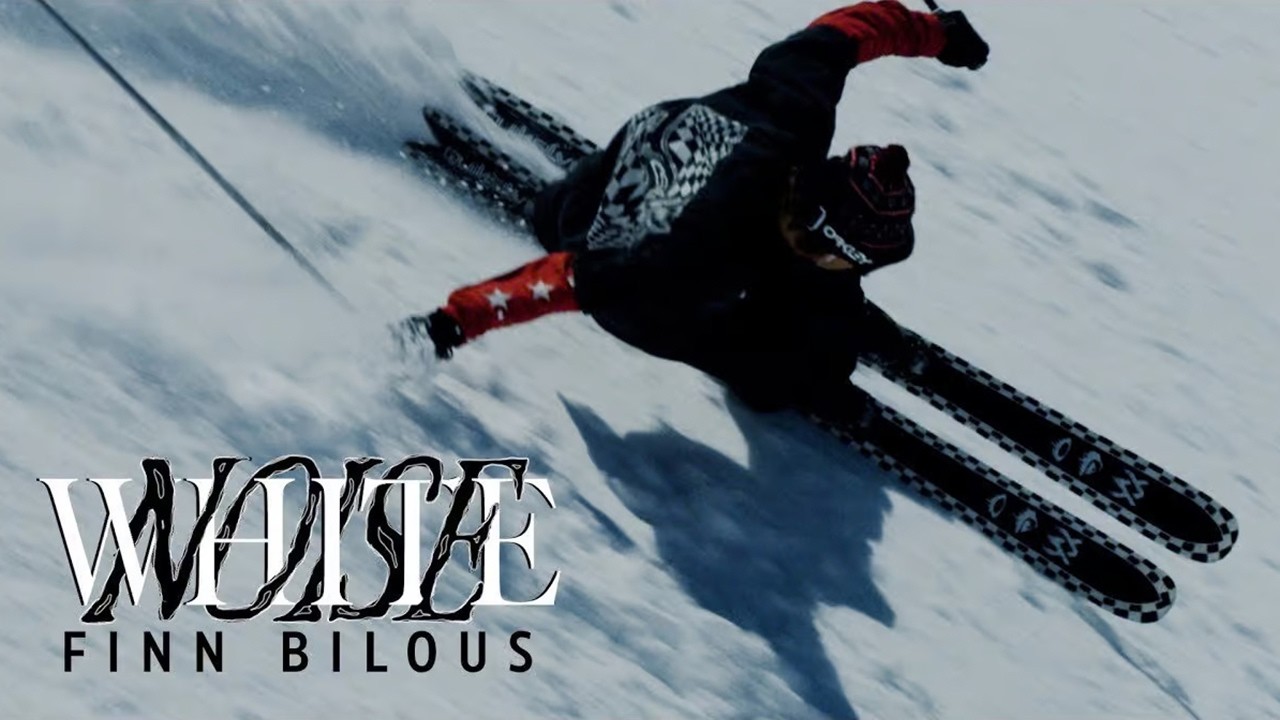
White Noise was filmed after the lifts stopped at Treble Cone, Bilous’s home mountain above Wānaka. Hunt Cinema describes the project as a spring-snow session where gullies and ridges became a blank canvas. Freeskier later identified the 2021 crew around Bilous, Hunt Cinema, Finlay Woods, and friends.
The film matters because it shows him without a bib or an imported set piece. Downdays placed the action on Crag’s Shooter, using a top-to-bottom snake line shaped with help from mates and mountain-bike trail builders Flux Trails. The terrain is local: Southern Alps ridges, loaded gullies, soft spring patches, and a run that rewards surf timing more than contest repetition.
White Noise gives the most useful visual key to Bilous. He does not force the hill into park skiing. He lets rollers, windlips, ribs, gullies, and knuckles decide the rhythm, then adds rotations where the mountain already offers takeoff.
Forty-Eight Hours To Matchstick Alaska
Calm Beneath Castles added a larger film-company chapter. Matchstick Productions wrote that after a busy winter on the Freeride World Tour, Bilous received an urgent call and was on a plane to Alaska forty-eight hours later. The segment became part of MSP’s 2024 film release on Red Bull TV.
The production context is clear: Alaska, Stellar Heli support, and a camera team including Dustin Lingren, Jack Francis, Justin Meyers, Luke Bredar, Brandon Skinner, Yancy Caldwell, Felix Raffaelli, and Mike Henitiuk. Bilous and Ben Cole are credited on the edit. That is a different scale from a home-resort creative project.
Alaska asked for a sharper mountain filter. Powder landings, heli timing, aspect choice, crew communication, and first-look decisions replaced the repetition of a resort lap. Bilous entered that terrain after FWT experience, which gave the segment a useful bridge: a park-trained skier already learning to judge exposure and line shape.
Cardrona, Treble Cone, And The Wānaka Split
Bilous grew up around Wānaka, with Cardrona and Treble Cone forming two sides of the same education. Downdays records his home resorts as Cardrona and Treble Cone. That pairing explains his career better than a single discipline label. Cardrona offers park jumps, rails, pipe infrastructure, and World Cup terrain. Treble Cone gives steeper faces, gullies, off-piste ribs, and Southern Alps weather.
The 2018 World Cup bronze came at Cardrona in big air. Wanaka Snowsports lists it as one of his career highlights, beside two Olympic starts, Youth Olympic medals, and a 2019 World Championships fifth place in big air. Cardrona put him into the formal contest record. Treble Cone gave the creative map seen in White Noise and later freeride footage.
That local contrast is rare. Some skiers grow up with park access but limited natural terrain. Others grow up freeriding without world-class park setups. Bilous had both within reach, and his style carries both landscapes at once.
Lillehammer Before The Freeride Turn
The first international marker came at the 2016 Winter Youth Olympic Games in Lillehammer. The New Zealand Olympic Team records silver in boys’ halfpipe and bronze in boys’ slopestyle. Olympedia also lists him as a Youth Olympic opening and closing flagbearer for New Zealand.
Those medals show the breadth of the early skier. Halfpipe requires wall timing, amplitude, transition pressure, and repeatable airs. Slopestyle requires rails, jumps, speed control, switch takeoffs, and course memory. Bilous was already working across events before his later move toward freeride.
PyeongChang 2018 almost produced an Olympic final. The New Zealand Olympic Team lists him thirteenth in men’s slopestyle qualification with 85.00, just outside the twelve-rider final. At Beijing 2022, he competed in both slopestyle and big air, finishing fifteenth in slopestyle qualification and eighteenth in big air qualification. The results were not medals, but they gave him two Olympic cycles of high-pressure contest experience.
Big Air Shougang And The End Of The FIS Chapter
FIS lists Bilous under New Zealand with FIS Code 2531648 and status “not active.” His recorded Olympic results include Beijing 2022 slopestyle and big air, while earlier FIS points show slopestyle and big air as the relevant disciplines.
The formal contest peak came through Cardrona and the 2018 World Cup big air bronze. Wanaka Snowsports also records his 2019 Utah World Championships fifth place in big air, placing him inside a senior international field before he fully shifted toward freeride venues.
Big Air Shougang in 2022 closed the most visible Olympic chapter. The Beijing ramp was artificial, industrial, and exposed, with a single-hit format that reduced skiing to takeoff, grab, axis, landing, and score. Bilous finished eighteenth in qualification. After that cycle, the most active part of his public profile moved away from FIS start lists and toward FWT, film, and natural-terrain competition.
Verbier With The Freestyle Memory Still Showing
The Freeride World Tour profile frames Bilous as a two-time Olympian from Wānaka and younger brother of Hank Bilous. It also notes his wildcard entry for FWT23, a key moment in the move from slopestyle and big air into freeride judging.
His 2024 season showed that the switch was more than branding. The FWT results page lists him fourth overall, second at Verbier Pro, fifth at Fieberbrunn Pro, and third at the YETI Xtreme Verbier. Verbier is a hard place to fake freeride skill. The terrain is steep, exposed, and judged on line, control, air, fluidity, and technique rather than spin count alone.
The freestyle memory still showed. Bilous approached freeride faces with pop, transition awareness, and a willingness to use small terrain features for rotation. He did not become a classic big-mountain skier overnight. He became a park-and-pipe-trained skier adapting his vocabulary to faces where snowpack and fall line have final authority.
How Bilous Reads Transitions
Bilous’s skiing is built around transition finding. His technical vocabulary includes right sevens, flat threes, double cork 1080s, Japan grabs, safety grabs, switch takeoffs, nose pressure, tail pressure, slash turns, windlip pops, and side-hit rotations. The movement rarely looks forced into a straight contest lane.
Compared with a pure big-air skier, he uses less vertical theater and more terrain conversation. Compared with a classic freerider, he carries more park timing into natural features. Compared with Colby Stevenson, his lines feel looser and more surf-influenced. Compared with Markus Eder, he reads smaller transitions with a lighter touch rather than building every run around heavy exposure.
That is why Natural Selection made sense. The CREDO judging system rewards creativity, risk, execution, difficulty, and overall flow. Bilous fits that language because his best clips do not rely on one enormous trick. They rely on linking terrain, timing, and movement without losing the playful part of the line.
Crews From Hunt Cinema To MSP
The crew list around Bilous helps explain the direction of his career. White Noise came from the Wānaka circle: Hunt Cinema, Finlay Woods, local friends, Flux Trails, and Treble Cone terrain. That project was intimate, shaped by home snow and local knowledge.
Matchstick Productions put him into a different network. Calm Beneath Castles connected Bilous with a long-running ski-film company, Alaska heli logistics, a larger film crew, and a roster built around big mountain and backcountry talent. The jump from a Treble Cone snake line to MSP Alaska is large, but the skiing remained recognizable.
The New Zealand scene also sits underneath the whole story. His brother Hank Bilous appears in the freeride world, while Wānaka has produced a dense modern generation across freeskiing, freeride, and snowboarding. Bilous’s career reads like a Kiwi answer to specialization: learn the park, ride the pipe, compete at the Olympics, then take the same body language into bigger terrain.
Red Bull, Völkl, Oakley, And Mons Royale
BUG Visionaries lists Bilous with Red Bull, Völkl, Marker, Dalbello, Oakley, and Mons Royale. Matchstick Productions also thanks Oakley, Mons Royale, Red Bull, Völkl, Marker, and Dalbello for making the Alaska trip possible. The sponsor pattern fits a skier moving between contest, freeride, and film.
Völkl, Marker, and Dalbello cover the ski, binding, and boot system needed for hard landings and mountain access. Oakley gives eyewear and visibility across weather windows. Red Bull connects the athlete to film distribution and event platforms. Mons Royale gives the Wānaka link a local apparel layer, especially around Natural Selection and backcountry positioning.
This sponsor thread is useful because it confirms the career shift. The athlete is no longer presented only as a slopestyle or big-air competitor. He is marketed as a freeride and film skier who still carries freestyle mechanics into natural terrain.
Natural Selection As The Current Marker
Natural Selection Ski 2026 is the current reference point. Freeskier listed the men’s field as Craig Murray, Sam Kuch, Colby Stevenson, Tanner Hall, Karl Fostvedt, Finn Bilous, Markus Eder, and Jonah Williams. That lineup placed him beside freeride champions, X Games names, film skiers, and freestyle-backcountry hybrids.
Mons Royale’s event recap records Bilous in third with 93.0 points, behind Stevenson on 96.0 and Eder on 94.0. The same report notes that unstable snow forced the competition away from Spine Cell after guides triggered an avalanche during safety checks. Bilous’s own comments in that recap show the decision was accepted as part of backcountry reality, not as a contest inconvenience.
For skipowd.tv, the watch path is clear: Lillehammer 2016 for the all-discipline foundation, Cardrona 2018 for the World Cup big-air podium, PyeongChang and Beijing for the Olympic record, White Noise for Treble Cone creativity, FWT 2024 for the freeride conversion, Calm Beneath Castles for Alaska film scale, and Natural Selection 2026 for the current competitive version of Finn Bilous.