Vincent Gagnier
Victoriaville, Quebec, Canada | Active: 2010s-present public ski career | Discipline: Big Air, Slopestyle and Creative Freestyle | Known for: X Games gold, Boston Big Air, Venom grab, Vinni Cash style
Buttermilk Under Lights And The Trick Nobody Could File
The Big Air jump at Buttermilk rose clean under the Aspen lights, 70 feet of sculpted snow built for spins that judges could count from the finish corral. Vincent Gagnier did not use it that way. In January 2015, eight months after breaking his back at Grand Targhee, he crossed skis, tangled grabs, twisted the shape of the trick mid-flight and made the air look less like math than mischief. Bobby Brown and Elias Ambühl were chasing the same gold. Gagnier won it by making Big Air feel strange again.
Victoriaville Before The X Games Screen
Gagnier was born on July 21, 1993, in Victoriaville, Quebec. FIS lists him as Canadian, with residence in Victoriaville, FIS code 2529747 and non-active status. His public story belongs to the same Quebec freeski line that produced his older brother Charles Gagnier, already an X Games winner before Vincent reached the biggest stage himself.
That family thread matters because Vincent’s skiing never looked like it came from a clean federation template. He followed a path shaped by older ski movies, brother influence, Quebec park culture and a deep fascination with tricks that bent the sport’s normal vocabulary. He was a Big Air competitor, but not a standard rotation-count specialist. His best skiing carried the energy of someone trying to make the scoreboard explain something it had not seen before.
Charles Gagnier And The Freestyle Inheritance
Charles Gagnier’s influence sits close to the surface. Charles had won X Games slopestyle gold in 2005, and Vincent later spoke about watching his brother rise through US Open, X Games and classic ski-movie parts. That gave Vincent an unusual inheritance: contest ambition mixed with an older freestyle instinct where style, surprise and individual trick design mattered as much as technical escalation.
The era matters. By the early 2010s, Big Air was moving toward bigger rotations, triples and cleaner grab packages. Gagnier pushed from another direction. He did not reject difficulty, but he often made difficulty harder to read. Crossed skis, double grabs, old-school shapes, screamin seaman variations, daffy echoes, octo-grab ideas and impossible-looking body positions became part of his language. The trick was not only what he did. It was how long viewers needed to decode it.
Aspen 2014 And The Silver Before The Break
Gagnier’s first X Games medal came in Aspen 2014, when he took silver in Ski Big Air. That result placed him firmly inside the highest level of contest freeskiing, but it also arrived before the career-defining injury. In April 2014, during a sponsor-related video shoot at Grand Targhee, he crashed and broke a thoracic vertebra, forcing a long recovery period.
The injury sharpens the 2015 gold. He was not coming into Aspen from an easy training block or a smooth contest season. He was returning from a back injury severe enough to interrupt everything. Big Air already punishes hesitation because speed, pop, rotation and landing must happen in one hit. Returning there after a broken back required more than technical memory. It required trusting the body at the exact moment the body had given him reason not to.
The Venom Grab And The Physics Joke
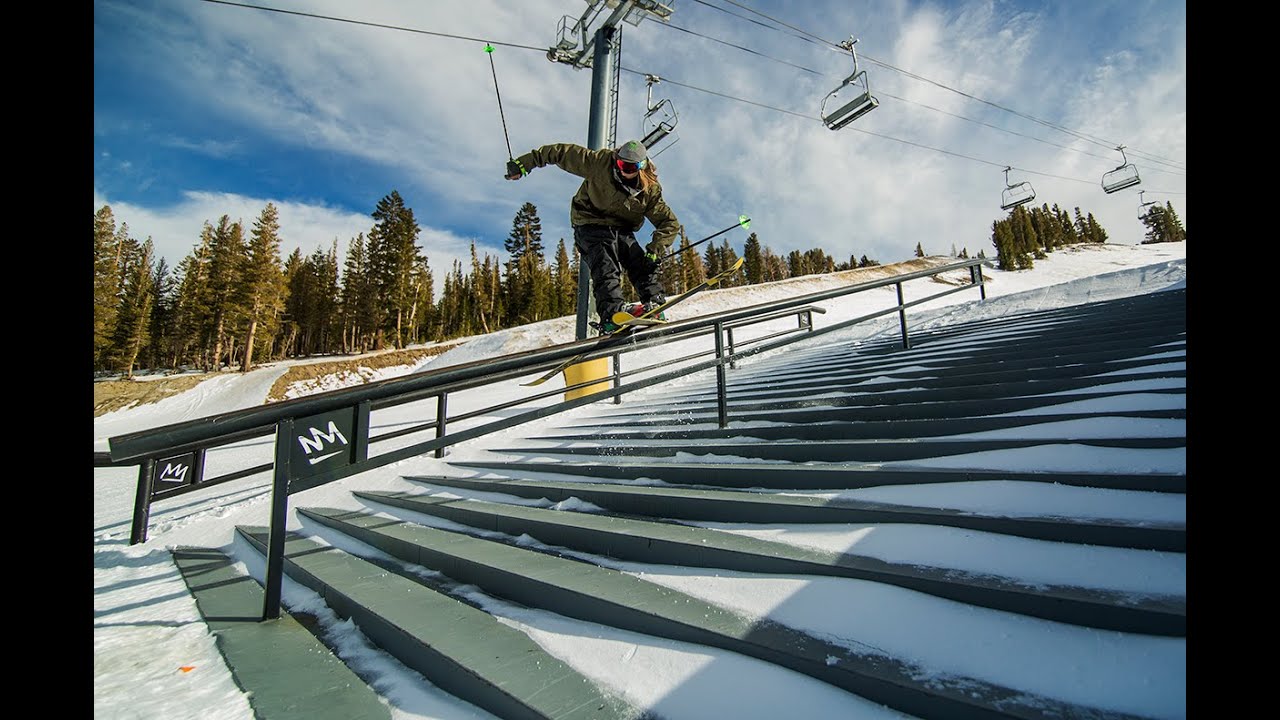
Gagnier’s most famous contribution to trick language is the Venom grab. The shape crosses the skis in the air and brings both hands into a mutated grab position, creating a visual knot that can look wrong before it looks complete. It became one of the clearest examples of his approach: take a recognizable freestyle platform, then alter the grab until the trick becomes a signature.
That creativity separated him from skiers whose main identity rested on adding another 180 degrees. A Venom-style shape asks for balance, flexibility, hand speed, ski awareness and enough confidence to risk making the trick look messy. In Big Air, where judges need to reward clarity, that is a dangerous choice. Gagnier made it work because the grabs were not random. They had intent, timing and a comic precision that turned confusion into style.
Aspen 2015 And The Gold That Fit His Name
The 2015 X Games Big Air gold is the central contest moment of Gagnier’s career. Freeskier’s recap described the Buttermilk scene as a night of roughly 100 jumps over a large booter, with Gagnier winning gold after his 2014 silver and the Grand Targhee back injury. That context makes the medal more than a comeback line.
He beat a field that included major Big Air names, and he did it without reducing himself to a conventional trick machine. The run carried the Vincent Gagnier problem for judges: how to score something difficult, stylish and bizarre at the same time. That was his legacy inside contest skiing. He kept reminding Big Air that progression did not have to look like a straight numerical ladder.
Fenway Park And The Boston World Cup
On February 12, 2016, Gagnier won the FIS World Cup Big Air at Fenway Park in Boston. The official FIS result placed him first with 185.00 points, ahead of Andri Ragettli on 183.00 and Jonas Hunziker on 176.80. The venue itself made the win memorable: a Big Air jump built inside one of baseball’s most recognizable stadiums.
Boston mattered because it turned the X Games gold into something repeatable on a federation result sheet. Ragettli was already part of the next technical generation, and Hunziker brought strong Swiss jump ability. Gagnier’s win showed that his oddball style could still survive the more formal FIS environment. Fenway was not only a show. It was a World Cup, and he won it.
The Knee Injury And The PlayStreets Return
The physical setbacks did not stop with the back injury. Later public profiles and reports noted that Gagnier missed X Games after tearing his ACL during practice. By 2019, Newschoolers covered his Red Bull PlayStreets return in Bad Gastein, writing that it was his first contest back from knee injury. The course was narrow, urban and rail-heavy, far from the clean symmetry of a Big Air jump.
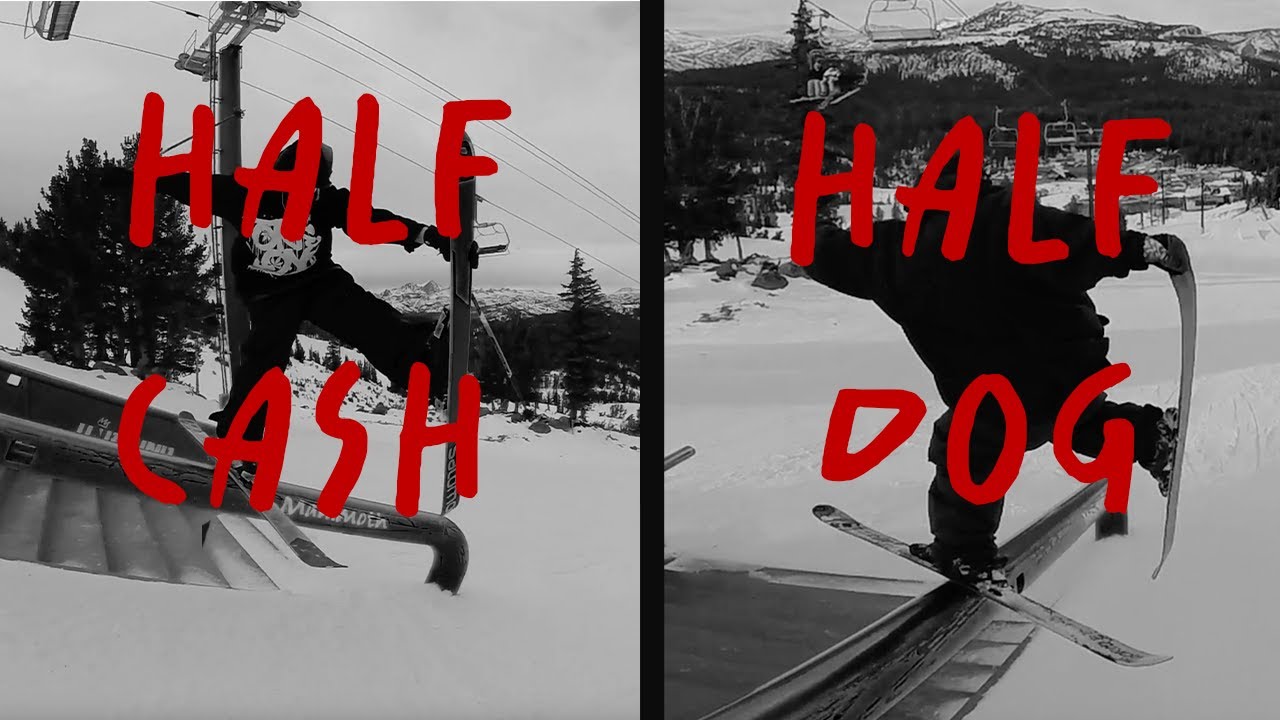
That return suited him because PlayStreets rewards strangeness. The course runs through a town, mixing rails, drops, hips and street-style transitions. Gagnier went creative rather than safe, using pole grabs and unusual rail choices even without putting a perfect run down. The result was less important than the image: Vinni Cash back in public, still choosing tricks that looked like private jokes delivered at full speed.
O’Neill, Salomon, Rockstar And The Older Sponsor Era
Gagnier’s main sponsor era connected him with brands such as O’Neill, Salomon and Rockstar Energy. Downdays’ 2017 interview listed Rockstar, O’Neill and Salomon in his profile, while later interviews continued to mention those partners as support through injuries and career changes. That sponsor mix fits the peak contest years: outerwear, skis, energy drink visibility and X Games relevance.
The commercial context matters because his market value was not built only on medals. Brands supported him because he was recognizable. A normal Big Air winner can disappear into result archives. Gagnier’s tricks stayed attached to his name. The crossed skis, double-grab positions, old-school references and unpredictable edits gave sponsors something harder to buy: an athlete whose skiing could be identified before the caption appeared.
J Skis, Blenders And The Current Vinni Cash Chapter
Gagnier’s current public image has shifted toward independent content and creative skiing. His social profile identifies him as a skier from Quebec, a former X Games medalist, and supported by J Skis and Blenders. J Skis also released That’s What We Like, a project with Gagnier and SLVSH that followed a 2022 Austria trip with Joss Christensen and filmmaker Andrew Napier.
That project fits the older and newer versions of Gagnier at once. In Austria, he wanted to find classic jump spots linked to the late-2000s era of Simon Dumont and other freeski history. The crew skied powder, built jumps, hit inbounds terrain and looked for street spots. It was not a standard contest comeback. It was a skier-historian searching for the terrain that shaped the sport’s memory, then adding his own warped trick language to it.
Why His Influence Outlasted The Results Page
FIS marks Gagnier as not active, which is accurate for the official competition circuit but incomplete for his place in freeskiing. His record has hard numbers: X Games silver in 2014, X Games gold in 2015, FIS World Cup Big Air victory in Boston in 2016. Those results alone would make him important. They are not the whole reason he remains relevant.
The deeper influence is creative permission. Gagnier showed that contest skiing could still reward tricks that looked personal, awkward, funny and original. He helped keep old-school shapes alive inside a modern Big Air environment. He made grabs part of the main event rather than an accessory to rotation. For younger skiers raised on clips, that matters. It says a trick can be difficult because of imagination, not only because of degrees.
The Legacy Of Vinni Cash
Vincent Gagnier belongs at 5/5 because the résumé and the cultural effect meet. He is a two-time X Games medalist, an X Games Big Air gold medalist, a World Cup Big Air winner, one of Canada’s most recognizable creative jump skiers, and the creator or popularizer of grab language that still circulates through freeski conversations.
The accurate ending is not retirement nostalgia. Gagnier is still visible through clips, J Skis projects, Quebec identity and ongoing creative park skiing. His best-known competition years sit in Aspen and Boston, but the larger story is about style refusing to behave. Vinni Cash made Big Air weirder, and that is the part of his career that still feels current.