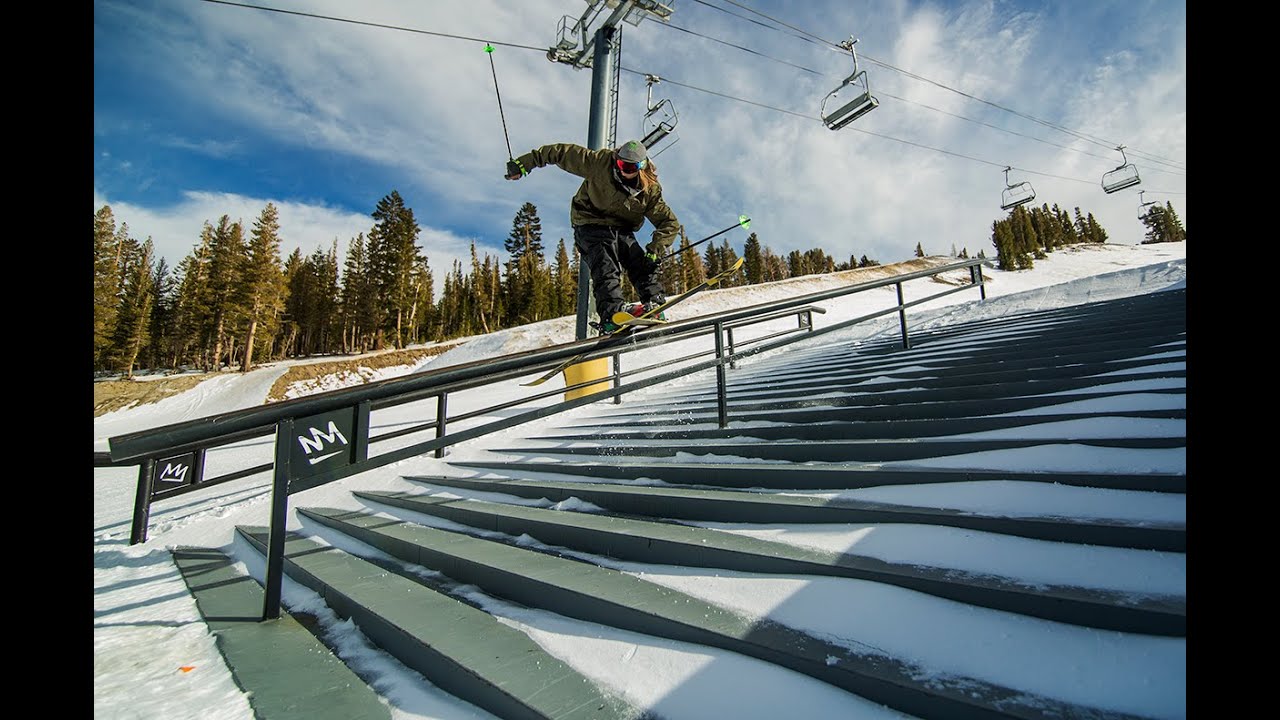
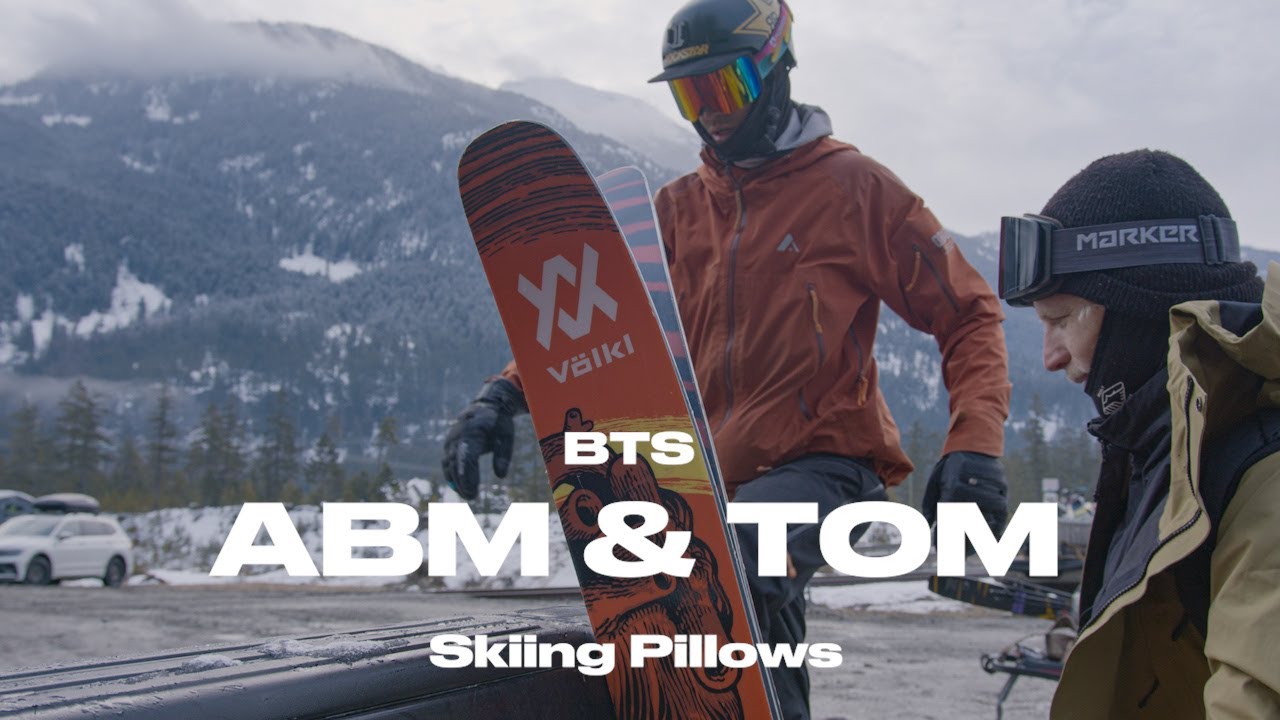
Alex Beaulieu-Marchand
Quebec City, Quebec, Canada | Active: FIS record listed as not active | Discipline: freeski slopestyle and big air | Verified: 2018 Olympic bronze, 2019 Worlds big air bronze, 5 X Games medals | Recent: Whistler, backcountry skiing, media work
Phoenix Snow Park On The Second Run
Phoenix Snow Park was sharp with February light when Alex Beaulieu-Marchand left the start gate in PyeongChang. The rails flashed orange below him, the landings looked chalky, and the Canadian needed one clean second run to stay inside a final that had no space for hesitation.
His 92.40 held through the last two riders. Øystein Bråten had already set the gold-medal mark at 95.00, Nick Goepper would land silver with 93.60, and Beaulieu-Marchand’s score became Canada’s first Olympic medal in men’s ski slopestyle. The image that stayed was not just the bronze. It was the way he skied through taped-up pain, limited training, and a field packed with Bråten, Goepper, James Woods, Teal Harle, Evan McEachran, Andri Ragettli, and Gus Kenworthy.
From Quebec City To Canada’s First Men’s Slopestyle Final
Beaulieu-Marchand was born in Quebec City on March 3, 1994. Team Canada lists his hometown and residence as Quebec City, with a 182 cm frame and a competition history built around freestyle skiing. His nickname, ABM, became the short form used across X Games clips, athlete profiles, and ski edits.
He started skiing at age two and moved into slopestyle around age twelve. Canadian Athletes Now records a more specific spark: a neighbor skiing in snow parks pulled him toward tricks, and a first trip to Whistler at thirteen became a favorite sports memory. Those details matter because his career never looked like a straight race-club pipeline. It started in a ski family, passed through Quebec parks, and then grew into the rail-and-jump language of Canadian freeskiing.
By Sochi 2014, men’s ski slopestyle had just entered the Olympic program. Beaulieu-Marchand was the lone Canadian in the event and advanced to the final, finishing twelfth at Rosa Khutor. The podium belonged to the American sweep of Joss Christensen, Gus Kenworthy, and Nick Goepper, but ABM had already entered the Olympic record of a discipline still defining its judging scale.
Ushuaia, Copper Mountain, And The First World Cup Signal
The FIS record places his World Cup debut on September 7, 2012, at Ushuaia, Argentina, where he finished fourth in slopestyle. Four months later, on January 12, 2013, he reached his first World Cup podium with third place at Copper Mountain, Colorado. That early stretch gave him FIS points, national-team credibility, and proof that his rail game could score outside Canadian events.
Team Canada notes that he ended the 2012-13 season fourth in the slopestyle rankings. The next winter brought a second-place result at the Dew Tour iON Mountain Championships in Breckenridge, Colorado, in December 2013. At that time, Dew Tour carried real weight for Olympic selection. The Breckenridge course demanded speed through rails into large jumps, the same structure that would define Olympic slopestyle.
His early contests also showed a pattern that stayed through the rest of his career. He could qualify high, manage technical rails, and use switch takeoffs without looking rushed. That made him different from skiers who relied almost entirely on jump amplitude. ABM’s best scores often began before the first booter, with rail combinations that gave judges difficulty before the doubles and triples arrived.
The Injuries Before Aspen Turned Back
The years after Sochi were not smooth. Team Canada records a torn left ACL while competing at Winter X Games Aspen in 2015. Surgery followed, then nine months away from competition. He was scheduled for Winter X Games in 2016, but a broken left collarbone just before the event kept him out again.
That timeline explains the force of his 2016-17 return. In December 2016, he took bronze at Dew Tour in Breckenridge. In late January 2017, he added Winter X Games Aspen bronze in ski slopestyle. Aspen’s Buttermilk course has always asked for more than courage: rails at the top, changing speed between features, three large jumps, and enough crowd pressure to punish rushed skiing.
His 2017 podium did not read like a sentimental comeback. It showed that the knee and collarbone interruptions had not erased his technical base. He was back among the riders who could hold a full line together: rail precision, switch entries, double corks, grabs held long enough to read, and landings stable enough to keep speed through the final hit.
How ABM Built Runs From The Rails Out
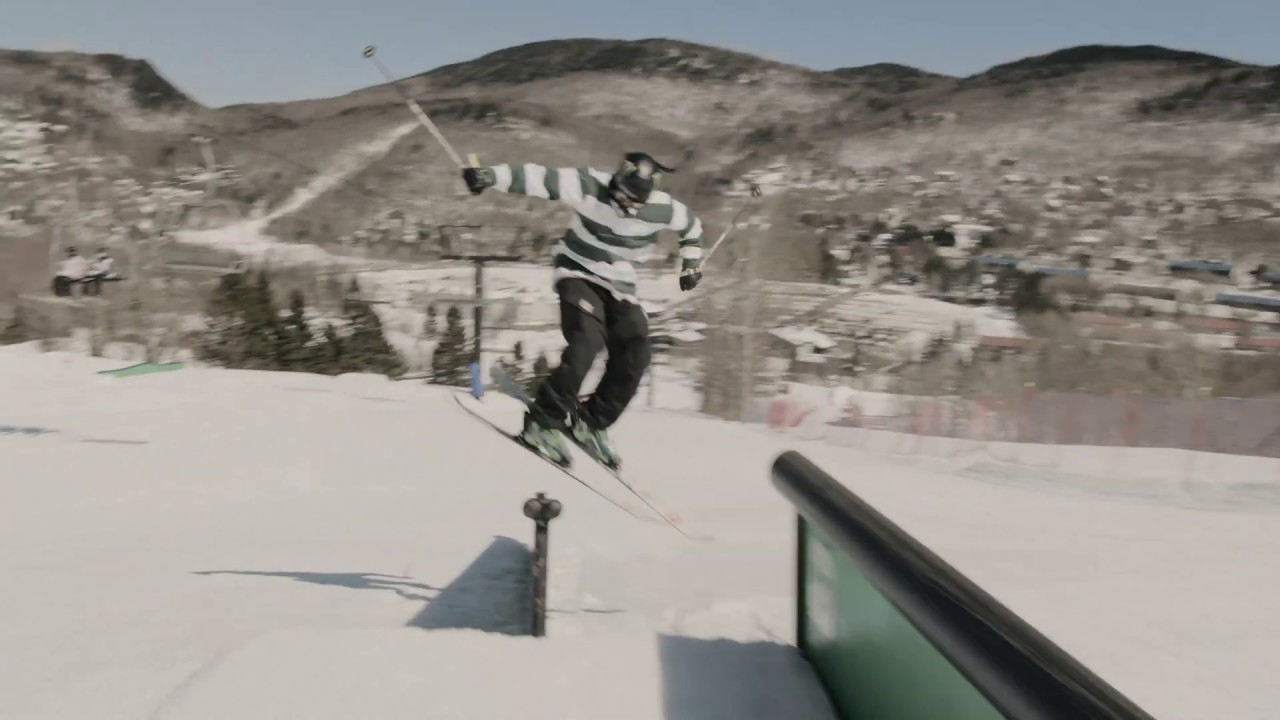
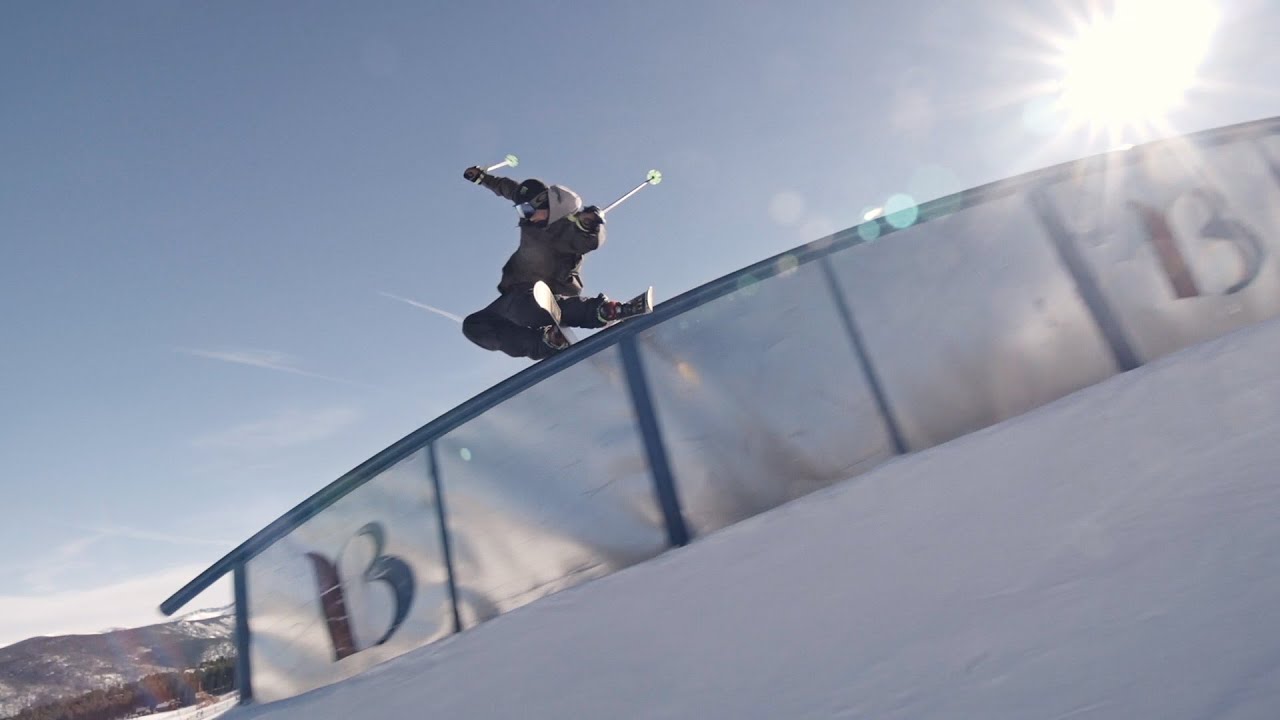
Beaulieu-Marchand’s slopestyle identity was rail-first in a discipline often judged by jump memory. A 2019 Monster Energy report from X Games Aspen described his first slopestyle run with a 450 to pretzel 270 off, a switch 630 disaster, then a switch rightside double cork 900, double bio 1260, and switch triple cork 1260 through the jumps.
That run shows the architecture. The rails were not filler before the jumps. They were the first scoring argument. Pretzel direction, disaster placement, switch takeoff, double bio rotation, and triple cork risk all appeared in the same line. In slopestyle language, that means the skier is not leaning on one category. He is building difficulty across rails, airtime, rotation direction, grabs, and landing control.
Compared with Alex Hall’s creative nose-butter and transfer vocabulary, ABM’s contest skiing leaned more toward technical rail locking and efficient jump execution. Compared with Henrik Harlaut’s loose grab-heavy air style, ABM usually looked more compressed and direct through the course. His best runs carried a Quebec street influence into a national-team contest frame.
Buttermilk In 2019 And Two Medals In Two Days
X Games Aspen 2019 became the densest weekend of Beaulieu-Marchand’s career. On January 26, he took silver in men’s ski big air at Buttermilk with a combined score of 87.00, behind Birk Ruud and ahead of James Woods. Freeskier reported that he landed a switch right triple cork and a switch left triple cork with double and octo-grab variations.
The next day, January 27, he returned for ski slopestyle and took another silver. Freestyle Canada recorded his score at 92.66 from the first of three runs, with Alex Hall winning on 95.66 and Ferdinand Dahl third on 80.33. The report also notes that Beaulieu-Marchand had earned two medals in two days and that it was his eighth X Games start.
That Aspen weekend also carried a specific temperature in the sport. Big air was becoming more separated from slopestyle, with riders needing one-jump trick depth and full-course consistency. ABM medaled in both. He was not the loudest personality in the start area, but he had enough range to compete against Ruud in big air and Hall in slopestyle within twenty-four hours.
Canyons Under Lights And The World Bronze
One week after Aspen, Beaulieu-Marchand reached another podium at the 2019 FIS Freestyle Ski and Snowboarding World Championships. The men’s ski big air final at Canyons, Utah, was held on February 2, with Fabian Bösch winning on 186.00 and Henrik Harlaut second on 184.00. ABM took bronze with 183.25.
The result made his late January and early February stretch unusually packed: X Games big air silver, X Games slopestyle silver, and World Championships big air bronze within days. Team Canada also records 2019 as the year he earned four X Games medals in a single calendar year: big air and slopestyle silver in Aspen, Real Ski bronze, and big air bronze in Norway.
Canyons mattered because it moved the story outside X Games branding. A FIS World Championships medal sits in a different record system, tied to national federations and official standings. For Beaulieu-Marchand, it confirmed that his big air progression was not only an invitational-contest moment. It held under a world-championship format against Bösch, Harlaut, Hall, Bilous, Magnusson, Tjäder, and Bråten.
Real Ski Took ABM To The Streets
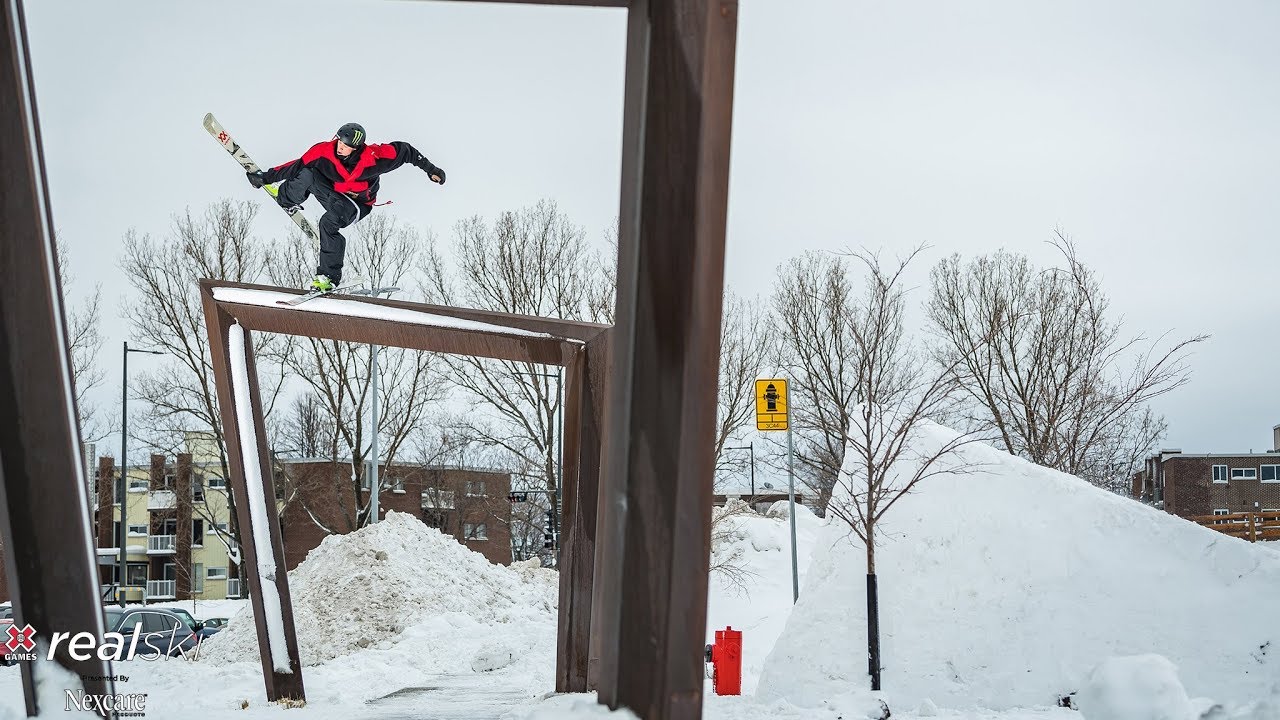
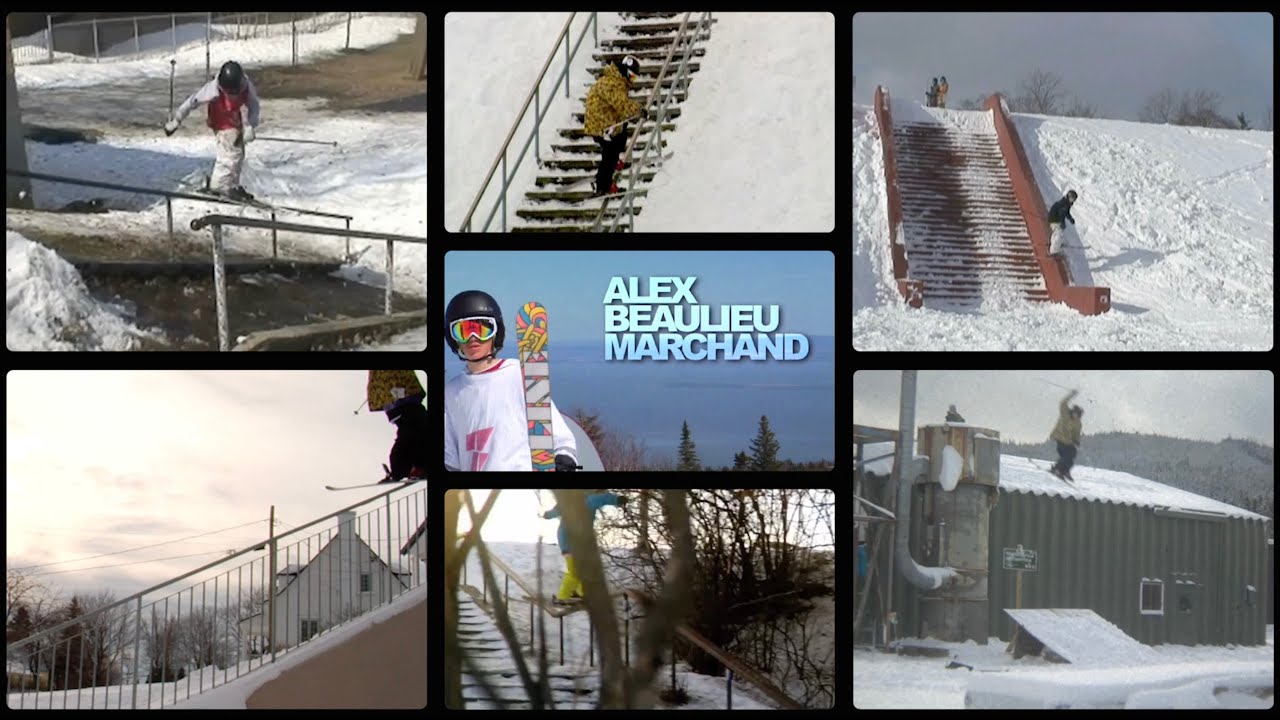
The 2019 Real Ski bronze changed the texture of his public profile. X Games Real Ski is not a normal stadium event. It is a video contest built from urban spots, snowmobile access, winch pulls, handrails, wallrides, redirects, and filmer decisions. Beaulieu-Marchand entered with filmer Antoine Caron, and Newschoolers listed him third behind Phil Casabon and Pär “Peyben” Hägglund.
That result linked him directly with Quebec’s street-ski lineage. Casabon had already shaped street skiing through B-Dog edits and technical rail approaches. Peyben represented the Swedish crew sensibility of The Bunch. ABM’s podium beside those names helped separate him from the idea of a contest-only slopestyle skier.
The Real Ski format also fit his strengths. Disaster rails, switch landings, pretzel exits, blind takeoffs, and short approaches reward balance over course speed. A skier who can read a contest rail line can adapt to a down-flat-down rail or a wall-to-rail setup, but only if the technique remains loose enough for imperfect snow and tight urban landings.
Whistler, Visualization, And The Work Behind The Bib
Beaulieu-Marchand’s training story is spread across Quebec, Whistler, Canadian team camps, and international courses. Canadian Athletes Now records visualization as a daily tool, helping him see maneuvers and manage pressure before competition. That detail matches the way he spoke after PyeongChang: he focused less on medal control and more on skiing the way he wanted.
In 2022, SBC Skier reported that he was living in Whistler, British Columbia, with deep freeskiing days and filming with BLANK Collective. He also said his focus had moved toward mountains rather than street trips that season, with backcountry skiing giving him new skills to learn. That was a different training problem than repeating a slopestyle course.
Backcountry skiing changes the risk map. Landings are not machine-cut. Speed is built through natural terrain. Wind, aspect, avalanche conditions, and camera timing decide the day. For a skier raised through judged formats, that shift requires patience. ABM’s later public profile shows a skier using contest technique in a broader mountain environment rather than chasing another Olympic start.
Völkl, Orage, Marker, Auclair, And The Sponsor Thread
ABM’s public sponsor list has changed with time, but several names remain visible across recent profiles. SBC Skier listed Marker, Völkl Skis, Orage, Rockstar, Dalbello, and Auclair in 2022. His public social profile has also listed Völkl Skis, Orage, Marker, and Auclair, while Auclair presents him as a Whistler-based freeskier after his Canadian Freestyle Ski Team career.
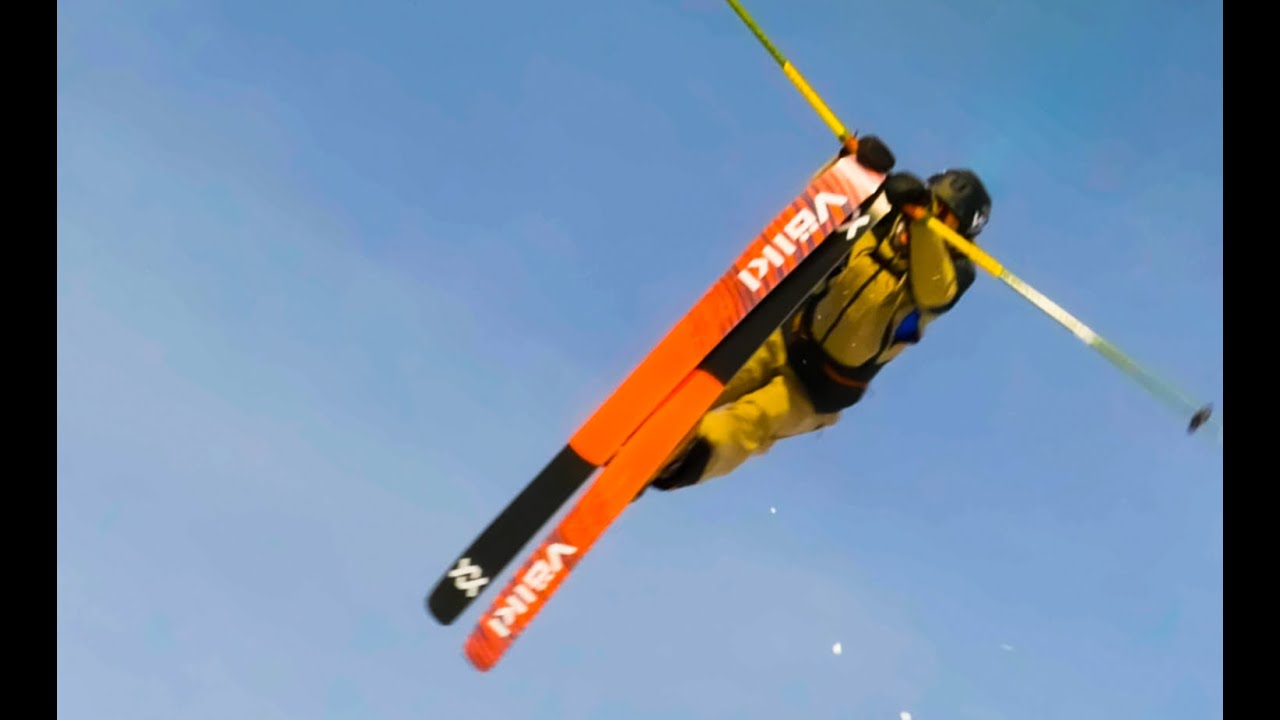
The Völkl and Marker combination fits the technical side of his skiing: twin-tip skis, bindings built for heavy landings, and setups that need to survive rail impact as much as jump compression. Orage connects him back to Quebec outerwear culture, while Auclair gives the glove category a Canadian link. None of those partnerships should be treated as decoration on the page. They show how ABM’s identity moved from national-team athlete to freeride, film, and online skiing figure.
Equipment also tells the competitive era. His career crossed the phase when slopestyle skis became more durable under urban and contest pressure, when bindings had to manage switch triple cork landings, and when outerwear moved between X Games visibility and backcountry filming. ABM’s sponsors sat inside that shift from course repetition to mixed-media skiing.
CBC Beijing And The FIS Record Now
Beaulieu-Marchand did not compete at Beijing 2022. Instead, SBC Skier reported that he worked as an English-language CBC analyst for Olympic big air and slopestyle, covering men’s and women’s events. That role made sense. He had competed in the Olympic debut of men’s slopestyle, medaled in the next Games, and understood the trick vocabulary from inside the start gate.
FIS now lists him as not active. The record still shows the path clearly: Ushuaia 2012 fourth, Copper Mountain 2013 World Cup bronze, Sochi 2014 twelfth, Quebec City 2017 World Cup bronze, PyeongChang 2018 Olympic bronze, Canyons 2019 World Championships big air bronze, then a final recorded World Cup start at Calgary in February 2020.
For skipowd.tv, the watch path is precise: Sochi 2014 for the Olympic debut, Aspen 2017 for the injury comeback, Phoenix Snow Park 2018 for the bronze run, Buttermilk 2019 for the two-medal X Games weekend, Real Ski 2019 for the street chapter, and Whistler-era clips for the mountain turn that followed the bib.