Chris McCormick
Glasgow, Scotland | Active: 2017-present World Cup record | Known for: Milano Cortina 2026 Olympics, Stubai World Cup 7th, Bearsden dryslope roots | Disciplines: slopestyle, big air
Livigno With An Ankle Still Talking
The Livigno jump rose into cold Italian night, its landing cut hard enough to expose every mistake. Chris McCormick had already missed the slopestyle final, already spoken about a painful ankle, and still had to find speed for two switch double 1800s when the Olympic big air qualifier asked for one more answer.
His Milano Cortina 2026 Olympics ended with 21st in men’s freeski big air and 26th in men’s freeski slopestyle. The numbers did not bring a final, but they confirmed a milestone that had taken years of World Cup starts, dryslope repetition and British selection pressure to reach. McCormick became an Olympian in the exact disciplines that built his career: rails, jump lines, switch takeoffs, double corks and judged execution under time pressure.
Bearsden Before The World Cup Bib
GB Snowsport lists McCormick’s hometown as Glasgow, Scotland, with Bearsden as his club. He learned to ski at the local dryslope in Bearsden when he was six years old. That detail is central to his story, because British freeskiers rarely grow up with daily access to alpine parks, high-speed chairlifts and long jump lines.
Bearsden gave him repetition instead: plastic slope habits, edge control, rail timing, air awareness built in small spaces and the resilience needed to turn limited terrain into technical skill. For a Scottish skier to reach World Cup slopestyle and big air, the pathway has to pass through travel, camps, indoor sessions, European parks and long periods away from home snow.
British Titles Before The International Grind
Ellis Brigham describes McCormick as the 2018 British champion in both slopestyle and big air. The same profile says he won the 2019 British University Big Air title while studying physics at Glasgow. Those results matter because they fixed him as more than a promising dryslope skier before his World Cup record became the main reference.
The domestic titles also show the event split that still defines him. Slopestyle asks for linked rail sections, speed control, jump rhythm, grab clarity and landings that can keep a run alive. Big air strips that down to one jump, one trick plan, one takeoff, one landing and almost no space to hide a mistake.
Stubai When The Run Finally Held
Stubai in November 2021 remains the result most closely attached to McCormick’s World Cup breakthrough. GB Snowsport reported that he finished seventh in men’s freeski slopestyle, his first World Cup top ten, improving on a previous best of 19th at Silvaplana earlier that year.
The run carried real technical weight. GB Snowsport described a switch 1440 and switch 12 up top, enough to hold seventh in a field where Jesper Tjäder finished only 0.08 points behind him in eighth. That detail makes the result stronger than a simple placing. McCormick was not sneaking into a soft final. He was holding off one of the sport’s most creative rail and slopestyle skiers by less than a tenth.
Silvaplana And Corvatsch Kept The Level Visible
Silvaplana gave him another key World Cup result in March 2022, when he finished 12th in men’s freeski slopestyle. GB Snowsport called it his second-best result of that season after Stubai. Corvatsch later became another important Swiss marker, with his athlete profile listing 12th place there among his notable achievements.
Those Swiss venues matter because they are not forgiving. Silvaplana’s course sits high above the Engadin valley, with long lines, changing light and a field that regularly includes Olympic finalists. Corvatsch can demand the same mix of rail precision and jump commitment. McCormick’s strongest results came where a skier has to build a full run, not only survive a feature.
How McCormick Builds A Contest Run
McCormick’s skiing is rooted in slopestyle structure. The rails need early confidence, because a missed exit ruins the speed plan for the jumps. Then the jump section asks for switch takeoffs, double cork control, grabs held long enough for judges to read, and landings strong enough to keep the score alive.
His best public trick references show that technical direction: switch 1440, switch 12, switch right double 1800 tail, switch right double 14 and switch left double 12. Those tricks place him in the modern contest language where both directions matter. A World Cup skier cannot rely on one preferred spin. The run has to show variety, amplitude, execution and clean landings across the full course.
Banger Park, Prime Park And The Training Blocks
GB Snowsport’s team content places McCormick in structured pre-season training with the British freestyle team at Banger Park in Austria, using airbags for rotation work, adjustments and trick progression. Downdays also confirmed his appearance in Peak Performance’s Reaching the Peak episode with Anni Kärävä at Prime Park Sessions before the Olympic season.
That training environment explains the jump development. Dryslope skiing creates edge habits and quick repetition, but double 1800s and World Cup slopestyle need larger purpose-built setups. Airbags, private park blocks and European camp windows let riders test rotations before taking them to snow landings. McCormick’s career sits exactly between those worlds: British roots, Austrian training, Swiss and North American World Cups.
Engadin And The World Championship Field
McCormick entered the 2025 Engadin World Championships in both slopestyle and big air. FIS lists him 17th in men’s freeski slopestyle and 26th in men’s freeski big air. Those results were not medals, but they kept him inside the British senior squad at a major championship level.
Engadin also gave context for the Olympic year. The same season included World Cup starts in Chur, Beijing, Klagenfurt, Kreischberg, Laax, Aspen, Stoneham and Tignes. His 2025 Laax slopestyle result was 16th, and FIS lists 12th in Klagenfurt big air in January 2025. The pattern shows an athlete capable of reaching the middle of strong fields, with occasional results close enough to keep Olympic qualification alive.
Planks, Shed Boys And The Scottish Spring
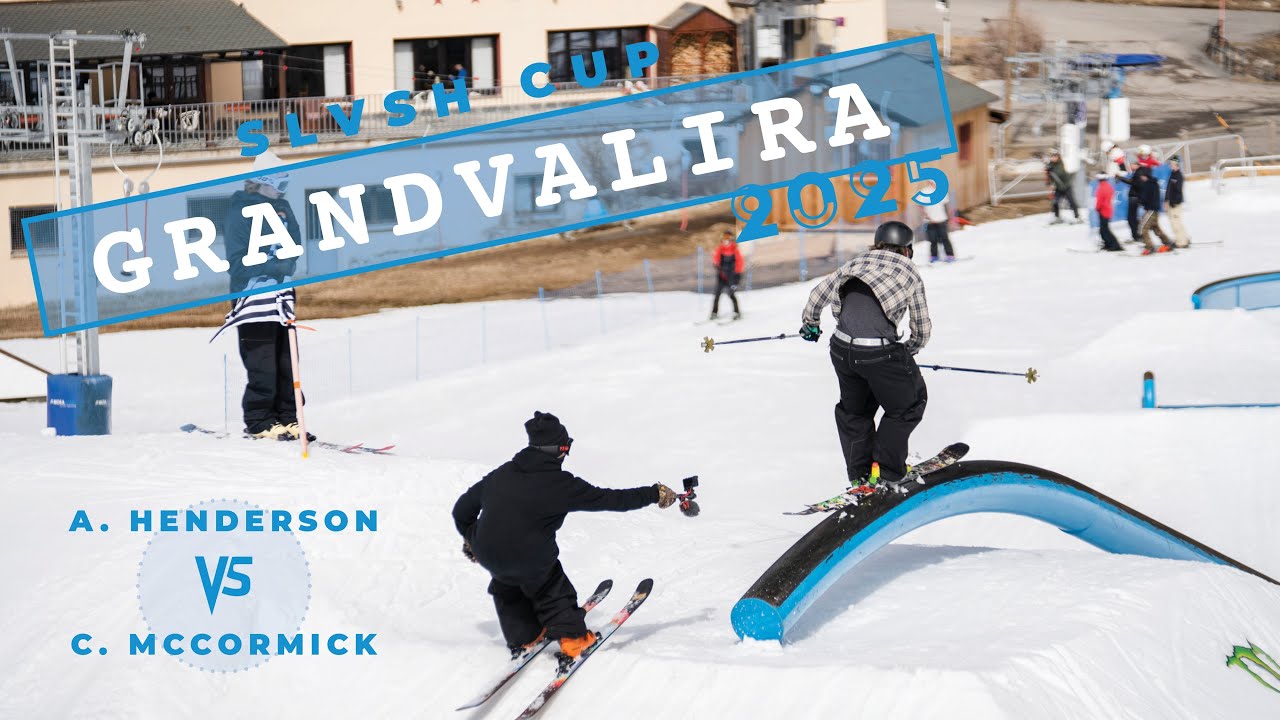
McCormick’s profile is not only a contest sheet. Planks documented Shed Boys projects with Chris and Matt McCormick, including a Livigno season clip with Tom Greenway and a Cairngorms ski-bike touring and jump-building mission with Harris Booth and others during a strong Scottish spring.
That side matters because it keeps him connected to British ski culture outside World Cup venues. Cairngorms spring missions, handmade jumps, bike approaches and Scottish snow windows are far from the polished scaffolds of Chur or the engineered jump lines of Stubai. They show the same skier adapting contest skill to home-country terrain, film clips and creative sessions.
Ellis Brigham, Planks And A Careful Gear Frame
Ellis Brigham lists McCormick among its athletes and ambassadors, while Planks has published multiple projects with him as a Planks athlete. Older video archives also show earlier support from brands around his dryslope and development years, but current exact ski, boot and binding details should not be invented without a direct setup sheet.
The safe equipment reading is practical. McCormick needs a setup that can handle switch takeoffs, double cork landings, rails, high-speed slopestyle courses and big air jumps. A British contest skier also needs gear durable enough for travel-heavy seasons: indoor training, dryslope sessions, airbags, European parks, North American World Cups and Olympic qualification events.
Where The Olympic File Stands Now
The strongest skipowd.tv tags for Chris McCormick are Glasgow, Bearsden, GB Snowsport, Team GB, Milano Cortina 2026, Stubai, Silvaplana, Corvatsch, Laax, Engadin, slopestyle, big air, Planks, Ellis Brigham and Shed Boys.
The current endpoint is precise: Olympic debut at Livigno in 2026, 26th in slopestyle, 21st in big air, back-to-back switch double 1800s in qualification, and a World Cup career still anchored by the seventh place at Stubai. Future updates should track whether McCormick turns his World Cup mid-field consistency into another top ten, and whether new Shed Boys or Planks projects keep adding a Scottish film layer to the competition file.