Sugar Bowl
Rocky Mountains
United States
Independent California ski resort on Donner Summit | Known for: 1650 acres, 500 inches of annual snowfall, Mt. Judah, Mt. Lincoln, Mt. Disney, Crow’s Nest, Sugar Bowl Parks, Silver Belt freeride, Royal Gorge Nordic access, and a ski history dating to 1939 | Season: December to April depending on snowpack | Best for: park crews, Tahoe powder skiers, freeride juniors, storm-day tree laps, and skiers who want a less corporate Sierra resort
Donner Summit And The Four Peak Sugar Bowl Map
Sugar Bowl sits high on Donner Summit in Norden, California, with official stats listing a 6883 foot base, 8383 foot summit elevation, and 1500 feet of vertical rise. The resort spreads across four named peaks: Mt. Judah, Mt. Lincoln, Mt. Disney, and Crow’s Nest. That four-peak layout is the first thing freeskiers need to understand because Sugar Bowl is compact on paper but varied in actual ski flow.
The mountain lists 1650 acres, 105 runs, 12 lifts, and an average annual snowfall of 500 inches. That snow number is central to the resort’s identity. Sugar Bowl sits on the Sierra crest before storms move deeper into the Tahoe Basin, which gives it a strong powder reputation and enough refresh to keep trees, bowls, steeps, and park landings alive through midwinter cycles. It is not a destination built on size alone. It is a Donner Summit storm trap with fast lift access and a long independent culture.
Mt. Lincoln Steeps And Sierra Snow Preservation
Mt. Lincoln gives Sugar Bowl much of its sharper freeride personality. The official lift data lists Mt. Lincoln Express with 1277 feet of vertical, the largest lift-served vertical number on the mountain. The surrounding terrain feeds technical steeps, ridges, short chutes, and the Palisades zone when coverage and control work allow. These are not long Alaska-style faces, but they are consequential enough to reward strong edge work and disciplined speed checks.
Mt. Judah is often the smarter storm-day tool, with trees, groomers, and quicker visibility when upper ridgelines are wind affected. Mt. Disney gives the resort its historical name connection and additional bowls, open pitches, and fall-line options. Crow’s Nest can feel quieter and more local, with shorter but useful terrain when the obvious zones are tracked. A good Sugar Bowl day moves between peaks according to wind, visibility, surface texture, and lift status rather than chasing one famous chair all day.
Christmas Tree Express And The New Park Training Ground
Sugar Bowl Parks is the resort’s most important recent freeski development. The official park page describes the project as a full-size progression facility designed to support junior development, advanced athletes, and elite freestyle performance. The park is strategically placed around Christmas Tree Express, whose short high-speed lap helps maximize training volume. That lift choice matters because park progression depends on repetition, not only feature size.
The program is built around a clear idea: Sugar Bowl wants to become a California-based training ground for freestyle athletes. The resort states that it has partnered with experienced park designers, including Charles Beckinsale and Steve Petrie, while using an in-house team led by park designer Brandon Dodds and park manager Mike Shipani. The practical result is a venue where skiers can build from basic rails and jumps toward larger lines without needing to leave Donner Summit. Compared with Mammoth Mountain, Sugar Bowl is smaller and less established as a global park reference, but its park direction is now serious enough to shape the resort’s freeski future.
Faction Full Film And The Modern Sugar Bowl Park Signal
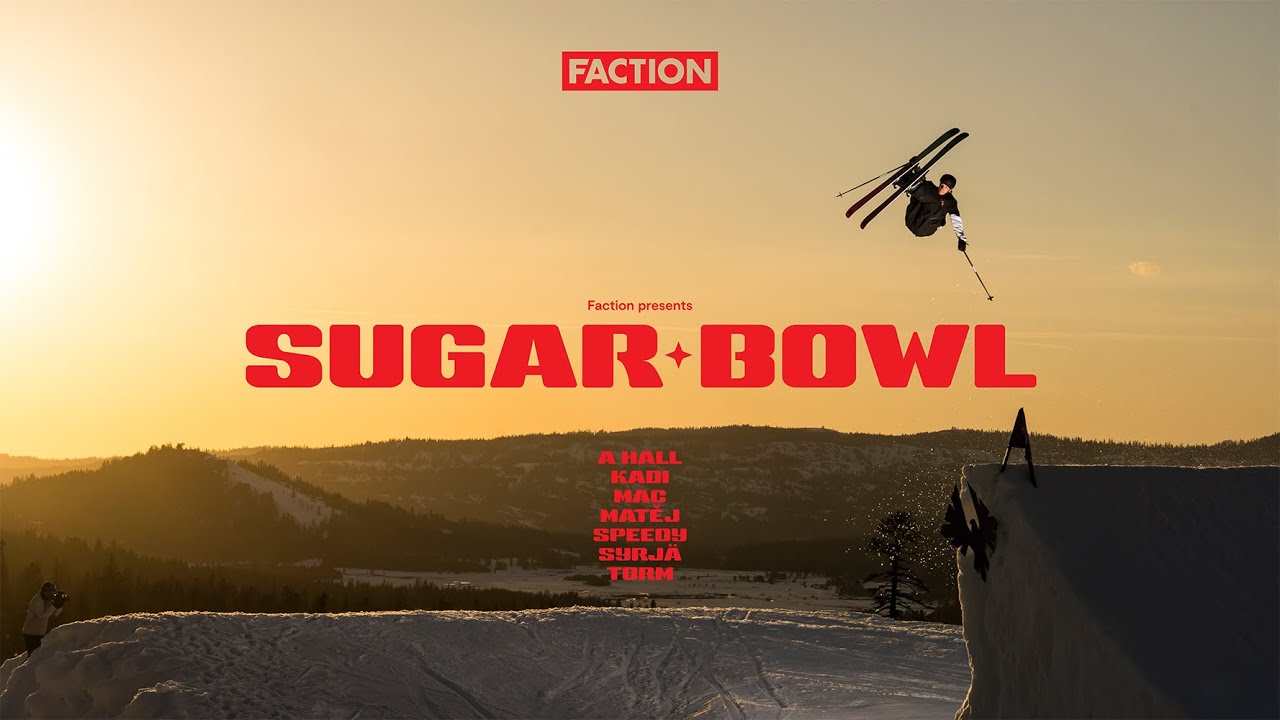
The resort’s new freestyle visibility is already visible inside skipowd.tv. The internal Sugar Bowl page includes the 2025 Faction full film SUGAR BOWL, tagged with big air and park, and featuring skiers connected to Faction. That matters because it moves Sugar Bowl from a local Tahoe park rebuild into a video-culture reference. A full team project can show the line quality, takeoff shapes, rail options, and snow texture better than a resort stats sheet ever could.
Alex Hall, Mac Forehand, and Matej Svancer all appear naturally in that Sugar Bowl park context through the Faction video listing. Their names give the location a higher ceiling than a normal regional resort park. Sugar Bowl is not only building boxes for weekend riders. It is building a park language that can hold Olympic-level creativity, big air precision, and short-format ski-film energy when the setup is right.
Silver Belt Gully And The Freeride Return
The Silver Belt gives Sugar Bowl a freeride story that goes deeper than current park investment. The official Silver Belt return page describes a modern freeride competition built around the famed Silver Belt Gully, and Sugar Bowl’s 2025 media page frames the event as athlete-built and athlete-judged. That format is unusual. It sits somewhere between classic big-mountain competition, shaped feature session, local freeride gathering, and spring spectacle.
IFSA and FWT-linked listings also confirm Sugar Bowl as a junior freeride venue, which makes sense given the terrain. The resort’s faces are compact enough for coaching, judging, and viewing, but sharp enough to teach real line choice. The Palisades, Lincoln terrain, cliffs, ribs, and spring snow surfaces give young freeriders a useful classroom. Sugar Bowl does not need a massive vertical drop to matter here. It needs visible features, reliable snow, strong local participation, and enough consequence to make decisions count.
Walt Disney Chairlift History And Independent Tahoe Culture
Sugar Bowl’s history still shapes how the resort feels. The official history traces the mountain back to 1939, when Austrian ski champion Hannes Schroll helped create a European-style ski resort on Donner Summit with investors including Walt Disney. The resort installed California’s first chairlift on Mt. Disney in its first season and later added the West Coast’s first aerial gondola in 1953.
That background matters because Sugar Bowl is still proudly independent. It does not feel like a giant pass-company product, even though it now sits inside the Mountain Collective ecosystem. The village, the old European references, the short lift lines, the ski-team presence, and the focus on winter rather than year-round spectacle all keep the resort’s tone distinct from larger Tahoe neighbors. Palisades Tahoe has the Olympic Valley scale and KT-22 mythology. Sugar Bowl has a quieter Donner Summit identity built around snow, history, parks, and local skier commitment.
I-80 Access Royal Gorge And The Donner Pass Logistics
Access is one of Sugar Bowl’s biggest practical advantages. The resort sits at 629 Sugar Bowl Road in Norden, close to Interstate 80 and the Donner Pass corridor. The official site describes it as the closest major resort to San Francisco and Sacramento, which explains why it works for Bay Area and Northern California skiers who want a Tahoe storm day without driving deeper around the lake.
The resort has two main access personalities. Judah Lodge serves the day skier side, while the Village Lodge and gondola create a snowbound village feel for overnight guests. Royal Gorge adds another dimension with 150 km of Nordic trails, making the wider property useful for families and endurance skiers even when the freeski focus stays on downhill terrain. On storm days, the real planning issue is not distance. It is I-80 chain controls, closures, wind holds, parking timing, and whether the crew can arrive before the best snow is tracked.
Backcountry Gates And Sierra Avalanche Discipline
Sugar Bowl maintains an open-boundary policy with USFS, but the resort’s backcountry page is very clear about the risk. Beyond the ski area boundary, terrain is in its natural state. Sugar Bowl does not regularly perform avalanche mitigation or provide ski patrol support outside the boundary, and the hazards include deep snow, avalanches, steep terrain, cliffs, cornices, and terrain variations.
The named backcountry gates include Flower Ridge, Tower, Crest, and Anderson’s, and they should only be used when designated open. Skiers leaving the boundary need partners, avalanche equipment, current Sierra Avalanche Center information, route knowledge, and a conservative plan for return. Inside the resort, the same discipline applies in smaller form. Respect closed terrain, give patrol room during control work, space out through steep panels, and treat park features as active traffic zones. Sugar Bowl’s best skiing comes from good timing, not shortcuts.
The Best Sugar Bowl Window For Freeskiers
January through early March is the strongest window for cold snow, repeated Sierra storms, and reliable park speed. These months are best for Mt. Judah trees, Lincoln openings, Palisades coverage, and park progression when the features are built and refreshed. March and early April can bring Sugar Bowl into its spring personality: softer landings, Silver Belt energy, longer light, and corn cycles that make short technical terrain more playful.
A smart freeski trip should stay flexible. Use Judah to warm up and check visibility, move toward Lincoln when patrol opens steeper terrain, lap Christmas Tree when the park is firing, and keep backcountry gates as a separate objective rather than an impulsive side mission. Sugar Bowl’s concrete value is clear: 1650 acres, 500 inches of average snow, 105 runs, 12 lifts, four peaks, a fast park lap, an open-boundary system, Silver Belt freeride culture, and a Donner Summit location that turns Sierra storms into progression days without needing the full Tahoe resort-machine atmosphere.