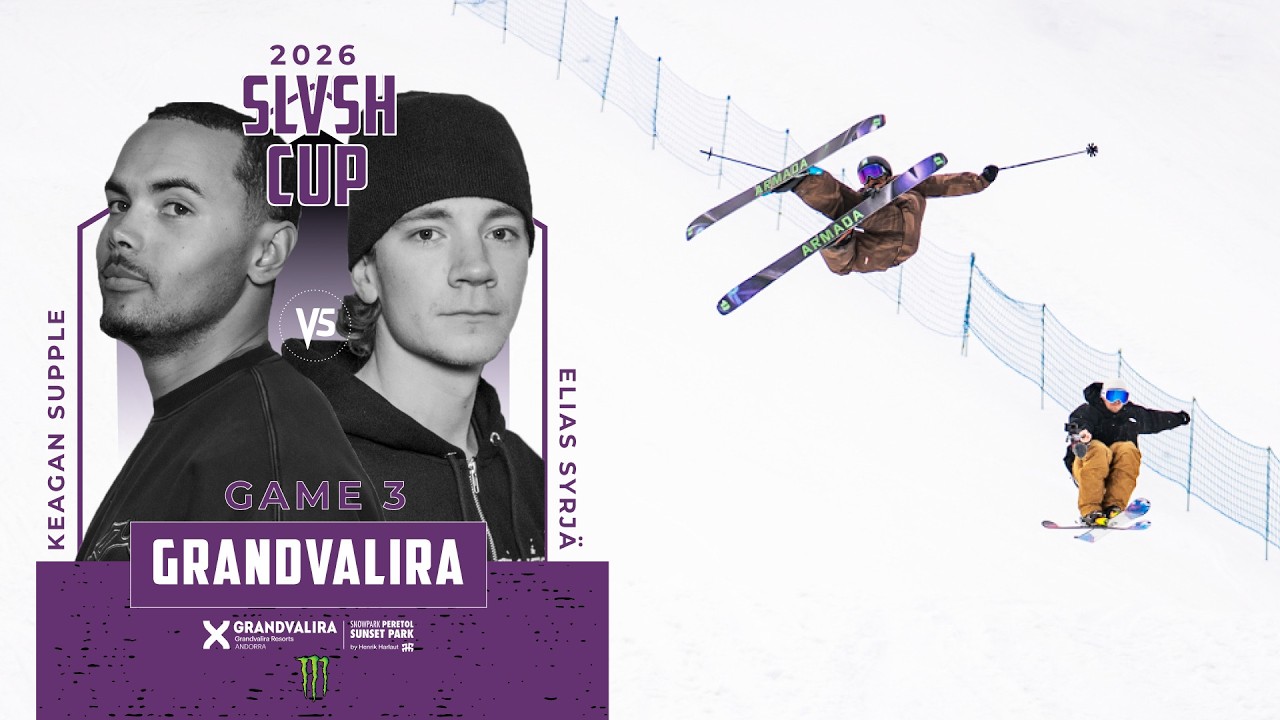
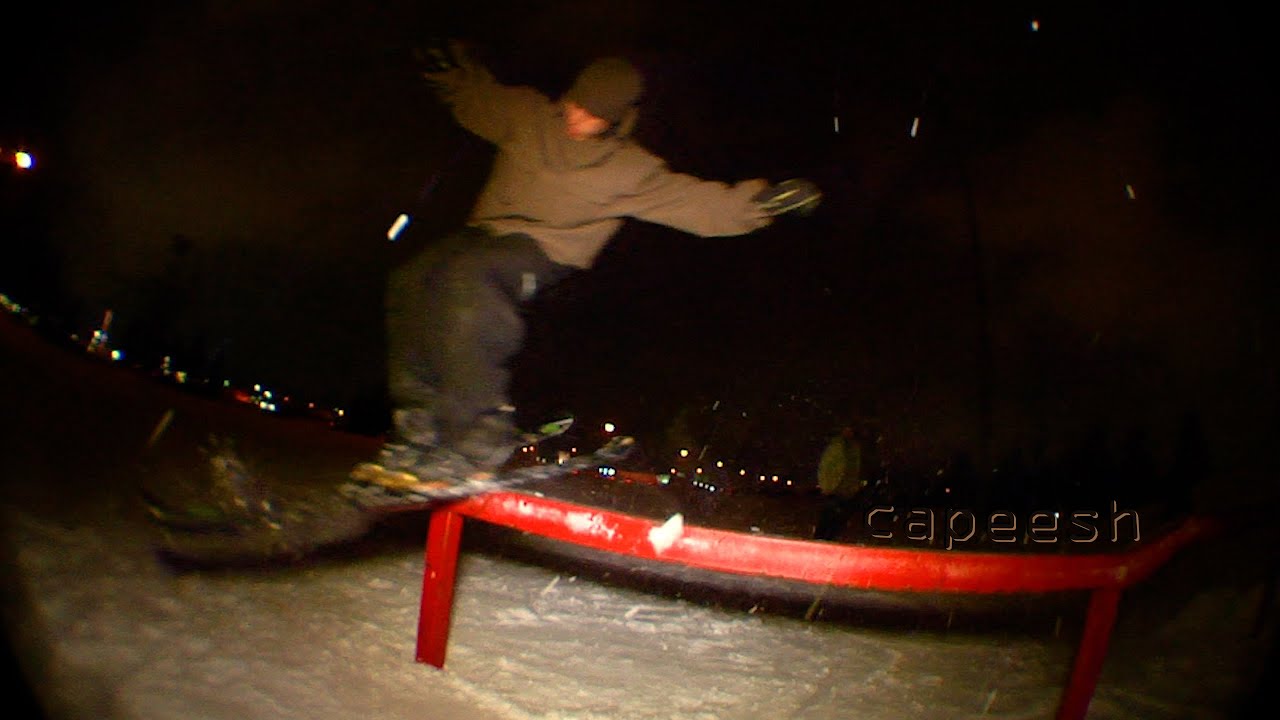
Keagan Supple
United States | Active: 2018-present | Focus: slopestyle, big air, park skiing, Armada film projects | Current: FIS World Cup athlete, Armada skier and Team NBS athlete
Steamboat Under The Big Air Lights
The Steamboat jump rose into cold December air, its landing cut hard by the first finalists before Keagan Supple took speed. He had spent years chasing the start list: Nor-Am points, European trips, scholarship support, injury recovery, and video contests that tested whether style could survive outside a bib. On December 13, 2025, FIS listed him fifth in the Steamboat Freeski Big Air World Cup. That result did not put him on a podium, but it changed the shape of his public profile. Supple was no longer only a promising American slopestyle skier or a SuperUnknown name. He had placed inside the top five at a senior World Cup big air event.
Team NBS And The Long Route To World Cup Starts
Supple’s path is documented through the National Brotherhood of Snowsports as much as through FIS. NBS listed him as a 2022-23 Team NBS athlete, a member of the Boston Ski Party Ski Club, a Westminster Honors College student in Salt Lake City, and part of the Elite Snow Sports program. That source also explained the practical cost of progression: travel, training, camps, dryland work, and the need to chase points toward World Cup starts. Team NBS matters in his story because it connects his skiing to a larger access question. Supple was not simply another park athlete moving through the usual private pipeline. He publicly tied his goals to representation, scholarship support, and the idea that young Black skiers should see a place for themselves in freestyle.
Learning To Fly Before The Bib
SKI Magazine reported that Supple learned to ski around age three and naturally moved toward slopestyle and big air because he liked climbing, jumping, and becoming airborne. That detail fits the trick goals NBS later published for his 2022-23 season: a switch right 1260, a forward right 1440, and a switch right 450-on to rail. Those goals are useful because they show the technical lane before the bigger results arrived. Supple was already aiming at modern park and big-air vocabulary: switch takeoffs, double flips, high-rotation spins, rail-direction control, and the kind of jump confidence needed to move from Nor-Am start lists toward World Cup qualification.
The Knee Injury Before Switzerland
The 2022-23 season could have moved faster. SKI Magazine reported that Supple was about to make his World Cup debut in Switzerland when he injured his knee on a bad training landing, requiring ACL, MCL, and meniscus surgery. That setback matters because the gap in his public results should not be treated as a lack of progression. It interrupted the first World Cup step just as the NBS support had helped him reach it. The same article quoted him speaking about wanting to be a role model for young Black kids, not only as a potential Olympic athlete but as proof that they could get into snow sports at all. His comeback therefore carried both competitive and representational weight.
Mammoth 2025 And The Nor-Am Breakthrough
The clearest formal breakthrough came at Mammoth Mountain in March 2025. FIS lists Supple first in Nor-Am Cup freeski slopestyle on March 18, 2025, then third in Nor-Am Cup freeski big air the next day. Those results are important because they show range in the same venue: a full slopestyle run one day, then a condensed big-air result the next. Mammoth is also not a small stage for park skiing. The resort’s jump lines, spring snow, and heavy American freeski traffic make it a proving ground for athletes trying to move from regional success into a deeper senior field. Supple’s Mammoth double result gave his profile a stronger competitive base than video clips alone could provide.
Stoneham, Calgary, Aspen, Laax
The 2025-26 FIS sheet shows the bigger calendar that followed. Before the Mammoth win, Supple had already placed fifth in Nor-Am slopestyle at Stoneham, fourth in Stoneham big air, second in Nor-Am slopestyle at WinSport Calgary, and sixth at Aspen Highlands in a Nor-Am Cup Premium slopestyle. After the 2025 summer and fall, he entered World Cup fields at Secret Garden, Steamboat, Snowmass, Laax, Tignes, and Silvaplana. The results were uneven, which is normal at this stage: a fifth in Steamboat big air, a 23rd in Silvaplana slopestyle, 27th in Tignes slopestyle, and lower finishes in other starts. That mix is the real transition zone between Nor-Am strength and World Cup consistency.
SuperUnknown 21 At Mammoth Unbound
Supple’s media profile expanded through Level 1 SuperUnknown 21 in 2024. Freeskier reported that he and Josephine Howell were voted in as the men’s and women’s wildcard finalists after public voting, joining the final lineup at Mammoth Mountain. The event placed him with riders such as Felix Klein, Collin Johnston, Mathias Høgås, Andy Hoblitzelle, Daniel Johnson, Blake Rolfing, Rafael Diaz, Ailo Riponiemi, Jackson Jenkins, Shiori Takahashi, Naomi Urness, Liv Cull, Evelyn Mullie, Isabella Tvede-Jensen, and Josephine Howell. Freeskier’s later recap said Supple was one of the finalists who continuously stood out, even though Felix Klein and Shiori Takahashi won the overall titles. The event gave him a different kind of validation: peer and viewer attention in a park-film environment.
A Japan Grab On The Shark Fin
One SuperUnknown image gives the best public technical snapshot. Freeskier’s later feature on the event identified Supple executing a textbook Japan grab off the shark-fin feature at Mammoth Unbound. That is a small detail, but it says something concrete about his skiing. A Japan grab requires a strong position in the air, with the ski pulled across the body and enough body control to avoid flattening the trick into a simple spin. Combined with his NBS-published goals and FIS big-air results, the picture is clear: Supple’s skiing is built around pop, power, switch entries, large rotations, grab discipline, rail approaches, and the ability to make park features look athletic rather than delicate.
Armada And The ORNADA Generation
Armada’s athlete page describes Supple as a powerful skier with clean style and stomped landings, while Freeskier’s ORNADA trailer coverage placed him among the brand’s current and rising stars alongside Quinn Wolferman, Rell Harwood, Toby Rafford and Dani Bacher. The Tahoe Art Haus listing for ORNADA also names him in a cast that includes Tanner Hall, Olivia Asselin, Kim Boberg, Mike Hornbeck, Sammy Carlson, Henrik Harlaut, Todd Ligare and Phil Casabon. That matters because ORNADA is not just another team edit. It is a two-year Armada film built around the brand’s history, present team, street skiing, powder, park, freeride, and generational crossover. Supple’s inclusion places him beside older Armada figures and newer riders in the same cultural frame.
The Next Step Is Repetition At World Cup Level
Supple earns a 3/5 importance rating because his record has moved beyond a simple emerging profile. He has a Nor-Am slopestyle win, a Nor-Am big-air podium, a World Cup big-air top five, SuperUnknown 21 finalist visibility, Team NBS representation, and an Armada film presence through ORNADA. A higher rating would overstate the résumé for now. He does not yet have a World Cup podium, X Games medal, Olympic start, or a long individual film part. The next concrete marker is repetition: more World Cup finals, another top-five result, or a first podium that proves the Steamboat jump was the start of a pattern rather than a single night.