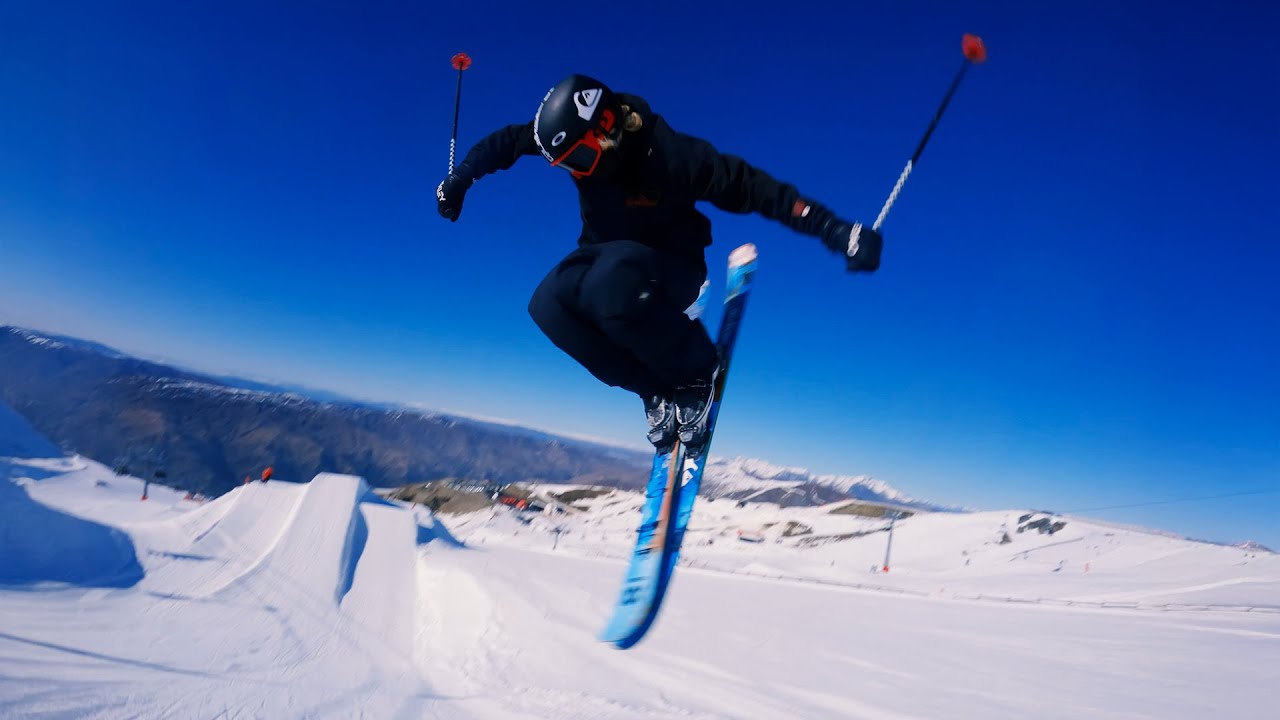
Torin Yater-Wallace
Aspen, Colorado, USA | Active: FIS record listed as not active | Discipline: freeski halfpipe, superpipe, backcountry filming | Verified: 8 X Games medals, two Olympic starts, 2013 Worlds silver | Current: Deviate Films focus
Oslo When The Light Came Back
The pipe in Oslo was short, steep, and bright under winter floodlights. Torin Yater-Wallace dropped first, edges hissing on cold walls, then opened with an unnatural double cork 1260 as spray lifted behind his tails.
That February 2016 final did not feel like a normal contest return. Only months earlier, a bacterial infection had put him in a medically induced paralysis, with tubes in his liver, lungs, stomach, arteries, veins, and airway. At X Games Oslo, he faced Alex Ferreira, Gus Kenworthy, Kevin Rolland, David Wise, Aaron Blunck, Kyle Smaine, and Ben Valentin. His score held. The win became less a comeback slogan than a run with exact details: four or five hits, heavy landings, a tight pipe, and a skier who had almost lost the season before it began.
Eight X Games Medals From Buttermilk To Tignes
Yater-Wallace’s contest record began with a shock at Winter X Games 15 in Aspen/Snowmass on January 28, 2011. Kevin Rolland won with 93.66, but the 15-year-old from Aspen finished second with 92.66, ahead of Simon Dumont, Duncan Adams, Thomas Krief, Justin Dorey, David Wise, and Xavier Bertoni.
Dakine’s athlete profile credits him with eight X Games medals, including three golds, plus two Dew Tour wins and two Olympic appearances. The medal path crossed several versions of the sport: Aspen’s SuperPipe circus at Buttermilk, the European X Games in Tignes, and the Oslo event that briefly gave X Games Europe a city-stadium atmosphere. In that span, halfpipe skiing moved from a specialist discipline into an Olympic event, and Yater-Wallace stayed inside the lead group through the change.
From Snowmass Lessons To The Aspen Valley Pipe
Yater-Wallace was born in Aspen, Colorado, on December 2, 1995. In early interviews he said he started skiing at Snowmass at around one and a half years old. He moved through normal ski lessons, then toward jumps and tricks, before joining Aspen Valley Ski Club and skiing moguls from age seven to twelve.
The Aspen base mattered. Buttermilk hosted X Games. Snowmass gave him park jumps. Aspen Valley Ski Club gave him a development structure before freestyle skiing was fully standardized around national-team selection. By 2011, he was no longer just a local kid with access to a good pipe. He was a teenager scoring within one point of Kevin Rolland at home, with Simon Dumont behind him and the X Games crowd packed against the deck.
The Run Shape Before The Judges Caught Up
Yater-Wallace’s best halfpipe skiing combined amplitude with a looser upper-body rhythm than many contest technicians of his era. His runs were built around double cork rotations, alley-oop direction changes, rightside and leftside takeoffs, switch entries, tail grabs, mute grabs, and safety grabs. He did not ski the pipe like a gymnast working between fixed marks.
A U.S. Ski & Snowboard Dew Tour team-challenge recap from 2018 listed a run with right alley-oop rodeo 720 bow-and-arrow, right 900 tail, left 720 safety, switch right 720 mute, right rodeo 900 safety, and switch air to forward. That sequence shows the vocabulary behind the style: not only bigger doubles, but direction changes and grab choices placed to keep speed through the transition.
Compared with David Wise’s clean contest architecture or Kevin Rolland’s powerful French pipe line, Yater-Wallace often looked more elastic. The shoulders moved late, the takeoffs carried skate influence, and the grabs were part of the visual identity rather than only score maintenance. That difference made his contest runs translate well to film.
Sochi, Broken Ribs, And A Rain-Drenched Olympic Debut
The 2014 Olympic debut of men’s ski halfpipe should have arrived at the center of Yater-Wallace’s rise. Instead, he entered Sochi after a difficult fall period that included a collapsed lung and broken ribs. NBC Sports later reported that he missed most of the 2013-14 season but still made the U.S. Olympic team because of his international record.
The halfpipe at Rosa Khutor became a harsh stage. Rain and soft walls hurt speed control, and Yater-Wallace fell on both qualifying runs. He finished 26th out of 28 skiers, far from the medal conversation that his earlier X Games and World Cup results had created. For many athletes, that kind of Olympic first impression becomes the public label. For him, it became one chapter in a longer contest record shaped by recovery as much as ranking.
Voss Silver And The Sochi Test Event
Before Sochi turned complicated, the 2013 season had placed Yater-Wallace near the front of the global halfpipe field. He won the Olympic test event in Russia and earned silver at the 2013 FIS World Championships in Voss/Oslo. Those results sit beside his European X Games wins as the competitive proof behind his Olympic selection.
His FIS profile records FIS Code 2528389, United States nationality, birth year 1995, and a competition history running through halfpipe and slopestyle. The same record lists later World Cup podiums, including two wins in 2017 and a third place at Mammoth Mountain in 2018. Those results show that the career did not peak as a teenage X Games story. It stretched into the PyeongChang cycle.
Mammoth At Minus Eight And The PyeongChang Ninth
On January 19, 2018, Yater-Wallace placed third in the FIS Freeski World Cup halfpipe at Mammoth Mountain. The official result sheet recorded clear sky, packed snow, air temperature around -8°C, and snow temperature around -9°C. Kyle Smaine won, Alex Ferreira finished second, and Yater-Wallace landed third with 89.20.
That podium came directly before the final Olympic selection period. One month later at Phoenix Snow Park in South Korea, the PyeongChang Olympic final was led by David Wise, Alex Ferreira, and Nico Porteous. Yater-Wallace finished ninth with 65.20. It was not the podium his early career suggested, but it was a second Olympic appearance after illness, injury, and a long fight back into the U.S. halfpipe group.
Training Between Buttermilk, Hood, And New Zealand
His training map always stretched beyond a single resort. Aspen gave him Buttermilk, Snowmass, and a home pipe culture. Summer often meant Mount Hood, where Windells sessions and soft volcanic snow allowed repetition without a winter calendar. Late summer could move to New Zealand, where Cardrona and Snowpark terrain helped many U.S. and European freeskiers build tricks before northern contests.
That rhythm explains part of his diversity. Pipe riders who only train walls can lose comfort in park and backcountry terrain. Yater-Wallace kept more options open. He talked in 2019 about wanting to film, ski backcountry, and avoid being reduced to a pure contest label. His references included Parker White and Sammy Carlson, two skiers associated with style-heavy film skiing rather than judging-sheet repetition.
Armada Skis, Dakine, And The Pipe Cleaner Thread
Armada has presented Yater-Wallace as part of its athlete family from the prodigy stage onward. The brand’s archive connects him to the Pipe Cleaner, a ski tied to halfpipe competition. In older contest footage, the Armada topsheet is often visible as he twists through corks and double rotations above the wall.
Dakine currently lists him as an Aspen, Colorado athlete and states that he now focuses on filming in the backcountry with Deviate Films. That sponsor positioning is important. It shifts the athlete page from podium inventory to creative output. He is not marketed only as a former superpipe medalist. He is presented as a skier still producing content, still riding powder and jumps, and still attached to brands that benefit from film visibility.
Back To Life Turned Recovery Into A Film
Back to Life, released through Red Bull Media House and ESPN’s World of X Games in 2018, gave Yater-Wallace’s career a different kind of record. Directed by Clayton Vila and produced by Matthew Brady, the documentary traced childhood instability, injuries, illness, Sochi disappointment, and the Oslo X Games win.
The film mattered because it showed the cost hidden behind a teenage podium curve. It included the 2015 infection, family stress, Olympic pressure, and the emotional weight of watching his own history on screen. In the contest era, athletes often had to look bulletproof to hold sponsor value. Back to Life worked differently. It placed vulnerability, hospital recovery, and fear inside the same frame as double corks and X Games gold.
Deviate Films And The Backcountry Second Act
After his halfpipe peak, Yater-Wallace shifted toward film production through Deviate Films with Jossi Wells. Newschoolers described his later period as a move from pipe competition into producing and starring in movies that include street, powder, and park shoots. That transition did not erase the contest résumé; it changed how the skiing was judged.
Good Luck, the second film from Torin Yater-Wallace and Jossi Wells, was captured by Sean Logan in the backcountry of Wyoming and Idaho, with Chris Logan and Birk Irving added to the crew. Chameleon, listed by iF3 as Deviate’s third movie, connected Yater-Wallace with Quinn Wolferman, Kim Boberg, Cody LaPlante, Cody Wilder Ray, Chris Logan, and Sammy Carlson across Minnesota, Montana, British Columbia, and Sweden.
Those locations say a lot. Minnesota points toward street and rope-tow creativity. Montana and British Columbia suggest powder jumps and natural terrain. Sweden adds Scandinavian park and urban possibilities. The skier who once had to fit everything into four or five pipe hits started working with weather windows, landings, hand-built jumps, street rails, and camera angles.
FIS Inactive, Still On Snow
The current competitive record is clear: FIS lists Yater-Wallace as not active. That does not mean the skiing stopped. His public profile remains tied to Armada, Dakine, Aspen Snowmass, Giro, and Deviate-related projects, while film credits keep his name inside freeski culture beyond start lists.
For skipowd.tv, Torin Yater-Wallace fits as a contest-dominant halfpipe skier whose story widened after the bib came off. The core footage to watch is precise: Aspen 2011 for the teenage X Games arrival, Tignes 2012 and 2013 for European gold, Oslo 2016 for the medical comeback, Mammoth 2018 for the last Olympic push, and Deviate Films for the backcountry chapter that followed.