Olivia Asselin
Lac-Beauport / Quebec City, Canada | Active: FIS status active, listed injured from 09-01-2026 | Discipline: freeski slopestyle, big air, knuckle huck, street style | Verified: 4 X Games medals, Beijing 2022 Olympic finalist, 3 World Cup podiums | Current: Canadian national-team skier with Armada profile
Buttermilk When The Wall Ride Became A Score
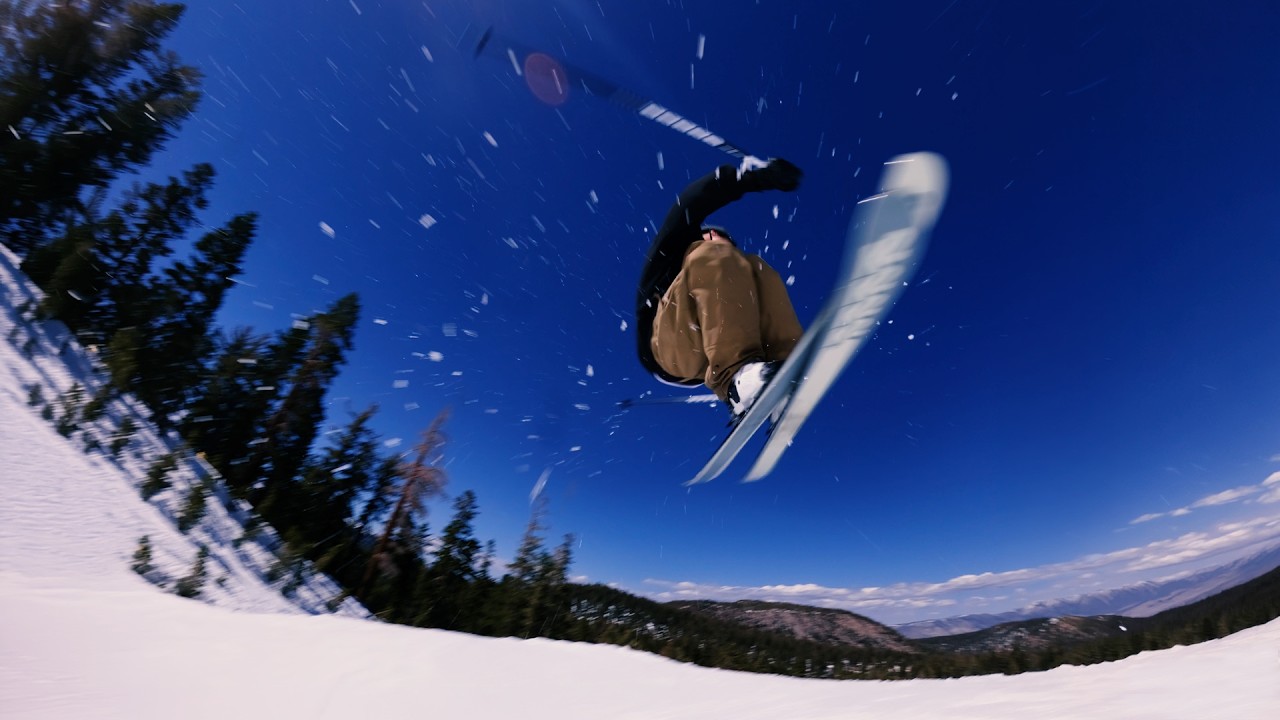
Buttermilk was loud under January lights, the street-style rails shining through cold Aspen air. Olivia Asselin pressed into the wall ride, stayed compact through the metal, then snapped a backside 450 out while the landing snow sprayed behind her skis.
X Games Aspen 2025 gave Asselin the clearest image of her current identity. She did not win only by going bigger than the field. She won by making the rail line carry the argument. The inaugural women’s ski street-style contest rewarded exactly the things Quebec park skiers often learn early: balance on steel, patience through a switch-up, commitment on a wall ride, and the ability to land with enough speed to make the next feature matter. One day later, she added slopestyle silver. The weekend turned her from a strong Canadian finalist into one of the most complete style skiers in women’s freeskiing.
Four X Games Medals Across Four Languages
Asselin’s X Games record has an unusual shape. She won Big Air bronze in her Aspen debut in 2022, Knuckle Huck gold in 2024, Street Style gold in 2025, and Slopestyle silver in 2025. X Games notes that she became one of only two women in X Games history to medal in four disciplines.
That range is why a 5/5 importance score is justified even without an Olympic medal. Big Air tests one-jump risk and landing control. Slopestyle tests full-course construction. Knuckle Huck rewards imagination off the rollover. Street Style asks for urban rail technique under a short, exposed format. Asselin has reached podium level in all four. The record is not only broad; it says something about how women’s freeskiing is expanding beyond the classic slopestyle-and-big-air calendar.
Mont Orignal Before The National Team
Asselin’s development started in Quebec, with family ski days at Mont Orignal, a small hill that Freestyle Canada places at the beginning of her story. She was introduced to skiing at four years old, then moved through the kinds of early freestyle habits that build edge feel before an athlete has a public résumé.
Freestyle Canada also records that she trained and competed for three years across moguls, aerials, and slopestyle. That multi-discipline start matters. Moguls teach absorption and quick lower-body reaction. Aerials teach body awareness and takeoff discipline. Slopestyle and big air later became the natural fit because the park gave her more room to experiment with tricks, rails, grabs, and jump lines.
The Quebec pathway also explains the rail identity. Asselin is not only a jump skier who later learned metal. Her strongest public results now include Knuckle Huck and Street Style, formats where technical balance, small-feature creativity, and body position can beat raw amplitude.
Red Deer Gold And The Junior Step
Team Canada records Asselin’s early international period beginning in the 2018-19 season, with Nor-Am Cup appearances and a start at the FIS Junior World Championships, where she finished sixth in big air. In 2019, she won big air gold at the Canada Winter Games in Red Deer.
Those details show a classic Canadian progression, but the timing was fast. Asselin was still a teenager when she moved from junior competitions into national-team visibility. She joined the Canadian team in 2019, then entered her first FIS World Cup events during the 2019-20 season. Team Canada notes that she landed top-10 results in four of her first five World Cup starts, with a seventh place in slopestyle at Calgary as the highlight.
That base made the later X Games medals less surprising. The scores arrived before the personality became obvious to a wider audience. Asselin had already proved she could handle formal FIS judging before the more creative formats gave her a bigger platform.
Beijing Finals At Seventeen
Asselin made her Olympic debut at Beijing 2022 and reached both finals. Team Canada lists her results as eighth in women’s freeski big air and eleventh in women’s freeski slopestyle. Big Air Shougang gave her the industrial stage: steel ramp, blue winter sky, cold urban air, and a format where every trick sits alone.
The big-air final also produced one of her most important technical moments. During Beijing, she became widely noted for bringing a double cork 1080 into the women’s event conversation, a trick that matched her later Copper Mountain World Cup podium. The Olympics did not give her a medal, but it placed her inside the final group in both judged park disciplines before she had turned eighteen.
Genting Snow Park then added the slopestyle test. Rails, jumps, speed checks, switch takeoffs, and landings had to hold across a full run. Finishing eleventh did not define her ceiling. It gave the first senior Olympic measurement of a skier who would soon become much more dangerous in formats built around style.
Copper Doubles, Tignes Rails, Stubai Silver
Asselin’s World Cup podiums show the formal structure behind the X Games profile. In December 2022 at Copper Mountain, she finished third in women’s freeski big air behind Megan Oldham and Mathilde Gremaud. SKI Magazine reported that her best tricks were a pair of double cork 1080s.
In March 2024 at Tignes, she placed third in women’s slopestyle behind Tess Ledeux and Mathilde Gremaud. The French venue matters because it mixes Alpine spring light, changing snow, and a course where rails and jumps can feel different from one run to the next. The result proved that Asselin’s scoring was not limited to one-jump formats.
The career-best World Cup result came at Stubai in November 2025. FIS official results list her second in slopestyle, behind Gremaud and ahead of Anni Kärävä, after weather forced the event to use qualification results. That podium arrived at a difficult moment in Canadian team selection, with depth across slopestyle and big air making every result valuable.
How Asselin Turns Rails Into Terrain
Asselin’s best skiing starts before the jump line. Her technical vocabulary includes 270s, continuing 270s, switch-ups, backside 450s, wall-ride exits, double cork 1080s, flatspin 540s, tail grabs, blunt grabs, mute grabs, switch takeoffs, and knuckle transitions. The list matters because it covers more than standard slopestyle scoring.
Compared with Megan Oldham, Asselin looks less power-driven in the jump line and more rail-shaped in the upper course. Compared with Tess Ledeux, she has less of a pure big-air championship identity, but more current presence in Knuckle Huck and Street Style. Compared with Mathilde Gremaud, she is less polished in classic FIS rhythm but more closely tied to the new X Games formats where rails and transition creativity can decide the event.
The strongest part of her skiing is not one trick. It is adaptability. A double cork 1080 can score at Copper. A flatspin off the knuckle can win at Aspen. A technical wall-ride line can take Street Style. That flexibility makes her valuable for video pages because different clips show different versions of the same skier.
Knuckle Huck Changed The Label
X Games Aspen 2024 hosted the first women’s ski Knuckle Huck, and Asselin won it. The event was a perfect fit. Knuckle Huck does not ask for maximum height in the classic big-air sense. It rewards timing off the rollover, butter mechanics, weird body shapes, transition use, and style that can be read quickly by judges and other skiers.
X Games described her winning approach through rail-influenced chops and a flatspin 540 drawn from the event’s earlier men’s history. That detail links her directly to Tom Wallisch’s Knuckle Huck language, but the more important point is format translation. Asselin did not need the biggest jump in the park. She needed a feature that allowed pressure, creativity, and clean body control to show at the same time.
One year later, Street Style extended the same argument. Women’s freeskiing had a new X Games rail format, and Asselin won the debut. Those two gold medals make her more than an athlete with one Aspen result. They place her near the center of a shift toward rail-led women’s freestyle visibility.
Armada, Full Tilt, Radical, And The Quebec Thread
Freestyle Canada lists Asselin’s sponsors as Armada, Full Tilt, Radical shop, and Canac. Armada’s athlete profile presents her as a Canadian skier pushing slopestyle and big air while helping define the next generation of park style. The wording fits the results, especially after the Knuckle Huck and Street Style wins.
The Armada connection is especially logical. Asselin’s skiing needs a ski that can handle rails, switch landings, jump compression, and knuckle tricks without feeling dead underfoot. Park-focused skis have to survive metal impact and still give enough pop for doubles. The boot and shop support matter as well, because a skier who spends time on rails and walls needs equipment that holds up through repeated small impacts, not only clean contest landings.
The Quebec sponsor thread should not be treated as decoration. Radical and Canac keep the profile tied to home culture, while Armada connects her to a global freestyle team where style and contest results can sit in the same athlete identity.
Active But Injured After Aspen
The current status needs careful wording. FIS lists Asselin as active, but also marks her as injured from January 9, 2026. That status followed the Aspen World Cup period, where FIS results placed her second in the slopestyle qualification behind Kirsty Muir before the season moved toward Olympic pressure.
Public Olympic pages still list her athlete profile for Milano Cortina 2026, and Canadian team announcements named her to the freestyle slopestyle and big-air group. The safer editorial line is not to frame her as fully healthy or as an athlete with completed 2026 Olympic results unless the page is updated with final confirmed starts. Her live profile is more precise: active Canadian freeskier, injured during the Olympic season, with an X Games and World Cup record already strong enough to stand alone.
For skipowd.tv, the watch path is clear: Red Deer 2019 for the early national marker, Beijing 2022 for the double Olympic final, Copper Mountain 2022 for the double-cork big-air podium, X Games Aspen 2022 for the first medal, Tignes 2024 for the slopestyle World Cup podium, Aspen 2024 for Knuckle Huck gold, Aspen 2025 for Street Style gold and slopestyle silver, and Stubai 2025 for the career-best World Cup slopestyle result.