Colby Stevenson
Park City, Utah, USA | Active: FIS status active | Discipline: freeski slopestyle, big air, knuckle huck, backcountry freestyle | Verified: 2022 Olympic big air silver, 2021 Worlds slopestyle silver, 5 X Games golds, 2020-21 FIS globes | Current: K2/Oakley/Monster athlete, 2026 Natural Selection Ski winner
Shougang Steel After The First Jump Failed
Big Air Shougang rose out of Beijing like a steel ramp dropped into an old industrial yard. Colby Stevenson missed his first landing, snow snapping off his tails, then climbed back for two jumps that had to score.
The pressure was exact. Birk Ruud had already moved toward gold, Henrik Harlaut was stacking Swedish style into the medal fight, and Stevenson needed two different tricks in the first Olympic men’s freeski big air final. He answered with 91.75 and 91.25, enough for 183.00 and silver behind Ruud’s 187.75. The result was his first Olympic medal, but the scene carried a deeper weight because six years earlier a car crash had put his skiing and basic recovery into question.
A Medal List Built Across Five Formats
Stevenson’s competitive record is not confined to one event. U.S. Ski & Snowboard lists him as a 2022 Olympic big air silver medalist, seventh in Olympic slopestyle at Beijing, 2021 World Championships slopestyle silver medalist, four-time World Cup winner, twelve-time World Cup podium finisher, 2020-21 slopestyle Crystal Globe winner, and 2020-21 overall Park & Pipe Crystal Globe winner.
X Games gives the broader map. His profile records five gold medals, three silvers, and one bronze. The golds span Aspen 2020 ski slopestyle, Aspen 2020 knuckle huck, Aspen 2023 slopestyle, Aspen 2024 knuckle huck, and Aspen 2025 street style. By 2026, he had also added silver medals in knuckle huck and slopestyle at Aspen.
That mix matters for skipowd.tv because it covers course skiing, one-jump creativity, street-style rails, knuckle mechanics, and natural-terrain freestyle. Stevenson is not only an Olympic medalist. He is one of the few modern skiers whose top results translate from FIS scoring sheets to X Games experimental formats.
Park City Before The Seiser Alm Win
Stevenson is listed by U.S. Ski & Snowboard as a Park City, Utah native, born October 3, 1997, with Park City Ski & Snowboard as his club. FIS records him under FIS Code 2529831 and keeps his status active. That Park City base gave him terrain, airbags, rails, and a national-team pathway before the Olympic spotlight arrived.
His first World Cup win came at Seiser Alm, Italy, in January 2017, only eight months after the 2016 crash that reshaped his life. Monster Energy’s profile points to that result as the proof that his recovery had moved beyond walking, rehab, and cautious return. It placed him directly back into the international slopestyle field.
Seiser Alm sits high in the Dolomites, with broad Alpine light, fast course sections, and jumps that demand clean speed management. For a skier returning from traumatic injury, winning there meant more than a number. It meant he could still process speed, timing, takeoff pressure, and landing impact at World Cup level.
The 2016 Crash Behind The Comeback
The car crash in May 2016 remains a central fact in Stevenson’s career. Axios reported that he sustained a traumatic brain injury, multiple broken bones, and spent three days in a medically induced coma. X Games and Monster both reference the injury as the rupture that came before his contest rise.
The danger with that story is turning it into a simple comeback slogan. The skiing itself is more useful. After the crash, Stevenson did not return only to survive a start list. He won Seiser Alm in 2017, then kept adding podiums until the 2020-21 season produced the slopestyle and overall Park & Pipe globes.
That arc changes how his Beijing silver reads. It was not a surprise result from a rider pulled into an Olympic narrative. It was the continuation of a competitive rebuild that had already passed through World Cup wins, technical progression, and the first signs of a wider all-terrain identity.
Aspen 2020 And The Rookie Double
X Games Aspen 2020 created Stevenson’s first major cultural spike. He entered as an X Games rookie and left with two gold medals, winning ski slopestyle and the inaugural ski knuckle huck. X Games later called him the first rookie in history to win two golds at one X Games and the first rookie to win ski slopestyle.
The Buttermilk course suited his range. Slopestyle required rails, jumps, switch takeoffs, grabs, and a full run that could hold from top to bottom. Knuckle huck asked for something different: butter mechanics, low-trajectory creativity, nose control, tail pressure, and the ability to turn the rollover of a jump into its own terrain park.
That weekend separated him from standard contest specialists. A skier can win slopestyle with run discipline. A skier can win knuckle huck with trick imagination. Winning both on debut showed that Stevenson could operate inside judging systems while still making the small, awkward, playful parts of a jump look like the main feature.
Aspen Worlds And The Crystal Globe Season
The 2021 FIS World Championships at Aspen/Snowmass placed Stevenson on a different kind of podium. FIS results list Andri Ragettli first with 90.65, Stevenson second with 89.55, and Alex Hall third with 86.01 in men’s ski slopestyle. That podium was heavy: Swiss precision, American creativity, and a course that rewarded full-run construction.
Two weeks later, his season kept building. U.S. Ski & Snowboard credits him with the 2020-21 slopestyle Crystal Globe and the 2020-21 overall Park & Pipe Crystal Globe. A globe is not an invitational highlight. It rewards consistency across a season, travel, course variation, weather delays, qualification rounds, and repeat execution.
The Aspen silver and the globe season are essential because they give his Olympic silver a foundation. Beijing did not arrive out of nowhere. By the time he stood on the Shougang ramp, Stevenson already had World Championships hardware, World Cup wins, X Games golds, and enough season-long consistency to lead FIS standings.
How Stevenson Turns Rails Into Takeoffs
Stevenson’s best skiing is built around conversion. He turns rails into launch pads, knuckles into transition zones, and backcountry windlips into contest-style features without making the terrain look forced. His vocabulary includes switch double corks, rodeo 540s, double cork 1080s, cork 720s, blunt grabs, nose butters, tail butters, 270s, pretzel exits, and late grab changes.
Compared with Alex Hall, Stevenson tends to look less puzzle-like and more flowing. Hall often interrupts rotation or bends the line around rails. Stevenson carries movement through the feature, using edge pressure and body position to make the next takeoff feel connected to the previous landing. Compared with Henrik Harlaut, he is less grab-theatrical, but more adaptable between course, knuckle, and natural terrain.
That adaptability explains the results. Slopestyle needs course memory. Big air needs two or three isolated tricks. Knuckle huck needs touch. Street style needs rail commitment. Natural Selection needs line choice, snow reading, and reaction. Stevenson has won or medaled across all of those because his technique does not depend on one perfect setup.
Corbet’s Switch Drop In 2023
In 2023, Stevenson won Kings & Queens of Corbet’s at Jackson Hole Mountain Resort. U.S. Ski & Snowboard states that he became the first skier to take off switch into Corbet’s Couloir. Reports from the event described his winning work around a switch five rodeo and a bigger second-run attempt that did not need to be perfect after the first line had set the mark.
Corbet’s is not a normal contest venue. The entry drops between rock walls, the snow can change from chalk to soft chop in one run, and the line continues into a custom-built lower section. It is part couloir, part freeride event, part freestyle show. A switch entry there is not a park trick copied into big-mountain clothing. It changes how the skier sees the lip.
That win widened Stevenson’s identity beyond FIS and X Games. It put him beside riders who can negotiate cliffs, variable snow, speed control, and crowd pressure without the comfort of a machine-cut in-run. For a Park City skier raised through slopestyle, Corbet’s became a public proof of mountain translation.
PROOF, PHANTOM, And The Backcountry Camera
Stevenson’s film work gives the clearest view of his current skiing. Freeskier presented PROOF in 2024 as his first solo project, filmed across Utah, Wyoming, and Alaska. The credits list Tom Yaps and Stevenson as producers, Jack Francis and Justin Mayers as directors, and Clayton Vila Post as editor, with support from Monster Energy, Oakley, K2 Skis, Ski-Doo, Freefly Systems, and Alpina Watches.
PROOF also carried a physical cost. Stevenson wrote that he had only six weeks of film time and that a February 14 crash left him with a sprained neck before he recovered after three weeks. That kind of detail matters because backcountry filming is not a softer version of competition. It compresses weather windows, avalanche planning, sled logistics, camera timing, and heavy tricks into short periods.
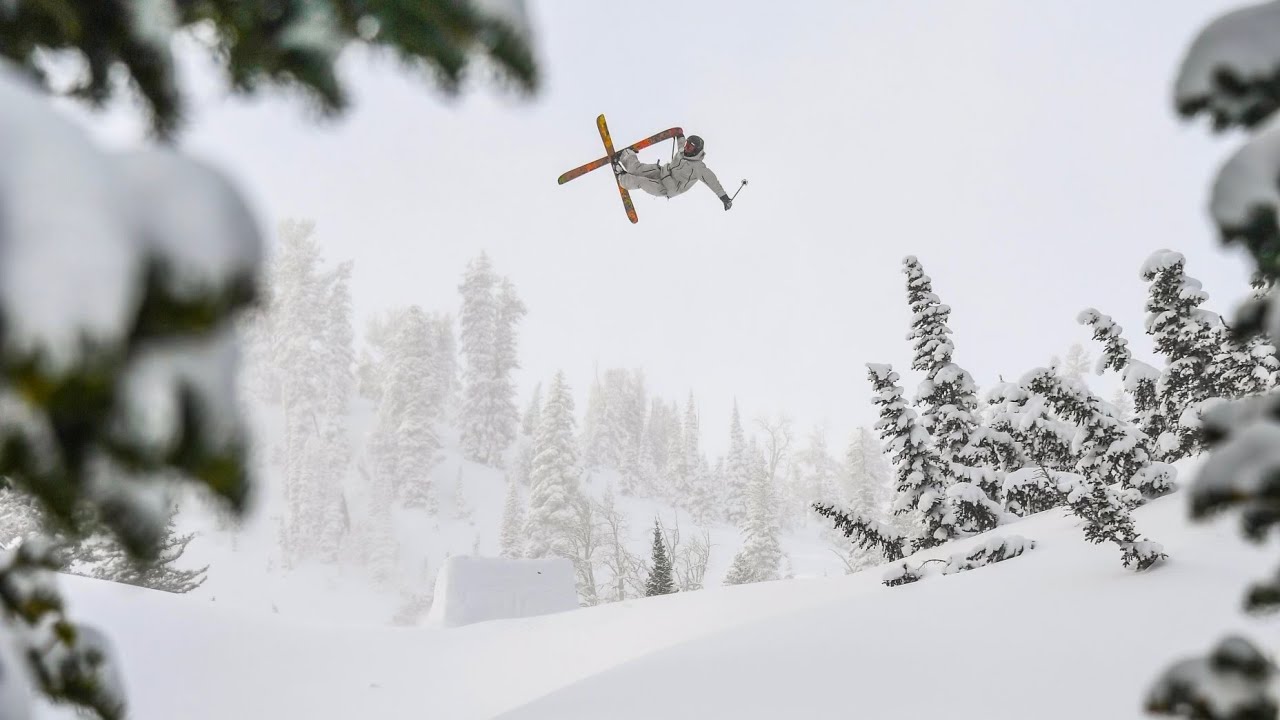
K2 followed with PHANTOM in December 2025. The brand described ten days of sled laps in Wyoming, weeks waiting out storms in Alaska, and two heli days with Stellar Heli. That geography shows where Stevenson’s skiing has moved: powder landings, wind-loaded takeoffs, patience for weather, and lines built for film rather than start gates.
K2 Reckoners And The Sponsor Thread
U.S. Ski & Snowboard lists Oakley, K2 Skis, Alpina Sports, and Monster Energy on Stevenson’s profile. K2’s PHANTOM page names the Reckoner 124 as his backcountry ski choice for that project. The equipment connection fits the career: a skier moving between slopestyle pop, rail durability, deep-snow landings, and filming days where float and stability matter.
K2 gives him a ski platform for the backcountry shift. Oakley carries the goggle and outerwear visibility seen across X Games and film images. Monster has supported the action-sports side of the story, including the 2020 X Games breakthrough and the recovery narrative after the 2016 injury. Alpina appears in the equipment sponsor list, connecting to the broader travel and mountain setup.
The sponsor picture is not just logo inventory. It shows why Stevenson can keep producing after Olympic qualification cycles change. Filming PROOF, PHANTOM, Corbet’s, and Natural Selection requires brand support for travel, production, weather delays, sled access, camera teams, and gear that can survive both hardpack rails and Alaska landings.
Alaska Natural Selection After The Olympic Cut
Stevenson’s current chapter is more complicated than a normal Olympic-cycle profile. FIS lists him as active, but the 2026 U.S. Olympic freeski roster named Mac Forehand, Alex Hall, Troy Podmilsak, and Konnor Ralph for men’s slopestyle and big air. Stevenson was not on that final list, despite remaining highly relevant in X Games and natural-terrain competition.
Three months later, the story moved to Alaska. Powder reported that Natural Selection Ski planned to use Spine Cell, a serious Alaskan face, before guides triggered an avalanche during an initial check and organizers changed venue for safety. The final setup became more rolling, more trick-based, and still shaped by fresh snow, speed management, and no warm-up run.
Stevenson won the men’s category. Freeskier listed the field as Craig Murray, Sam Kuch, Colby Stevenson, Tanner Hall, Karl Fostvedt, Finn Bilous, Markus Eder, and Jonah Williams. The Ski Journal recorded the podium as Stevenson first, Markus Eder second, and Finn Bilous third in Alaska’s Chugach Mountains. Powder noted that his highest-scoring men’s run opened with a rodeo 540 and used a double cork 1080 as the centerpiece.
For skipowd.tv, the viewing path should start with X Games Aspen 2020 for the rookie double, continue through Aspen Worlds 2021 and Beijing 2022, then shift to Corbet’s 2023, PROOF, PHANTOM, and Natural Selection Ski 2026. That order shows the full arc: contest recovery, Olympic medal, all-format X Games dominance, and a current backcountry freestyle identity built on the same edge control that once won slopestyle.