Legs of Steel
StudioAustria
Austrian ski film production studio | Founded from an Innsbruck based freeski crew around Bene Mayr, Paddy Graham, Tobi Reindl and Thomas Hlawitschka | Known for: The Pilot, Nothing Else Matters, Hurt So Good, Passenger, Same Difference, The Ultimate Run and Descendance | Focus: high consequence ski cinematography, athlete led storytelling, European freeski energy and action sports production built for global screens
Innsbruck housemates who turned a ski crew into a studio
Legs of Steel began with the kind of origin story that still matters in freeskiing: riders living together, training together and deciding they could tell their own story better than anyone else. The early core was built around Bene Mayr, Paddy Graham, Tobi Reindl and Thomas Hlawitschka, four European freeskiers who moved through contests, park sessions, glacier shoots and heavy backcountry days before turning their shared energy into a crew identity. Their base in Innsbruck was not accidental. The city sits close to Austrian glaciers, Tyrolean resorts and Alpine road-trip terrain, giving the group a natural launchpad for filming.
What made Legs of Steel different was the way it treated skiing like a band project. The founders were not only athletes waiting for a film company to call. They were performers, producers, characters and decision makers inside the same creative machine. That chemistry gave the early movies a loud, physical and very European rhythm. Over time, the group evolved from a skier crew into LOS and Sons GmbH, a professional production house and creative agency still located in Innsbruck. The official company now works across sports films, documentaries and advertising content, but its roots remain visible: snow, risk, friendship, style and a willingness to build features that look slightly unreasonable until someone actually hits them.
The Pilot, Nothing Else Matters and the early European explosion
The first Legs of Steel releases helped shift attention toward a European freeski voice at a time when much of the ski film conversation was still dominated by North American companies. The Pilot in 2010 introduced the crew’s mix of park scale, big terrain and rock charged editing. Nothing Else Matters followed in 2011 and pushed the image further, with major jump sessions, powder turns, urban energy and a cast that included names such as Bene Mayr, Paddy Graham, Tobi Reindl, Thomas Hlawitschka, Sven Kueenle, Fabio Studer, Antti Ollila, Oscar Scherlin, Lolo Favre and others.
Hurt So Good in 2012 sharpened the emotional tone. The title captured a truth every serious skier understands: the sport gives joy, injury, frustration, reward and obsession in the same season. The film moved through British Columbia, Innsbruck, St Anton am Arlberg, Kaunertal, Courmayeur, Davos, Crans Montana, Folgefonna and other locations, building a bridge between European freestyle culture and larger backcountry trips. The LOSt in 2013 kept the crew language intact, while Passenger in 2015 brought a larger travel and production scale. By the time Same Difference arrived in 2017, Legs of Steel was no longer simply a crew making ski movies. It had become one of the most recognizable production names in modern freeskiing.
From rock energy to cinematic precision in The Ultimate Run
Legs of Steel’s visual style changed without losing its original voltage. The early films were fast, loud and physical, built around big features, close friendships and the feeling of a crew pushing each other into increasingly ambitious terrain. Later projects added more precision. The camera work became more deliberate, the planning more complex and the stories more capable of crossing into mainstream sports media without losing skier credibility.
The Ultimate Run is the clearest example. Built around Markus Eder’s idea of linking every part of freeskiing into one imagined descent, the film combined big mountain skiing, park tricks, street rails, powder, glaciers and terrain transitions into a single cinematic flow. The project moved through the Zermatt region and South Tyrol, requiring years of planning, athlete control and camera coordination. It proved that Legs of Steel could keep the fantasy of skiing alive while operating at a level of production that mainstream award bodies could recognize. The result was not only a viral ski film, but a statement about what ski cinematography could become when athlete imagination and production engineering meet.
Bene Mayr, Paddy Graham, Markus Eder and Dennis Ranalter in the LOS frame
The Legs of Steel athlete story begins with the founders themselves. Bene Mayr brought power and contest visibility. Paddy Graham gave the crew a wild, creative and charismatic edge. Tobi Reindl and Thomas Hlawitschka helped anchor the original group with skiing, production and leadership. Around them, the films pulled in a wider European and international roster: Sven Kueenle, Fabio Studer, Lolo Favre, Oscar Scherlin, Antti Ollila, Russ Henshaw, Jossi Wells, Sam Smoothy, Fabian Lentsch, David Wise and many others appeared across different projects.
Later, Legs of Steel became a platform for deeper athlete led stories. Markus Eder’s The Ultimate Run showed the full range of a skier who could move from street and park to freeride and exposed big mountain terrain. Descendance, made with The North Face and focused on Dennis Ranalter, used skiing to explore identity, heritage and representation. That shift matters. LOS still understands spectacle, but it has also learned how to give athletes emotional space. The skier is not only a body moving through snow. The skier can be a narrator, a cultural bridge, a source of humour, a risk manager and a person carrying history into the mountains.
Kaunertal kickers, British Columbia storms and the Zermatt dream line
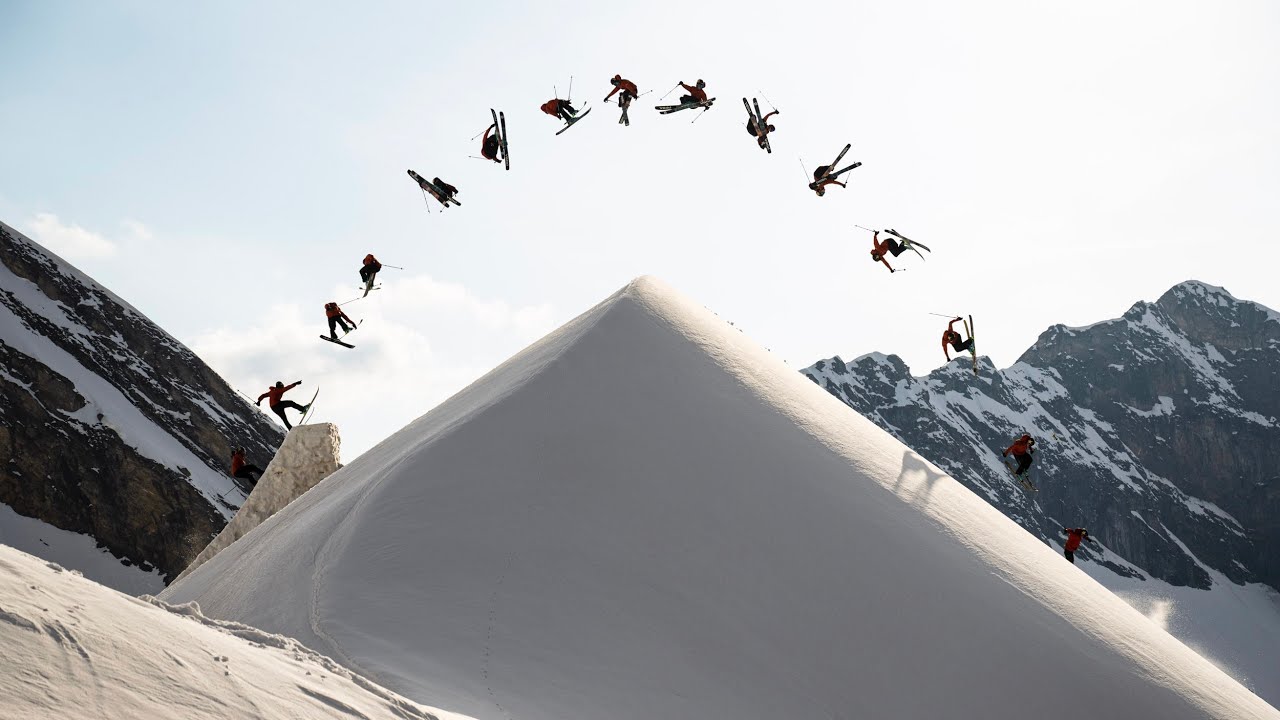
Geography has always been central to Legs of Steel. Innsbruck gave the crew access to Austrian glaciers, Tyrolean resorts and an Alpine network that could support park shoots, backcountry missions and quick weather moves. Kaunertal became one of the early signature places through massive jump builds and spring style sessions. St Anton am Arlberg, Davos, Klosters, Courmayeur, Crans Montana and other Alpine zones helped define the European texture of the early work.
The crew also looked outward. British Columbia locations such as Pemberton, Monashee Powder Snowcats and Eagle Pass Heliskiing gave Hurt So Good and other projects a deeper powder and big terrain vocabulary. Passenger widened the map further with travel heavy storytelling. The Ultimate Run brought Zermatt into the center of one of the most ambitious ski films ever made, using the high alpine environment as the start of Eder’s imagined descent. The geography works because Legs of Steel does not treat locations as postcards. Each place shapes the film’s rhythm: European glaciers for repetition, Canadian storm cycles for depth, Alpine passes for scale and urban features for creative interruption.
From skier made films to agency production and Emmy level craft
Legs of Steel’s business model has expanded far beyond the original crew movie format. The official company now describes itself as a film production house and creative agency with a portfolio spanning action sports films, sports documentaries and advertising content. That evolution is visible in projects such as The Ultimate Run, Descendance and Fabio Wibmer related productions, where outdoor action, athlete storytelling and brand partnership are combined with sophisticated camera work.
The awards list explains the level of recognition. Passenger won Powder Awards for Best Manmade Air, Best Powder and Best Cinematography in 2015. Ski Good Money Will Come earned an iF3 Jury Pick in 2014. Hurt So Good won iF3 awards for Best Cinematography, Best Single Shot and Best Editing in 2012. Nothing Else Matters won Powder Awards in 2012. The Ultimate Run won a Sports Emmy for Outstanding Camera Work in 2022, and Descendance won the same category in 2024. Descendance also earned iF3 Film of the Year, Best Story Telling and Best Cinematography recognition in 2023, plus a Banff Film Festival Special Jury Mention. That combination of ski specific awards and mainstream sports television recognition is rare, and it places LOS in a different tier from most independent ski crews.
Why Legs of Steel changed the standard for European ski films
The influence of Legs of Steel is partly technical and partly cultural. Technically, the crew pushed jump builds, camera movement, aerial perspective, edit pace and athlete coordination at a level that made European freeski films feel bigger. They showed that a skier led crew from Innsbruck could compete with established production houses in visual ambition. Their films helped normalize a mix of park, backcountry, street, travel and documentary tone within one project.
Culturally, the effect may be even stronger. Legs of Steel gave European freeskiing a voice that did not feel like a copy of American ski media. The humour, music, locations and crew chemistry felt rooted in the Alps, while the skiing was strong enough to travel globally. Later projects proved that the same foundation could mature. Instead of staying locked inside the early crew formula, LOS grew into a company capable of producing character driven films, commercial campaigns and award winning documentaries. That is why the studio remains relevant: it did not abandon the crew energy, but it learned how to scale it.
How to understand the Legs of Steel catalog today
The best way to enter the Legs of Steel catalog is by mood. Viewers who want the raw crew origin should start with The Pilot, Nothing Else Matters, Hurt So Good and The LOSt. Those films show the foundation: Innsbruck, park builds, powder missions, injury, friendship and a very physical form of European freeski culture. Viewers who want the broader travel and production phase should move toward Passenger and Same Difference, where the crew language opens into bigger locations and a wider ski story.
For modern cinematic precision, The Ultimate Run is essential. It is the project that most clearly shows how far LOS moved from a crew film identity into large scale action sports production. For a more human and socially layered story, Descendance is the key reference, using Dennis Ranalter’s skiing and personal history to make a film that reaches beyond trick selection. Together, the catalog works like a progression map. It begins with friends trying to make their mark, then becomes a studio capable of making ski films that win inside the ski world and outside it.
Why Legs of Steel still matters to freeski culture
Legs of Steel matters because it connects several eras of modern freeskiing. It belongs to the crew driven internet film moment of the early 2010s, the European park and backcountry boom, the Red Bull co production era and the current age of cinematic athlete documentaries. Few ski production names have moved through those phases without losing their original identity. LOS still carries the sense that skiers are at the center of the work, even when the production scale is now much larger than it was in the first housemate years.
For riders, the appeal is simple. Legs of Steel films make skiing feel huge without making it feel fake. The best projects understand that the sport is not only about perfect tricks and perfect weather. It is about pain, waiting, fear, friendship, travel, ambition and the strange desire to go back out after everything hurts. From Kaunertal jumps to Zermatt dream lines and Emmy winning documentaries, Legs of Steel has helped define what European freeski filmmaking can look like when the crew grows up, keeps the edge and learns to speak to the wider world.