Stoneham Mountain Resort
Québec
Canada
Quebec resort north of Quebec City | Known for: 43 trails, 345 m vertical, 19 evening trails, three snow parks, Olympic halfpipe, National Training Centre, and Air Nation freestyle events | Season: winter operations with extensive night skiing | Best for: park progression, halfpipe training, Quebec freestyle trips, and evening laps
Stoneham Valley Freestyle North Of Quebec City
Stoneham Mountain Resort sits at 600 Chemin du Hibou in Stoneham-et-Tewkesbury, a short drive north of Québec City and close enough to the capital region to work as both a training hill and a night-skiing mountain. The official mountain stats place the summit at 593 meters, the base at 248 meters, and the vertical drop at 345 meters. That is not western big-mountain scale, but Stoneham uses its compact relief with unusual freestyle density. The resort lists 43 day trails, 19 evening trails, 135.8 hectares of ski area, 430 centimeters of natural snowfall, and 86 percent snowmaking coverage. The result is a Quebec resort whose real importance comes from parks, halfpipe infrastructure, night access, and competition culture rather than raw vertical alone.
La Randonnée Length And A Forty Three Trail Map
The mountain’s trail system spreads across several sectors with enough difficulty variety to keep Stoneham from feeling like a park-only venue. Official trail details list 8 easy trails, 11 intermediate trails, 17 advanced trails, and 7 extreme trails, with La Randonnée marked as the longest trail at 3.2 kilometers. That split gives the hill a sharper profile than many suburban resorts. Beginners and families can stay on lower-angle terrain, while advanced riders can use steeper pitches, moguls, and faster groomers to build edge pressure before moving into the snow parks. The 10,550 skiers per hour lift capacity helps the mountain handle its local and regional traffic, especially on nights when Quebec City skiers arrive after school or work.
Nineteen Evening Trails And The Nine Thirty Rhythm
Night skiing is central to Stoneham’s identity. The official 2025 26 schedule lists evening skiing from the start of the season to March 14, running every night from 4 pm to 9:30 pm, with spring hours shifting later in March and early April. The mountain stats identify 19 evening trails, which makes the after-dark program more than a small beginner add-on. For freeskiers, that schedule is crucial. Park progression depends on repetition, and Stoneham lets riders put in laps when most mountains are closed. The surface changes under lights: takeoffs can firm up, pipe walls can feel faster, and groomed approaches demand sharper edge control. The night program gives the resort a rhythm closer to a training center than a simple weekend hill.
Olympic Halfpipe Built Into The Mountain
The halfpipe is Stoneham’s strongest single freestyle asset. The official snow parks page describes it as the province’s only Olympic halfpipe, built on permanent infrastructure in 2008 after ground work that lets the season start earlier than a temporary build. Technical details list a 19 meter width, 6.7 meter height, and 16.5 degree inclination, while the mountain stats describe it as a 22 foot superpipe open 7 days and 7 nights. The training camps page reinforces the point by listing Stoneham as an official National Training Centre with an Olympic size halfpipe equipped with lights. For skiers and snowboarders, that combination changes the mountain’s status. A lit, maintained pipe gives athletes a repeatable tool for amplitude, transition control, alley oop timing, spins, and competition preparation.
Parc XL 418 And The Big Air Line
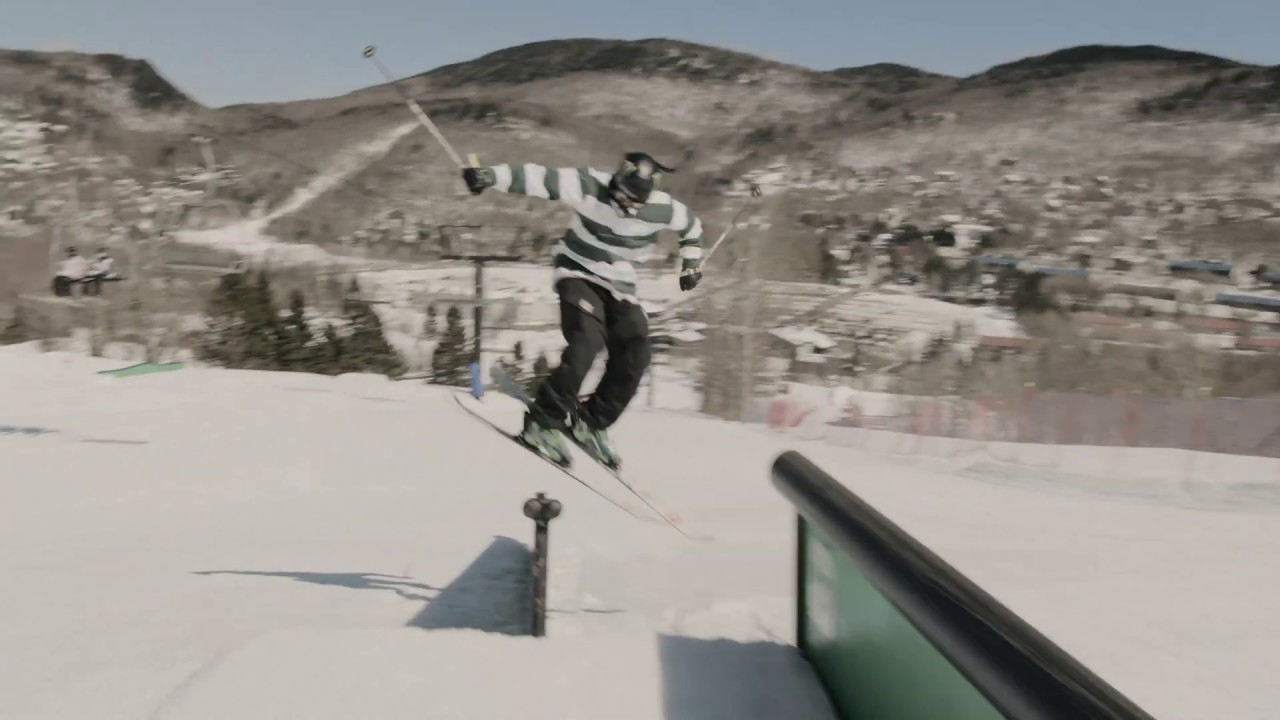
Parc XL 418 is the strongest park lane at Stoneham. The resort describes it as a controlled-access XL park with jumps of various step-up formats, stairs modules, rails, a wall ride, and other advanced features. The Big Air section above it includes two large jumps, each with two takeoff areas, with jump height varying between 30 and 40 feet depending on the season. That is real freestyle terrain, not a token rail garden. Access requires an XL park card, and helmets are mandatory in all Stoneham snow parks. Those controls make sense. A park with large jumps, stepped takeoffs, and higher-consequence rails needs a clear skill filter, especially at a resort with heavy night traffic and a wide range of public users.
Slope Style On Nine And The Intro Park Ladder
Stoneham’s park system works because it has a progression ladder beneath the XL features. The intermediate Slope Style park on trail number 9 is designed for riders who are comfortable beyond the beginner park but not ready for Parc XL 418. It includes medium and large rails, boxes, and jumps placed for continuous downhill flow. From there, riders can connect toward La Traverse or Shortcut and finish with easier features in the Intro Park. The Intro Park sits on slope 4C and gives newer skiers rails, boxes, and jumps in a safer learning environment. That structure matters for freeski development. A young rider can start with low-speed balance, move into medium features, then step into XL terrain only when approach speed and landing awareness are ready.
Air Nation And The North American Freestyle Circuit
Stoneham’s competition relevance remains active. Canada Snowboard lists Air Nation Stoneham as a 2026 Air Nation Freestyle Tour stop, serving as Nationals in Slopestyle and Big Air, with events scheduled from February 2 to 5, 2026. The resort’s own Air Nation event page also presents Stoneham as a gathering point for top North American freestyle snowboard athletes in Slopestyle and Big Air. That competition structure reinforces the mountain’s park reputation, even when the event focus is snowboard rather than freeski. Stoneham has also been tied historically to Snowboard Jamboree and FIS World Cup culture in the Quebec City region. For skipowd.tv, the important point is the infrastructure: the same parks, jumps, pipe, lights, and training lanes shape the terrain language that freeskiers use.
Training Camps With Lights And Race Lanes
The official training camp program adds another layer to Stoneham’s profile. The resort offers visiting groups access to training infrastructure, including exclusive use of training trails, lift tickets, ski-in ski-out lodging, meals, meeting venues, and disciplines such as slalom, giant slalom, and Olympic halfpipe. That combination makes the mountain useful for organized athletes, not just recreational park riders. A team can train gates during the day, use the pipe under lights, and stay at the base without moving between venues. This is why Stoneham deserves a higher importance score than many regional resorts of similar vertical. The mountain’s physical size is moderate, but its operating model supports structured freestyle and race development.
Snowmaking Coverage And Quebec Winter Timing
Stoneham receives a listed 430 centimeters of natural snowfall, but the 86 percent snowmaking coverage is just as important. Quebec winters can provide cold, consistent surfaces, but park and pipe terrain need more than natural snow. They need stable bases, repeated grooming, wall maintenance, jump rebuilding, and enough cold nights to keep transitions clean. The halfpipe page states that the bottom and table are groomed daily, while the walls are maintained roughly twice a week with a Zaugg machine. That detail matters because pipe quality depends on geometry. A soft wall, rutted flat bottom, or rough deck can change the whole session. Stoneham’s strongest days are often built from cold snowmaking windows, natural refreshes, and careful park crew maintenance rather than storm totals alone.
Quebec City Access And Resort Logistics
Stoneham’s proximity to Quebec City gives it a practical advantage. Riders can fly into the region, stay near the city or at the ski-in ski-out lodging, and still reach a mountain with night skiing, parks, pipe, training lanes, and family terrain. That makes it especially useful for mixed trips. One skier can spend the evening in the Intro Park, another can train in the pipe, a family can ski mellow terrain, and an advanced rider can work steeper trails before returning to the same base. The resort also sits inside a broader Quebec winter ecosystem that includes urban street skiing, nearby resorts, winter festivals, and a local culture comfortable with cold, dark, snowy evenings. Stoneham benefits directly from that environment.
Helmet Rules And Park Discipline Under Lights
Stoneham’s snow park rules are not decorative. Helmets are mandatory in all parks, and the XL park requires a specific access card. Riders should treat that as a sign of terrain seriousness, not as an inconvenience. The Intro Park is for learning. The Slope Style park requires better speed judgment. Parc XL 418 and Big Air features demand inspection, controlled takeoffs, and full commitment to landing zones. Night sessions add another layer because shadows can flatten transitions and colder temperatures can firm up lips or pipe walls. The best etiquette is simple: inspect before dropping, start smaller than planned, wait turns, clear landings, and respect closures when crews are grooming, reshaping, or preparing competition features.
Why Stoneham Carries Quebec Freestyle Weight
Stoneham Mountain Resort earns a 4 level profile because its importance is bigger than its vertical. The resort has 43 trails, 19 evening trails, 345 meters of vertical, 135.8 hectares of ski area, 430 centimeters of listed natural snowfall, 86 percent snowmaking, three park zones, a permanent Olympic halfpipe, Big Air features, a National Training Centre role, night skiing to 9:30 pm during the main season, and Air Nation freestyle competition activity. It is not a freeride destination built around cliffs, couloirs, or alpine bowls. Its value is more specific. Stoneham is a Quebec freestyle engine where park riders, pipe athletes, snowboard competitors, race teams, and night skiers all use the same compact mountain to repeat technical laps until the details start to matter.