Marker Bindings
Germany
German ski binding specialist | Founded 1952 in Garmisch Partenkirchen by Hannes Marker | Known for: Duplex safety binding heritage, Royal Family freeride models, Duke PT hybrid touring, Kingpin, Alpinist and Comp race bindings | Focus: reliable retention, predictable release and direct power transmission for resort skiers, racers, freeriders and touring athletes across modern boot standards.
1952 Garmisch origins and the safety binding idea
Marker Bindings is one of the defining equipment names in skiing because it sits at the exact point where power, safety and trust meet. The brand was founded in 1952 by Hannes Marker in Garmisch Partenkirchen, Germany, after the presentation of the Marker Duplex, an early safety binding concept built around a releasing toe. In a sport where falls are unavoidable but injuries can be reduced, that idea shaped the company from the beginning.
Marker is not a ski manufacturer in the classic sense. Its role is more specific and arguably more technical: it builds the connection between boot and ski. A binding has to hold when a skier loads the edge, lands a jump, drives through chopped snow or accelerates on a race course. It also has to release when the forces move beyond a safe range. That balance explains why Marker has remained visible from recreational rental systems to World Cup race setups, freeride chargers and lightweight touring builds.
The brand’s early decades were defined by alpine safety, German engineering and competition credibility. Ossi Reichert won Olympic gold on Marker in 1956, and the company later became associated with racers including Franz Klammer, Phil Mahre and Ingemar Stenmark. Those names matter because Marker’s reputation was built not only in shops, but under pressure, at speed and in conditions where binding behavior could decide a run.
Duplex Rotamat Royal Family and the freeride shift
Marker’s product story starts with safety binding development, but its modern freeski identity changed dramatically in the 2000s. In 2007, the Duke arrived as a major freeride binding and opened a new era for the brand. Wider skis were becoming normal. Freeride athletes wanted stronger retention, wider mounting patterns and downhill performance that matched bigger terrain. Marker responded with the Duke and then built the Royal Family around models such as Baron, Jester, Griffon and Squire.
The Royal Family gave Marker a clear language for freeride and freestyle. Jester became the high power option for aggressive skiers, big mountain lines and park riders who needed stronger construction. Griffon became the everyday performance binding for advanced resort and freeride skiers. Squire gave lighter or progressing skiers a more accessible path into the same visual family. Duke PT later pushed the idea further by combining an alpine style downhill toe with pin technology for uphill travel.
Outside the Royal Family, Marker covers race and touring with dedicated collections. The Comp series serves alpine racing and high speed precision. Kingpin gave the brand a stronger place in PinTech touring. Alpinist focuses on lighter alpine touring setups. Cruise targets a more accessible touring category. The result is a binding range that spans piste, park, powder, skin tracks, race courses and junior progression without pretending that one binding can serve every skier equally.
Retention release and why bindings feel different
Skiers often talk about skis first, but bindings have their own feel. Marker’s strongest products are built around retention, elasticity, boot compatibility and power transfer. A binding that releases too easily can destroy confidence. A binding that does not release when it should can create serious consequences. Between those extremes is the difficult engineering space where Marker has built its reputation.
For freeride skiers, elasticity and heel strength matter because snow is inconsistent. A skier might land sideways in soft chop, pressure a ski across wind affected crust or absorb compression at high speed. For park skiers, retention has to manage repeated impacts, switch landings and edge catches. For race skiers, the binding has to center the boot precisely and transmit force immediately to the ski. For touring skiers, the equation adds uphill efficiency, walking comfort and transition simplicity.
Marker’s current technology language reflects these different needs. MultiNorm construction allows compatible bindings to work with several boot sole standards. GripWalk compatibility addresses the reality that many modern ski boots are built for easier walking as well as skiing. X Cell technology targets race power transmission. Duke PT uses a Ride and Hike toe and a Lock and Walk unit to shift between ascent and descent. These systems are not decorative features. They define whether a binding belongs on a race plate, a resort freeride ski, a hybrid sidecountry setup or a lightweight touring build.
World Cup race roots and freeski credibility
Marker’s athlete credibility comes from two worlds that do not always overlap: alpine racing and freeskiing. The racing side is part of the brand’s foundation. Marker’s own history highlights major World Cup success in the 1980s and the long use of its bindings by elite racers. The modern Comp series continues that connection with models built for precision, centering and direct power transmission at speed.
The freeski side grew through the Royal Family and later Duke PT. When skiing moved toward wider skis, heavier landings and more crossover between resort laps and hike access terrain, Marker became part of the setup conversation for aggressive riders. The Jester, Griffon and Duke names became familiar in ski shops because they sat under all mountain skis, park skis, freeride skis and big mountain platforms. They were visible in the same era that powder skis got wider, park skiing got more technical and sidecountry access became more common.
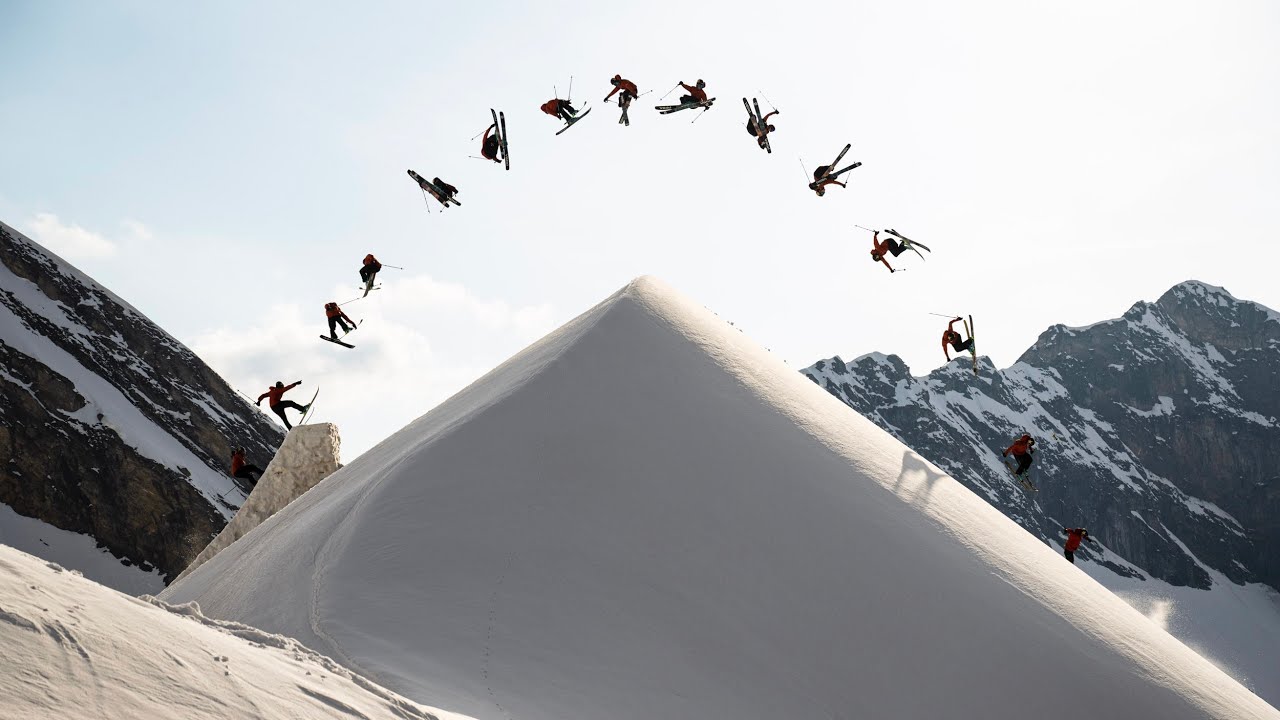
Marker’s official team structure spans race, freestyle, freeride, touring and all mountain skiing. That breadth is important for skipowd.tv because the brand can appear across many types of video: a race start, a halfpipe run, a backcountry freeride line, a resort carving clip or a touring descent. Unlike a ski brand with a specific shape identity, Marker’s identity follows the skier’s setup. It is the hardware beneath the boot, often unseen in the edit, but central to how the skier can pressure the ski.
Garmisch engineering with a global mountain footprint
Marker’s origin story belongs to Bavaria, but its ski presence is global. Garmisch Partenkirchen gives the brand a natural alpine identity: steep training terrain, race culture, European engineering and a close relationship with the technical side of skiing. The later factory development in Eschenlohe reinforced that industrial foundation and helped Marker scale from a specialist safety binding maker into a global equipment name.
From that base, Marker spread across the main environments where modern skiing happens. In Europe, the brand fits naturally into alpine race programs, freeride terrain and touring culture. In North America, Griffon, Jester and Duke PT are common names in resort and freeride shops. In Japan, British Columbia and the Alps, Marker bindings appear on skis built for storm days, tree skiing, big terrain and travel quivers. On race hills, the Comp line connects the brand to hard snow precision. On touring routes, Kingpin, Alpinist and Cruise connect it to uphill movement and descent focused equipment choices.
This geographic range matters because bindings are highly context dependent. A skier choosing a binding for icy groomers does not need the same priorities as a skier building a powder touring setup. Marker’s value is that it has remained present across these contexts rather than being locked into one terrain category.
MultiNorm GripWalk X Cell and the hardware underneath
Marker’s construction story is less visible than a ski topsheet, but it is central to the brand. On the race side, X Cell technology and magnesium components are used to create precise centering, damping and direct transmission. The Comp line is built for skiers who need a binding to stay quiet and exact when the edge angle increases and speed builds. Small movements matter in that environment, which is why race bindings are treated as precision hardware rather than generic accessories.
On the freeride side, Jester and Griffon models focus on power width, toe and heel strength, boot compatibility and reliable stepping behavior with modern boot soles. On Duke PT models, the construction problem is more complex: the binding must climb like a pin system and then ski with the confidence of a stronger alpine inspired platform. The removable or movable toe concept, Auto Quad Lock logic, Lock and Walk unit and Inter Pivot heel design all serve that hybrid goal.
Marker also works in sustainability through the LIFE reWINTER project with partners including Dalbello and Völkl. The project focuses on industrial scale circularity for ski equipment, including end of life skis, boots and bindings. That does not make every Marker product sustainable by default, but it does show that the brand is involved in the larger equipment industry problem of recycling complex multi material winter sports gear.
Choosing Griffon Jester Duke PT Kingpin Alpinist or Comp
Choosing Marker starts with the skier’s terrain and boot type. For a strong resort skier who wants one binding for all mountain and freeride use, Griffon is usually the central reference point. For heavier, more aggressive or higher impact skiing, Jester moves toward stronger freeride performance. For lighter skiers, younger skiers or those building a more accessible setup, Squire can make more sense than overpowering the ski with too much binding.
For skiers who want to climb and still prioritize downhill confidence, Duke PT is the hybrid option. It is not a minimalist touring binding. It is built for freeriders who accept extra complexity and weight because they want alpine style downhill behavior. Kingpin sits in the more dedicated touring world with PinTech performance and stronger descent focus than the lightest race style touring bindings. Alpinist is the better direction for skiers who care more about low weight, long climbs and high alpine efficiency.
Race skiers should look toward the Comp series rather than freeride models. Comp bindings are built for precision, plate systems, edge pressure and course speed. Junior and progressing skiers should also stay within appropriate release ranges instead of choosing a binding because it looks like the pro model. Bindings are safety equipment. The right Marker is the one that matches boot standard, skier weight, release value range, ski width, terrain and mounting purpose.
Why skiers still trust the Marker name underfoot
Marker matters because it has influenced how skiers think about confidence. A ski binding is easy to ignore when it works well and impossible to ignore when it does not. The brand’s long history, from the Duplex to modern freeride and touring systems, is built around that quiet responsibility. It has to hold. It has to release. It has to transfer power. It has to match the boot and ski without becoming the weak point in the setup.
For riders, the appeal is practical. A Griffon or Jester mounted on a daily driver gives an all mountain skier a familiar feel. A Duke PT gives a freerider a route into hike accessed terrain without abandoning downhill support. A Kingpin or Alpinist gives touring skiers a Marker option in the pin binding world. A Comp binding gives racers the precise connection they need when speed and pressure are high. Each model family answers a different version of the same question: how much connection does the skier need, and when should that connection let go?
On skipowd.tv, Marker belongs as one of the equipment names behind the action. It is not always the most visible sponsor in a ski video, but it is one of the most important pieces in the setup. Whether the skier is carving injected race snow, hitting a park jump, dropping into a freeride line or touring toward a remote descent, Marker represents the technical link between intention and ski response.