Jackson Hole
Rocky Mountains
United States
Wyoming big mountain resort in Teton Village | Known for: Big Red Aerial Tram, Rendezvous Mountain, Corbet's Couloir, 4139 ft vertical, 2500 in bounds acres, 458 inches of annual snow, Burton Stash parks, Kings and Queens of Corbet's, Teton Gravity Research roots, and backcountry gate access | Season: late November to mid April depending on conditions | Best for: expert freeriders, tram lap crews, natural-feature skiers, park riders with big-mountain ambitions, and film-minded athletes drawn to the Tetons
Rendezvous Mountain And The 4139 Foot Tram Drop
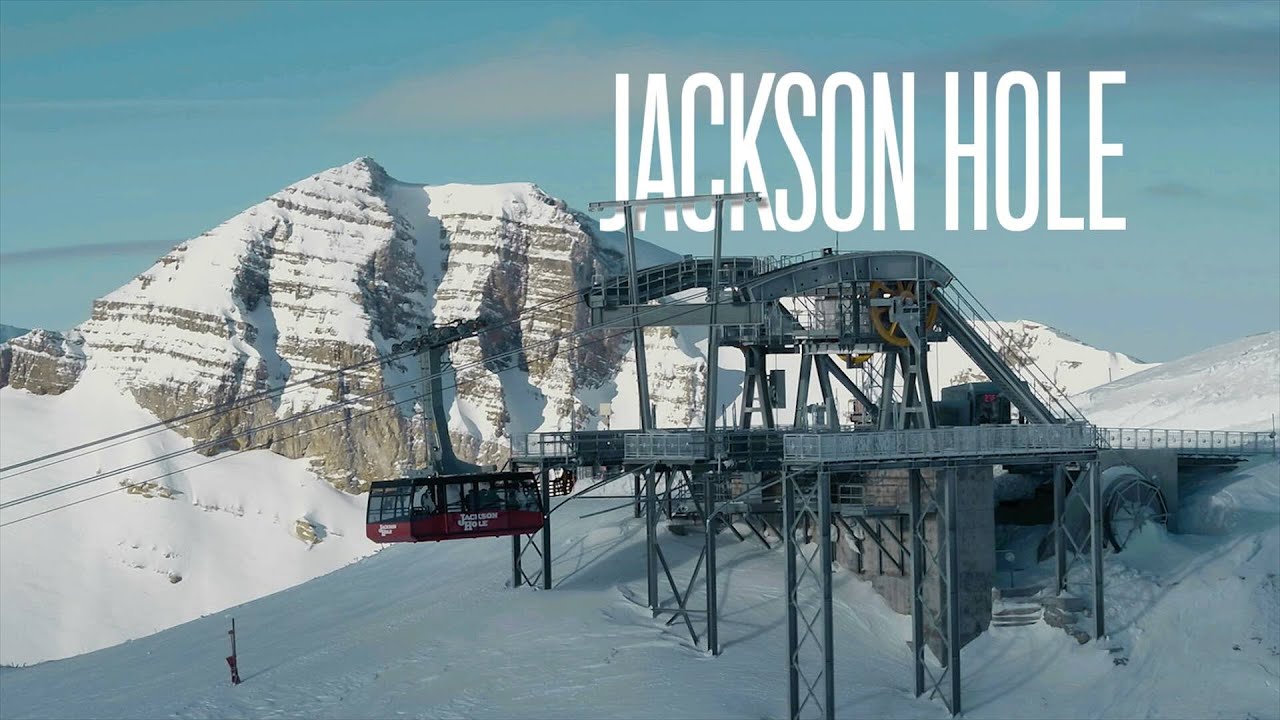
The Aerial Tram climbs 4139 vertical feet from Teton Village to the high terrain of Rendezvous Mountain in about nine minutes, carrying 100 passengers in the red cabin locals simply call Big Red. That single lift explains much of Jackson Hole's reputation. It links a 6311 foot base to a 10450 foot summit and places skiers above steep bowls, cliff bands, chutes, traverses, and long fall-line exits before the day has really begun.
Jackson Hole Mountain Resort lists 2500 acres of in-bounds terrain across Après Vous and Rendezvous, 131 named trails, 13 lifts, and an expert-heavy split of 50 percent expert, 40 percent intermediate, and 10 percent beginner. Those numbers make the mountain useful for many ability levels, but the freeski identity is clear. Jackson Hole is built around commitment: tram laps, steep faces, technical snow, and a local culture that respects terrain before style.
Corbet's Couloir And The Headwall Standard
Corbet's Couloir sits near the tram summit and gives Jackson Hole its most recognizable drop. The resort traces the name to Barry Corbet, who saw the narrow upside-down funnel in 1960 and predicted that someone would ski it. The line became famous because it is simple to understand and difficult to fake: a high entry, rock walls, a consequential landing, and an immediate need to ski cleanly out of the choke.
Corbet's is not the only serious terrain here. The Headwall, Casper Bowl, Tower Three, Expert Chutes, Alta Chutes, Rendezvous Bowl, and the Hobacks all contribute to the mountain's pressure. That is why Jackson Hole belongs beside Snowbird and Big Sky in the North American big-mountain resort conversation. The comparison is not about matching every feature. It is about lift-served terrain where speed, exposure, wind, snow texture, and exit discipline matter on ordinary resort days.
Hobacks Trees And 458 Inches Of Teton Snow
Jackson Hole averages 458 inches of snow each year, and that snow does not land on a gentle canvas. Storms fill trees, benches, gullies, and alpine faces that can ski completely differently by aspect. The Hobacks offer long, sustained powder descents when coverage is strong, while lower trees can stay useful when upper visibility disappears. Après Vous and Teton Lift zones give softer openings for crews that need to read conditions before stepping into bigger terrain.
The snowpack can change quickly. Midwinter often brings cold powder and chalk, but wind can strip ridges, load pockets, and make the upper mountain feel more technical than the forecast suggests. March adds longer light and a more forgiving surface cycle, but sun and temperature changes can move fast across open faces. The strongest Jackson Hole skiers do not only chase the tram. They read where the mountain is working that hour, then shift from upper alpine to trees, from trees to park features, or from in-bounds lines to a safer low-angle plan.
Bronco Park Stashley Ridge And Natural Feature Freestyle
Jackson Hole is not a park-first resort, but the freestyle infrastructure is more deliberate than outsiders sometimes assume. The resort lists two classic terrain parks and four Burton Stash parks. Antelope Flats gives learning terrain with small jumps and rails, while Bronco Park near Teewinot carries roughly two dozen intermediate features that change through the season, including jumps, rails, boxes, and step-ups.
The Burton Stash network gives the mountain a more Jackson-specific freestyle identity. Little Stash, Deer Flat Stash, Campground Stash, and Stashley Ridge use local wood, natural terrain, wall rides, banked turns, log features, and creative objects rather than only metal rails and shaped jumps. Stashley Ridge is the most difficult of the group, with larger features and a local test-piece feeling. That format fits the resort. Park skiing here works best when it feeds back into natural terrain: clean takeoffs, quick absorption, side-hit timing, and the ability to turn a storm-day traverse into a feature line.
Kings And Queens From The Corbet's Lip
The Kings and Queens of Corbet's contest turns the resort's most famous entrance into a judged creative arena. The 2026 edition was scheduled for February 13, with the resort describing an athlete roster that includes Olympians, X Games winners, and Freeride World Tour champions. The event has become one of the clearest modern examples of freeskiing and snowboarding using the same natural feature as a shared progression stage.
Tristen Lilly is the current name that makes the event feel especially relevant for skipowd.tv. His Kings and Queens profile notes his 2026 King of Corbet's title and his 2025 third place in ski, tying a new-school trick vocabulary to one of the sport's oldest visual tests. That is the value of the contest. It does not ask athletes to ski the couloir in the old straight-line language only. It asks them to reinterpret the entry with spins, flips, grabs, transfers, and runouts while still respecting a very real landing zone.
TGR Tetons And The Film Lineage
Jackson Hole's role in freeski media is inseparable from Teton Gravity Research. Founded in Jackson Hole in 1995, TGR helped turn the Tetons into a recurring film language: tram mornings, storm windows, bootpacks, backcountry gates, long lenses, helicopter shots, and skiers committing to lines where the whole descent matters. The studio's presence gives the resort a cultural footprint that goes beyond lift stats.
Kai Jones is one of the clearest modern examples of that lineage. Raised in the Tetons and shaped by TGR projects, his skiing connects junior freeride, in-bounds Jackson terrain, adjacent backcountry, and a film-first understanding of line pacing. Maggie Voisin adds another angle: a Montana-born contest star who moved into TGR and Good Company film work, proving that Jackson-linked media can absorb slopestyle precision as well as big-mountain tradition. The Tetons are not only a backdrop here. They are a style filter.
Grand Targhee Powder And The Teton Wider Map
Jackson Hole is the headline resort on the west side of the Jackson valley, but the wider Teton map matters. Grand Targhee sits over Teton Pass on the Idaho side, with a deeper powder-resort personality and a different storm-day rhythm. Many film crews and visiting skiers understand the region by moving between the two: Jackson Hole for tram terrain and steep in-bounds consequence, Grand Targhee for soft-snow volume and broader powder flow when the west side is favored.
That regional pairing helps explain why Jackson Hole has produced so much durable ski footage. The resort gives strong skiers a daily classroom, while Teton Pass, Grand Targhee, Grand Teton National Park, and the surrounding backcountry create a much larger terrain conversation. The boundary between resort skiing and backcountry skiing can feel visually close, but it should never be treated casually. The difference between an in-bounds clip and a backcountry objective is equipment, forecast reading, rescue planning, route knowledge, and the decision to turn around.
Teton Village Airport Access And Tram Timing
Teton Village sits 12 miles northwest of the town of Jackson and about 36 minutes from Jackson Hole Airport under normal conditions. That makes the resort unusually accessible for a mountain with this level of terrain. A skier can fly into the valley, transfer to lodging, and be standing below the tram without the long interstate approach required by many Rocky Mountain destinations.
The daily flow is still strategic. Tram access is powerful, but chasing the first cabin is not always the smartest move. On storm mornings, patrol work and visibility can make mid-mountain trees, Casper, Teton, or Après Vous more productive while the upper mountain is assessed. For park and Stash days, Teewinot, Sweetwater, Casper, and Teton lifts create better repetition than forcing every lap through the summit. Town-based skiers can use transit and shuttles, while Teton Village lodging gives the cleanest lap count on heavy snow weeks.
Backcountry Gates Patrol Culture And Avalanche Forecasts
Jackson Hole's open backcountry gate system accesses more than 3000 acres beyond the resort boundary, but the word access should not be mistaken for permission to improvise. The resort's safety guidance points skiers toward avalanche education, patrol communication, and the regional forecast. The Bridger Teton Avalanche Center is the key public reference for current avalanche conditions in the zone.
Inside the boundary, ropes, signs, closures, and staged openings are part of the mountain's operating language. Outside the boundary, skiers need beacon, shovel, probe, partners, navigation, first-aid capacity, conservative terrain choices, and the humility to skip a line that looks good on camera. The same discipline applies in the parks at smaller scale. Call your drop, clear landings, respect shapers, and do not cross active lanes. Jackson Hole's best culture is not reckless. It is skilled, patient, and very aware of consequence.
The Jackson Hole Use Case For Freeskiers
Jackson Hole earns its place because it connects almost every major freeski language in one valley. There is tram-accessed big mountain terrain, a famous couloir contest, long powder descents, tree skiing, Stash features, classic parks, a film-studio lineage, current athlete relevance, and a backcountry gate system that demands real education. Few resorts make a skier confront so many versions of progression in the same week.
Mid-January through February is the cleanest window for cold snow and repeat storm cycles. March often gives the best mix of coverage, light, park speed, and alpine visibility. A smart trip uses the mountain in layers: learn the lower and mid-mountain flow, build confidence in the Stash zones and Bronco Park, watch tram and patrol status, step into Rendezvous terrain only when the group is ready, and keep backcountry gates as a separate objective rather than an afterthought. Jackson Hole's concrete value is simple: 4139 vertical feet, 2500 in-bounds acres, 458 inches of annual snow, a 100-passenger tram, Corbet's Couloir, Kings and Queens, Teton film history, and a terrain culture that still asks strong skiers to prove their judgment before their style.