Jérémie Paquette
Whistler, British Columbia / Mont Orford, Quebec, Canada | Active: FWT Challenger and Qualifier profile listed | Discipline: freeride, backcountry freestyle, cliff drops, Whistler all-mountain skiing | Verified: 2024 Kicking Horse IFSA Qualifier 2nd place, FWT Challenger profile, Auclair athlete profile, ASCENT documentary | Current: Whistler-based freeride skier known as Je Paq / Paqman
Whistler When The Backside Went Quiet
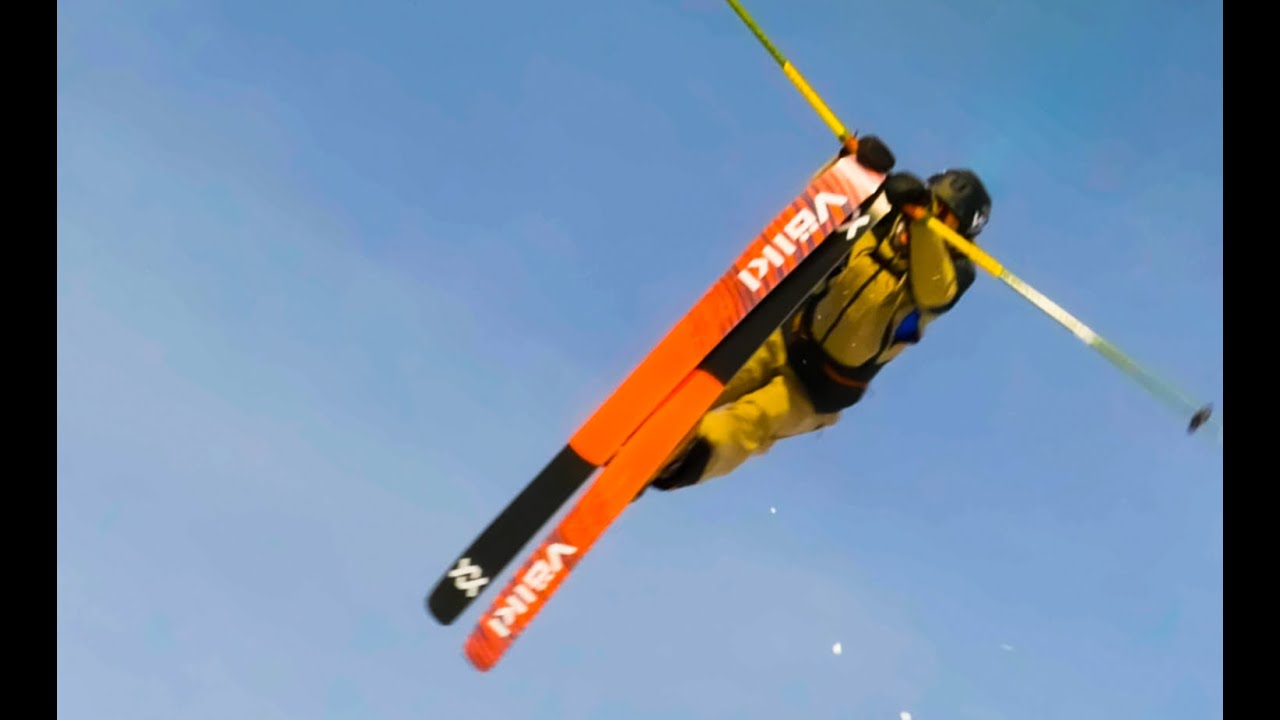
The backside of Whistler Mountain was grey with coastal light, the takeoff half-hidden by speed and uneven snow. Jérémie Paquette came in fast, compressed once, then threw a triple front flip into a gap that looked too wild for a calculated introduction.
The clip travelled faster than the official résumé. Low Pressure Podcast later described Paquette, also known as Je Paq, as the skier who “launched onto the scene” after the triple front flip from the backside of Whistler went viral. The line did not make him a World Tour champion overnight, and it should not be used that way. It did something else: it gave the ski world a first image of a Canadian rider willing to risk speed, rotation, cliff exposure, and rough backcountry landings without waiting for a polished sponsor campaign.
From Mont Orford To Whistler Blackcomb
The Freeride World Tour profile lists Paquette as Canadian, twenty-five years old, with Mont Orford and Whistler Blackcomb named as his mountain references. That east-west split is the base of his story. Mont Orford represents Quebec roots, smaller-hill repetition, and the kind of early skiing where a rider learns to make limited vertical feel bigger than it is.
Whistler Blackcomb gave the opposite scale. Coastal storms, alpine bowls, long descents, tree zones, pillows, cliffs, traverses, and high-traffic local culture all shaped the western version of Paquette. Moving from Canada’s East Coast to Whistler is not only a change of resort. It changes the risk map. Snow can be heavier, terrain more complex, and the local standard ruthless. A skier either adapts to speed, visibility, avalanche awareness, and daily competition with other strong riders, or disappears into the crowd.
The Kicking Horse Result That Put Points On Paper
The strongest verified competition result is the 2024 Kicking Horse IFSA Qualifier. Freeride World Tour results list Paquette second in Ski Men, behind Adam Kuch and ahead of Tyler Curle, Jesse Thurston, Jack Kolesch, Alonso Darias, Fynn Powell, Henry Zakowski, Leif Gascoigne, and Westan Lubin.
Kicking Horse is a serious venue for a developing freerider. The resort above Golden, British Columbia, is known for steep bowls, cliff bands, alpine exposure, cold interior snow, and venue faces where a line choice can shift from controlled to reckless within one turn. A 4-star result there carries more value than a small local podium because it demands line selection, control, airs, fluidity, and technical skiing under a judging system tied to the Freeride World Tour pathway.
Auclair also lists Paquette’s best result to date as second place at the Kicking Horse 4-star competition. That gives the result extra support outside the FWT page and makes it the central scoring fact for his profile.
Whistler Blackcomb Qualifier Before The Push West Settled
Paquette also appears in the 2023 Whistler Blackcomb IFSA Qualifier results. Freeride World Tour lists him fourth in Ski Men, behind Leif Gascoigne, Troy Rozsypalek, and Tristan Curran. That finish sits below the later Kicking Horse result, but it matters because it happened at his western home zone.
Whistler contests can be strange for locals. Familiar terrain can help, but it also adds pressure. The skier knows the snow, knows the traverses, and knows where a better line might have been hiding. A fourth place at Whistler does not make Paquette an established international star, but it shows that his local freeride identity translated into a judged format before the Kicking Horse podium gave him a sharper result.
Why Paquette Already Stands Out
Paquette’s skiing is built around commitment to natural features. His public footage and competition profile point toward cliff drops, front flips, fast runouts, fall-line skiing, rough landings, and a willingness to turn Whistler’s backside terrain into a freestyle problem. The viral triple front flip is the visible headline, but the better reading is terrain confidence.
Compared with a polished Freeride World Tour veteran, Paquette still has a thinner record and less proven consistency across international venues. Compared with a pure park skier, he works with snowpack, blind exits, trees, cliffs, and unstable in-runs rather than shaped takeoffs. Compared with Canadian freeriders such as Adam Kuch or Leif Gascoigne, his current public identity is more tied to Whistler footage, ski-bum mythology, and a single high-risk clip that opened the door to wider attention.
The Je Paq Story Beyond One Trick
Low Pressure Podcast’s episode description is useful because it refuses to make the triple front flip the whole athlete. It frames Paquette as a true ski bum who lives in his car, skis every day, keeps gear dry, charges his phone where he can, and spends nights recovering in saunas. That detail gives his profile an unusual texture.
Most polished athlete bios clean away the logistics. Paquette’s public story still has them: sleeping arrangements, wet gear, car life, low-budget mountain routines, and the physical cost of trying to ski enough days to become relevant. That does not automatically make him more important than a medalist. It makes him more specific. The page should treat him as a skier whose current identity is built from obsession, risk, and Whistler repetition more than from a national-team pipeline.
ASCENT After The Injury Silence
ASCENT gives Paquette’s current profile its strongest creative anchor. Pangea Collective lists the film as part of its 2025 Freeride Film Tour, featuring Jérémie “Jepaq” Paquette and directed by Ulysse Guay. The film description follows his return from injury while chasing the dream life as a professional skier.
PowderGuide’s 2025/26 video feature frames the same project around Paquette living in Whistler for several seasons as a ski bum after leaving Canada’s East Coast for the West. The film appears to use that contrast as its emotional center: the dream of becoming the best, the cost of pushing too hard, and the pause forced by injury before a return to snow.
That documentary context matters for skipowd.tv because it creates a stronger page than results alone would allow. Without ASCENT, Paquette would be a promising FWT pathway rider with a viral clip. With ASCENT, he becomes a character inside a current freeride story: ambition, injury, car life, Whistler, and the attempt to turn obsession into a sustainable ski career.
Auclair, Völkl, Marker, Dalbello, And The Support Thread
Auclair’s athlete page lists Paquette in Whistler, Canada, and describes him as Jérémie Paquette, better known as Je Paq or Paqman. The same page notes his Kicking Horse 4-star second place and his goal of joining the circuit, while preparing for snowmobile access and a larger winter.
Pangea Collective’s ASCENT page lists support from Völkl, Marker, and Dalbello. That support fits the direction of his skiing. A Whistler freerider chasing cliffs, pillows, and competition faces needs skis that can handle variable snow, bindings built for impact, and boots strong enough for landings that are rarely smooth. The sponsor picture should stay limited to verified names. Paquette is still building his public record, so adding unconfirmed brands would weaken the page.
The FWT Path Is Still Open
The Freeride World Tour Challenger profile currently lists Paquette with 2026 Americas Qualifier points, including a fourteenth-place event score and a thirtieth-place event score in the available season table. Those results are not yet the profile of a World Tour main-stage athlete, but they confirm that he is inside the pathway.
That distinction is important. Paquette should not be presented as a Freeride World Tour star, X Games rider, or Olympic athlete. His verified level is emerging freeride competitor with one strong 4-star podium, a Whistler-based video identity, an Auclair profile, and a documentary appearance. That is enough for a real article, but the article must stay honest about the stage of the career.
The Next Clip Needs A Line Score
Paquette’s short-term direction is concrete. The next step is not vague fame. It is more high-quality footage, stronger Freeride World Tour Challenger results, and proof that the Whistler style can travel to different faces. Kicking Horse showed that he could score on a serious venue. ASCENT shows that he can carry a short documentary. The missing piece is repetition.
For skipowd.tv, the watch path starts with the Whistler triple front flip, then moves to the 2023 Whistler Blackcomb qualifier, the 2024 Kicking Horse 4-star second place, Low Pressure Podcast episode 257, Auclair’s athlete profile, and ASCENT on the Pangea Freeride Film Tour. Jérémie Paquette is not Edjoy, not a finished legend, and not a safe résumé page. He is a Canadian freerider in the middle of the hard part: turning one wild clip, one real podium, and one injury-return film into a career that can survive beyond the first viral moment.