Profile and significance
Nick McNutt is one of the defining backcountry freeskiers of his generation, a Canadian rider whose ability to land and ski switch in deep powder has reshaped what is possible in big-mountain terrain. Known for effortless backwards landings, nosebutters on almost any surface and tree taps that seem to ignore gravity, he built his reputation in British Columbia’s backcountry before his segments with Teton Gravity Research carried his style to a global audience. Instead of coming up through World Cup slopestyle or big air, McNutt made his mark in film, using multi-minute parts to show how freestyle trick vocabularies could live on pillows, spines and technical lines far from the park. For fans of modern freeski, he represents an important bridge between classic powder skiing and the switch-heavy, playful approach that dominates contemporary film segments.
McNutt’s path into the spotlight is a self-made story. Raised in interior British Columbia and later based around Whistler and Squamish, he worked construction while chasing storms and stacking clips with smaller crews. An open-source film contest run by Teton Gravity Research became the inflection point: his entry didn’t officially win, but it impressed the producers enough that he soon joined their athlete roster. From that moment on, his name was tied to some of the most influential ski movies of the 2010s and 2020s, and his “backwards in the backcountry” approach turned into a recognizable sub-style that younger riders copy on pillow lines all over the world.
Competitive arc and key venues
Although McNutt is not a contest skier in the traditional sense, his career still follows a recognizable arc of breakthrough moments and big stages. Early on, filming with regional crews around interior British Columbia helped him refine the kind of lines that would later become his calling card: stacked pillows with technical exits, faces that demanded both speed and subtle sluff management, and small but crucial terrain details he could use for butters and switch takeoffs. His breakthrough came when his contest edit for a Teton Gravity Research collaboration project circulated widely; suddenly the “unknown” carpenter from British Columbia was on the radar of a major film company.
From there, McNutt became a regular presence in annual TGR releases, appearing in titles that took him from his home mountains to marquee destinations like Alaska, Patagonia and Pakistan. Those trips put him on some of the steepest, most exposed faces in the sport, where his trademark switch skiing shared screen time with more traditional fall-line power turns. Along the way he picked up major film awards, including breakthrough and powder-focused honors from influential ski award shows, reinforcing his status as one of the standout riders in big-mountain freeski film. His “results sheet” is a list of segments rather than podiums, but in freeski culture those parts carry as much weight as medals.
How they ski: what to watch for
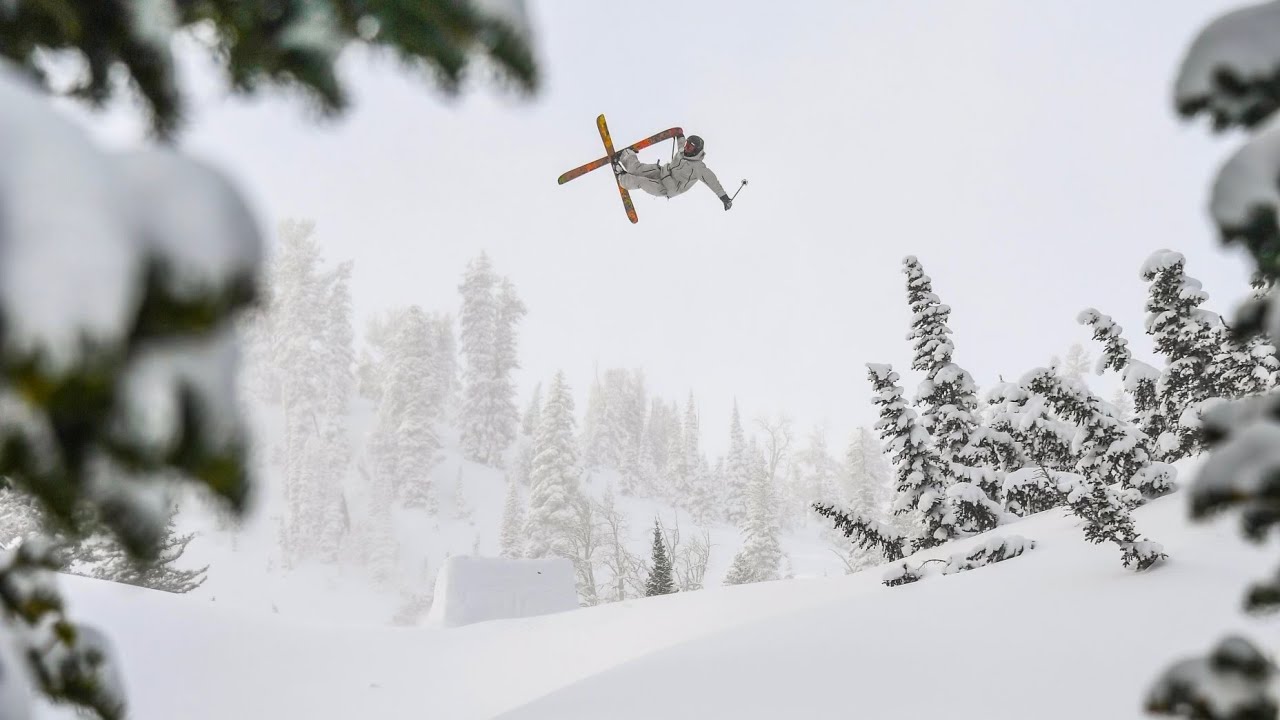
McNutt’s skiing is instantly recognizable, even in a crowded lineup. The most obvious signature is his comfort landing and continuing to ski switch in deep snow, not just off clean booters but out of technical natural features with exposure below. Watch how he sets up those airs: he often uses subtle terrain rolls or pillows as takeoffs, pops lightly rather than muscling the skis, and keeps his upper body calm while his lower body does the work. The landings are where his control becomes clear; his skis tend to stay on the same plane, tails slightly weighted, and he wastes no time rolling into switch turns that look almost as natural as his forward skiing.
Another hallmark is his creativity on pillows and in tight tree zones. McNutt reads stacked features the way a park skier reads a rail line, looking for ways to link nosebutters, taps and direction changes while still moving fluidly down the fall line. On film you’ll often see him enter a zone with a fairly direct line, then use a mid-run tree tap or butter to reset his stance and timing before a bigger drop lower on the face. Technically, he relies on a strong centered stance, quick feet and precise pressure control underfoot, which let him stay loose and playful without losing grip on consequential terrain. For skiers watching at home, slowing down his clips is an education in how to combine freestyle ideas with disciplined, avalanche-aware line choice.
Resilience, filming, and influence
One of the most talked-about chapters of McNutt’s story is his near-fatal avalanche burial in March 2020, when a line in the Pemberton backcountry collapsed into a powerful slide that swept him through trees and buried him deeply in the debris. He survived thanks to fast, decisive work from his partners, and the incident later became public because the crew realized his avalanche beacon had likely turned off or failed during the run. In the years since, McNutt has been open about the experience, speaking in interviews and personal posts about what went wrong, what went right in the rescue, and how critical it is to question assumptions about gear and group process in the backcountry.
That honesty has amplified his influence well beyond pure trick progression. As his film career continued with new TGR projects, he also leaned into roles that foreground safety and mentorship, working with avalanche-safety brands and heli-ski operators to talk about decision-making, communication and redundancy. For many riders, he is now as much an example of how to handle close calls and come back stronger as he is a reference for how to ski a pillow line. His willingness to share both the glory shots and the uncomfortable lessons fits perfectly with a generation of freeskiers who want authenticity, not just highlight reels.
Geography that built the toolkit
McNutt’s skiing makes sense when you trace it across the map. Growing up in interior British Columbia gave him access to smaller but complex mountains, where tree skiing, tight gullies and storm days were the norm. Relocating to the corridor around Whistler and Squamish put him in one of the planet’s greatest playgrounds for big-mountain and backcountry freeski, with easy access to the lift-served terrain of Whistler Blackcomb and the sled-access zones and alpine faces that surround it. That combination of resort laps and deep backcountry days built the foundation for his pillow prowess.
Heli-ski trips with established British Columbia operators added yet another layer, exposing him to glaciated terrain, massive alpine ramps and long runs where snow quality can change dramatically from top to bottom. International expeditions for film projects have taken him to places like Patagonia and the high ranges of Pakistan, where spires, couloirs and remote basins demand thoughtful route-finding and a calm head for exposure. Across all of those locations, his skiing retains the same DNA: playful but calculated, deeply rooted in powder and pillows but adaptable enough to handle firm, technical snow when the story calls for it.
Equipment and partners: practical takeaways
McNutt’s gear choices reflect both his sponsors and the practical demands of spending most of the winter in avalanche terrain. As a long-time rider for Atomic, he is frequently seen on wide, rockered freeride models like the Bent Chetler series, skis designed to stay loose in deep snow while remaining stable when he needs to straighten out a line or stomp a large drop. Clothing and outerwear from The North Face form the outer shell of his system, with technical pieces built for storm days, sled bumps and long hikes that are part of filming in remote zones. On the safety side, his association with Mammut underscores how seriously he takes avalanche gear, from beacons and airbags to shovels and probes that must function without question when things go wrong.
Many viewers also connect McNutt with heli-ski and guiding operations in British Columbia, where years of filming have given him a close understanding of how guides manage risk and logistics on complex terrain. The practical lesson for everyday skiers is not to copy his kit exactly, but to notice how coherent it is: wide, forgiving skis matched with binding and boot setups that can handle speed and landings, outerwear tuned for prolonged exposure to winter weather, and reliable safety tools used within practiced systems. For riders pushing into bigger terrain in their own lives, that kind of integrated approach to equipment is just as important as any specific brand logo.
Why fans and progressing skiers care
Fans care about Nick McNutt because he brings something genuinely new to big-mountain freeski while staying grounded and relatable. His segments show a skier who treats the backcountry as both a serious environment and an endless playground, mixing high-stakes faces with tricks and lines that make viewers want to grab their own skis and head for the pillows. The near-mythic clips of him landing huge switch in deep snow are inspiring on a technical level, but equally compelling is the way he talks about his close calls and the teamwork behind every big day out.
For progressing skiers, studying McNutt offers a roadmap to modern freeride and freeski: build strong fundamentals, learn to read terrain, bring freestyle ideas into natural features, and back it all up with solid safety habits and honest debriefs when things don’t go to plan. Whether he is charging a spine wall in Alaska, threading a complex pillow stack in British Columbia or sharing a story about beacon checks, he embodies the mix of creativity, humility and resilience that defines the best of contemporary freeski culture. Watching his evolution over multiple film projects gives viewers a long-term picture of progression—and a reminder that the most memorable skiing often happens far from podiums, in the spaces where style, judgment and passion intersect.