Ski Doo
Canada
Canadian snowmobile brand | Launched in 1959 by Joseph-Armand Bombardier in Valcourt, Quebec | Known for: Summit, Freeride, Backcountry, MXZ, Renegade, Expedition, Skandic, Tundra, REV Gen5, Rotax E-TEC engines and deep-snow access | Focus: powered winter mobility that gives skiers, film crews, guides and mountain riders access to powder zones, backcountry terrain and remote snow landscapes beyond the lift system.
1959 Valcourt origins and the machine that changed winter access
Ski-Doo is not a ski manufacturer, apparel label, boot brand or film studio. It is a snowmobile brand, and its importance to skiing comes from access. The Ski-Doo snowmobile was launched in 1959 by Joseph-Armand Bombardier in Valcourt, Quebec, becoming the product that helped create recreational snowmobiling as a sport and changed how people moved through winter terrain.
That history matters because skiing is not only what happens at a lift-served resort. Backcountry filming, sled-access freeride, snow safety operations, resort work, remote lodges, mountain travel and powder hunting all depend on winter mobility. Ski-Doo helped make that mobility possible at scale. In the ski world, the brand’s role is indirect but powerful: it does not shape the ski underfoot, but it can decide whether the skier reaches the zone at all.
Today Ski-Doo sits inside BRP, the Canadian powersports company that also owns brands such as Lynx, Sea-Doo, Can-Am and Rotax. For skipowd.tv, Ski-Doo deserves a 5 out of 5 importance rating because snowmobiles are part of the infrastructure behind modern ski media. Many powder segments, backcountry booters, film trips, storm chases and remote access days would look very different without sleds.
Summit Freeride Backcountry and the modern Ski-Doo snow map
Ski-Doo’s current snowmobile lineup is organized around different winter uses. Summit and Freeride are the most important models for ski culture because they sit in the deep-snow and mountain riding category. The 2027 deep-snow lineup positions Summit and Freeride as powder sleds built on the REV Gen5 platform with Rotax E-TEC engines, designed for bowls, tree lines, steep terrain and deep snow travel.
Summit is the mountain access and technical deep-snow platform. It is built for riders who want to climb, sidehill, carve through powder and reach terrain beyond groomed trails. Summit Expert, Summit Edge, Summit HCE and Summit Neo all serve different levels of mountain ambition, from accessible entry into deep snow riding to more aggressive technical terrain and hillclimb-inspired packages.
Freeride is the more aggressive, freestyle-leaning mountain sled. Ski-Doo describes the 2027 Freeride as built for riders who push extreme terrain and freestyle riding, with Rotax power and high-capacity KYB suspension. For ski filming, that kind of sled matters because access days often involve more than smooth travel. Riders tow skiers, shuttle camera gear, punch through deep snow, reach jump zones and manage terrain that can be rough, steep and exposed.
Backcountry crossover and the trail-to-powder bridge
Backcountry is the crossover line. It blends trail precision with off-trail capability, making it relevant for riders who need one machine to move between groomed approaches and powder zones. For skiers, this kind of sled can be useful when access begins on packed trails but ends in meadows, glades, sidecountry zones or sled-access jump terrain.
Not every ski mission needs the most extreme mountain sled. Some crews need a reliable machine for mixed travel, resort-adjacent access, road approaches, hauling gear or reaching zones where deep snow performance matters but the full day is not technical sidehilling. Backcountry fills that middle lane. It is less specialized than Summit or Freeride, but often more practical for mixed winter travel.
The wider Ski-Doo family also includes MXZ and Renegade for trail and performance riding, Expedition for utility-touring crossover, Skandic for work and utility, and Tundra for light utility and exploration. These models matter less directly to freeski edits, but they show why Ski-Doo is not only a mountain freestyle brand. It covers recreation, utility, touring, work, access and winter transportation.
REV Gen5 Rotax E-TEC and the machine feel behind the access
Ski-Doo’s construction story begins with the platform and engine. REV Gen5 is the current mountain platform language for Summit and Freeride, built around lightweight feel, narrow ergonomics, deep-snow handling and rider connection. In sled-access skiing, those details matter because the machine has to move through snow that may be bottomless, wind affected, tracked, steep or covered in buried obstacles.
Rotax E-TEC engines are central to the Ski-Doo identity. Current mountain sleds use Rotax 2-stroke E-TEC options, including 850 E-TEC and 850 E-TEC Turbo R packages on performance models. The reason this matters to skiers is simple: deep snow access requires instant response, power, flotation and reliability. A sled that bogs, overheats or struggles in powder can turn a filming day into a rescue and digging day.
Suspension and track choices are just as important. Long tracks help flotation on deep days. Narrow ski stance and lighter rear suspension can make mountain sleds easier to initiate into sidehills and powder carves. Freeride adds a more aggressive suspension and component package for harder riding. These are not abstract specs. They decide how confidently a crew can reach a zone, shuttle laps or move through difficult mountain snow.
Sled access and why Ski-Doo matters to ski films
Ski-Doo’s strongest connection to skiing is sled access. In ski films, a perfect backcountry jump or powder line often appears isolated and natural, but the real process is logistical. Riders need to reach the zone, tow in, shuttle laps, move shovels and cameras, carry fuel, bring safety gear, return before dark and sometimes spend hours breaking trail. Snowmobiles make that possible.
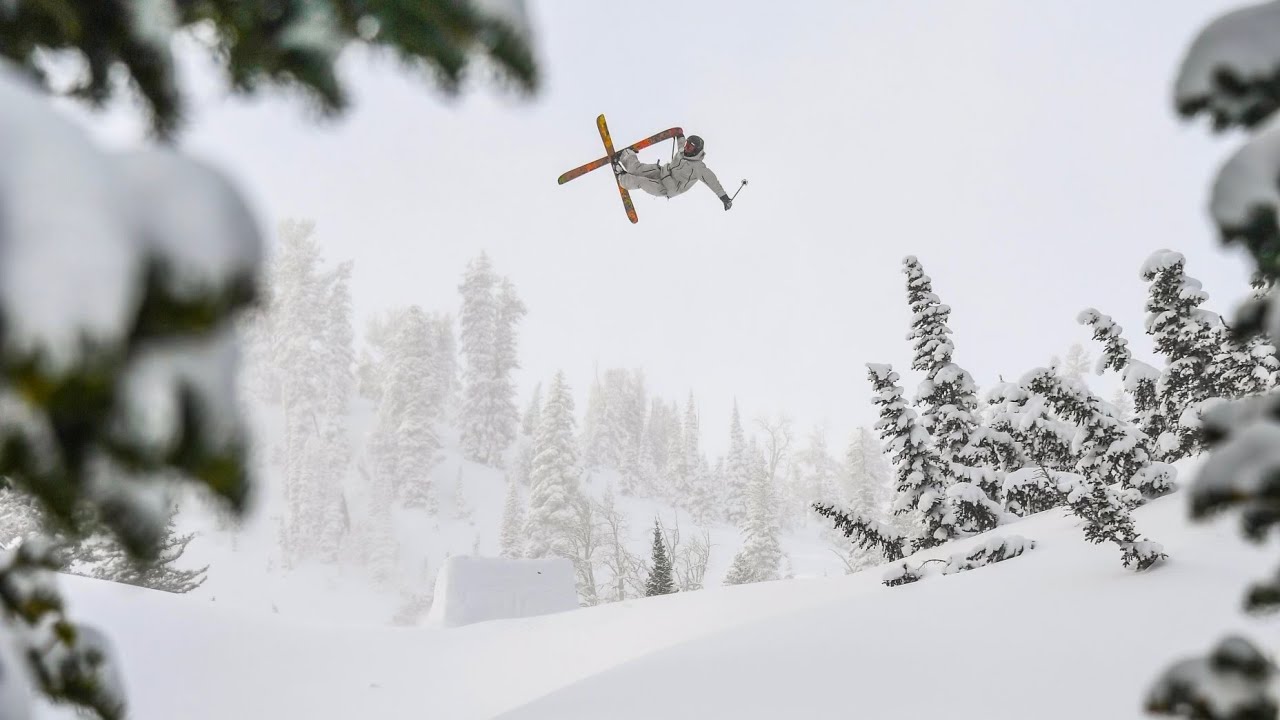
For freestyle backcountry skiing, sleds are especially important. A jump may take a full crew to build, test and maintain. Skiers may need repeated tow-ins to hit the feature with enough speed. Filmers need to move quickly between angles. Avalanche conditions, light and weather can change fast. A Ski-Doo does not appear in every final shot, but it may be the reason the shot exists.
For freeride skiing, snowmobiles open a different kind of access. They can bring skiers to remote ridgelines, tree zones, powder fields and faces that would be impossible or inefficient to reach on foot in one day. This does not replace human judgment or avalanche knowledge. It increases the amount of terrain a crew can reach, which makes decision-making even more important.
Quebec invention with British Columbia and mountain West relevance
Ski-Doo’s origin is Quebec, but its ski relevance is especially visible in British Columbia, the Rockies, Alaska, the Wasatch, interior Canada, Scandinavia and mountain zones where sled access is part of winter culture. The brand’s home story begins in Valcourt, but the machine’s ski story often plays out in Revelstoke, Whistler-area zones, Golden, Pemberton, interior B.C. forests, Wyoming approaches and deep North American powder corridors.
British Columbia is one of the clearest Ski-Doo ski maps. Deep snow, logging roads, sled zones, pillows, backcountry booters and storm cycles make snowmobiles a natural part of filming and freeride culture. A skier may still skin, bootpack or climb, but the sled changes the distance and scale of the day.
In the United States, Ski-Doo also belongs to the Rocky Mountain and mountain West sled scene: Colorado, Montana, Idaho, Utah, Wyoming and Washington. These regions have large areas where snowmobile access, avalanche education and backcountry skiing overlap. Ski-Doo’s importance is not only commercial. It is woven into how many skiers physically reach the terrain that appears in modern clips.
Access power comes with responsibility
Ski-Doo’s ski value should always be paired with responsibility. A snowmobile can take riders farther and faster than skis or skins alone. That can be a gift, but it also increases exposure. A group can reach more avalanche terrain, more remote zones, more complex exits and more situations where self-rescue becomes difficult. Powered access requires real planning.
For ski crews, the responsible sled-access kit includes avalanche education, transceivers, probes, shovels, radios, navigation, extra layers, repair tools, emergency communication, fuel planning and a clear understanding of local regulations. The machine is only one part of the system. Good riders know where they are allowed to ride, respect closures, avoid sensitive wildlife areas and understand the impact of noise, emissions and trail conflict.
Ski-Doo itself has supported responsible riding through BRP initiatives such as Snow PASS and responsible rider messaging. For the ski world, that message matters because sled access can be controversial when used carelessly. The best version of the culture is respectful, skilled, safety-conscious and aware that access is a privilege, not a right to ride everywhere.
Choosing Summit Freeride Backcountry or utility models for ski use
Choosing a Ski-Doo for ski use starts with terrain. If the priority is deep powder access, technical sidehilling, tree zones and mountain riding, Summit is the natural first family. Summit models are built around deep-snow performance and are the clearest choice for skiers who need to reach powder zones efficiently.
If the use case includes aggressive sled riding, jumps, harder hits, steep terrain and high-impact mountain play, Freeride is the stronger direction. It is heavier-duty and more freestyle-oriented, with suspension and component choices aimed at riders who push machines hard. For ski film crews building and hitting backcountry jumps, Freeride can make sense when the sled itself becomes part of the mountain session.
If the day includes long trail approaches, mixed riding, crossover terrain and less extreme powder access, Backcountry may be the better fit. For work, hauling, resort operations, utility travel or less sport-focused access, Expedition, Skandic or Tundra models may be more practical. The best Ski-Doo for skiing is not automatically the most expensive or most powerful one. It is the sled that matches snow depth, rider skill, terrain, load, access rules and safety plan.
Why Ski-Doo deserves a 5 out of 5 in the ski ecosystem
Ski-Doo matters because it changed winter movement. The 1959 launch did not only create a product category. It created a way for people to access snowy landscapes that were previously slow, difficult or impossible to reach. For skiing, that access became one of the foundations of modern backcountry filming and sled-assisted freeride.
The 5 out of 5 importance rating is justified by history, scale and impact. Ski-Doo is a pioneering snowmobile brand, part of BRP’s Canadian powersports legacy, and a central name in mountain snowmobiling. It does not manufacture skis, boots, bindings or outerwear, but its machines help create the conditions for many ski videos, backcountry sessions and winter travel stories.
On skipowd.tv, Ski-Doo belongs as a snowmobile access and mountain mobility sponsor. Its value is the sound before the shot: the sled warming up before sunrise, the tow-in to the jump, the track through the trees, the gear strapped to the tunnel, the long ride back after dark, and the simple fact that some of skiing’s most memorable powder moments begin with a machine built to move through snow.