Alta Ski Area
Rocky Mountains
United States
Skiers-only resort in Utah | Known for: Little Cottonwood Canyon powder, High Rustler, Baldy Chutes, Alta-Bird gates, and strict rope-drop culture | Season: late November to April in typical winters | Best for: advanced powder skiers, natural-feature freeride, and terrain-reading progression
State Route 210 Ends at a Skiers Only Powder Wall
At the top of Little Cottonwood Canyon, Alta Ski Area begins where State Route 210 runs out of road. The mountain sits about 26 miles from downtown Salt Lake City and 32 miles from Salt Lake City International Airport, yet its base starts at 8530 feet and the summit reaches 11068 feet. That compression is the Alta equation: city access, alpine consequence, 2614 skiable acres, 2538 feet of vertical, and an official winter average of 548 inches of snow.
The ski area grew from a silver-mining town into one of the oldest lift-served ski hills in the American West. Alta credits Alf Engen and the Forest Service with recognizing the skiing potential of the abandoned mining slopes, then using winter recreation as part of a larger plan to rebuild a damaged canyon landscape. The skiers-only policy remains part of the daily rhythm. Snowboarding is not allowed on the lifts, which keeps Alta culturally distinct from neighboring Snowbird and gives the hill a precise, traverse-heavy skier identity.
High Rustler, Baldy Chutes, and the High Traverse Test
Collins and Wildcat hold Alta’s old-school fall-line language. The High Traverse cuts across the upper face toward Alf’s High Rustler, Eagle’s Nest, Gunsight, Eddie’s High Nowhere, and other lines that reward balance before the descent even starts. High Rustler is the visible classic, a steep shot that runs toward the canyon floor and the Wildcat base. Alta’s own steep-run guide describes the pitch around this family of terrain as serious enough to demand confident speed checks, clean edges, and patience in chalk, bumps, or storm chop.
Mount Baldy pushes the expert story higher. From Sugarloaf, skiers hike toward the 11068-foot summit to reach Baldy Chutes when patrol opens them, with Main Chute described by Alta as reaching 44 degrees at the entrance. Supreme, Point Supreme, Devil’s Castle, Catherine’s Area, East Castle, and the Cecret Chutes add a different flavor: sidesteps, bowls, tree pockets, and wind-buffed panels that can keep snow soft after open faces get tracked. The best Alta days are rarely straight-line efficient. They are built from traverses, rope drops, bootpacks, and one carefully timed lap after another.
No Park, but Wildcat and Supreme Build Their Own Features
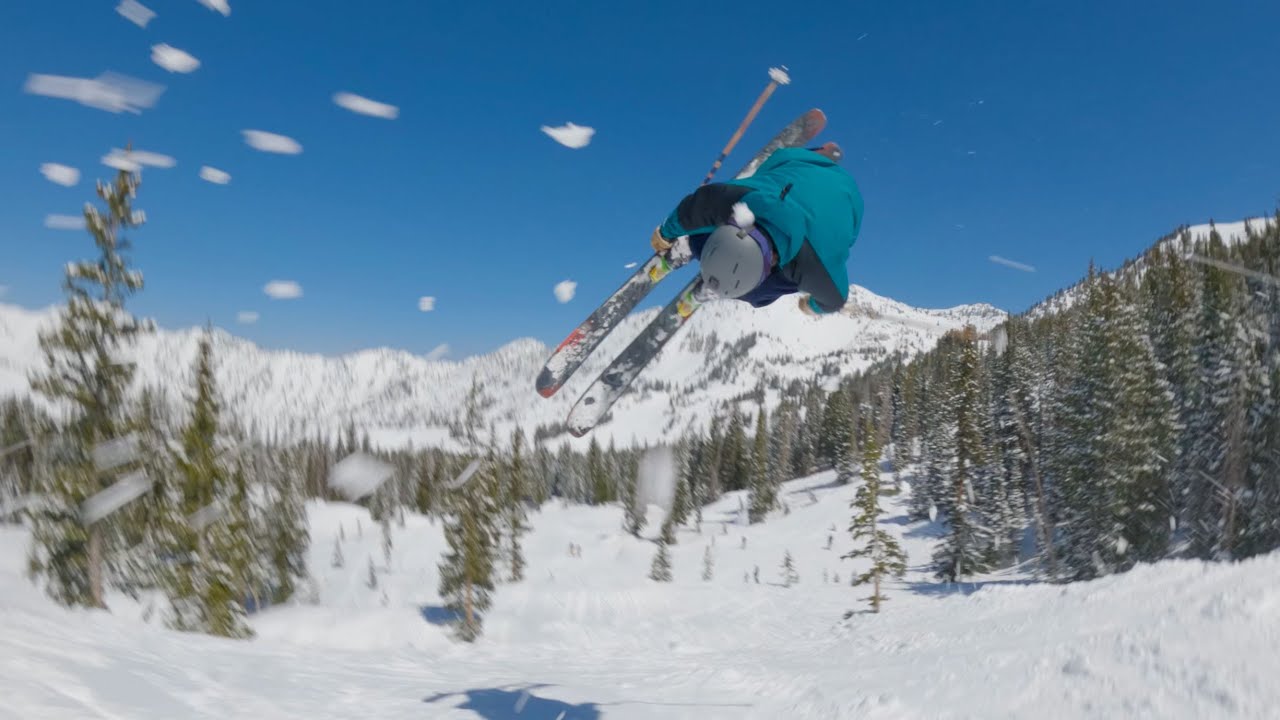
Alta does not operate a formal terrain park, and that absence is part of the mountain’s freestyle identity. Natural takeoffs replace shaped jumps: wind lips under Wildcat, soft shoulders near Supreme, cat-track poppers, powder rollers, and small cliff bands that change shape after every storm. Skiers who want rails, lights, and structured jump lines usually add days at Brighton Resort or Solitude Mountain Resort. Alta’s version of freestyle is terrain reading, not repetition on a machine-built feature.
The current footage trail around Alta reflects that natural setup. Henry ZakowSki appears across multiple Alta-tagged POV edits, including Wildcat laps from 2021, Alta-focused clips in 2022 and 2023, and stormy freeride lines posted in 2024 and 2025. The same Alta edits connect to Flylow Gear and Pret Helmets, two brands that show up naturally in Wasatch resort and sidecountry footage. Those connections make sense because Alta skiing is hard on outerwear, helmets, goggles, legs, and decision-making.
Alf Engen History Without a Stadium Event Script
Alta’s competition legacy is not built around a recurring X Games, Olympic, or FIS freeski stadium. Its influence comes through technique, snow culture, and the way American powder skiing was taught, filmed, and copied. The Alf Engen Ski School carries that name into daily operations, while the mountain itself keeps using the same terrain grammar that shaped generations of strong skiers: traverse, wait, commit, and finish the line with control. The result is a heritage that feels lived-in rather than museum-like.
The absence of a major terrain-park contest also keeps the hill focused on storms. Alta’s event calendar leans toward community, racing, education, and stewardship rather than a global freestyle spectacle. That does not make the place quiet. Powder mornings here create their own event structure, with cars stacking before canyon control, skiers listening for lift updates, and word spreading fast when Ballroom, High Traverse, Devil’s Castle, or Baldy terrain opens. The most important start list is often informal: whoever is ready when patrol drops the rope.
Thirteen Miles of Canyon Before the First Chair
Alta’s convenience is real, but the canyon decides the day. The resort’s road guidance describes Highway 210 as a 13-mile dead-end winter road that crosses 64 avalanche paths before reaching town. During storms, travel can be delayed by control work, traction restrictions, road closures, or full interlodge procedures. Check UDOT Cottonwood Canyons before leaving the valley, especially on powder mornings, holiday weekends, or days when snow is forecast to continue through the commute window.
Parking is another part of the plan, not a small errand. Alta uses reservations on selected weekends and holiday periods, with current rules changing by season. Car-free access can be simpler when UTA ski service is running, particularly for visitors staying near Salt Lake transit links. Once on snow, flow depends on intent. Collins is the first read for High Traverse timing, Wildcat preserves old Alta character, Sugarloaf opens quick access toward Baldy and Ballroom, Supreme builds toward Catherine’s and Castle terrain, and Albion gives newer skiers a gentler starting zone without removing them from the main mountain.
Ropes, Interlodge, and Little Cottonwood Etiquette
Alta’s safety culture is not decorative. Little Cottonwood Canyon has avalanche paths above the road, resort terrain with staged openings, and boundary exits that lead into real backcountry. Rope lines, closure signs, and patrol instructions are part of the operating system. For travel beyond the resort boundary, the Utah Avalanche Center Salt Lake forecast should be treated as required reading, not an optional browser tab. Beacon, shovel, probe, partners, and conservative terrain choices matter immediately outside the gates.
Inside the boundary, etiquette is equally specific. On the High Traverse, keep a predictable line, avoid sudden stops in blind spots, and let faster skiers pass where the track widens. Do not cut rope lines for untracked snow; Alta Patrol opens terrain in sequences because slopes, cornices, and runouts need control work. Interlodge orders mean no outdoor movement until officials lift the restriction. That rule can feel strange to visitors, but it is a practical response to a canyon where roads, buildings, and ski terrain all sit under avalanche start zones.
January Storms, April Corn, and Alta Bird Timing
Alta’s core powder window runs through midwinter, when cold storms refill the Collins, Wildcat, Supreme, and Sugarloaf zones with the consistency that made the canyon famous. January and February are the cleanest bet for cold snow, while March often brings a useful mix of resets, longer light, and more predictable filming weather. April is not an afterthought. Alta spring can mean storm skiing, corn laps, costumes, and late-season terrain management, with patrol opening and closing expert zones as temperature and stability change during the day.
The 2022-23 winter is the number that still anchors modern Alta snow conversations: the resort lists 903 inches as its largest single-season record. Do not build a trip around repeating that anomaly, but do build flexibility into any Alta plan. A joint Alta-Bird ticket can turn one canyon into two mountains when gates and return routes are open, and multi-resort pass products can help broader Wasatch trips. The daily checklist stays simple: canyon status, parking plan, terrain status, weather, then a decision on whether to chase first chair or wait for the safest rope drop.
The Freeski Value Is Craft, Not Convenience
Alta remains a reference point because it teaches skills that transfer everywhere. The mountain asks skiers to manage traverses, sidesteps, fast fall lines, deep snow, low visibility, and timing around patrol work. It gives almost nothing in the form of sculpted park infrastructure, but it gives constant natural feedback. A missed traverse means a different run. A late rope drop means chop instead of blower. A rushed entrance into Baldy Chutes or High Rustler changes the whole lap before the first real turn is finished.
That is why freeskiers keep returning even when the parking is complicated and the canyon is closed for control work. Alta converts snowfall into craft. Collins, Wildcat, Sugarloaf, Supreme, and Sunnyside create a compact but demanding lift map, and the best line of the day might come from a 25-minute bootpack, a ten-second rope drop, or a patient traverse across the High T. The final practical decision is always concrete: check SR-210, check the terrain board, then ski the first safe opening with enough control to make the next one.