New Zealand
Kā Tiritiri o te Moana
New Zealand
Southern Hemisphere freeski destination across the Southern Alps and Mt Ruapehu | Known for: Cardrona park and pipe, Treble Cone freeride, Queenstown and Wanaka ski culture, The Remarkables bowls, Mt Hutt wind-buff, Winter Games NZ, and a June to October season | Best for: park training, late-summer contest preparation, freeride filming, and skiers chasing winter while the Northern Hemisphere is off snow
Kā Tiritiri o te Moana And The Upside Down Season
The Southern Alps, known in te reo Māori as Kā Tiritiri o te Moana, run down New Zealand’s South Island with ski areas stacked around Wānaka, Queenstown, Canterbury, and the Mackenzie basin. The calendar is the first fact that changes everything: lifts usually turn from June into October, which puts New Zealand winter directly inside the Northern Hemisphere summer. For freeskiers, that flipped season turns a distant island country into a training bridge between contest cycles.
New Zealand does not rely on one mega resort. Its freeski value comes from a network: Cardrona Alpine Resort for park and pipe, Treble Cone for steeper Wānaka terrain, The Remarkables and Coronet Peak for Queenstown laps, Mt Hutt for Canterbury exposure, and Mt Ruapehu for volcanic skiing on the North Island. The country’s best ski days often come from moving between these zones instead of waiting for one mountain to solve every condition.
Wanaka Queenstown And The Southern Lakes Ski Map
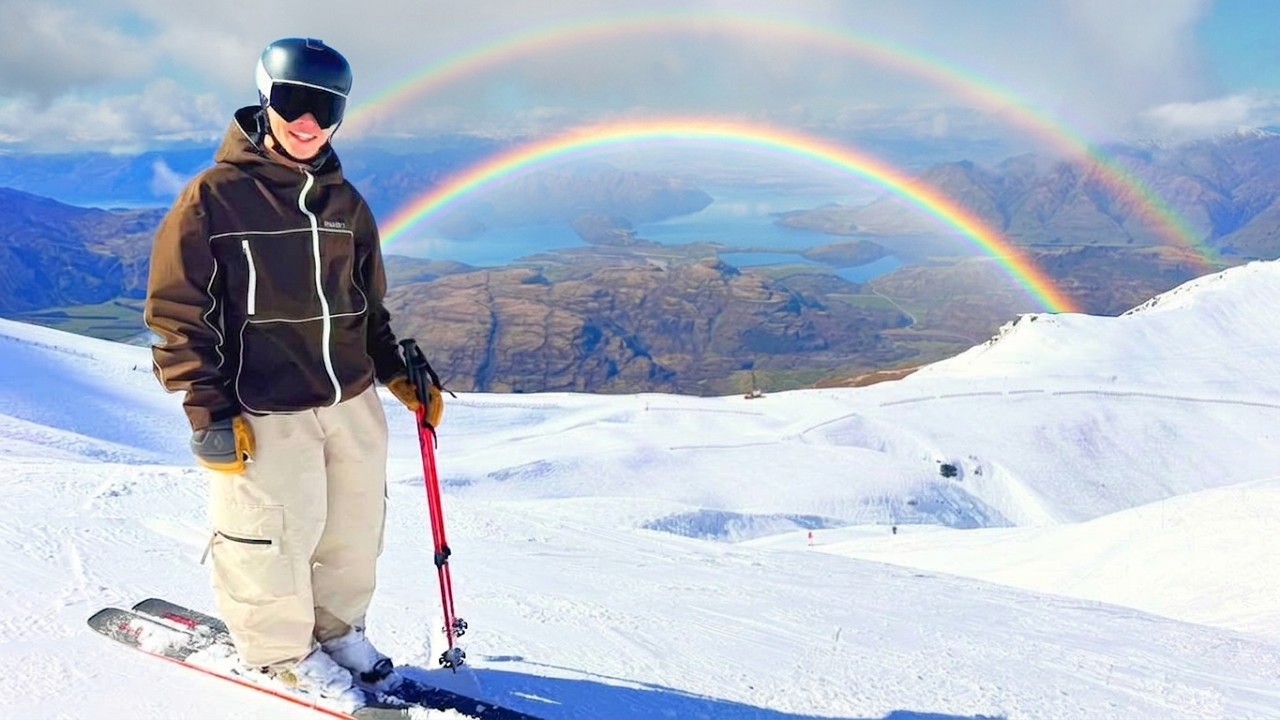
Wānaka and Queenstown form the main freeski corridor. Cardrona sits between them on the Crown Range side, with official mountain information listing more than 615 hectares of terrain across five basins after the Soho Basin expansion. That footprint gives park riders and mixed crews a broad training platform: groomers, open bowls, jump lines, pipe walls, side hits, and storm-day escape options without leaving the same pass ecosystem.
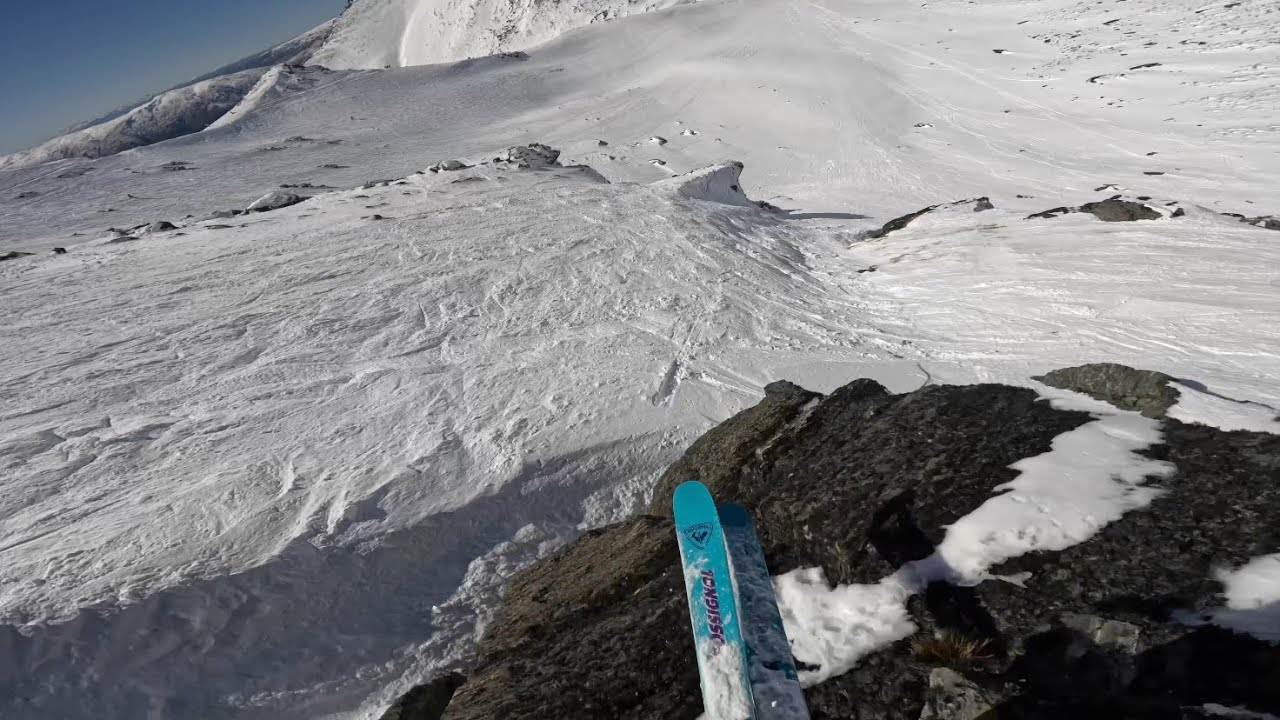
Treble Cone sits above Lake Wānaka and carries the opposite personality. Its reputation is built around long, open, above-treeline terrain, Saddle Basin laps, wind-shaped faces, and a high lifted point around 1960 meters. When Cardrona is the structured training hill, Treble Cone is the terrain-reading exam. The best Wānaka trips use both: Cardrona when the goal is park mileage and repeatable speed, Treble Cone when visibility, wind, and snow surface point toward freeride lines.
Cardrona Pipe Walls And The World Cup Training Window
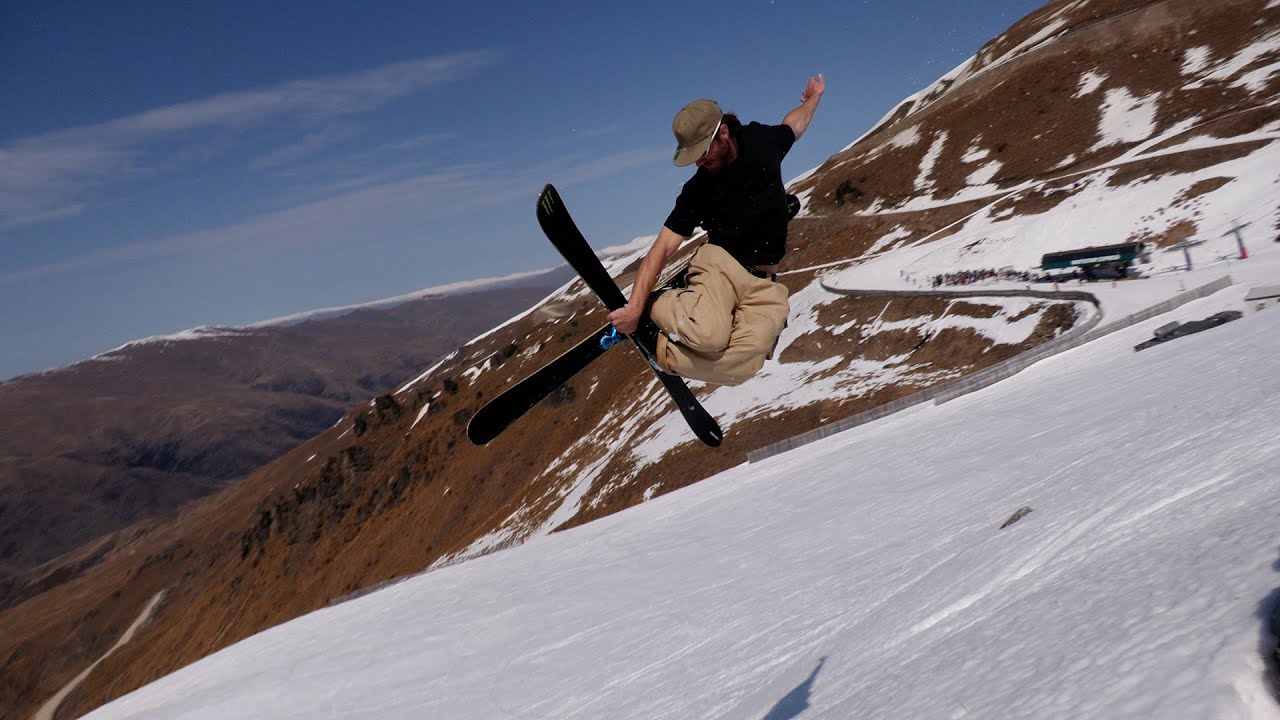
Cardrona is the technical center of New Zealand freeskiing. Its Parks and Pipes program is described by the resort as including the only full-size superpipe and World Cup slopestyle course in Australasia, with zones that step from beginner features to elite training terrain. In winter 2025, a new T-bar was added for faster laps on Lil Bucks, Big Bucks, and Stag Lane, tightening the park’s role as a repetition machine.
The event layer is just as important. Winter Games NZ staged a FIS Freeski Halfpipe World Cup and a FIS Freeski Slopestyle Australia New Zealand Cup Premium at Cardrona in 2024, with the halfpipe World Cup acting as an early Olympic qualification-point opportunity for Milano Cortina 2026. For public riders, the impact is visible in the snow. Contest builds leave clean transitions, shaped landings, and speed knowledge that filters into everyday park laps after the athletes move on.
The Remarkables Chutes Coronet Nights And Mt Hutt Exposure
Queenstown brings a different rhythm. The Remarkables sits about 45 minutes from central Queenstown and lists 449 hectares of terrain with a 468 meter vertical drop. Its freeski identity is built from bowls, chutes, parks, and the Burton Stash, which the resort describes as one of only six worldwide and the only one in the Southern Hemisphere. That combination makes it useful for riders who want natural-feature freestyle without losing access to shaped lanes.
Coronet Peak is Queenstown’s fast-lap mountain. The official NZSki network describes it as the closest ski area to Queenstown, with night skiing and a long operating day that lets crews stack rail mileage or groomer speed after normal daylight sessions. Mt Hutt, farther north in Canterbury, adds size and exposure: official Mt Hutt information lists 365 hectares, 683 meters of vertical drop, and a 2086 meter summit. When wind, visibility, and snowpack align, those Canterbury faces can feel bigger than the map suggests.
Ruapehu Volcanic Terrain And The North Island Variable
The North Island gives New Zealand a terrain category that most ski countries cannot copy. Mt Ruapehu, inside Tongariro National Park, carries Whakapapa and Tūroa on an active volcanic massif rather than a classic alpine chain. The skiing is broad, open, exposed, and weather-sensitive, with gullies, amphitheaters, lava-formed rolls, and wind-textured surfaces shaping the day. It is not the safest bet for a short international park trip, but it gives the country a second freeski identity beyond the South Island.
Ruapehu rewards flexible skiers. Cloud, wind, rain line, volcanic terrain, and lift status can all decide whether the day is productive. When the mountain clears, the scale is memorable: wide volcanic bowls, rolling fall lines, and a visual field that feels closer to Iceland or Japan’s Hokkaido volcanoes than to Otago. For a complete New Zealand profile, Ruapehu matters because it prevents the country from being reduced to only Cardrona and Queenstown.
Winter Games NZ And The Wanaka Athlete Pipeline
New Zealand’s freeski credibility is not only terrain-based. It has produced athletes who connect local training to global competition. Finn Bilous grew up around Wānaka with Cardrona and Treble Cone as the two sides of his education, then moved from Olympic slopestyle and big air into high-level freeride. That path explains the country’s advantage: park precision and natural-terrain reading can develop inside the same regional map.
Jackson Wells represents the other half of the Wānaka story. The Wells family helped make Cardrona more than a training facility by turning it into a creative freeski stage, with invitational sessions, film projects, and a style-first approach that travels beyond contest results. New Zealand’s scene feels unusually dense because athletes, parks, small towns, visiting pros, and production crews all collide during the same August and September window.
Roads Chains Wind Holds And Rope Tow Culture
New Zealand ski logistics are straightforward until the weather moves. Queenstown Airport works for Cardrona, The Remarkables, Coronet Peak, and Treble Cone. Christchurch is the main gateway for Mt Hutt and the Canterbury club fields. Auckland, Wellington, Taupō, National Park Village, and Ohakune can all enter the Ruapehu planning map depending on route and budget. The key is not distance alone; it is road condition, chain rules, shuttle availability, and wind exposure.
The club fields add another layer. Craigieburn Valley, Broken River, Mt Olympus, Temple Basin, and other rope-tow mountains are not park resorts, but they shape the New Zealand freeride image. Nutcracker rope tows, hike-accessed lodges, no-frills terrain, and steep bowls create a culture closer to lift-accessed backcountry than mainstream resort skiing. For visiting freeskiers, those days require humility. Learn the tow system, wear proper gloves, listen to locals, and treat terrain selection as a group decision rather than a content plan.
Avalanche Forecasts Park Etiquette And Open Alpine Discipline
New Zealand’s open alpine terrain changes quickly. Wind can strip one ridge to ice and load the next gully with soft snow. Rain lines can climb high during a warm storm, then freeze into demanding surfaces overnight. The New Zealand Avalanche Advisory provides public avalanche forecasts for 13 regions, written for recreational backcountry users. That resource should be checked before touring, bootpacking outside controlled terrain, or treating a resort boundary as a casual gate.
In the parks, the rules are simpler but just as important. Inspect jumps and rails before dropping, call your line, stay predictable, and clear landings immediately. Cardrona’s public lanes can mix first-time park riders, national-team athletes, and film crews in the same day. The Remarkables Stash asks for flow and spacing rather than straight-line speed. Coronet night sessions add visibility and speed-control concerns. New Zealand’s best freeski culture is relaxed, but the mountains are not soft.
Planning The Best Months For New Zealand Freeskiing
July and August are the strongest months for winter snow, colder landings, and repeated storm cycles. They are also the months when weather can interfere most sharply with road access, upper lifts, and exposed basins. Late August into September is the most complete freeski window: parks are mature, competition infrastructure is strongest, international athletes are visible, and sunny breaks create better filming light across Cardrona, The Remarkables, Treble Cone, and Mt Hutt.
Spring can be excellent when expectations are right. September and early October bring longer light, corn cycles, and park features that have had time to settle. The tradeoff is variable coverage on lower or wind-scoured terrain. A smart itinerary does not chase every mountain at once. Build one Wānaka and Queenstown block for Cardrona, Treble Cone, The Remarkables, and Coronet Peak, then add Canterbury or Ruapehu only if the trip is long enough to absorb travel and weather shifts.
The New Zealand Freeski Equation
New Zealand matters because it compresses several versions of freeskiing into one flipped-season country. Cardrona supplies contest-grade repetition. Treble Cone supplies steeper natural terrain. The Remarkables supplies chutes, bowls, and natural-feature freestyle. Coronet Peak extends the day under lights. Mt Hutt adds Canterbury altitude and exposure. Ruapehu gives the map a volcanic edge. The club fields keep the culture honest by reminding skiers that lift access can still feel raw.
For skipowd.tv, the best New Zealand footage will not all look the same. It can be a clean Cardrona park lap, a Treble Cone windlip, a Remarkables chute, a Coronet night session, a Mt Hutt spring line, a Ruapehu volcanic storm break, or a rope-tow day where the skier earns every turn. That range is the country’s concrete value: between June and October, New Zealand gives freeskiers a full winter laboratory while the rest of the ski world is supposed to be in summer.