Cast Touring
United States
American freeride touring binding specialist | Founded in 2012 by Lars and Silas Chickering-Ayers in the Teton Mountains | Known for: CAST Freetour 2.0, Pivot 15, Pivot 18, Upgrade Kit, Second Ski Kit, tech-toe uphill efficiency and Look Pivot downhill confidence | Focus: giving aggressive skiers a no-compromise hybrid system for resort, sidecountry, sled-access, backcountry bootpacks and big-mountain descents.
2012 Teton roots and the no-compromise binding idea
CAST Touring is not a ski manufacturer, outerwear brand or film studio. It is a focused American binding hardware company built around one very specific problem: strong skiers wanted to tour uphill without giving up the alpine binding feel they trusted on the descent. The brand was founded in 2012 by brothers Lars and Silas Chickering-Ayers, with a vision shaped by freeride competition, Teton terrain and the legacy of their late friend Ryan Hawks.
The CAST name comes from the collective noun for a group of hawks, chosen in Ryan Hawks’ honor. That origin gives the brand a deeper emotional identity than a normal hardware startup. CAST is built around access, confidence and the idea that a skier should be able to move farther into the mountains without feeling under-equipped when the real descent begins.
The brand’s home in Driggs, Idaho, on the west side of the Tetons, is central to the product. This is terrain where skiers tour, sled, ride lifts, film, ski high consequence lines and move constantly between resort and backcountry logic. CAST was designed for that overlap, not for lightweight skimo racing or mellow touring alone.
Freetour 2.0 and the tech toe to Pivot swap
The core CAST product is the Freetour 2.0 system. Its defining feature is a simple interchangeable interface that lets the skier climb with a pin-tech touring toe, then swap to an alpine toe for the descent while skiing on a Look Pivot heel. In touring mode, the tech toe reduces uphill weight and allows a natural pin-binding stride. In ski mode, the alpine toe and Pivot heel restore the release, retention and elastic feel that aggressive skiers expect from a true alpine binding.
The complete binding options are Freetour 2.0 Pivot 15 and Freetour 2.0 Pivot 18. Both are built around Look Pivot architecture, with CAST hardware integrated into the system. The Pivot 15 is the more appropriate version for many advanced skiers who still want serious retention without moving into an 18 DIN range. The Pivot 18 is the heavy-duty option for the strongest skiers, freeriders, cliff senders and athletes who already know they need that category.
The Upgrade Kit is the most important product for skiers who already own compatible Pivot 15 or 18 bindings. It converts that binding into a Freetour system. The Second Ski Kit lets riders set up another pair of skis with CAST plates and heel hardware, then move the alpine toes and tech toes between skis. This is very useful for skiers with a freeride quiver who want CAST functionality across more than one setup without buying multiple full systems.
Alpine confidence on the way down
CAST’s ride feel is built around the Pivot. That is the entire point. On the descent, the skier is not relying on a lightweight pin binding, a frame binding or a compromise heel. They are skiing on a real alpine binding platform with the familiar Pivot turntable heel, elastic travel, compact mount zone and direct boot-to-ski connection that many freeriders already trust.
This matters most when the skiing is fast, rough or exposed. A skier dropping into chopped resort snow, landing a cliff, skiing firm runouts, hitting backcountry booters or charging technical freeride terrain wants a binding that feels solid and predictable. CAST exists for the skier who would rather carry extra weight uphill than wonder whether the binding is the weak point on the descent.
The system is not the lightest touring solution. It is not trying to be. A pure pin binding is easier to justify for long traverses, huge vertical days and weight-sensitive ski mountaineering. CAST is for skiers who place downhill performance first, then accept the extra complexity and mass because the descent is the reason they climbed in the first place.
Uphill efficiency without pretending to be ultralight
In touring mode, the CAST tech toe gives the skier a much better uphill experience than old frame bindings or carrying a full alpine toe through every step. The Freetour 2.0 Pivot 18 official specs list 1340 grams per ski in alpine mode and 1000 grams per ski in touring mode. That is heavy compared with minimalist touring bindings, but it is efficient enough for sidecountry laps, sled-access approaches, bootpack-to-skin missions and many freeride-oriented tours.
The climbing risers offer flat, 8-degree and 12-degree positions. The system is also compatible with Dynafit-style ski crampons through the crampon clip. Those details matter because CAST is not only a downhill hack. It is a real touring system, just built for a specific skier: someone who needs to climb, but still judges the binding by how it skis down.
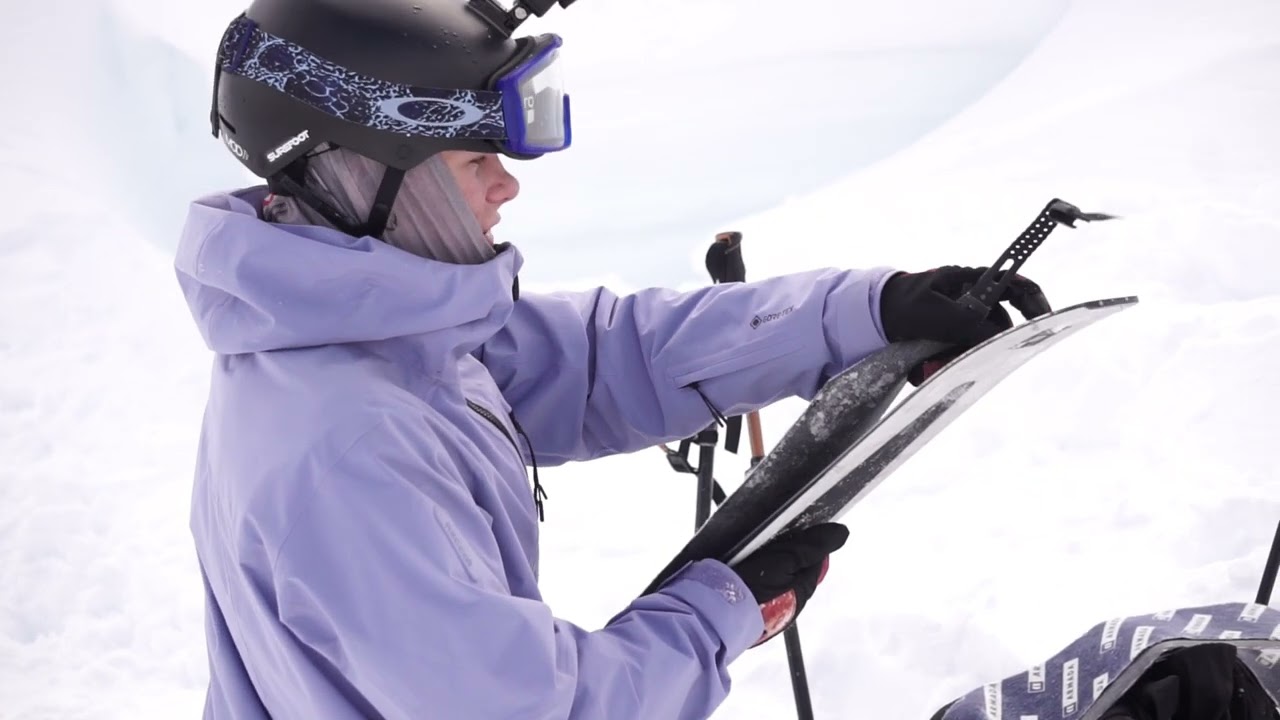
The transition is part of the identity. The skier removes the tech toe, installs the alpine toe, locks the brakes for uphill or releases them for skiing, and manages the parts carefully. This is not as automatic as some hybrid bindings. It requires discipline. But for many CAST users, that small transition ritual is worth it because the downhill result feels like a proper alpine setup.
Boot compatibility and the AFD system
CAST Freetour 2.0 includes AFD options for Alpine ISO 5355, GripWalk ISO 23223 and Touring ISO 9523 soles. That matters because modern freeride boots are messy from a standards perspective. Some skiers use alpine soles, many use GripWalk, and touring-focused freeride boots may use fully rockered touring soles. CAST addresses that by using interchangeable AFDs rather than pretending one surface works perfectly for everything.
This is also why professional mounting and adjustment matter. A CAST setup is still a release binding system. Boot sole length, AFD height, forward pressure, release values and compatibility must be checked correctly. Skiers should not treat the system like a casual DIY accessory unless they are properly trained and have the right tools.
CAST also offers Boot Conversion products for skiers who want to add tech compatibility to alpine boots. That is a niche solution, but it fits the brand’s philosophy perfectly: preserve the downhill boot and binding feel as much as possible, then add just enough touring functionality to access the terrain.
Lars Silas Ryan Hawks and the freeride origin story
CAST’s credibility comes from freeride skiing rather than from a corporate binding lab. Lars and Silas Chickering-Ayers came from big-mountain competition and lived inside the exact problem CAST set out to solve. They wanted to ski hard in real terrain, not design a generic touring product for moderate use.
Ryan Hawks’ influence gives the brand another layer. Hawks was a respected freeskier who died after injuries sustained during a Freeskiing World Tour event in Kirkwood. CAST’s official story links the company name and mission to his memory, and to the broader idea of building equipment that helps skiers access mountains with more confidence and respect.
This background is important because binding trust is emotional. A skier can read numbers, weights and ISO standards, but the final question is simple: do you trust this system when you are tired, above exposure, skiing fast or landing hard? CAST built its identity around answering yes for a very specific group of skiers.
Karl Fostvedt Sam Anthamatten Jeremie Heitz and the athlete signal
The CAST Pro Team confirms the brand’s position in big-mountain and freeride skiing. The official team includes names such as Marcus Goguen, Karl Fostvedt, Sophia Rouches, Sam Anthamatten, McKenna Peterson, Jeremie Heitz, Reine Barkered, Hadley Hammer, Colby Stevenson, Chris Logan, Andrew Pollard, Logan Pehota, Duncan Adams, Thayne Rich, Blake Wilson, Max Palm, Connery Lundin, Richard Permin and others.
That roster matters because these are not casual touring ambassadors. Many of them ski fast, land hard, film in complex terrain, compete in freeride, hit backcountry jumps or move through mountains where binding confidence is not theoretical. CAST makes sense under skiers who need the security of an alpine binding but still have to get to the line.
Karl Fostvedt connects CAST to creative freeride and backcountry freestyle. Sam Anthamatten and Jeremie Heitz connect it to steep alpine freeride and high-speed mountain lines. Colby Stevenson and Chris Logan connect it to freestyle power. Logan Pehota, Max Palm and Marcus Goguen connect it to modern big-mountain progression. The team gives the product a clear message: this is a binding system for skiers who intend to ski the descent seriously.
Driggs the Tetons and the hybrid freeride testing ground
CAST’s geography is one of its biggest strengths. Driggs, Idaho sits close to Grand Targhee, Teton Pass and the wider Jackson Hole backcountry ecosystem. This is one of North America’s strongest testing grounds for freeride touring gear. Skiers there move between lift access, short tours, deep storm days, road laps, sled zones and big alpine objectives.
The Tetons punish weak equipment. Cold transitions, deep snow, wind, variable snowpack, hard exits, long approaches and heavy landings all test a binding differently from a smooth demo tour. CAST being designed and tested in that environment gives the brand credibility beyond marketing language.
For skipowd.tv, this geography is highly relevant. CAST appears naturally in backcountry films, freeride edits and athlete projects where the skier needs to climb or access terrain before skiing aggressively. It is not a binding for every resort skier, but it belongs directly in the world of film lines, sidecountry missions and big-mountain gear choices.
7075 aluminum stainless steel and in-house manufacturing
CAST’s construction story is mechanical and focused. Official Freetour 2.0 specs list machined 7075 aluminum, POM/Acetal and stainless steel. The company describes itself as a full-capacity, in-house binding manufacturer with prototyping, machining and manufacturing capabilities. That is important because CAST is not simply reselling a vague adapter concept. It is machining and refining a specific hardware ecosystem around a demanding use case.
The system’s base plate must be precise because it holds the swap interface between touring and alpine toes. The tech toe must be simple and strong because it carries uphill movement. The brake lock and heel assembly need to work in cold snow. The AFD system must interface correctly with boot soles. Small mechanical details matter because a tiny failure in a binding can end a tour or create real danger.
CAST’s Made in USA positioning also gives the brand a strong manufacturing identity. In a category dominated by large European binding companies and global supply chains, a small Teton-rooted American binding manufacturer is distinctive.
Choosing Pivot 15 Pivot 18 Upgrade Kit or Second Ski Kit
Choosing CAST starts with release range and skiing style. Freetour 2.0 Pivot 15 is the better choice for most aggressive advanced skiers who want alpine security, strong retention and serious downhill performance without automatically jumping into the highest release category. Freetour 2.0 Pivot 18 is for heavier, faster, more aggressive skiers who already understand why they need that DIN range.
The Upgrade Kit is ideal for skiers who already own compatible Pivot 15 or 18 bindings and want to convert them. It is also the cleanest option for riders who already love Pivot feel and do not want to move to a different hybrid binding platform. The Second Ski Kit is for quiver skiers who want CAST interfaces on multiple skis and are willing to move components between setups.
CAST makes most sense on freeride skis, powder skis, resort-backcountry hybrids and strong all-mountain platforms. It makes less sense on ultralight touring skis, skimo setups or mellow uphill-focused rigs. The right user is not asking, “What is the lightest?” The right user is asking, “How do I tour to the line and still ski my binding like a Pivot?”
Why CAST Touring earns a 4 out of 5
CAST Touring earns a 4 out of 5 importance rating because it is one of the clearest niche innovators in modern freeride-touring equipment. It solved a real problem for aggressive skiers: climb with tech efficiency, descend with alpine confidence. The Freetour system is not universal, but within its lane it is highly respected.
It is not rated 5 out of 5 because CAST remains specialized. It does not have the global scale of LOOK, Marker, Salomon or Tyrolia, and it does not define every part of the binding market. Its influence is concentrated in freeride touring, sidecountry, sled-access, film skiing and hard-charging backcountry setups. But inside that category, CAST is one of the most important names.
On skipowd.tv, CAST Touring belongs as a freeride touring binding specialist. Its value is the moment after the climb: tech toe back in the pack, alpine toe locked in place, Pivot heel ready, line below, and a skier who wants the descent to feel exactly as powerful as the setup they trust inbounds.