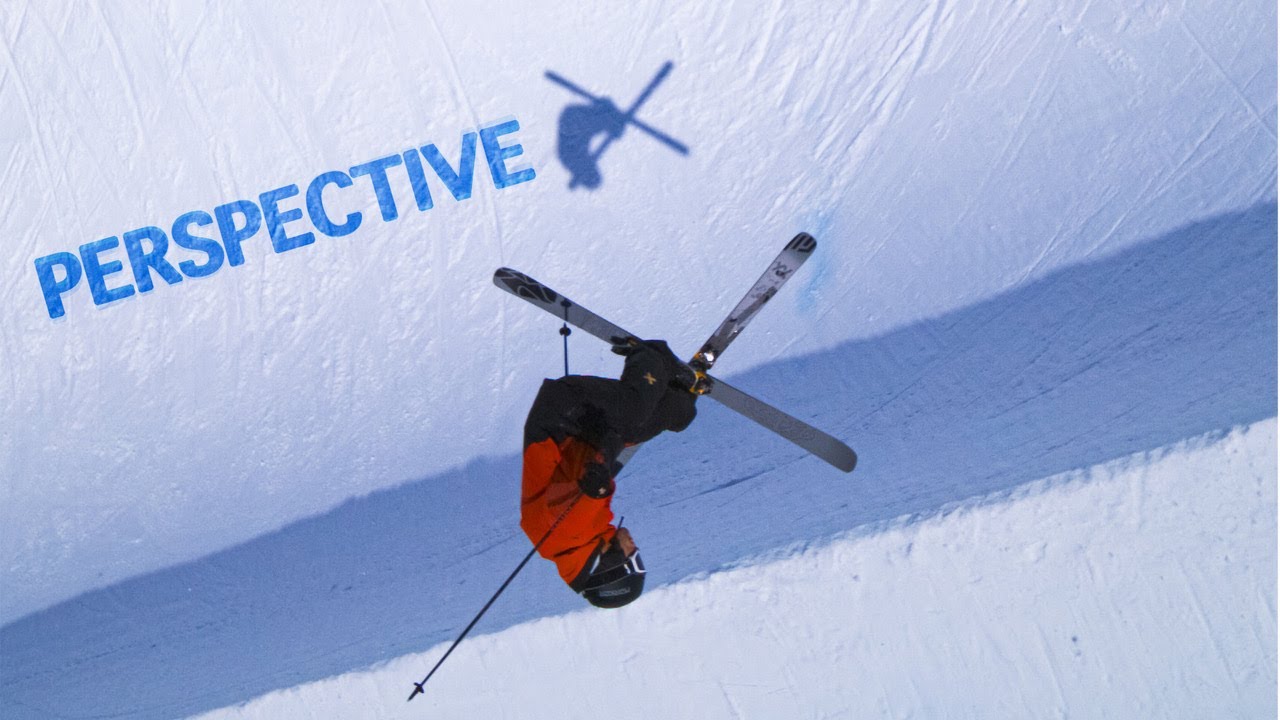
Kévin Rolland
La Plagne, Savoie, France | Active: FIS record listed as not active | Discipline: freeski halfpipe, superpipe, quarterpipe, film projects | Verified: 2009 World Champion, 2014 Olympic bronze, 9 X Games medals, 5 X Games golds, Beijing 2022 flag-bearer | Current: post-competition projects, WATTS capsule, video work and French halfpipe legacy
Rosa Khutor In Falling Snow
The Sochi pipe was blue at the walls and grey above the lights, with snow falling hard enough to soften every landing. Kévin Rolland dropped into Rosa Khutor, carried speed through the first hit, and tried to keep France inside the first Olympic ski halfpipe final.
The score that held was 88.60. David Wise won gold, Mike Riddle took silver, and Rolland earned bronze in the discipline’s Olympic debut. The medal did not arrive in clean weather or quiet conditions. It came through low visibility, pressure, and a pipe that punished hesitation. For a skier from La Plagne who had already won world and X Games titles, Sochi gave the official Olympic line his career had been waiting for.
La Plagne Before The Pipe Became Olympic
Rolland was born on August 10, 1989, in Bourg-Saint-Maurice and grew into skiing through La Plagne. FIS lists him with Club des Sports La Plagne, FIS Code 2414363, and a not-active status in freestyle skiing. That home mountain matters because his career is tied to a French resort that built both a competitive skier and a visual identity around him.
La Plagne gave him winter access, club structure, and enough freestyle terrain to move from local promise into international halfpipe. He entered the World Cup early, while ski halfpipe was still fighting for space beside moguls, aerials, snowboard pipe, X Games superpipe, and a growing new-school freeski scene. The Olympic structure came later. Rolland’s first years belonged to a sport still inventing its route toward the Games.
Inawashiro And The First World Crown
The first major championship title came at Inawashiro in 2009. Rolland won the FIS World Championships halfpipe gold at nineteen, years before ski halfpipe appeared at the Olympics. That title was important because it placed him in the official federation record before the discipline had the global stage it later gained in Sochi.
He followed with more World Championship medals across the next decade, including silver at Park City in 2019. His world-level record gives the career more depth than an X Games-only story. Halfpipe skiers often move between different judging ecosystems: X Games, Dew Tour, World Cup, World Championships, and Olympics. Rolland’s results traveled across those systems, which is one reason he became the central French reference in men’s ski pipe.
Aspen, Tignes, And The French SuperPipe Years
Rolland’s X Games record is the loudest part of the competitive résumé. Public sponsor and athlete materials list him as a nine-time X Games medalist with five gold medals. Équipe de France records Aspen SuperPipe victories in 2010, 2011, and 2016, plus X Games Europe wins in Tignes in 2010 and 2011.
Those Tignes wins mattered for French freeskiing. The European X Games brought the format closer to home, and Rolland delivered in front of a crowd that understood the weight of a French skier beating the North American pipe field. Aspen mattered differently. Buttermilk put him under the strongest action-sports spotlight, against riders such as Simon Dumont, David Wise, Gus Kenworthy, Torin Yater-Wallace, Mike Riddle, and later Alex Ferreira.
The 2016 Aspen win gave the arc a late surge. Rolland scored 93.33 to beat Kenworthy, while Ben Valentin took bronze for another French podium. It was not a young breakout anymore. It was a veteran returning to the top of the event that had helped make his name.
Sochi Bronze In The First Olympic Pipe
Sochi did not create Rolland’s status, but it changed the way the wider French public could read it. Ski halfpipe was finally an Olympic event. The discipline’s language had to become clear for viewers who did not know why a double cork, alley-oop, rightside 900, switch hit, amplitude line, or grab position mattered.
Rolland’s bronze helped make that translation. He was already a world champion and X Games winner, but the Olympic medal gave the career a national symbol. The final itself was difficult. Snow fell through the pipe, speed became harder to manage, and the highest score came from the best run that could still hold shape in those conditions. Rolland’s first-run 88.60 survived the final and placed him on the first Olympic men’s ski halfpipe podium.
The Wall Language: Doubles, Alley-Oops, And Amplitude
Rolland’s skiing was built around power through the pipe walls. His vocabulary included double cork 1260s, double cork 1080s, alley-oop rotations, rightside and leftside spins, tail grabs, mute grabs, Japan grabs, switch direction, amplitude control, transition pressure, and late-hit precision. The strongest part was not one isolated trick. It was how hard he could drive the pipe without making the line look rushed.
Compared with David Wise, Rolland looked more aggressive and less mechanically smooth. Compared with Simon Dumont, he carried a different French technical rhythm rather than pure amplitude theatre. Compared with Mike Riddle, he had more visible X Games fire. Compared with Ben Valentin, he became the older French benchmark: the skier others measured themselves against when French halfpipe needed a world-stage answer.
Halfpipe rewards repetition, but it also punishes small errors. A skier has to land high enough to keep speed, maintain edge pressure through icy transition, rotate in both directions, hold grabs long enough to be read, and keep the run escalating. Rolland’s best runs did that while still looking like they had been built for a crowd.
FollowUs, Fast Forward, And The La Plagne Camera
Rolland’s importance is not only competitive. FollowUs.tv gave French freeskiing a recurring media channel during a period when online ski edits were becoming central to athlete identity. The project followed Rolland and the French crew through contests, travel, park sessions, pipe days, crashes, and the smaller moments that formal broadcasts never showed.
Fast Forward pushed that visual side into a more cinematic lane. The La Plagne chase-film concept, made with Julien Régnier and directed by Mathias Lopez in the second episode, used night skiing, lights, fires, jumps, speed, and resort architecture as a playground. It was not a normal halfpipe run and not a competition recap. It placed Rolland inside the wider French tradition of playful resort filmmaking, close to the line between sport clip and short action film.
That matters for skipowd.tv because Rolland’s footage path is broader than superpipe medals. The strongest page should show Aspen and Sochi, but also La Plagne, FollowUs, Fast Forward, and the way he helped make French freestyle skiing visible through self-produced media.
The Quarterpipe Fall That Split The Career
On April 30, 2019, Rolland crashed at La Plagne while attempting to break a quarterpipe high-air world record. FIS reported that he was transported to the Grenoble university hospital in critical condition after the fall. Later accounts described head trauma, a fractured pelvis, broken ribs, and injuries to internal organs.
The accident split his career into before and after. Before it, Rolland was a champion with an Olympic medal and a late-career World Championship silver. After it, every pipe drop carried a different meaning. Recovery was not simply about rebuilding tricks. It was about rebuilding trust in takeoff speed, body position, landing impact, and the feeling of being upside down above a wall of snow.
Résilience, the documentary released around the comeback period, made that chapter public. It followed the accident, the birth of his child while he was still recovering, the rehabilitation, and the return to skis. The film gave the career a human record that competition results alone could not hold.
Beijing As Flag-Bearer And Final Run
Beijing 2022 became the symbolic comeback. Rolland and alpine skier Tessa Worley carried the French flag at the Opening Ceremony, giving his return a national role before the halfpipe event even started. The image mattered because three years earlier, the question had been whether he would ski again at all.
In Zhangjiakou, he qualified for the Olympic final and finished sixth. That result should be read carefully. It was not a medal, and it did not match Sochi. It was still one of the strongest comeback results in modern freeskiing because it happened after an accident that could have ended far more than a career.
One year later, Rolland competed at the 2023 World Championships in Bakuriani and finished seventh. Olympics.com framed that result as the end of a long competitive chapter after seventeen years at the top level. FIS now lists him as not active, which makes the current page a legacy profile rather than an active World Cup biography.
Völkl, Dalbello, WATTS, And The Equipment Arc
Rolland’s equipment story follows the same long arc. His career moved through older French freestyle sponsor systems before Völkl became a key ski partner in the mid-2010s. FIS currently lists Dalbello in the equipment field, while the WATTS x Kevin Rolland capsule connects him to apparel design after the main competition years.
The needs of a Rolland setup changed with time. Early halfpipe skiing demanded skis with edge hold, pop, and swing weight light enough for double rotations. X Games and Olympic pipe asked for stability through icy walls and high landings. Quarterpipe projects required a different kind of speed management and impact confidence. Later clothing and capsule projects place him in a design and ambassador role rather than a start-gate-only identity.
That evolution matters because Rolland is not simply archived as a 2014 medalist. He remains useful to brands and younger skiers because his career covers the whole modern halfpipe cycle: pre-Olympic, Olympic debut, X Games dominance, injury, comeback, and post-competition storytelling.
How Rolland Built The French Pipe Line
Rolland’s influence on French freeskiing is direct. Ben Valentin, Thomas Krief, Xavier Bertoni, and the broader La Plagne/Tignes pipe scene existed around him, but Rolland became the central public figure because of the depth of the record. He showed that a French halfpipe skier could beat the North American field repeatedly, medal at the Olympics, and remain relevant across more than one generation.
His cousin Tess Ledeux later carried French freeskiing into slopestyle and big air at the highest level, with her own X Games and Olympic story. The connection should not reduce either athlete to family lineage, but it shows how concentrated freestyle influence can become inside French ski culture. Rolland’s generation opened one door in pipe. Ledeux’s generation opened another in park and big air.
The technical influence is also clear. Young French riders could study how Rolland handled amplitude, grabs, doubles, alley-oops, and pressure runs. The cultural influence was wider: make the edits, build the projects, represent the resort, and do not wait for Olympic inclusion to define the discipline.
The Pipe Still Has His Tracks
For skipowd.tv, the Kévin Rolland watch path starts with Inawashiro 2009 for the world title, then moves to Aspen and Tignes for the X Games peak. Sochi 2014 gives the Olympic bronze, while Aspen 2016 shows the veteran return to SuperPipe gold.
The second half of the page should follow the deeper story: FollowUs.tv, Fast Forward with Julien Régnier, the La Plagne quarterpipe accident, Résilience, Beijing 2022 as flag-bearer and finalist, and Bakuriani 2023 as the competitive close. Rolland’s FIS record is not active, but his place in ski halfpipe remains fixed: world champion, Olympic medalist, X Games standard-setter, comeback figure, and the French pipe skier whose career turned La Plagne walls into international memory.