Red Bull
Austria
Austrian energy drink, sports and media powerhouse | Red Bull Energy Drink launched in Austria in 1987 | Known in skiing for: Red Bull PlayStreets, Unrailistic, Cold Rush, Linecatcher, Infinite Lines, The Ultimate Run, athlete projects, Red Bull TV and global event production | Focus: turning ski progression into films, contests, urban courses, athlete stories and high-impact media moments that reach far beyond the core mountain audience.
1987 Austria and the energy drink that became a sports media empire
Red Bull is not a ski manufacturer, boot brand, binding company or outerwear label. It is an Austrian energy drink company that became one of the most influential sports media and event engines in the world. Red Bull Energy Drink launched in Austria on April 1, 1987, after Dietrich Mateschitz developed the product, positioning, packaging and marketing concept inspired by functional drinks from East Asia.
In skiing, Red Bull’s importance is not about a physical product used on snow. Its importance comes from scale, funding, athlete support, event creation and media distribution. The brand builds the stages where skiers perform: city-center slopestyle courses, experimental rail parks, backcountry contest formats, freeride films, athlete documentaries and high-production video projects that push skiing into mainstream attention.
This makes Red Bull one of the most important non-hardgoods sponsors in ski culture. It does not shape the ski underfoot, but it often shapes the project, the venue, the camera, the story and the audience. For skipowd.tv, Red Bull is a 5 out of 5 sponsor because its fingerprints are visible across modern freeskiing: urban, park, big air, freeride, backcountry and athlete-led film.
PlayStreets Unrailistic Cold Rush and the Red Bull event machine
Red Bull’s ski identity is built through formats. Red Bull PlayStreets in Bad Gastein turns a historic Austrian town into an urban slopestyle course, bringing skiing into streets, stairs, rooftops and crowd-heavy public space. That kind of event changes how people see freeskiing because the mountain is no longer the only stage. The town itself becomes the feature.
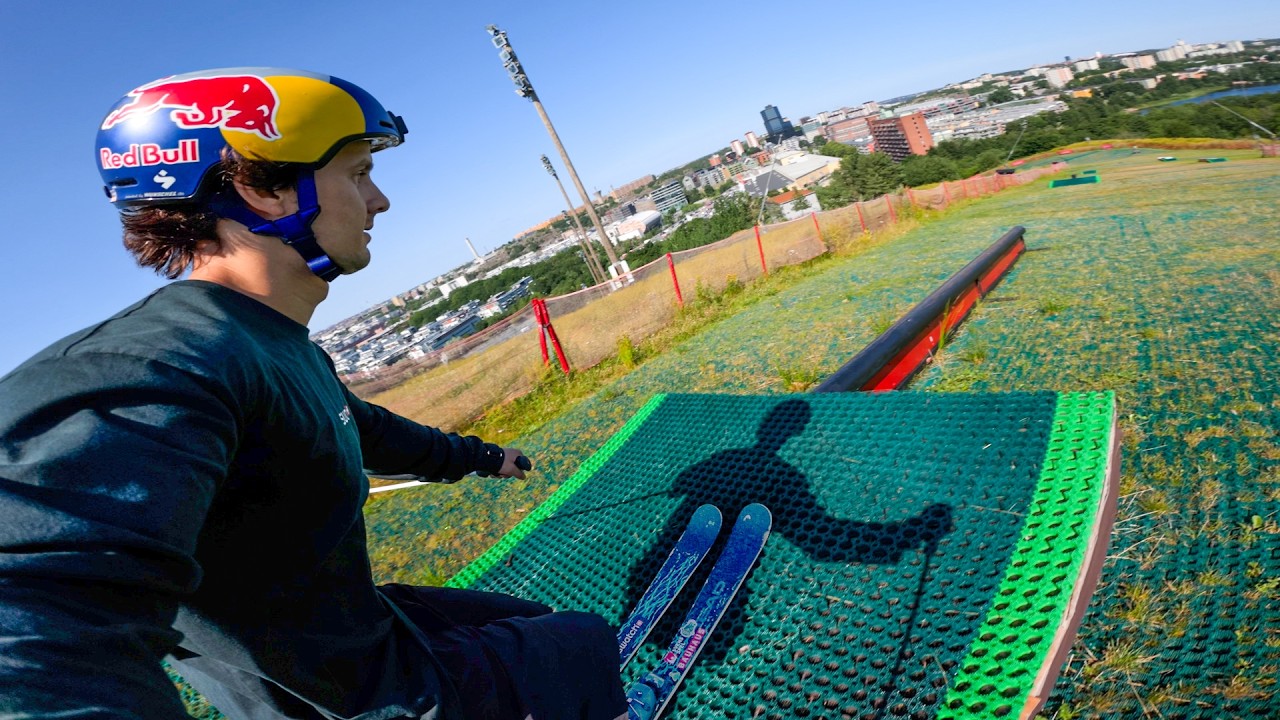
Red Bull Unrailistic, built around Jesper Tjäder’s imagination, does something similar for rail skiing. Instead of treating rails as small filler features between jumps, Unrailistic makes them the whole point: loops, transfers, impossible-looking metal structures, creative lines and park design that feels closer to a video game than a normal terrain park. The format gives rail skiing a world-class showcase and rewards imagination as much as technical execution.
Cold Rush and Linecatcher represent Red Bull’s backcountry and freeride influence. Cold Rush in British Columbia helped define a filmed, athlete-driven freeride contest format where deep snow, cliffs, natural features and judging categories came together. Linecatcher in Les Arcs pushed the blend of freeride terrain and freestyle tricks, helping establish the idea that a natural face could be judged not only by line difficulty, but by creativity, airs and style.
The Ultimate Run and Red Bull’s athlete-film power
Red Bull’s strongest ski films are usually athlete-led. Markus Eder’s The Ultimate Run is the clearest example. The project follows Eder through a dream sequence of skiing that links steep alpine terrain, freeride, freestyle, park, urban features and cinematic fantasy into one continuous top-to-bottom idea. It is not a traditional ski movie segment. It is a branded athlete project with global distribution and a concept big enough to reach viewers who may not normally watch ski films.
That is Red Bull’s media strength. It can take a skier’s personal vision and give it the production resources, location access, safety support, camera teams, editing structure and release platform to become a major cultural object. A smaller brand might sponsor a clip. Red Bull can turn the same idea into an international media event.
This matters because modern ski progression is increasingly shaped by athlete-authored projects. Skiers no longer need to fit only into annual film-company segments or contest runs. A rider with the right idea can build a standalone story. Red Bull has been one of the most important brands in making that model visible.
Eileen Gu Mathilde Gremaud Jesper Tjäder and the athlete network
Red Bull’s athlete roster gives it enormous ski credibility. In freestyle skiing, names such as Eileen Gu, Mathilde Gremaud and Jesper Tjäder represent different types of progression. Gu is a global crossover star whose success spans halfpipe, big air, slopestyle, academics, fashion and mainstream culture. Gremaud represents elite slopestyle and big air consistency, technical progression and competition dominance. Tjäder represents creative rail skiing, strange features and the ability to turn a personal idea into a full event format.
In freeride and film, Markus Eder is one of the brand’s most important ski figures. His career links Freeride World Tour success, freestyle roots, steep skiing and cinematic projects. That kind of versatility fits Red Bull perfectly because the brand often looks for athletes who can do more than win. They need to carry stories, invent formats, speak to media and create memorable moments.
The roster effect is powerful. Red Bull athletes are not only wearing logos. They often become centers of projects. A rail skier can become Unrailistic. A freerider can become The Ultimate Run. A contest skier can become a documentary subject. This is why Red Bull’s athlete program has such a strong influence on modern ski storytelling.
Red Bull TV and the global packaging of ski culture
Red Bull’s media platform is as important as its events. Red Bull TV, Red Bull Content Pool, YouTube, social media channels and event pages give ski content a distribution system much larger than the normal freeski audience. That changes the scale of a project. A park edit, freeride film or documentary can reach viewers who follow motorsports, climbing, biking, surfing, gaming or general adventure sports, not only skiers.
For ski culture, this global packaging has two effects. First, it gives athletes and events visibility that would be difficult to achieve through core ski media alone. Second, it changes the standard of production. Red Bull projects often arrive with strong cinematography, fast editing, broadcast structure, professional graphics, clear athlete storytelling and a release strategy built for replay value.
There is a tradeoff. Red Bull’s scale can make some projects feel highly branded, and not every skier wants action sports filtered through a corporate media machine. But the best Red Bull ski projects work because the skiing remains real. The camera may be polished, but the landings, speed, crashes, weather windows and athlete decisions still have to happen on snow.
Bad Gastein Åre Avoriaz Revelstoke and the Red Bull ski map
Red Bull’s ski geography is global but very precise. Bad Gastein gives PlayStreets its urban alpine identity, with skiing running through a historic Austrian town instead of a standard park. Åre gives Unrailistic a Swedish home and connects Jesper Tjäder’s personal creativity to a national freestyle stage. Avoriaz gives Infinite Lines a French all-mountain canvas where line choice, natural features and freestyle expression can meet.
Revelstoke and British Columbia give Red Bull the deep-snow credibility needed for Cold Rush and backcountry projects. Les Arcs gives Linecatcher a French freeride-freestyle heritage. Zermatt, Luttach and the Alps give The Ultimate Run its dreamlike alpine-to-valley structure. These locations are not random backdrops. Each one is chosen because it gives a format its character.
This is one of Red Bull’s biggest strengths. The brand understands that a ski event needs a place that feels specific. A rail event needs a creative park. A city slopestyle needs architecture. A freeride contest needs natural terrain with camera angles and safety access. A film project needs a route that can become a story. Red Bull’s location choices often become part of the identity of the project itself.
Construction means venues logistics and media systems
For Red Bull, construction does not mean wood cores, membranes or buckles. It means building the systems that allow ambitious ski ideas to happen. That includes course design, scaffolding, snow transport, resort partnerships, city permits, avalanche safety, camera planning, athlete logistics, live broadcast setups, editing teams, medical support, media rights and release strategy.
Urban events like PlayStreets require huge logistical work. Snow has to be moved into a town, features have to be built safely, athletes need enough speed and landing room, crowds need access, and the course still has to ski well. A concept like Unrailistic requires a different kind of build: experimental rails that are visually wild but still physically possible for elite skiers.
Backcountry and freeride projects require another system entirely: guides, avalanche forecasting, helicopters or sleds, weather windows, rescue plans, communication and patience. Red Bull’s “technology” in skiing is operational. It turns sketches, terrain ideas and athlete dreams into events and films that can actually be ridden, filmed and watched.
Sustainability and responsibility in a high-impact sponsor model
Red Bull’s ski footprint also raises responsibility questions. Large events, global filming, athlete travel, helicopter work, snow builds and branded activations all have environmental and community impacts. A sponsor with Red Bull’s scale has to be judged not only by what it creates, but by how carefully it works with resorts, towns, athletes and mountain environments.
The strongest responsible ski projects are the ones that use existing infrastructure intelligently, minimize unnecessary footprint, work with local crews, respect snow safety decisions and create content with long life rather than disposable spectacle. In urban settings, that means leaving the town intact and making the event feel welcome. In backcountry settings, that means terrain decisions, avalanche awareness and respect for local access.
Red Bull’s general corporate sustainability language around cans and recycling is separate from ski-specific impact. For skiing, the most important point is execution. A Red Bull project earns trust when the event feels safe, the athlete voice stays real, the terrain is respected and the final media gives the sport lasting value rather than one weekend of noise.
How to enter Red Bull’s ski universe
For park and rail skiers, start with Red Bull Unrailistic. It shows how a single athlete’s imagination can reshape rail design and create a new competition format. Watch the features, the trick choices and how skiers solve problems that do not exist in normal terrain parks.
For urban slopestyle and crowd-energy skiing, start with PlayStreets. It is one of the clearest examples of skiing leaving the resort and becoming a public spectacle without losing technical difficulty. For freeride and backcountry history, explore Cold Rush and Linecatcher. These formats show how Red Bull helped build event structures around natural terrain and skier creativity.
For cinematic athlete storytelling, watch The Ultimate Run. It is the best entry point for understanding Red Bull’s power as a ski film producer: athlete vision, massive logistics, polished cinematography and a concept designed to reach the whole action-sports world.
Why Red Bull deserves a 5 out of 5
Red Bull deserves a 5 out of 5 importance rating because its influence on skiing is enormous, even though it does not make ski equipment. It funds events, supports athletes, builds formats, produces films, distributes media and gives skiing access to a global audience. Few non-ski brands have shaped modern freeskiing so directly.
Its role is especially important in the parts of skiing that depend on imagination and infrastructure: urban slopestyle, park progression, rail innovation, backcountry-freestyle contests, athlete films and high-production freeride storytelling. Red Bull can take an idea that would otherwise stay in a skier’s notebook and turn it into a course, a film, a live event or a global release.
On skipowd.tv, Red Bull belongs as a core ski media, athlete and event sponsor. Its value is not in the can alone. It is in the venues, cameras, athletes, edits, contests, risk, timing and ambition that have made some of modern skiing’s most recognizable moments possible.