Trysilfjellet
Norway
Norway
Norway ski resort in Innlandet near the Swedish border | Known for: four linked ski areas, 41 lifts, 71 slopes, 685 meters of vertical drop, SkiStar Snow Park and family friendly mountain logistics | Season: November to April | Best for: park progression, groomer mileage, Nordic resort travel and mixed ability ski trips
Trysilfjellet And The Biggest Alpine Map In Norway
Trysil sits around Trysilfjellet in Innlandet, eastern Norway, close to the Swedish border and about two and a half hours from Oslo by road. Its modern identity is built on scale inside a Nordic context: SkiStar lists 41 lifts, 71 slopes, more than 100 kilometers of cross-country trails and 685 meters of vertical drop. For Norway, that makes Trysil the reference large-resort experience rather than a niche local hill.
The mountain is organized around four connected ski areas: Turistsenteret, Skihytta, Høyfjellsenteret and Høgegga. That layout gives Trysil a different rhythm from compact alpine resorts with one central base. Skiers can start in a hotel-heavy village zone, move through family slopes and high-mountain terrain, then finish in steeper Høgegga laps without leaving the same SkiPass system. For freeskiers, the key point is not huge exposed freeride terrain. It is reliable infrastructure, a real park program and enough piste mileage to keep a mixed crew moving all day.
1100 Meters Up And 5400 Meters Down
SkiStar’s piste map gives Trysil a highest ski altitude of 1,100 meters, a longest piste of 5,400 meters and a vertical drop of 685 meters. Those numbers matter because Scandinavian resorts often run lower than the Alps, with weather quality coming from latitude and winter consistency rather than extreme elevation. Trysil’s terrain is therefore best understood as a cold-weather, groomed-slope and park mountain, not a high-alpine freeride arena.
The terrain spreads in several directions around Trysilfjellet. Turistsenteret carries the busiest resort feel, with wide slopes, children’s areas, shops, restaurants and the snow park. Skihytta is sunnier and calmer, with red slopes and a cabin-based atmosphere. Høyfjellsenteret has higher mountain terrain and a Fun Ride zone. Høgegga is the steeper sector, with black pistes, tree skiing and more demanding laps for experienced skiers. Powder days can happen, but the resort’s everyday strength is repetition: carved turns, park laps, fast lift access and long prepared descents.
SkiStar Snow Park And The One Kilometre Freestyle Line
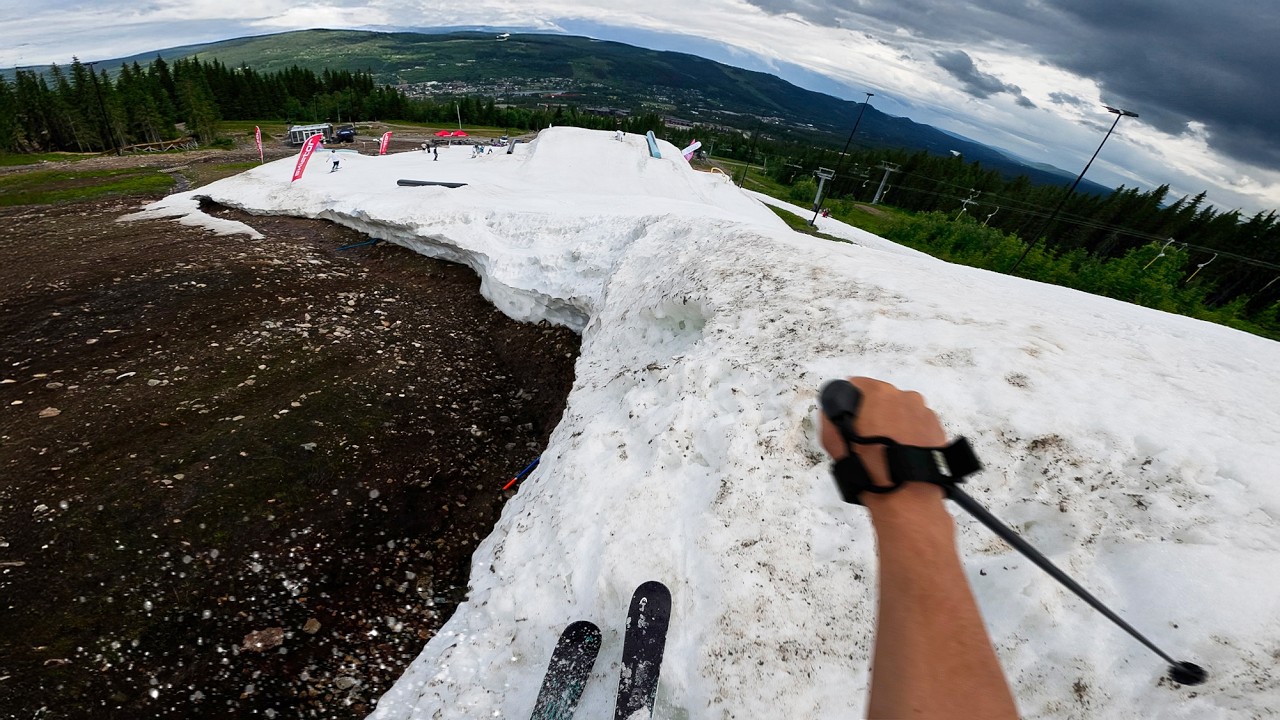
The modern freeski argument for Trysil is the SkiStar Snow Park. The resort describes the park as a new build launched for the 2024 25 season, with several lines for different levels. The published specs are useful: a T-bar park lift, blue, red and black jump lines, floodlights, jumps, boxes, rails and an approximate length of one kilometre. That places the park above a simple side-zone setup and gives Trysil a clear freestyle identity inside Norway.
The planning detail is also relevant. SkiStar states that freeskier Birk Ruud and the Norwegian Ski Federation were involved in planning the park. Ruud’s name gives the project technical credibility because he represents Norway’s top-level freeski pathway, while the federation connection suggests the layout is not only recreational. The park is built for progression, training and repeatable sessions. Oakley is also attached to the Oakley Jib Academy in Trysil, a free jibbing program aimed at children and young people. For skipowd.tv tagging, Trysil belongs naturally beside park, rails, jumps, jibbing, SkiStar Snow Park and Nordic freeski progression.
Turistsenteret Energy And Høgegga Speed
Trysil’s four-area structure makes the mountain easier to read once each sector has a purpose. Turistsenteret is the main social and service hub, with the snow park, a large children’s area, shopping, restaurants and major accommodation close to the lifts. It is the natural start point for park riders, families and groups that want everything within walking distance.
Høgegga sits on the opposite end of the experience. SkiStar describes it as the steepest and most challenging area, with advanced slopes, significant vertical drop and tree skiing. That does not make Trysil a big-mountain freeride destination, but it does give stronger skiers a defined sector for speed, edge pressure and more serious piste skiing. Skihytta and Høyfjellsenteret fill the middle ground: Skihytta for sunny red-slope flow, Høyfjellsenteret for high-mountain terrain, ski school access and family-friendly lodging around SkiStar Lodge Trysil.
November To April Under Scandinavian Light
SkiStar presents Trysil’s winter operation as a November to April ski season, supported by modern snowmaking systems. Annual snowfall is listed at 230 centimeters on SkiStar’s quick facts page, which is moderate compared with deep-snow destinations but workable in a cold Scandinavian climate. The resort’s strength is not constant storm chasing. It is the combination of prepared slopes, high operational capacity, evening and floodlit skiing in selected areas, and enough cold weeks to keep snow surfaces consistent through the core winter.
For park skiing, January through March is the most useful window. Midwinter brings cold snow and darker days, while March adds more light for filming, training and repeated park laps. April can still work for spring skiing depending on coverage and operations. The best Trysil freeski plan is practical: check park status, ride Turistsenteret when the snow park is the objective, use Høgegga for faster piste laps, and shift toward Skihytta or Høyfjellsenteret when the group wants quieter terrain.
Oslo Road Trips And Scandinavian Mountains Airport
Access is one of Trysil’s strongest advantages. Visit Norway places the resort about two and a half hours from Oslo by car or bus, with Scandinavian Mountains Airport around 45 minutes away across the Swedish border. That gives the resort two clear travel patterns: Norwegian domestic road trips from Oslo, and international access through the airport serving the Sälen Trysil region.
The lodging model is also simple for visitors. Much of the accommodation is ski-in ski-out or close to the slopes, with major resort hotels, cabins and apartments spread around the main base zones. That matters for freeski crews because park progression works best when logistics are frictionless. A skier can wake up near Turistsenteret, lap the park, move across the mountain, return for night activity, and avoid the long shuttle rhythm that can drain smaller trips.
Norwegian Ski Etiquette And Controlled Resort Flow
Trysil is polished, organized and family-heavy, so etiquette is more about control than local secrecy. Speed needs to match traffic, especially around children’s areas, ski schools and wide blue slopes. Park etiquette is equally important: wait your turn, call drops clearly, keep landings open, and use the right line for your level. The resort’s park structure gives options, but blue, red and black features only work when riders choose appropriate speed and respect the flow.
Off-piste expectations should stay realistic. Høgegga and tree zones can add variety, but Trysil is not built around unmanaged alpine exposure or glacier terrain. Skiers looking for remote couloirs, avalanche terrain and summit-to-sea lines should treat Trysil as a resort stop, not as a substitute for Norway’s wilder freeride regions. Its best safety profile comes from staying inside the marked system, checking lift and slope status, and using the mountain’s controlled layout properly.
The Trysil Case For Freeskiers
Trysil earns its place through a specific mix: Norway’s largest resort scale, four linked ski areas, 41 lifts, 71 slopes, 685 meters of vertical drop and a new one kilometre SkiStar Snow Park with jump lines, rails, boxes, floodlights and a dedicated T-bar. That combination makes it more than a family groomer destination. It is a practical Nordic training and progression resort where park riders can build skills while the rest of the group still has enough mountain to explore.
The resort is strongest for skiers who value consistency over spectacle. A park-focused teenager, a parent carving Høgegga, a beginner in Turistsenteret and a crew filming rail laps can all use the same mountain without splitting the trip apart. Trysil is not the place to chase Alaska-style spines or Olympic-scale slopestyle fame. It is the place where Norwegian resort skiing becomes efficient, organized and useful for freestyle repetition from the first winter weeks into April.