Bobby Brown
Colorado, USA | Active: FIS record listed as not active | Discipline: freeski big air, slopestyle, backcountry | Verified: 2014 Olympian, 5 X Games medals, first skier with two Winter X Games golds at one event | Current: Red Bull and Atomic athlete, backcountry filming
Aspen Under The Lights In 2010
Buttermilk was frozen hard under the January lights, with the Big Air scaffolding cutting a black shape into the Aspen sky. Bobby Brown came in fast, skis flat, then opened a switch double misty over the 85-foot step-up.
The landing sounded clean before the score made history. Winter X Games XIV had already seen the sport stretch toward bigger rotations, but Brown turned the night into a measuring point: two perfect-scoring tricks, Big Air gold, and the first perfect overall score by a skier in X Games Big Air. He was eighteen. He had already won slopestyle gold at the same event. One weekend moved him from a Colorado park prodigy into a reference point for the triple-cork generation.
The Double Gold That Rewired Winter X
Brown’s January 2010 weekend at Winter X Games XIV still sits near the center of modern freeski history. In slopestyle, he won ahead of Andreas Håtveit and Sammy Carlson, landing a score of 94.33. In Big Air, he beat T.J. Schiller and Elias Ambühl with a perfect 100.00, built from two 50-point tricks.
Red Bull describes him as the first skier to win back-to-back gold medals at a single Winter X Games. That detail mattered because slopestyle and Big Air asked different things. Slopestyle required rails, transitions, full-course rhythm, and clean landings across several features. Big Air was stripped down to one hit, one takeoff, one landing, and the pressure of showing something new under lights.
The two wins arrived before Olympic slopestyle existed. Freeskiing was still negotiating its position between core video culture, Dew Tour courses, AFP rankings, and the coming Olympic structure. Brown’s Aspen result proved that a skier could carry both full-course discipline and one-jump progression at the same time.
Denver Roots, Breckenridge Speed, And Colorado Park Time
Team USA lists Brown as a Denver, Colorado athlete, born June 5, 1991. Red Bull gives Colorado as his birthplace and marks his career start in 2008. The competitive identity that followed was built around Colorado’s park system, especially Breckenridge, where jump lines, early-season training, and Dew Tour pressure shaped a full generation of American freeskiers.
Breckenridge was not only a home-state venue. It was a technical lab. The park season there could begin on firm man-made snow, with cold mornings, fast in-runs, and features tuned for national contests. Brown learned in a setting where double corks, rail transfers, and switch landings were not reserved for finals. They were part of the daily rhythm.
That environment placed him beside skiers who were changing the sport’s language: Tom Wallisch’s rail precision, Sammy Carlson’s amplitude and film style, Joss Christensen’s course efficiency, and later Nick Goepper’s slopestyle consistency. Brown’s version leaned toward aerial risk first, then expanded into rail and backcountry vocabulary.
The Switch Double Misty That Set The Tone
Brown’s name became tied to the switch double misty 1440. Red Bull states that at the 2010 Winter Dew Tour finals he became the first person to land that trick. In simple terms, it combined switch takeoff, off-axis double flip mechanics, four full rotations, and enough landing awareness to bring the skis back to the snow without washing out.
The trick belonged to a period when spin count was accelerating fast. Big Air athletes were moving beyond double cork 1260s and into 1440 variations, while triple-cork training began pushing the ceiling higher. Brown was one of the skiers who made that shift visible to mainstream action-sports audiences.
The innovation was not only mathematical. A switch double misty forces the skier to leave the jump backward, commit to an inverted axis, hold body position through rotation, and find the landing late. Judges could count the degrees, but the crowd understood the risk by sight. Brown’s strength was making that risk look direct.
From Snow Park Junior Gold To The Dew Tour Belt
Before the Olympic era, Brown’s record moved through junior worlds, Dew Tour, AFP, X Games, and invitational events. FIS records him winning the 2010 FIS Junior World Ski Championships slopestyle event at Snow Park, New Zealand. That result placed him in a global field before the World Cup slopestyle calendar fully stabilized.
Team USA credits him as a nine-time Dew Tour medalist, with four golds, three silvers, and two bronzes. The Dew Tour mattered in that period because it gave skiers repeatable course pressure in North America. Breckenridge, Mount Snow, Killington, and other venues became testing grounds for runs that later appeared in Olympic qualification conversations.
Brown also carried AFP relevance. Turtlebox’s ambassador profile lists him as the 2011 Association of Freeskiing Professionals World Champion in slopestyle. Those rankings belonged to freeskiing’s pre-FIS identity, when riders and independent events still held major cultural weight. Brown’s résumé bridges that older scene and the later national-team structure.
Tignes, Two Years After Aspen
The 2012 European Winter X Games in Tignes confirmed that Aspen 2010 had not been a one-week spike. ESPN reported that Brown won men’s ski slopestyle with a 95 on his second run. The run included a switch 270 disaster onto the first rail, pretzel 270 off, rightside double cork 1080 mute, switch double 1260, and a misty 450 Japan gap over the transfer rail.
Tignes gave the victory a different texture. The French resort sits high in the Tarentaise, where March light can flatten the course and Alpine wind can change speed between laps. Brown’s win there showed more than Big Air power. The rail details mattered. Switch 270 disaster and pretzel 270 off required edge precision before the jump line even started.
The podium era around him was deep. Jossi Wells, Henrik Harlaut, Tom Wallisch, Andreas Håtveit, Sammy Carlson, and other skiers were pushing slopestyle in different directions. Brown’s line in Tignes sat between contest structure and aerial aggression. It was technical enough for a full course and heavy enough to carry his Big Air identity.
Sochi Before The Sport Settled
When ski slopestyle made its Olympic debut at Sochi 2014, Brown was part of the U.S. team. Olympics.com lists him as a United States freestyle skier with one Olympic participation, Sochi 2014. Red Bull records his final ranking as ninth. Joss Christensen won gold, Gus Kenworthy took silver, and Nick Goepper completed the American sweep.
Brown’s ninth place can look modest beside his X Games record, but the context matters. Slopestyle had just entered the Olympic program. Course design, judging expectations, federation systems, and athlete preparation were all shifting quickly. The American team arrived with enormous depth, and the Rosa Khutor course demanded full-course consistency under a new global spotlight.
For Brown, Sochi was less a career peak than a marker of the sport’s conversion. He had helped define the pre-Olympic progression era, then stood in the first Olympic field once freestyle skiing became a medal discipline. That bridge is part of his historical value.
The Big Air Years After The First Gold
Brown returned to Big Air gold at Winter X Games 2012 in Aspen. ESPN reported that he won ahead of Kai Mahler and Jossi Wells, becoming the only skier in Winter X history at that time to win two Big Air gold medals. The win came two years after the perfect-score night and after Alex Schlopy had taken the 2011 title.
In 2015, Red Bull notes second-place finishes at Winter X Games Big Air and the Jon Olsson Invitational, plus a win at the seventh annual Dumont Cup. Those results show his contest relevance after Sochi. He remained competitive while younger riders pushed triples, triples with new grabs, and more technical rail packages.
Big Air was also changing around him. The discipline was moving toward stadium formats, city jumps, and later Olympic inclusion. Brown’s early perfect score and later return to the top placed him inside that evolution. He was not simply a winner of one famous night; he was one of the skiers who helped define what Big Air looked like before it became more standardized.
Be Water And The Move Beyond The Course
Red Bull’s profile connects Brown’s 2016 period to Be Water, a short film that moved him and his crew away from the park and into larger natural terrain. The film followed a familiar progression for contest skiers of his generation: use park technique, then take it to backcountry jumps where snow, speed, and landing shape are less predictable.
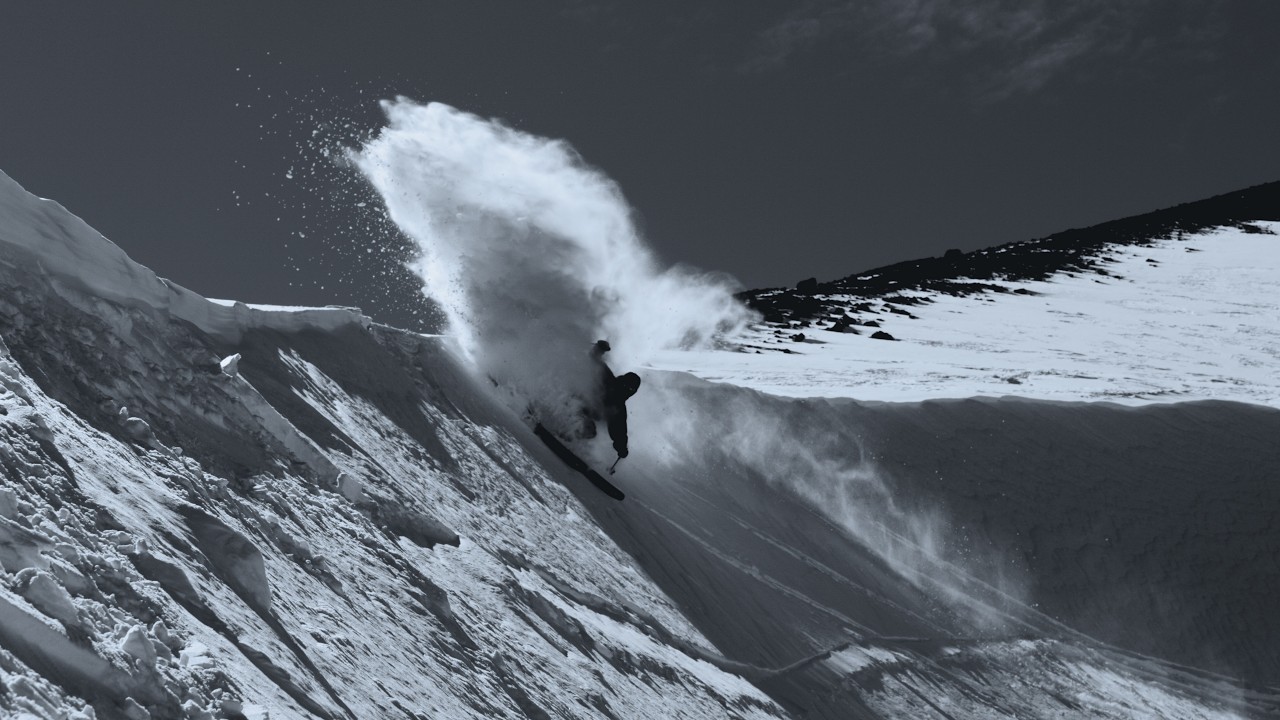
That transition changed the way Brown’s skiing was read. In a course, the rail order and jump size are known. In the backcountry, the skier has to work with wind-loaded slopes, hand-built takeoffs, avalanche timing, landing pitch, and camera position. A switch takeoff or corked rotation becomes less repeatable when the in-run is not perfectly machine-cut.
Be Water also placed Brown closer to the film lineage of Sammy Carlson, Pep Fujas, Tanner Hall, and other skiers who refused to let contest results define the whole career. The move did not erase his X Games identity. It widened it.
Saas-Fee, A Broken Back, And The Long Return
In 2021, Brown’s career changed at Saas-Fee, Switzerland. Red Bull and Freeskier both describe a severe spine injury during training there. Freeskier reports that the injury left him away from full-strength skiing for years before the release of White Gold. The location matters: Saas-Fee’s glacier park is a high-altitude autumn training zone where riders chase firm takeoffs before the North American season begins.
Prime Skiing’s report on Sounds of Saas Fee notes that the trip was filmed over three days in September on the glacier and ended early because of the injury. The park setting was the kind Brown had used for progression throughout his career: clean jumps, controlled laps, and a crew built around new tricks. One crash changed the timeline.
The recovery belongs to the later chapter of his legacy. Many skiers from the 2010 progression era left competition quietly as bodies, sponsors, or event formats shifted. Brown’s return became public through film rather than start lists. That choice fit where his skiing had moved.
White Gold In Southern Colorado
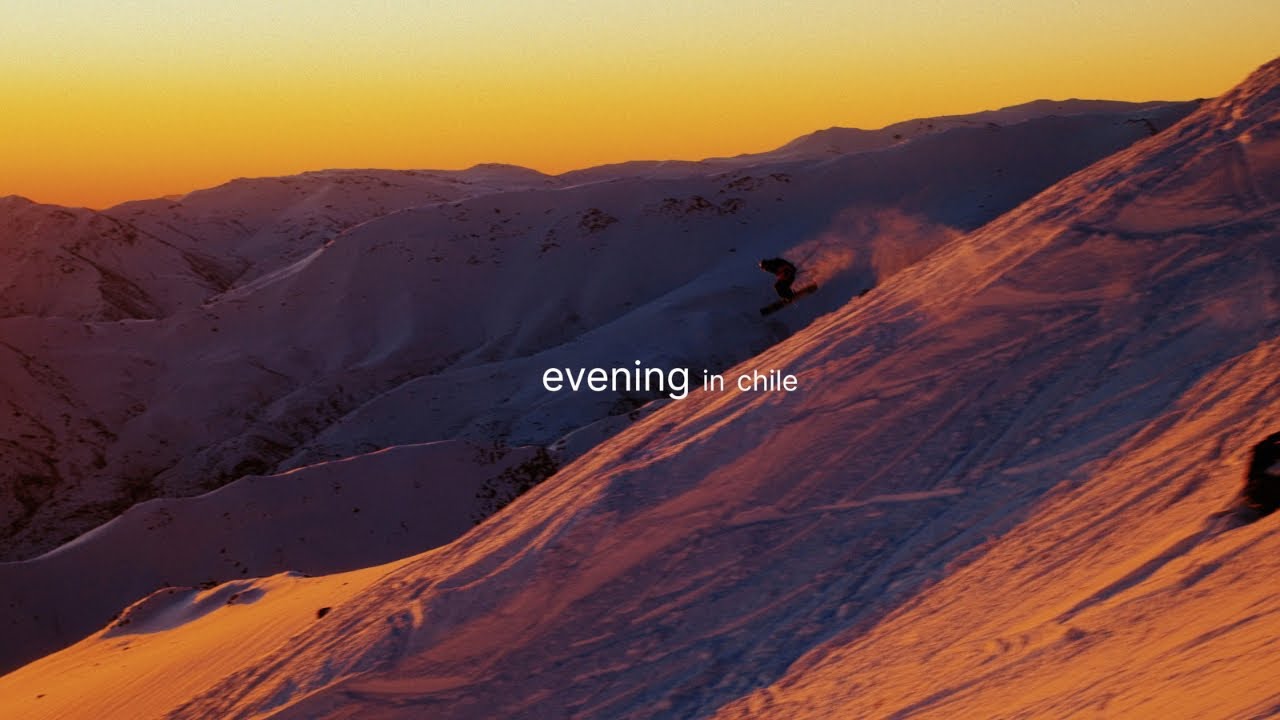
White Gold brought Brown back into the conversation through a Colorado backcountry lens. Freeskier published its return piece in November 2024, framing the project around his recovery from the 2021 Saas-Fee injury. Teton Gravity Research later described the film as a Southern Colorado project with natural freestyle features, including the Silverton road gap and Telluride’s Trestle.
The geography is important. Silverton terrain is steep, mining-road raw, and exposed to storms that can load faces quickly. Telluride offers a different visual language: narrow valleys, high ridgelines, and recognizable man-made features near a historic mountain town. Brown’s Atomic profile lists Telluride as his home resort, tying the film’s setting to his current mountain life rather than a random location hunt.
White Gold works because it does not try to recreate 2010. The tricks are filtered through age, recovery, terrain choice, and a more selective eye. The skier who once won under stadium lights now uses cliffs, road gaps, powder landings, and Colorado texture to show a different form of progression.
Atomic Bent Skis And The Current Kit
Atomic lists Brown as a United States athlete with Telluride, Colorado as his home resort and backcountry and freeski as his disciplines. The same profile connects him with Bent 100 skis, Backland Summit 9 BR bindings, and Hawx Prime 130 S GW boots. That setup points to a modern hybrid identity: freestyle shape, touring capability, and enough boot strength for heavy landings.
His public sponsor presence also includes Red Bull and Smith Optics, and Turtlebox lists him as an ambassador. The current support picture is different from the old contest circuit, but it fits the work. Backcountry filming needs more than skis. It needs communication, weather windows, camera logistics, avalanche planning, sled access, and gear that can move between touring and impact.
The equipment arc mirrors the career. The early Brown was associated with park skis and X Games landings. The current Brown is still a freestyle skier, but the canvas has changed to Colorado lines, natural takeoffs, and film-based output.
How Brown Shaped The Generation After Him
Brown’s influence is easiest to see in the way young skiers treat Big Air and slopestyle as connected disciplines. His 2010 double gold showed that the same athlete could win a full course and a one-jump event in the same week. Later riders such as Alex Hall, Birk Ruud, Andri Ragettli, and Henrik Harlaut built careers across multiple formats with that expectation already established.
The trick legacy is also direct. Switch double misty 1440, triple cork 1440 progression, double cork 1260s, pretzel rail exits, and high-pressure Big Air execution were part of the vocabulary Brown helped push into the mainstream. The sport did not stop there, but his era created the platform for later 1800s, 1980s, 2160s, and more complex rail-to-jump combinations.
His later move into film adds a second influence. It shows a path for contest skiers after the bib: keep the aerial skill, change the terrain, and build projects where style and risk are edited rather than scored.
The Legacy Now Lives In Footage
FIS lists Brown’s competition status as not active, with recorded starts from the 2010 Junior World Championships through 2018 World Cup slopestyle at Mammoth Mountain. The official start-list chapter has closed, but the video path remains clear.
For skipowd.tv, the essential Bobby Brown watch order starts at Winter X Games XIV for the double gold, moves to Tignes 2012 for course control, Sochi 2014 for Olympic context, Be Water for the backcountry turn, Saas-Fee recovery material for the injury chapter, and White Gold for the modern Colorado version. His career is not only a medal list. It is a record of how freeskiing moved from contest progression into filmed mountain creativity.