Kai Mahler
Fischenthal, Switzerland | Active: FIS record listed as not active | Discipline: freeski big air, slopestyle, halfpipe | Verified: 2012 Youth Olympic halfpipe gold, 2014 Olympian, 4 X Games Big Air medals, 2 World Cup Big Air wins | Current: retired from competition since 2020
Aspen When The Teenager Went Bigger
The Buttermilk jump was lit hard against the Colorado night, the landing scraped by repeated heavy impacts. Kai Mahler came in as a sixteen-year-old rookie, left the lip with his skis crossed, and sent a Big Air trick into the X Games final like he already belonged there.
Winter X Games Aspen 2012 made Mahler visible outside Switzerland. Bobby Brown won the event with 88 points, but Mahler took silver with 84, ahead of Jossi Wells, Sammy Carlson, and Gus Kenworthy. The result had a particular shock because he was not an established American contest name or a long-running X Games personality. He was a young Swiss skier from Fischenthal, carrying a compact style into the loudest Big Air venue of that period.
Four Aspen Medals Before The Gold Arrived Elsewhere
Mahler never won X Games gold, but his Big Air record at Aspen is too dense to treat as a side note. He earned silver in 2012, silver again in 2013, bronze in 2014, and bronze in 2017. That makes four X Games medals in one discipline across two different phases of Big Air progression.
The podium names around him explain the difficulty. Bobby Brown, Henrik Harlaut, Vincent Gagnier, James Woods, Elias Ambühl, and Jossi Wells were all part of the same era. Big Air was moving from double cork control toward triple cork pressure, while judges still rewarded grab clarity, style, and landing strength. Mahler stayed relevant through that shift by skiing with a cleaner visual line than many riders chasing only spin count.
The missing gold became part of his story. In a 2017 Newschoolers Q&A, the question was asked directly: four medals, but no gold. Mahler’s joking answer kept the tone light, but the record underneath was serious. A skier does not medal four times at Aspen Big Air by accident.
Fischenthal To Kühtai Before Big Air Took Over
Mahler was born on September 11, 1995, and grew up in Fischenthal in the canton of Zürich. FIS lists him under Switzerland with FIS Code 2528796, birth year 1995, and current status not active. APO’s older athlete profile lists Fischenthal as hometown and Laax as home mountain.
The early pathway was broader than the Big Air label suggests. Mahler competed in halfpipe, slopestyle, and Big Air at the start of his career. That mattered technically. Halfpipe gave him transition timing and body control. Slopestyle gave him rails, speed checks, and full-run construction. Big Air later became the cleanest expression of his strengths, but the foundation came from a three-discipline freeski education.
The 2012 Winter Youth Olympic Games at Kühtai became the first international title line. Mahler won boys’ ski halfpipe gold with 95.00 points, ahead of Finland’s Lauri Kivari and American Aaron Blunck. Before he was an X Games Big Air medalist, he was a Youth Olympic halfpipe champion.
The Silver Night Behind Harlaut
At X Games Aspen 2013, Mahler returned as more than a rookie surprise. Henrik Harlaut won Big Air with the nose butter triple cork 1620 that became one of the defining tricks of the decade. Mahler finished second, with Elias Ambühl third and Bobby Brown fourth.
The context matters because Harlaut’s trick changed the event’s language. The takeoff itself became part of the difficulty, not only the airtime. Mahler’s silver that night placed him directly beside that shift. He was not the stylistic earthquake of the final, but he was close enough to the front to show that his own approach still scored under a new level of creativity.
An APO “Road To Sochi” note later framed that period around an injury story, saying Mahler had explained his X Games Aspen 2013 silver despite a broken ACL. The safest reading is simple: the 2013 medal came in a season where his body was not operating cleanly, yet his Big Air level remained high enough to podium at Aspen.
Switch Double Misty, Triple Cork, And The Mahler Line
Mahler’s Big Air skiing was built around controlled risk rather than maximum theatre. His trick vocabulary included switch double misty 1440s, switch double misty 1620s, triple cork 1440s, carving triple cork 1620s, switch double bio variations, mute grabs, safety grabs, Japan tweaks, and clean one-jump landings.
ESPN noted before X Games Aspen 2013 that the seventeen-year-old had won the Breckenridge Dew Tour stop with a switch double misty 1440 double Japan grab. Newschoolers later described his 2013 X Games silver run as including a triple cork 14 and a switch double misty 16 during the jam session final.
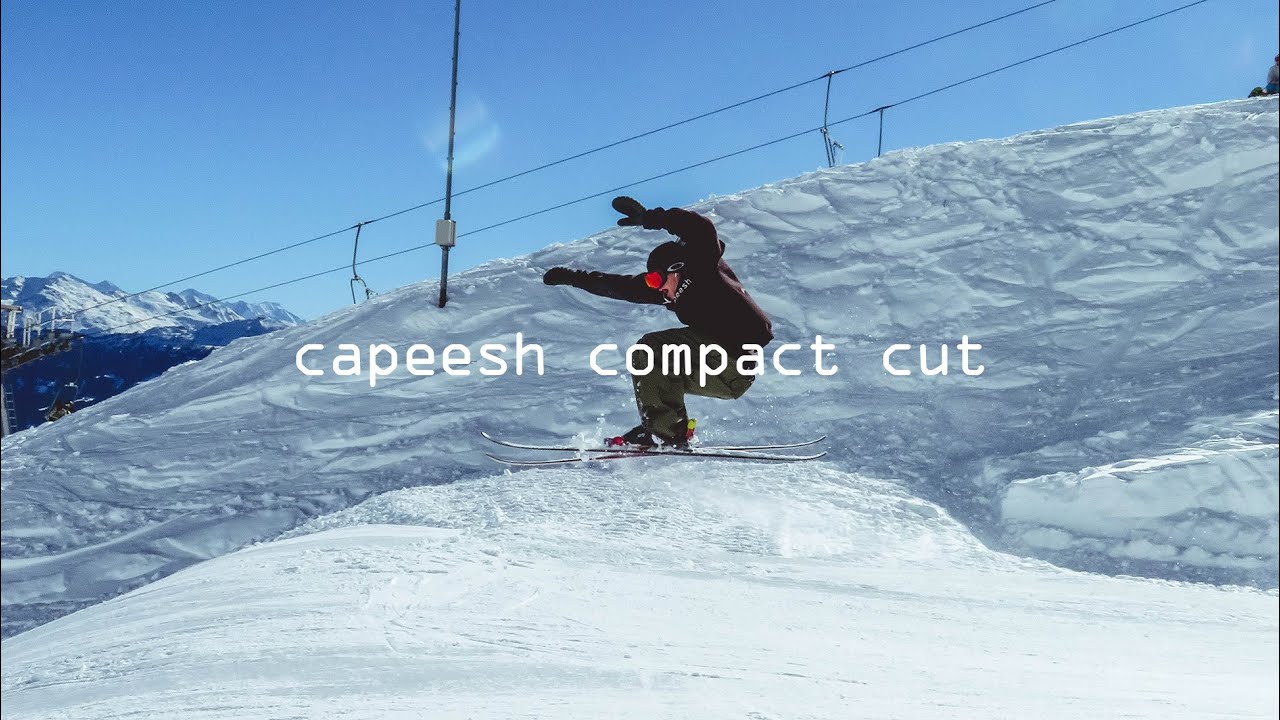
Compared with Harlaut, Mahler was less theatrical at the lip. Compared with Bobby Brown, he was less defined by one progression trick. Compared with James Woods, he carried a more Swiss big-air identity: fast in-run, compact body position, clean axis, strong landing. His best jumps looked direct, but the simplicity was deceptive.
Sochi In Camouflage Against The Caucasus Sky
Sochi 2014 gave Mahler his Olympic stage. Men’s ski slopestyle made its Olympic debut at Rosa Khutor Extreme Park, and Mahler represented Switzerland in a field packed with the strongest contest skiers of the moment. Olympedia lists his result as sixteenth.
The visual memory from Sochi is sharp: camouflage outerwear, neon green goggles, hard blue sky, and the jagged Caucasus mountains behind the slopestyle course. Photos from qualification show both the height and the difficulty of the day, including a fall on the course. He did not reach the medal fight, but the start placed him inside the first Olympic version of freeski slopestyle.
That matters historically because Mahler’s strongest event was Big Air, which was not yet on the Olympic ski program in 2014. He arrived through slopestyle at a time when Big Air specialists had to find another Olympic route. His Olympic record therefore tells only part of the athlete.
Milan And Quebec Gave The World Cup Proof
The strongest FIS stretch came in the 2016-17 season. FIS later summarized Mahler’s career with two World Cup victories in Big Air. Those wins came during a period when Switzerland was producing a deep Big Air group with Fabian Bösch, Andri Ragettli, Luca Schuler, Jonas Hunziker, and Elias Ambühl around the same scene.
The Milan Big Air World Cup gave him a city-event victory in front of a European crowd. The jump format was artificial, compressed, and exposed, with no mountain course to hide behind. Quebec City followed with another World Cup win in February 2017, where Canadian reports placed Teal Harle fourth and Mahler at the top.
Those wins keep the X Games medals from carrying the résumé alone. Invitational success can be dismissed by critics as event-specific. World Cup wins sit inside a federation system, with qualifiers, standings, national teams, and season points. Mahler had both.
Bronze In 2017 With The Carving Triple
X Games Aspen 2017 became the last major Mahler podium. James Woods won the Big Air final, Henrik Harlaut took silver, and Mahler finished third. Forecast Ski described his “otherworldly carving triple cork 16s,” while Downdays noted that he also put down a clean triple and a large switch double bio 12 mute.
The 2017 field had already moved into a new technical phase. Alex Hall was entering the conversation, Birk Ruud was rising, Harlaut was still shaping the style argument, and Woods brought British Big Air power into Aspen. Mahler’s bronze showed he could still land inside that changing group.
The details also show where his skiing had evolved. A carving triple cork 1620 starts before the takeoff: edge pressure, angle, timing, then release. It was not a straight ramp-to-rotation trick. The carving entry gave the jump a different rhythm, keeping his style readable even as the spin number climbed.
APO, K2, Marker, Red Bull, And The Laax Thread
Mahler’s sponsor and equipment trail reflects the early-2010s freestyle scene. APO’s profile listed APO, Samsung, Oakley, Red Bull, Full Tilt, and Marker, with Laax as home mountain and Inspired as a video reference. Older public profiles also connected him with K2, Marker, Full Tilt, and Red Bull during different phases.
Those names place him in a specific gear era. Full Tilt boots were common among freestyle skiers chasing flex and feel. Marker bindings sat under heavy Big Air landings. APO and K2 connected him to freestyle ski platforms designed for rails, jumps, switch landings, and repeated impact.
Laax is the key location. The Swiss resort has one of Europe’s strongest park identities, with P60, progressive jump lines, pipe infrastructure, and a culture that connects contest riders with film crews. For Mahler, Laax was not only a training venue. It became the place where his post-contest skiing still made sense.
The Swiss Big Air Generation Around Him
Mahler’s career sits inside a strong Swiss big-air period. Elias Ambühl represented the earlier polished contest generation. Fabian Bösch brought raw power and World Championship success. Andri Ragettli became the country’s most complete modern slopestyle and Big Air technician. Luca Schuler, Jonas Hunziker, and others filled out the depth.
Mahler’s role in that group was distinctive because he was young when he arrived. The 2012 Youth Olympic gold and X Games silver made him a teenage reference before the World Cup Big Air circuit had fully settled into its modern shape. He was not the longest-running Swiss star, but he was one of the riders who made Switzerland visible in the one-jump progression years.
His influence is more specific than universal. He did not reshape freeskiing like Harlaut, and he did not build a long Olympic résumé like later Swiss skiers. He helped define a Swiss lane in Big Air: stylish, technical, compact, and comfortable under night-event pressure.
Retirement At Twenty-Four
In January 2020, Swiss-Ski announced that Mahler was retiring from competitive skiing at age twenty-four. FIS published a similar retirement note, describing him as a freeski figure with four X Games medals, two World Cup Big Air wins, two World Championships appearances, and the 2012 Youth Olympic halfpipe title.
The retirement message was unusually young on paper, but it did not come from a lack of results. Mahler had already competed through the early Olympic slopestyle era, the first major X Games Big Air boom, and the city-jump World Cup period. He said he no longer felt the same joy as when he started, and that line gave the decision a clear emotional center.
The timing also explains why his profile can feel quieter today than the medal count suggests. He stepped away before ski Big Air made its Olympic debut at Beijing 2022. Had that event arrived eight years earlier, Mahler’s Olympic story might have been written in his strongest discipline.
The End Of Day At Snowpark Laax
After retirement, Mahler did not disappear from skis. Downdays published The End of Day in March 2020, describing him as doing what he loved most after leaving contest skiing: hot laps through Snowpark Laax. The edit matters because it strips the biography back to movement.
Snowpark Laax gives the right final setting. Not Aspen floodlights, not Olympic bibs, not city scaffolding. Just Swiss park laps, late-day snow, familiar jumps, and a skier whose competitive record had already been written. For skipowd.tv, that is the footage path to use after the medals: Kühtai 2012 for the halfpipe gold, Aspen 2012-2017 for Big Air, Milan and Quebec for World Cup proof, Sochi for Olympic context, then Laax for the skier after the scoreboard.