Jennie-Lee Burmansson
Sälen, Sweden | Active: FIS status active | Discipline: freeski slopestyle, big air, street style | Verified: 2017-18 FIS Slopestyle Crystal Globe, X Games Norway Big Air gold, X Games Aspen Slopestyle bronze, PyeongChang 2018 Olympic finalist | Current: active Swedish freeski profile with Völkl / Marker / Dalbello links
Phoenix Snow Park At Fifteen
Phoenix Snow Park was bright under Korean winter sun, the slopestyle course cut into hard snow and castle-shaped features. Jennie-Lee Burmansson dropped in wearing bib one, crossed her Völkl skis in the air, and skied like the Olympic stage had arrived early.
She was fifteen years old at PyeongChang 2018 and still reached the women’s ski slopestyle final. The result was eighth, not a medal, but the context made it powerful. Sarah Höfflin won gold, Mathilde Gremaud took silver, Isabel Atkin earned bronze, and Burmansson finished inside the first Olympic final of a career that had barely begun. For Sweden, it was a new signal: another young park skier could stand beside the sport’s strongest women while still learning how fast the field was moving.
Stubai Started The Globe Season
The 2017-18 season is the core of Burmansson’s competitive profile. FIS records five World Cup slopestyle podiums that season: Cardrona, Stubai, Font-Romeu, Mammoth Mountain, and Silvaplana. The only win came at Stubai in November 2017, on a high Austrian glacier course where cold snow, flat light, and long rails can turn a young rider’s run into a problem before the first jump.
That Stubai victory became the anchor for the FIS Slopestyle Crystal Globe. A globe is not a single highlight. It rewards travel, qualification days, changing snow, repeat execution, and enough consistency to survive a full season. Burmansson was still fifteen when she won the title, which made the achievement feel almost out of scale. She was not simply a junior skier with promise. She had already beaten senior fields across a World Cup calendar.
Sälen Before The World Cup Bib
Burmansson’s story begins in Sälen, one of Sweden’s most recognizable ski areas. Olympics.com described her as born and raised in the resort environment, with skiing present from childhood rather than discovered late. That matters because her earliest progression happened inside a Swedish snow culture where park laps, family skiing, and national-team pathways could overlap.
FIS lists her with Sälen’s IF and Swedish nationality, while BUG Visionaries lists her residence as Sälen. The mountain context is different from the large Alpine systems that shaped many European slopestyle skiers. Sälen gave repetition, winter rhythm, and a Swedish freestyle environment that would later include riders such as Emma Dahlström, Jesper Tjäder, Henrik Harlaut, Oliwer Magnusson, and Sandra Eie. Burmansson’s rise belonged to that wider Swedish park identity.
Font-Romeu And Mammoth Kept The Scores Coming
After Stubai, Burmansson’s season did not fade. She finished second at Font-Romeu in December 2017 and second again at Mammoth Mountain in January 2018. Font-Romeu sits in the French Pyrenees, where bright winter light, cold artificial snow, and changing wind can make speed control difficult through a slopestyle course.
Mammoth gave the same season a North American marker. The California course brought larger jumps, Sierra Nevada sun, and a deeper field preparing for the Olympic Games. For a rider her age, scoring podiums on both European and American courses mattered. It showed that her skiing could travel across snow conditions, course design, judges, and time zones. The globe race was not carried by one lucky early result. It was built through repeated finals.
Aspen Bronze Before Norway Gold
X Games Aspen 2018 gave Burmansson her first major action-sports medal. She took bronze in women’s ski slopestyle, adding an X Games result to the World Cup season that had already changed her status. Aspen’s Buttermilk course is a different pressure from FIS World Cup slopestyle: louder, more compressed, more media-facing, and historically central to freeski culture.
Four months later, X Games Norway turned the medal into a title. In the women’s ski big air final, Burmansson won gold ahead of Giulia Tanno and Tiril Sjåstad Christiansen. ESPN Press Room reported that she was the youngest rider in the field at fifteen and won with switch 720 variations, including a switch leftside 720 with double grab and a switch rightside 720 tailgrab. That detail is central because it shows the event demanded directional variety, not only one comfortable spin.
Switch Sevens And A Quiet Air Position
Burmansson’s early skiing was not built on the largest trick list in women’s freeskiing. Her strength came from composure, clean takeoffs, switch comfort, and the ability to make a run hold. The vocabulary around her 2018 results included switch 720s, tail grabs, safety grabs, double grabs, rail slides, 270s, switch landings, and full-course speed management.
Compared with Mathilde Gremaud, she looked less explosive in the air but very stable through a full line. Compared with Sarah Höfflin, she carried less veteran contest polish at that stage, but her score consistency was unusual for her age. Compared with Kelly Sildaru, another teen prodigy of the period, Burmansson’s image was less about dominance across every platform and more about an early season where almost everything landed when it needed to.
The Knee Injury That Stopped The Surge
The career changed in September 2018. Burmansson tore her ACL during competition in New Zealand, and the injury cost her the 2018-19 season. That timing was harsh. She had just completed the kind of year most riders spend a decade chasing: Olympic final, World Cup globe, X Games bronze, and X Games gold.
The injury did not only remove results from a database. It interrupted momentum while women’s freeskiing was accelerating around her. Gremaud, Höfflin, Sildaru, Tess Ledeux, Maggie Voisin, Johanne Killi, Giulia Tanno, and later Eileen Gu kept raising the technical ceiling. A teenager who loses a full year does not come back to the same sport. She comes back to a field where doubles, higher switch tricks, and more technical rail sections are arriving quickly.
Lausanne And The Return To Competition
Burmansson returned to public attention around the Lausanne 2020 Youth Olympic Games cycle. Olympics.com framed her as a skier feeling the thrill again after a year away, and the coverage made clear that she was still rebuilding confidence and rhythm rather than simply resuming the 2018 run.
The comeback was not smooth in the way highlight reels prefer. Rehab after an ACL injury changes how a skier approaches takeoffs, landings, spins, and crashes. The knee becomes part of every decision. For Burmansson, the return also carried public expectation because she had been presented as one of the sport’s fastest-rising teenagers. That pressure can be heavier than the injury itself: the body has to heal, and the image has to be rebuilt.
Völkl, Marker, Dalbello And The Swedish Support Line
BUG Visionaries lists Völkl, Marker, Dalbello, and Kläppen around Burmansson’s sponsor profile. The ski-binding-boot combination fits a competition rider who needs reliable response on rails, enough pop for switch spins, and stable landings through both slopestyle and big air.
Völkl skis were visible during the 2018 period, and the brand link remains part of her public equipment identity. Marker and Dalbello complete the setup, while Kläppen gives the Swedish snowpark connection. This support picture should not be inflated beyond the verified list. Burmansson’s profile is strongest when it stays precise: Swedish competition skier, Völkl-linked, national-team environment, and a career shaped by early podiums followed by injury management.
Street Style And SLVSH In The Current Chapter
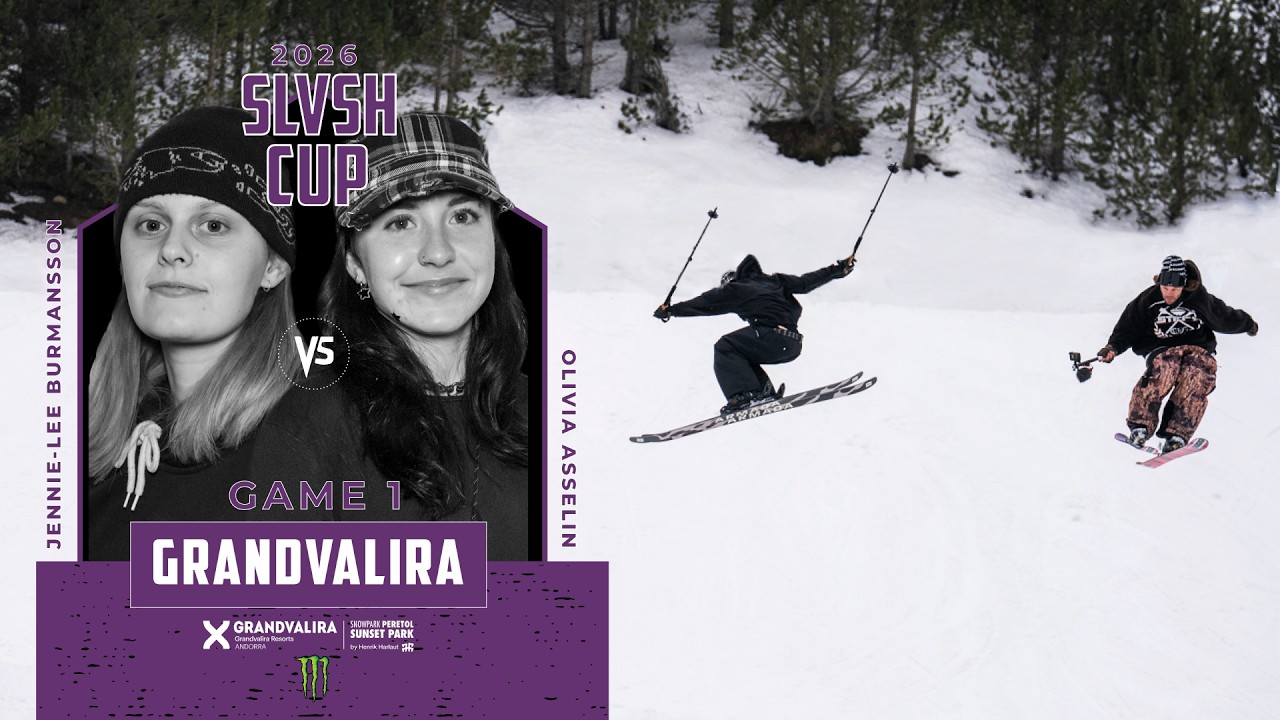
Burmansson’s current profile is different from her 2018 one. FIS lists her as active, but the public footage trail now includes formats that are more style-driven than a classic World Cup slopestyle calendar. Freeskier’s 2026 X Games Aspen recap placed her in the women’s ski street-style lineup, while SLVSH Cup Grandvalira 2026 listed a final between Jennie-Lee Burmansson and Naomi Urness.
That direction makes sense. Street Style and SLVSH reward rail technique, trick calling, fast adaptation, and small-feature creativity. They are less about winning a season-long globe and more about peer-readable skiing. For Burmansson, these formats give a way to stay visible while the women’s World Cup slopestyle field keeps growing more technical and more crowded. Her strongest current value may sit in that overlap: competition history, Swedish style, and a willingness to enter newer formats.
The Active Record After The Early Peak
Burmansson should not be framed as a retired prodigy or as a current dominant World Cup leader. The accurate position is more interesting. She is an active Swedish freeskier with one of the strongest teenage seasons in women’s slopestyle history, followed by injury, comeback, and a shift toward formats where style and rail creativity can matter as much as standings.
For skipowd.tv, the watch path is clear: Stubai 2017 for the World Cup win, Font-Romeu and Mammoth for the globe push, PyeongChang 2018 for the Olympic final, X Games Aspen 2018 for slopestyle bronze, X Games Norway 2018 for big air gold, the post-ACL comeback footage, X Games Aspen 2026 Street Style for the newer direction, and SLVSH Cup Grandvalira for the current head-to-head format. Jennie-Lee Burmansson’s page is not only about what happened at fifteen. It is about what remains after the fastest rise gets interrupted.