Profile and significance
Rudy Lépine is a Québec-born freeski rider and filmmaker whose urban/street skiing and calm, precise movement have made him a reference for edits-first progression. After early years in the Laurentians, he based himself in British Columbia around Whistler Blackcomb, where steady filming blocks shaped a catalog of replayable parts. Lépine’s profile surged with “PSYCHOACTIV” (2022), a rider-led project he directed and co-edited, and “Delirium” (2024), a joint release with Level 1 that stitched together Canadian cityscapes into a single street statement. As an athlete with ON3P Skis, he pairs credible rail craft with a filmmaker’s eye, producing clips that riders slow down to study. His significance sits at the intersection of style and method: he shows how freeski technique—especially for slopestyle and urban/street skiing—can be organized, repeatable, and learned without a bib or a mega-park.
Competitive arc and key venues
Lépine’s lane is film-first, not rankings-first. The touchpoints that matter are projects and places. “PSYCHOACTIV” introduced a tightly curated mood piece featuring Québec talent, followed by “Delirium,” filmed across Vancouver, Calgary, Toronto, Montréal, and Québec City. Those cities—and their rails, ledges, close-outs, and thin snowpacks—explain his skiing better than any result column. When the mountains call, long filming windows around Whistler Blackcomb provide consistent lips and light to refine jump cadence and speed control. The outcome is an urban rider whose timing reads cleanly whether the scene is a handrail in Montréal or an evening park lap in the Coast Mountains.
How they ski: what to watch for
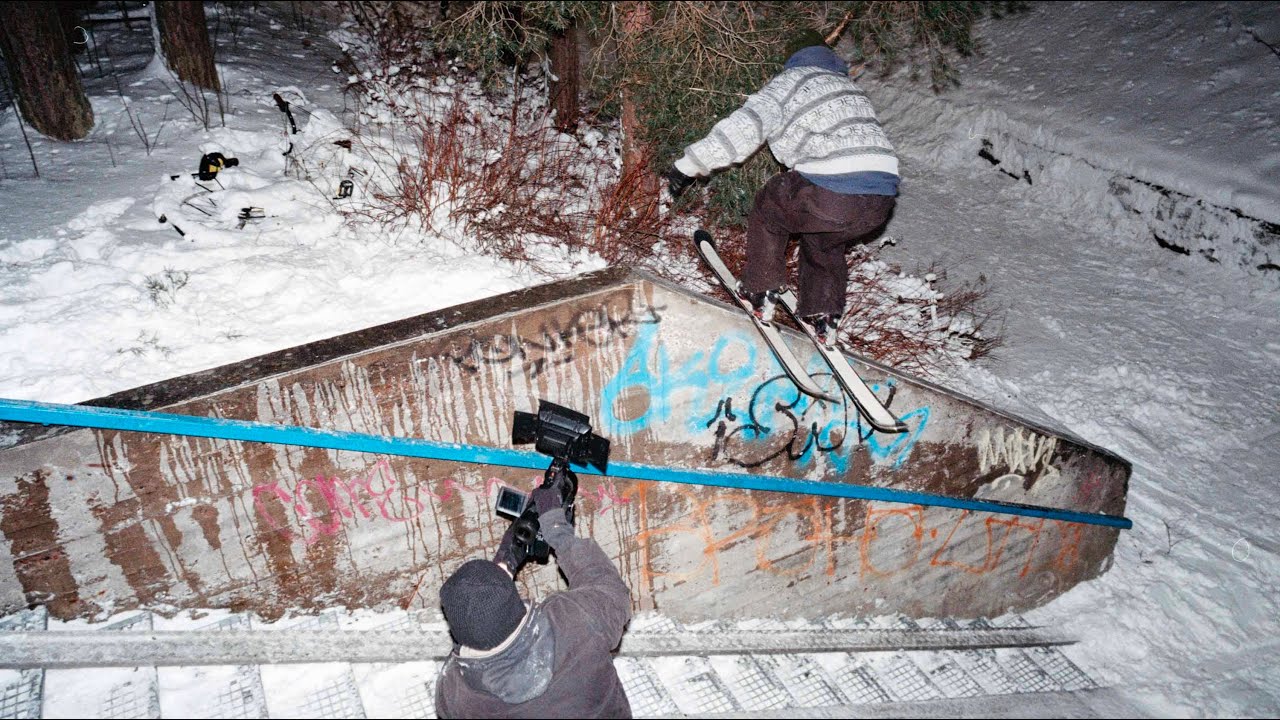
Lépine skis with economy and definition. Into the lip he stays tall and neutral, sets rotation late, and locks the grab before 180 degrees so the trick breathes. On rails he favors square, unhurried entries; backslides and presses held just long enough to be unmistakable; and exits with shoulders aligned so momentum carries into the next hit. You’ll notice minimal arm swing, early edge organization that keeps the base flat through kinks, and landings that read centered and inevitable—hips over feet, ankles soft. Even when the spot is complex, the approach looks calm, which is why his clips hold up to slow-motion scrutiny and translate directly to slopestyle features and urban/street skiing alike.
Resilience, filming, and influence
Lépine has been candid about navigating concussion history and mental-health turbulence—context that informs the patience visible in his skiing. Rather than chase constant escalation, he builds edits that value honesty of speed, clear setups, and exits that preserve flow. “PSYCHOACTIV” set that tone: a rider-directed film made with close collaborators. “Delirium” widened the lens with a Level 1 joint, blending friends’ segments into a cohesive Canada-wide street tour. Because the shots are framed to show slope angle, approach speed, and body organization, his work doubles as a study guide: viewers can pause, check shoulder alignment, and copy the checkpoints on their next park lap.
Geography that built the toolkit
Place explains the method. Montréal and Québec City provide handrails, walls, and tight in-runs that force accuracy at low to medium speeds—perfect for learning line design and preserving speed between features. The filming corridor through Vancouver, Calgary, and Toronto adds different snowpacks, lighting, and stair geometries, sharpening decision-making under pressure. In British Columbia, extended time at Whistler Blackcomb layers in consistent takeoffs, dependable rhythm lines, and wind reads that carry over to larger park builds. Trace those dots and you’ll see their fingerprints in every segment: urban commitment, park repetition, and patient timing that works anywhere.
Equipment and partners: practical takeaways
With ON3P Skis he rides press-friendly, predictable park platforms that accept a thoughtful detune at the contact points yet stay composed on bigger lips. Past film credits note support from rider-run outfits and creative partners tied to specific projects. For skiers trying to borrow his feel, the hardware lessons are straightforward: choose a true park ski with balanced, medium flex you can bend without folding; detune tips and tails enough to reduce rail bite while maintaining reliable lip grip; and mount close enough to center that presses sit level and switch landings feel neutral. The bigger “equipment” is process—film laps, compare shoulder alignment and hip-to-ankle stack against a short checklist, and repeat until patient pop, early grab definition, and square-shoulder exits become automatic.
Why fans and progressing skiers care
Fans care about Rudy Lépine because his skiing ages well. The edits prioritize timing, organization, and line choice over noise, which is why they invite rewatching—and why coaches use them to explain modern freeski mechanics. Progressing riders care because the same choices are teachable on normal parks and real city snowpacks: calm entries, grabs established early, presses that hold long enough to read, and exits that preserve speed for what’s next. If your winter looks like night laps in Québec, weekend missions to Canadian cities, and a few floodlit sessions in the mountains, his blueprint shows how to turn limited speed into stylish, reliable freeskiing across slopestyle features and urban/street skiing.