Åre
Scandinavia
Sweden
Swedish mountain resort in Jämtland | Known for: Åreskutan terrain, Bräcke snow park, World Championships history, Swedish freeski roots and rail progression | Season: December to early May depending on sector | Best for: park riders, all-mountain freeskiers, spring crews and Scandinavian resort travel
Åreskutan Above A Village Built On Ski History
Åreskutan rises to 1420 meters above the village of Åre, with lift-served skiing spread across Åre village, Björnen and Duved Tegefjäll. SkiStar Åre lists 47 lifts, 91 slopes, 890 meters of vertical drop and about 420 centimeters of annual snowfall, making the resort the main alpine reference point in Sweden. The mountain feels different from an Alpine bowl resort. The fall line drops toward Åresjön lake, the tree line shifts quickly with weather, and the village sits close enough that skiing, rail travel, restaurants and nightlife all compress into one valley.
The historical base is unusually deep for Scandinavia. Åre Ski Club was formed in 1902, and Åre Bergbana opened in 1910 as the first fixed transport link up the mountain. That funicular connection still matters symbolically. Åre did not grow only from modern tourism marketing; it developed through rail access, winter sport culture and a village rhythm that long predates freestyle skiing. For freeskiers, that gives the place weight. Park sessions, rail projects and World Cup-era infrastructure sit on a mountain with more than a century of ski identity behind it.
Åreskutan Lines From High Wind To Lakeside Snow
The terrain is broad rather than extreme. Åre’s strongest freeride zones sit around the upper mountain, where wind can reshape the snow into chalk, crust, pockets and loaded panels within a single day. The 890-meter vertical drop creates long laps when the upper lifts are open, while lower tree-lined sectors become useful when cloud or wind closes exposed terrain. Skiers who arrive expecting one simple trail map miss the point. Åre skis by sector, weather and timing.
Early season depends on cold, snowmaking and progressive terrain openings. The upper mountain normally becomes more reliable once winter deepens, and spring can be one of the best periods for filming because daylight stretches long and the surface softens without losing all structure. The practical Åre freeride season is strongest from January into April, with May offering closing-week atmosphere when snowpack allows. Wind is the key variable. A storm can refresh the upper faces, but the same wind can strip entries and load convex rolls, so local status updates and avalanche information are part of the daily routine.
Bräcke Rails And The Garden After Dark
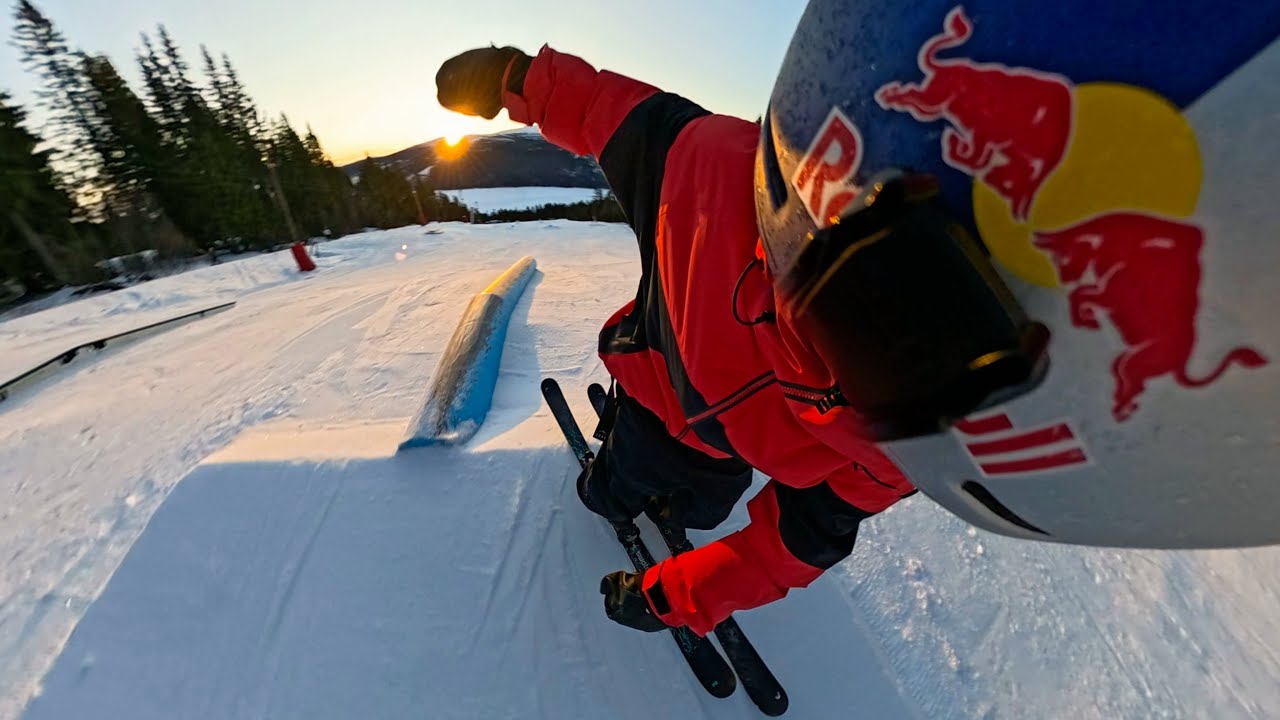
SkiStar Snow Park Åre is based in the Bräcke area and gives the resort its clearest freestyle identity. The park has blue, red and black lines with jumps, rails and features, while the illuminated Garden zone near Bräckeliften adds a night-session layer that suits short edits and repeat attempts. This is the terrain that connects Åre to a Swedish park language built around rails, creative setups and long technical lines rather than only big jump amplitude.
Compared with Kläppen Snowpark, Åre is less park-exclusive and more of a complete mountain town with a serious freestyle sector inside it. That distinction matters for trip planning. A skier can spend the morning on upper-mountain chalk, move to Bräcke for park laps, then finish in Garden when the lights come on. The park setup also gives local riders a place to refine rail pressure, switch takeoffs and landing control without leaving the resort system.
World Championships On The Alpine Side
Åre’s biggest official event history comes from alpine racing rather than freeski. The resort hosted the FIS Alpine World Ski Championships in 1954, 2007 and 2019, with Olympics.com describing the 2019 edition as a return to a venue already used in 1954 and 2007. That matters even for freeski content because major championships leave infrastructure behind: race hills, broadcast standards, lift capacity, crowd management and a reputation for handling large winter events.
The freeski story is more cultural than formal. Åre is tied to Swedish freestyle through riders, parks and rail projects rather than a single recurring freeski mega-event. Henrik Harlaut is listed by FIS under Åre SLK, and his archive connects the resort to a generation that made Swedish freeskiing visible through big air, slopestyle, street filming and style-driven park skiing. The mountain became part of a national pathway where contest skiing and edit culture could exist together.
Tjäder Steel And The 154 Meter Åre Rail
Jesper Tjäder gives Åre one of its most precise modern freestyle markers. Guinness World Records lists his longest rail grind on skis at 154.49 meters, achieved at SkiStar Resort in Åre on May 9, 2022. That record was not a random stunt placed in a neutral venue. It matched Åre’s role in Swedish rail progression: a resort where engineered features, athlete imagination and local terrain can combine into something measurable.
The record also explains why Åre should not be reduced to a groomer resort with a park attached. Tjäder’s skiing has always blurred contest precision and feature design. Åre gave that language a physical stage, from early-season Garden clips to the custom metal pipe used for the world record. For young riders, the lesson is simple. The resort can support both normal park mileage and one-off builds where the obstacle becomes the story.
Train Town Flow And Scandinavian Logistics
Åre is one of the easiest major Scandinavian resorts to understand without a car. The railway reaches the village, and the resort sits between Åre Östersund Airport and Trondheim Airport for international travel. SkiStar highlights the train station in the village as part of the destination’s access profile, while the lift system spreads guests across Åre village, Björnen and Duved Tegefjäll. That multi-sector layout gives groups flexibility, especially when weather changes during the day.
Park-focused skiers should base decisions around Bräcke and Garden access. Families or mixed crews often drift toward Björnen for softer terrain, while stronger skiers watch the upper lifts for Åreskutan openings. Duved Tegefjäll can work when the central mountain feels crowded or exposed. The best rhythm is not to chase every sector in one day. Start with the weather, pick the lift cluster that matches it, and keep enough energy for evening laps or village movement after skiing.
Swedish Freeski Names In The Åre Orbit
Åre’s influence shows up through athletes more clearly than through a single signature face. Harlaut and Tjäder represent two different branches of Swedish freeskiing: one built on style, big air, apparel culture and film identity; the other built on rail engineering, slopestyle medals and feature creativity. Max Palm adds the freeride side of the Swedish story, connecting big-mountain tricks and modern FWT-era skiing to the same national ecosystem.
That ecosystem also runs through brands and crews. Armada is central to Harlaut’s ski identity and appears repeatedly in the wider creative lane that links Sweden, Andorra, Riksgränsen and street projects. Åre functions as one of the Swedish anchors inside that network. It has enough resort infrastructure for events and training, enough park culture for progression, and enough village gravity to keep riders returning between trips elsewhere.
Weather Discipline On A Visible Mountain
Åre’s safety culture starts with accepting that the mountain is weather driven. Upper lifts can be affected by wind, visibility and icing, while off-piste snow changes quickly across open slopes and tree-line transitions. The resort’s weather and slope pages publish lift, piste and avalanche information, and those updates should shape any plan beyond groomed terrain. A sunny village does not guarantee clean visibility above, and a soft lower run does not mean stable snow near exposed ridges.
Inside the park, etiquette is just as important. Garden and Bräcke can become busy when conditions align, so riders need to call drops, clear landings, respect line order and avoid standing in blind zones. On natural features, the same logic applies. Åre rewards creative skiing, but the best sessions happen when crews manage speed, communication and terrain awareness. The mountain is public, compact and watched by many different ability levels.
The Late Season Reason To Keep Åre On The Map
Åre belongs in a freeski travel plan because it combines several identities without flattening them into one product. It is a historic Swedish ski village, a large Scandinavian resort, a park training base, a rail-project setting and a spring destination with a strong end-of-season atmosphere. Riksgränsen owns the more Arctic late-season freeride myth, but Åre offers a broader mountain-town version before many riders push farther north.
For park skiers, Bräcke and Garden are the practical target. For all-mountain skiers, the upper Åreskutan openings decide the day. For film crews, the most useful window often comes when spring light stretches, snow softens and the village is still fully alive. Åre’s strongest fact is not one lift, one athlete or one event; it is the way 1910 mountain access, 2019 World Championship infrastructure and a 154.49-meter rail record can all belong to the same resort.