lauri kivari
Helsinki, Finland | Active: 2011-present public record | Known for: Sochi 2014 slopestyle, Youth Olympic halfpipe silver, Keeshlife, The Bunch Color, Forre street films | Current: Finnish street and film-focused freeskier
Rosa Khutor Under A Blue Olympic Sky
The slopestyle course at Rosa Khutor looked sharp under the Sochi sun, pink rails cutting across white snow while the Caucasus peaks sat hard against a clear sky. Lauri Kivari dropped into that Olympic course in 2014 as a Finnish teenager with pipe, park and street already mixed into his skiing. The result, 29th in men’s slopestyle qualification, did not define him as a contest star. It became one chapter in a stranger route: Youth Olympic halfpipe medalist, World Cup slopestyle starter, then a skier whose strongest later work came from Finland’s cold streets, Keeshlife, The Bunch and Forre.
Helsinki Name On The Finnish Start Sheet
Olympedia lists Kivari as born in Helsinki on March 23, 1996, affiliated with Freestyleseura Moebius. FIS lists him under Finland with FIS Code 2529361 and an inactive status in the official database. Those basic details matter because Finnish freeskiing has often developed through small scenes rather than a massive resort system. The country has parks, rails, cold winters and committed crews, but not the same industrial freestyle infrastructure as the United States, Norway or Switzerland. Kivari’s career reflects that scale: official international starts early, then a deeper footprint through films and street projects.
Kühtai Halfpipe Before Sochi Slopestyle
The first major result came before the Olympic Games. At the 2012 Winter Youth Olympics in Kühtai, Austria, Kivari won silver in boys’ halfpipe behind Kai Mahler and ahead of Aaron Blunck. Olympedia’s result sheet gives the detail: Kivari qualified fourth, then scored 90.00 in the final. That podium is an unusual marker for his later profile because he did not remain a pipe-only skier. It shows early air control, transition awareness and amplitude discipline before his public image shifted toward slopestyle, rails and eventually street video.
Copper Mountain And The Slopestyle Door
FIS results show Kivari moving through slopestyle at a high level before Sochi. In January 2013, he placed tenth at the Copper Mountain World Cup slopestyle, after qualifying second in his round two days earlier. In December 2013, also at Copper, he placed eighteenth in another World Cup slopestyle event. Those results gave him enough international context to be more than a one-off Olympic participant. Copper’s courses test full-run construction: rails first, speed management, jump-line rhythm, switch direction, grab quality and the ability to keep skis quiet after landings.
Sochi And The Finnish Freeski Moment
At Sochi 2014, Kivari joined a Finnish slopestyle group that also included Antti Ollila, Otso Räisänen and Aleksi Patja. His 29th-place Olympic result came in a discipline that had just entered the Games, when freeskiing was still negotiating its contest identity. The field was stacked with skiers who came from film, X Games, Dew Tour and World Cup backgrounds at the same time. For Kivari, Sochi became less a career peak than a timestamp. It fixed him inside the first Olympic generation of men’s ski slopestyle, before his later footage moved away from stadium scoring.
Keeshlife In The Cold Finnish Streets
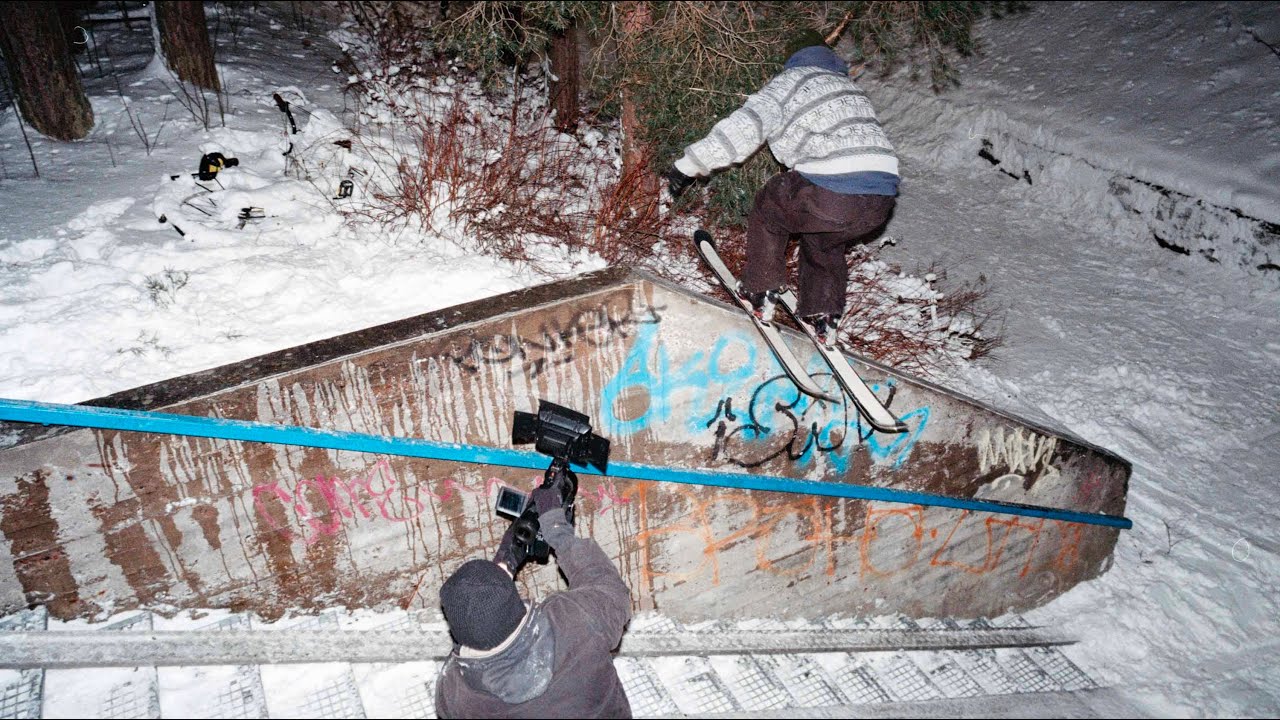
Keeshlife gave Kivari a different kind of identity. The 2016 Keeshlife Movie was filmed mostly in the cold streets of Finland, with additional flavor from Ruka backcountry and Riksgränsen. The rider list placed Kivari alongside Anttu Oikkonen, Antti Ollila, Markus Schröder, Aleksi Patja, Miika Virkki, Kalle Hilden, Eemeli Jussila, Joona Kangas, Valentin Hänninen and others. That project belongs to a Finnish DIY tradition: handycams, friends filming friends, street rails, rough landings, snow piled into city features and a willingness to let the footage stay raw rather than polished flat.
Lunta After The Knee Injury
Kivari’s 2017 edit “Lunta” gave a more personal glimpse. The Newschoolers description says the footage came from dreamy spring-time shredding at Ruka after a knee injury the previous November. That context matters because injuries often disappear from clean athlete bios, but they shape style and timing. A skier returning from knee damage may approach features with different patience, smaller windows of confidence and a stronger sense of what each trick costs. “Lunta” placed Kivari back in Finnish spring snow, testing ideas and dreams gathered during months away from normal skiing.
Russia, Sweden And Japan With The Bunch
The Bunch’s Color placed Kivari in one of the most influential creative ski-film circles of the late 2010s. The 2019 film listed Pär “Peyben” Hägglund, Alex Hackel, Kim Boberg, Oliver Karlberg, Magnus Granér, Lucas Stål Madison, Forster Meeks, Lauri Kivari and Hugo Burvall, with filming in Sweden, Russia and Japan. That roster matters because The Bunch changed the way many skiers read street footage. The crew valued rhythm, clothing, music, friendship, humor, loose structure and tricks that could look strange before they looked difficult. Kivari fit that language because his skiing was already moving toward a less formal, more image-driven lane.
Forre And The Finnish Street Standard
Forre connected Kivari to another Finnish film current. FREESKIER’s Movie Monday feature on Forrmula listed him with Mainio Ormio, Eemil Aro, Matias Suomi, Harald Hellström, Joona Sipola and Teemu Tirkkonen, describing the Forre crew as part of a Finnish street-skiing wave shaped by bitter winters, short days, icy conditions and flat landscapes. CAST followed in 2022, directed, filmed and edited by Arttu Heikkinen, with Kivari again in the rider list. Downdays noted that CAST won Best Short Film at High Five Festival and singled out Kivari’s limited but heavy clip count. That is a precise description of his later role: not always the most visible name, but rarely filler.
How Kivari Moves From Contest To Concrete
Kivari’s technique is best understood through that shift from halfpipe and slopestyle into street films. Pipe and slopestyle gave him air awareness, axis control, transition comfort and the ability to set speed with discipline. Street skiing asks for a different version of the same skills: rails with poor run-ins, stair gaps, concrete landings, short approaches, uneven snow and features that cannot be reset by a park crew. His film clips tend to value commitment, line choice, rail pressure, calm exits, switch control and the ability to make a rough Finnish or Russian urban spot look readable.
The Kivari Archive After Competition
Kivari’s official FIS record ends without a senior medal defining the career, but the wider archive gives him a clear place in freeskiing. Youth Olympic silver and Sochi qualification connect him to Finland’s early Olympic freeski chapter. Keeshlife, The Bunch, Forre Forrmula, CAST and Keesh 3 connect him to the Scandinavian and Finnish street-film network. That combination makes him more interesting than a simple “former Olympian” label. He represents a skier who passed through the contest system, then kept building relevance through crews, streets, raw filming and the colder edge of European freeski culture.