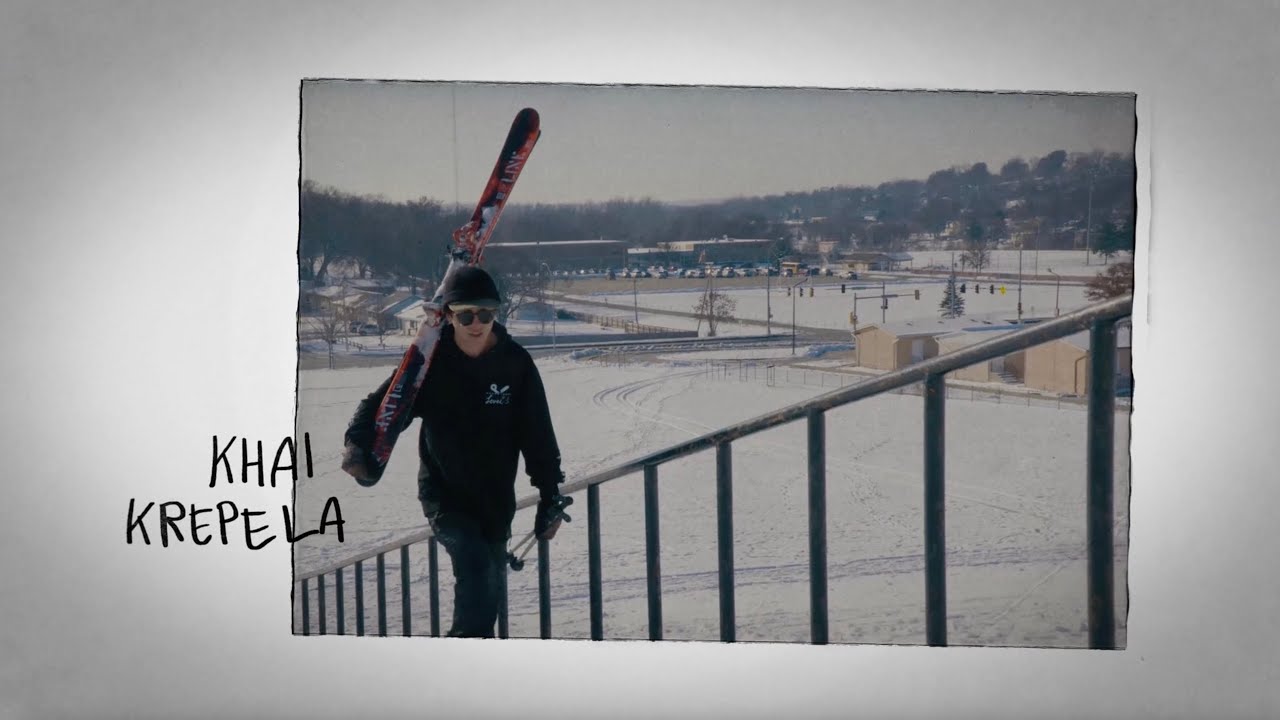
Khai Krepela
Park City, Utah | Former professional street skier, film athlete, rail-jam organizer, and ski-industry executive | Public markers: Act Natural, Tracing Skylines, Level 1 films, X Games Real Ski 2017, Good Company, LINE Traveling Circus, Khai Krepela’s Summer Classic, K2, Hinterland Skis
Rail Gardens After The Lights Came On
The Salt Lake rail was cold, scratched, and already marked by years of ski edges. Khai Krepela stood below the run-in with the quiet body language of a street skier who knew the spot could still win. No start wand, no bib, no judging tent. Just stairs, concrete, metal, a camera, and the pressure to make one attempt look casual after hours of work. That was the world that made his name travel: not polished slopestyle decks, but Utah rails, Detroit walls, Moscow stair sets, Windells summer metal, and the small crew rituals behind a filmed trick. Krepela’s legacy sits in that gap between effort and ease.
Act Natural And The 2012 Break
Krepela’s public rise is tied closely to Toy Soldier Productions’ Act Natural. Later ski-media summaries describe 2012 as the season when he broke through with a standout part in that film. The timing matters. Street skiing had already built its own language through Level 1, Poor Boyz, 4bi9, Stept, and regional crews, but online video culture was changing how skiers were discovered. A strong part could travel faster than a contest result. Krepela’s Act Natural footage put him in that video-first lane, where rail choice, patience, and style counted more than medals.
Detroit Turned Tracing Skylines Sideways
In 2013, Krepela linked with Poor Boyz for Tracing Skylines, and the Detroit segment became one of the defining references around his name. Detroit mattered because the city offered street skiing at its roughest edge: brick, metal, industrial architecture, dead winter light, and spots that did not feel designed for skiing. A rider had to build speed from sidewalks, trust narrow snow piles, and make landings work where the city allowed them. Krepela’s place in that chapter helped mark him as more than a park skier who could hit rails. He belonged in the streets.
Less, Small World, Pleasure, Habit, Romance
The long Level 1 run is the center of Krepela’s film résumé. Public film listings and ski-media summaries connect him to Less, Small World, Pleasure, Habit, and Romance. That sequence gave him one of the stronger street-ski archives of his generation. Pleasure, released by Level 1, listed locations that stretched from Washington, DC, Salt Lake City, and Aspen to Kirovsk, Russia, Gulmarg, India, Haines, Alaska, Eagle Pass, British Columbia, and Secret Valley, Switzerland. Krepela’s presence inside that world tied his skiing to a production house that shaped modern freeski film grammar for two decades.
How Krepela Made Metal Feel Loose
Krepela’s strongest technical identity sits on rails, ledges, stairs, and urban transitions. His skiing used presses, swivels, switch takeoffs, pretzels, 50/50s, wall contacts, rail transfers, close-outs, and awkward landings without turning each clip into a trick-list exercise. Street skiing rewards patience before it rewards difficulty. A crew may spend hours shaping a run-in, salting a landing, checking security patterns, and resetting a bungee before one clean attempt. Krepela’s best clips carried that labor without showing strain. The trick looked like it belonged to the spot, not like it had been forced onto it.
Real Ski Put Ninety Seconds On ESPN
X Games Real Ski 2017 pushed Krepela’s street identity onto a bigger competitive screen. ESPN published his Real Ski 2017 video part, and The Ski Journal described that year’s format as an all-urban freeski video contest built around 90-second edits from six skiers: Will Wesson, LJ Strenio, Khai Krepela, Henrik Harlaut, Tom Wallisch, and Magnus Granér. LINE also promoted the event through its athlete roster, placing Krepela and Strenio beside Wesson and Wallisch. He did not need a slopestyle course to enter the X Games conversation. His contest format was streets, filming blocks, and one compressed edit.
Windells Became The Summer Classic
In July 2017, Krepela and Jason Arens built Khai Krepela’s Summer Classic at Windells Camp on Mt. Hood. Freeskier described the event as a rail-jam-style ski competition with a cash purse, created during a summer of bluebird days, harvest snow, big jumps, and kinked rails. Newschoolers announced it as a Windells-based event built to connect campers and pros, with a morning camper contest followed by thirty invited rail skiers fighting for the podium. Saga Outerwear, Spy Optic, and Phunkshun Wear helped support the event. The concept showed Krepela’s role moving beyond clips: he was shaping the culture around rail skiing.
Good Company, Traveling Circus, And Moscow
Krepela’s film trail also runs through Good Company, LINE Traveling Circus, 4bi9, and Good Enough edits. Downdays’ Baltic Ski coverage listed him with Tom Wallisch, Mike Hornbeck, Niklas Eriksson, and Kevin Salonius as the Good Company crew explored Finland and Sweden by public transportation, turning cities into an urban ski playground. Level 1’s archive also framed Muscovite Madness as a LINE-backed trip, with Krepela traveling to snowy Moscow to slide rails. Those projects matter because they show range inside the same discipline: Scandinavia by transit, Russia by street mission, Utah by local spot, and Level 1 by full film.
The Riders Who Shared The Frame
Krepela’s era was crowded with skiers who changed the visual language of rails. Will Wesson, Tom Wallisch, LJ Strenio, Magnus Granér, Henrik Harlaut, Parker White, Keegan Kilbride, Mike Hornbeck, Kevin Salonius, and the Good Enough crew all sit near his public archive in different ways. Krepela was not separated from that generation; he was one of the names moving through it. That is important for his legacy. Street skiing is never only individual. It depends on crews willing to shovel, tow, film, spot security, argue about angles, and celebrate one clean landing at midnight.
From LINE Skis To The K2 Office
Krepela’s equipment history is partly visible through brand and media references. LINE described him as one of its athletes during the 2017 Real Street push, and Level 1 later referred to him as a LINE pro in the Muscovite Madness context. Earlier profile snippets and ski-media references also connect his career to brands such as Surface, Bern, Full Tilt, Saga, Spy, Phunkshun, The Ski Monster, and Yoke Collection. The exact timeline should not be overbuilt without a full sponsor archive, but the broad pattern is clear: rider first, product-world insider later. After skiing professionally, he moved into the industry at K2 as a senior marketing manager.
Hinterland And The Industry Chapter
The post-pro chapter gives Krepela’s profile a different kind of weight. Newschoolers and The Mayrand Podcast describe his move from professional skier to ski-industry work, first at K2, then into a new role as CEO at Hinterland Skis. That transition fits the arc of a street skier who learned the sport from the inside: not only how a rail clip works, but how brands, teams, products, and media shape what young skiers see. His current relevance is not based on entering events. It comes from carrying street-ski knowledge into the business side of the sport.
A Street Ledger Without Medal Inflation
Krepela should not be written as an Olympic or FIS World Cup athlete. The verified record does not support that frame. His importance comes from film, X Games Real Ski, crew culture, street influence, rail-jam organizing, and industry work. That makes him a 4/5 profile for skipowd.tv: not a medal-based contest legend, but a durable street-ski figure whose name runs through Act Natural, Tracing Skylines, Level 1, Good Company, LINE, Windells, K2, and Hinterland. The factual ending is concrete: his public role has shifted from filmed rails to shaping ski culture from inside the industry.