Overview and significance
Crans-Montana is a high-profile Swiss Alps resort on a sunny plateau in Valais, built around a wide, modern ski domain that rises from the village level to glacier altitude. The destination is internationally recognizable for two reasons that matter to freeskiers: it mixes approachable cruising terrain with genuine high-alpine scale, and it has a long-standing “venue” identity tied to elite alpine racing. That venue status is not nostalgia. Crans-Montana is slated to host the FIS Alpine World Ski Championships Crans-Montana 2027 from 1 to 14 February 2027, returning to the same stage that last hosted Worlds in 1987.
On top of the racing pedigree, Crans-Montana is also a real freestyle destination in French-speaking Switzerland, with tourism and destination platforms highlighting a large snowpark footprint and a dedicated freestyle hotspot at Cry d’Er. Add the glacier access at 3,000 meters and the practical transport links from the Rhône Valley, and you get a resort that can satisfy very different trip goals: fast carving laps in sun, high-alpine views and altitude, park progression, and the atmosphere of a place that regularly builds for broadcast-level competition.
Terrain, snow, and seasons
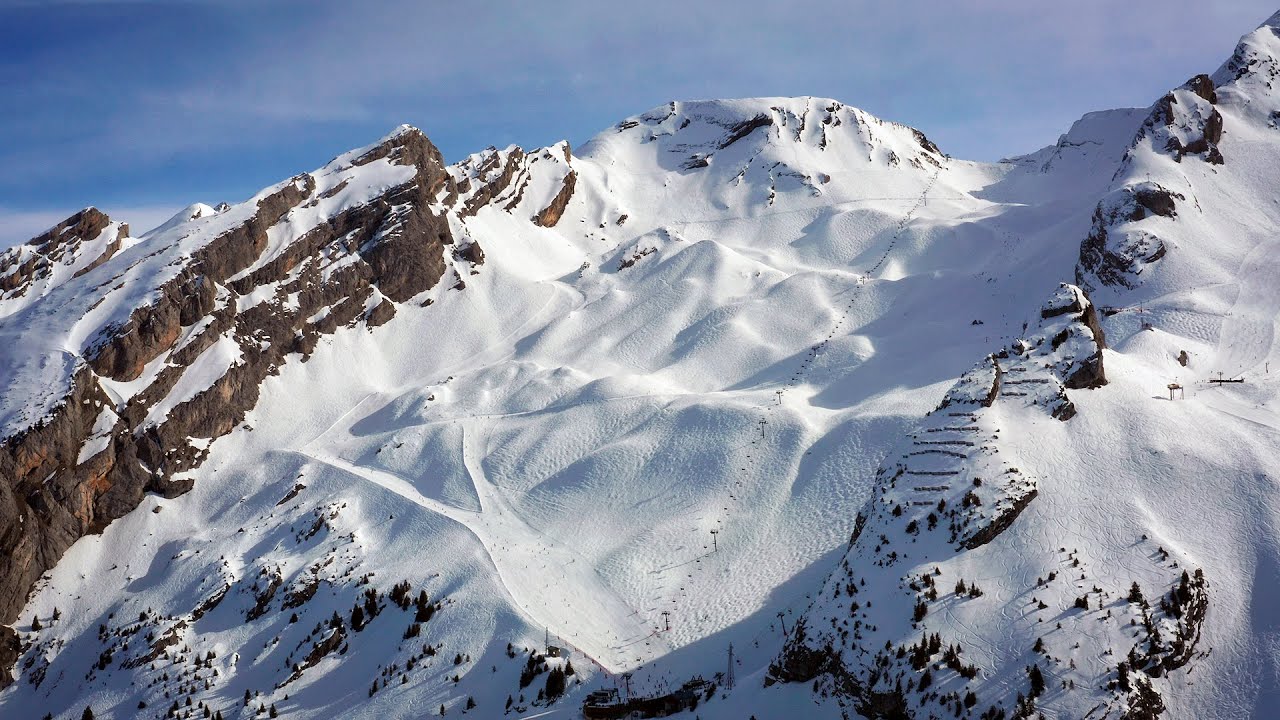
Crans-Montana’s ski area is marketed as 140 km of pistes with a vertical span from 1,500 m to 3,000 m, reaching the Plaine Morte sector at glacier altitude. That range is central to how the resort skis. The plateau base keeps day logistics easy, while the upper mountain delivers a true alpine feel, with open sightlines, big panoramas, and the kind of exposure where wind and visibility can quickly become the deciding factor for where you lap.
The domain’s largely south-facing orientation is a defining trait. When temperatures cooperate, that exposure can create a satisfying rhythm: firmer, faster morning surfaces and softer, more forgiving snow later in the day, especially on high-traffic pistes. It also means that planning by aspect is worth doing. If you’re chasing the best texture, the smart move is often to start with higher, colder lines and then follow sun-softened terrain as the day evolves rather than trying to force one zone for eight straight hours.
The glacier top end isn’t only about alpine skiing. The destination also promotes a cross-country loop at 3,000 m on the Plaine Morte glacier, which underscores the resort’s “high plateau to glacier” identity: you can be in a village resort environment and still end up in a stark, high-altitude landscape within the same day. Seasonal opening and closing dates vary by year, but the overall positioning is clear: Crans-Montana is built for long winter operation supported by altitude and an infrastructure that’s comfortable handling big visitor volume when conditions are strong.
Park infrastructure and events
Crans-Montana’s freestyle reputation is anchored by dedicated park zones rather than a token rail line. Switzerland Tourism highlights Snowpark Cry d’Er as a freestyle hotspot with multiple lines for different levels, built around jumps and rails with a creative layout. Valais tourism goes even further in how it frames the offer, explicitly describing a large 100,000 m² snowpark presence in the destination. The practical takeaway is that freestyle here is not an afterthought: it is a core part of how the resort markets itself to younger riders and progression-minded skiers.
Crans-Montana also offers an unusual “all-weather” progression angle for a ski town. Switzerland Tourism spotlights the Alaïa Chalet as a major indoor freestyle facility, positioning it as a training option that complements on-snow park riding. For freeskiers, that matters because it expands your training window. When weather shuts down upper lifts or when conditions make park speed inconsistent, indoor reps can keep the trip productive without turning it into a waiting game.
Where Crans-Montana becomes globally visible is through alpine racing. The resort’s competition corridor is centered on the “Nationale” race slope, and Crans-Montana is actively staging major World Cup weekends as part of its build-up to 2027. The official race hub, Crans Montana Ski World Cup, frames these events as a key rehearsal before Worlds. On the calendar side, the international federation confirms the 2027 World Championships dates and the return of the event to Crans-Montana, which is a strong signal of venue weight: a resort doesn’t get that assignment without the infrastructure, terrain profile, and organizational capacity to deliver at world stage level.
Even if your trip is primarily freeskiing, that race identity still influences the experience. Race venues drive lift operations, slope preparation standards, and crowd patterns during event windows. If you time your visit around a World Cup weekend, you’ll feel the energy. If you avoid it, you can still benefit from the “venue standard” approach to mountain management that often carries over into the broader resort.
Access, logistics, and on-mountain flow
One of Crans-Montana’s underrated strengths is how efficiently it connects to the Swiss rail network. The destination promotes the funicular link from Sierre (Siders) to the resort, presenting a quick ride of roughly 12 minutes from the valley rail station up to the plateau. That connection makes Crans-Montana a realistic option for travelers who want to arrive without a car, and it keeps day-to-day logistics simple once you’re based in the village.
On-mountain flow is best when you treat the resort as a set of “altitude layers.” If conditions are stable and visibility is good, it makes sense to go high early and stay in the alpine zone long enough to get value from the glacier scenery and the wider piste feel. If wind or light flattens the top, you can drop back to mid-mountain and village-side laps without losing the whole day. This kind of vertical flexibility is one reason Crans-Montana works well for mixed groups: freeride-leaning skiers can chase higher, more exposed terrain when it’s on, while everyone else keeps an easy rhythm on groomers and progression zones.
During major event weekends, access planning becomes part of the strategy. The World Cup organization promotes the use of the funicular and shuttle links between Sierre and the resort for spectator flow, which is a good hint for ski travelers too: when the venue is busy, rail-based access can reduce parking friction and keep your day calmer from the start.
Local culture, safety, and etiquette
Crans-Montana has a dual personality: polished resort energy on the plateau, and serious alpine exposure at the top end. That contrast shapes safety decisions. The upper mountain sits in a high, open environment where weather can turn quickly, so carrying layers, eye protection, and a simple “visibility plan” is not optional if you intend to ski the glacier sector. If lifts close due to wind or if the light goes flat, the smart choice is pivoting to lower terrain rather than forcing alpine objectives.
Freestyle etiquette matters because the destination openly courts park riders. In busy periods, expect park lines to be social and high-traffic. That means drop order, clear landings, and predictable speed checks are the difference between a smooth session and a collision risk. The better you ski park, the more you understand that “one person standing in the wrong place” can shut down an entire line; Crans-Montana’s park culture rewards riders who keep flow moving and make space for different ability levels to progress.
Off-piste decision-making should be treated with the seriousness the terrain deserves. Glacier-access resorts can make high alpine feel deceptively close, but that proximity doesn’t remove consequences. If you leave marked pistes, you are accepting a different risk profile, and the responsible move is staying within what you can manage with your group, your equipment, and the day’s stability and visibility.
Best time to go and how to plan
Crans-Montana is most rewarding when you plan for variety rather than a single obsession. If your goal is high-alpine skiing and panoramic glacier laps, prioritize windows with stable weather and good visibility so you can fully use the 3,000 m sector. If your goal is freestyle progression, prioritize the core winter period when parks are typically fully shaped and maintained, and plan your days around repetition: warm up on groomers, then commit to a line at Cry d’Er long enough to dial speed and timing before you chase bigger tricks.
If you want to experience the resort at “venue intensity,” the ramp-up to the 2027 World Championships is creating real moments on the calendar. The World Cup weekend in early 2026, staged on the Nationale slope as part of that build-up, is a clear example of when the destination turns into a stadium. Those weeks bring crowds and restricted zones, but they also deliver a unique atmosphere and a sense that you’re skiing in a place that matters to the sport beyond tourism.
For travel logistics, the Sierre funicular link is the obvious planning tool. It makes it easier to base your trip around rail travel, and it also gives you a clean fallback for event weekends when road access is more stressful. A smart Crans-Montana plan is simply this: choose your altitude objective for the day based on visibility, build a park session if conditions allow, and keep enough flexibility to pivot quickly when the mountain tells you it’s time to go lower.
Why freeskiers care
Freeskiers care about Crans-Montana because it blends three things that rarely coexist this smoothly. It has the scale and altitude span of a major Alpine resort, rising from a comfortable village plateau to a 3,000 m glacier sector. It has a freestyle offer that’s visible and structured, with Snowpark Cry d’Er positioned by Switzerland Tourism as a dedicated hotspot and Valais tourism highlighting a large snowpark footprint that targets progression and airtime. And it has a genuine world-stage identity, reinforced by the return of the FIS Alpine World Ski Championships in February 2027 and the World Cup presence on the Nationale course.
In practical freeski terms, that means you can build the kind of trip that actually improves you. You can spend one day stacking creative park reps in a defined progression zone, spend another day skiing fast, sunlit pistes until your legs are durable again, and then choose a clear-weather window to go high for true alpine scale and views. Crans-Montana isn’t only a postcard destination. It’s a training-capable resort with real event gravity, and that combination is exactly what keeps freeskiers coming back.