Profile and significance
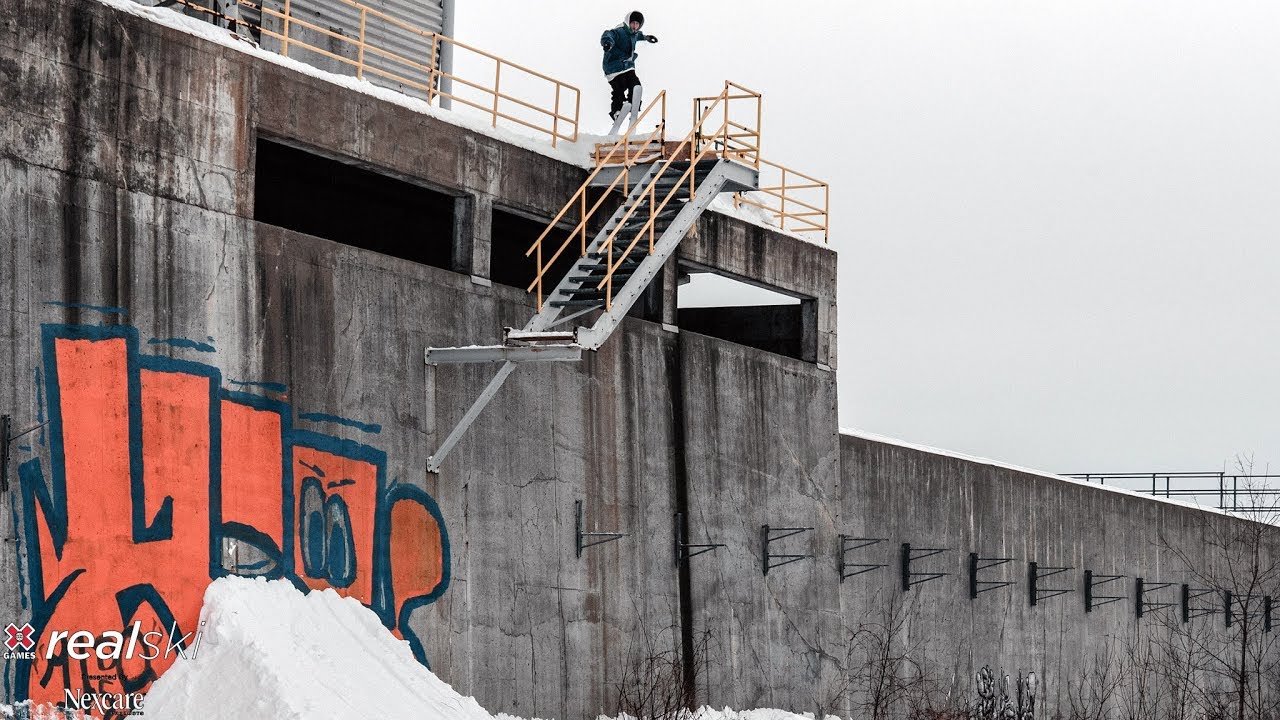
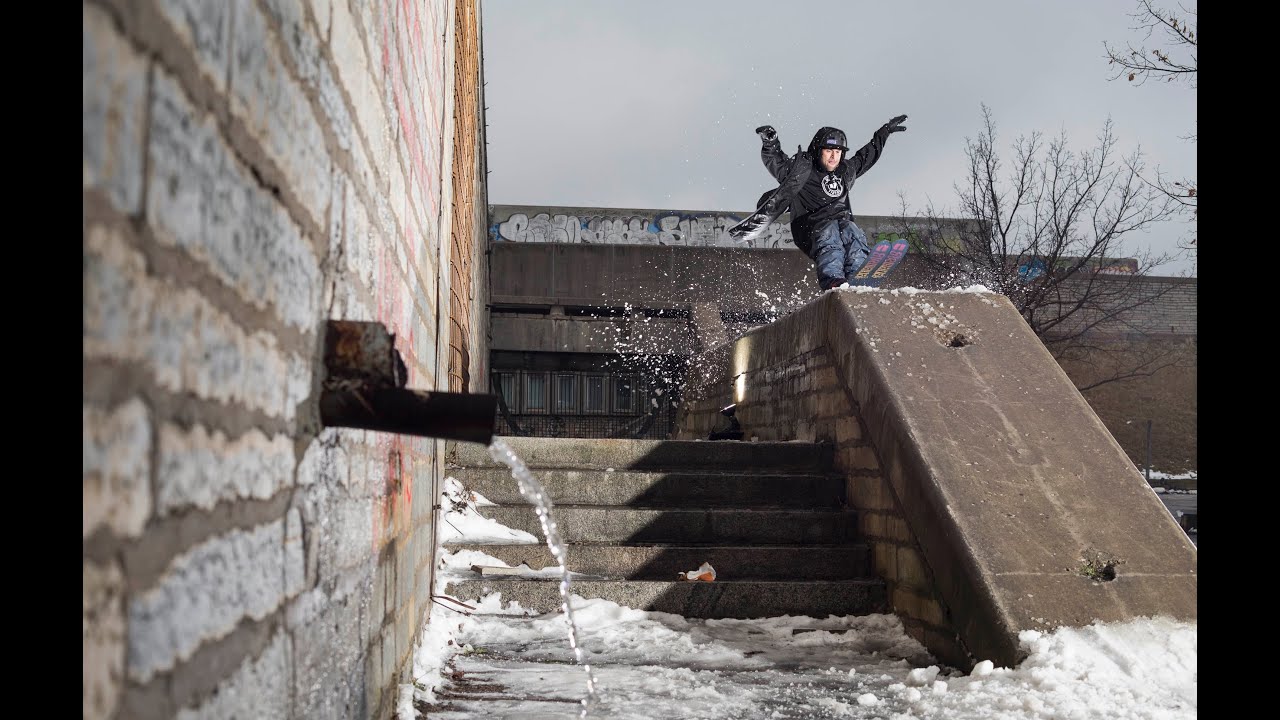
Garrett Whaley is an American freeski rider–editor whose work with the street collective Child Labor helped define a clear, rewatchable look for modern urban and park skiing. Raised in Connecticut and sharpened on the Carinthia Parks scene at Mount Snow, he moved west to stack winters around Utah’s street spots and high-frequency park laps. As Child Labor’s lead editor, Whaley cut and shaped multiple full-length films, including “Why Not?” (2022) and “All in Good Time” (2023), projects that earned attention from core media because the trick math is legible at full speed and the pacing lets lines breathe. His on-snow parts match his edits: decisive rail work, measured spin speed, deep grabs that stabilize axis, and calm outruns that preserve speed for whatever comes next.
Beyond the crew’s annual films, Whaley’s creative fingerprint shows up in collaborations with brands and resorts. He has shot and edited product and team pieces for Vishnu Freeski, and his camera often tracks friends through long spring laps at Mammoth Mountain and Timberline Lodge. The result is a dual identity—skier and editor—whose influence rests on turning difficult street and park skiing into stories that make sense the first time and reward a tenth watch.
Competitive arc and key venues
Whaley’s résumé reads more like a filmography than a results sheet. As a junior he came up through Mount Snow Academy and regional contests in the Northeast, then redirected his energy toward filming and rider-led showcases. The inflection points are the Child Labor features: “Why Not?” stitched together a winter of missions across Utah, the Upper Midwest, New York State, and Québec, while “All in Good Time” distilled the crew’s rail-first philosophy into a no-frills street document. Each film doubled as a workshop in line design—what to do with short in-runs, how to protect momentum after a heavy lock-in, when to choose a grab that quiets rotation instead of chasing spin count.
Place tells the rest of the story. East Coast repetition at Mount Snow taught honest approach angles and quick decisions on firm snow. Utah winters added dense, unforgiving architecture and a creative community anchored around Woodward Park City, where airbags and lift laps turn ideas into habits. Spring blocks at Mammoth Mountain and Oregon’s Timberline Lodge provided consistent shaping and long runways that reward tall, patient takeoffs and full-value grabs. Across those venues, the constants are speed honesty and clarity on camera.
How they ski: what to watch for
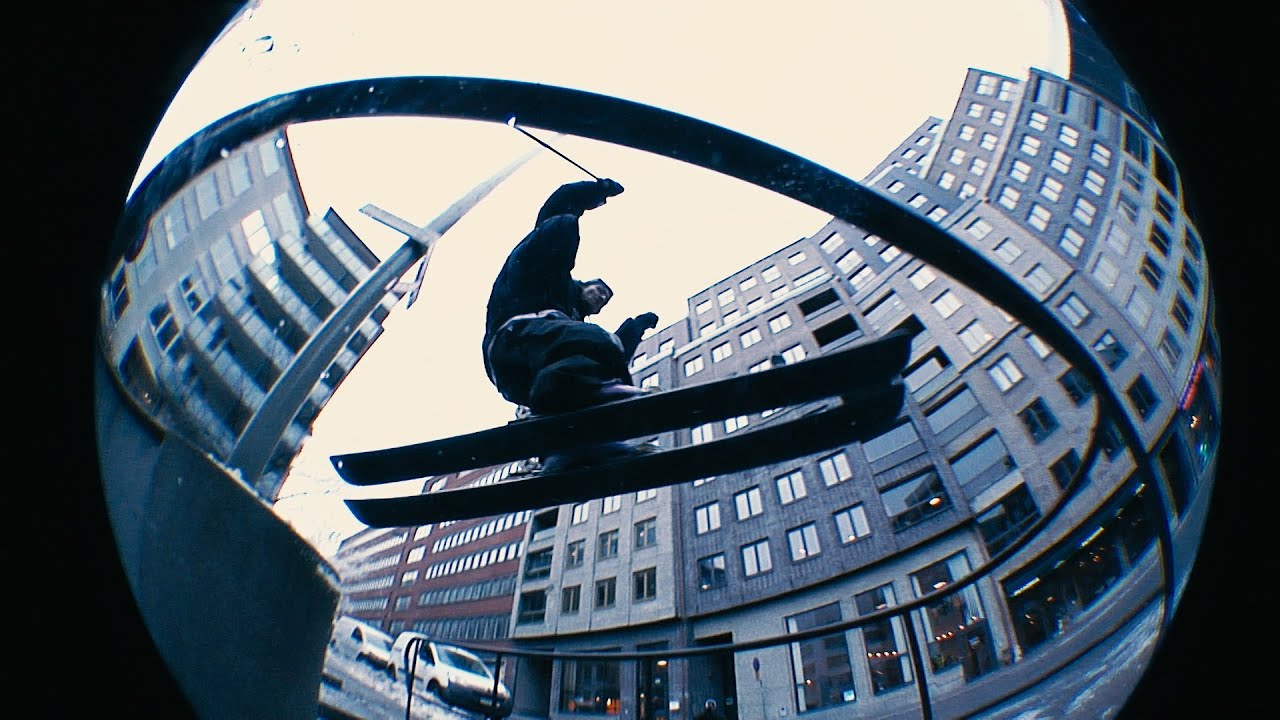
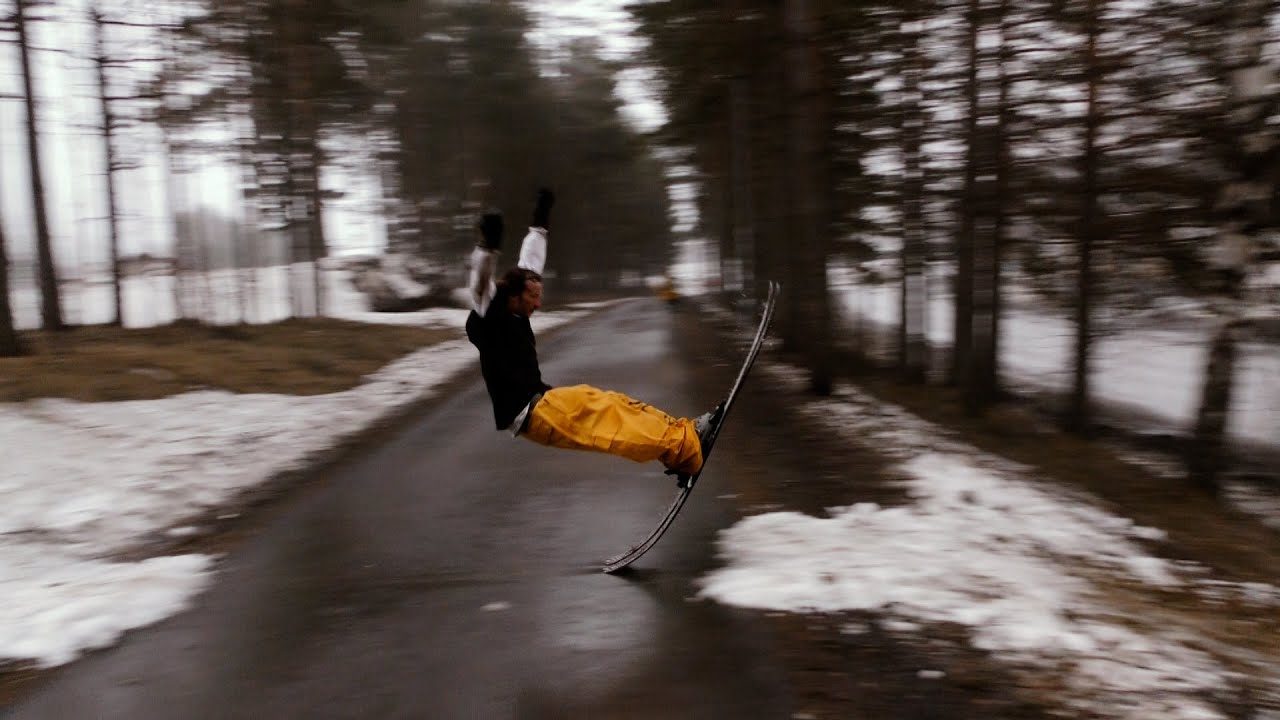
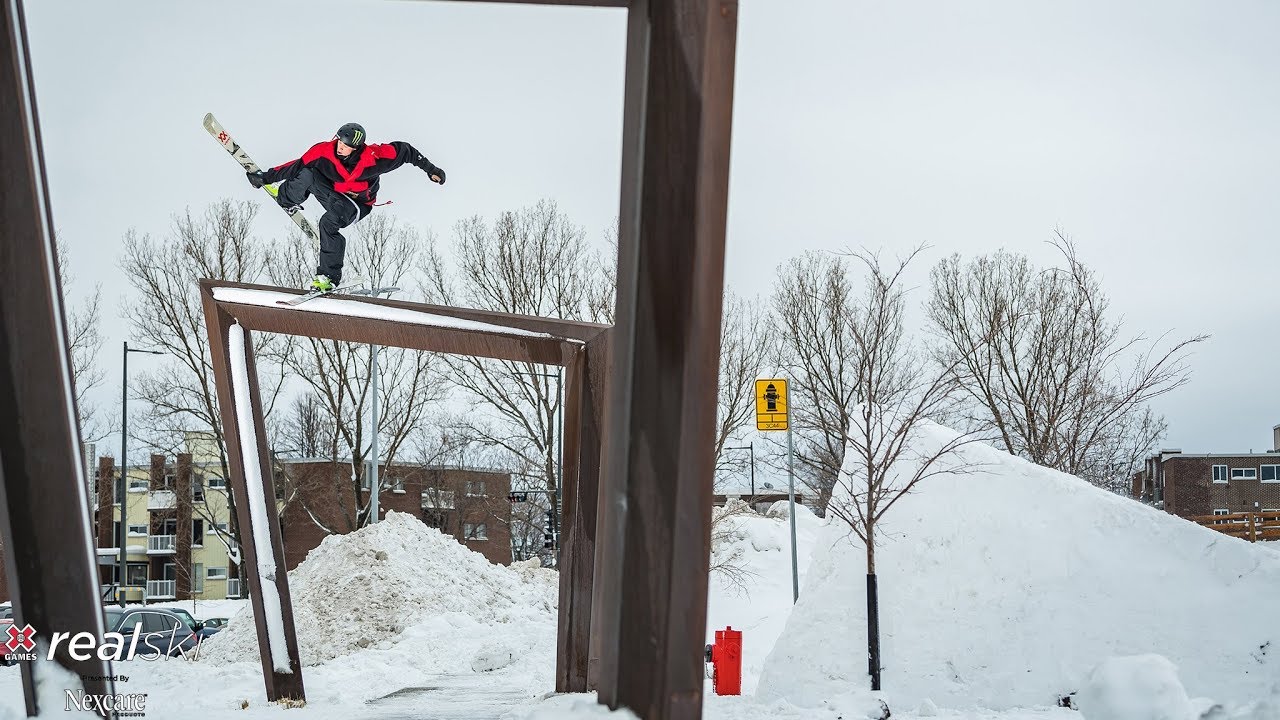
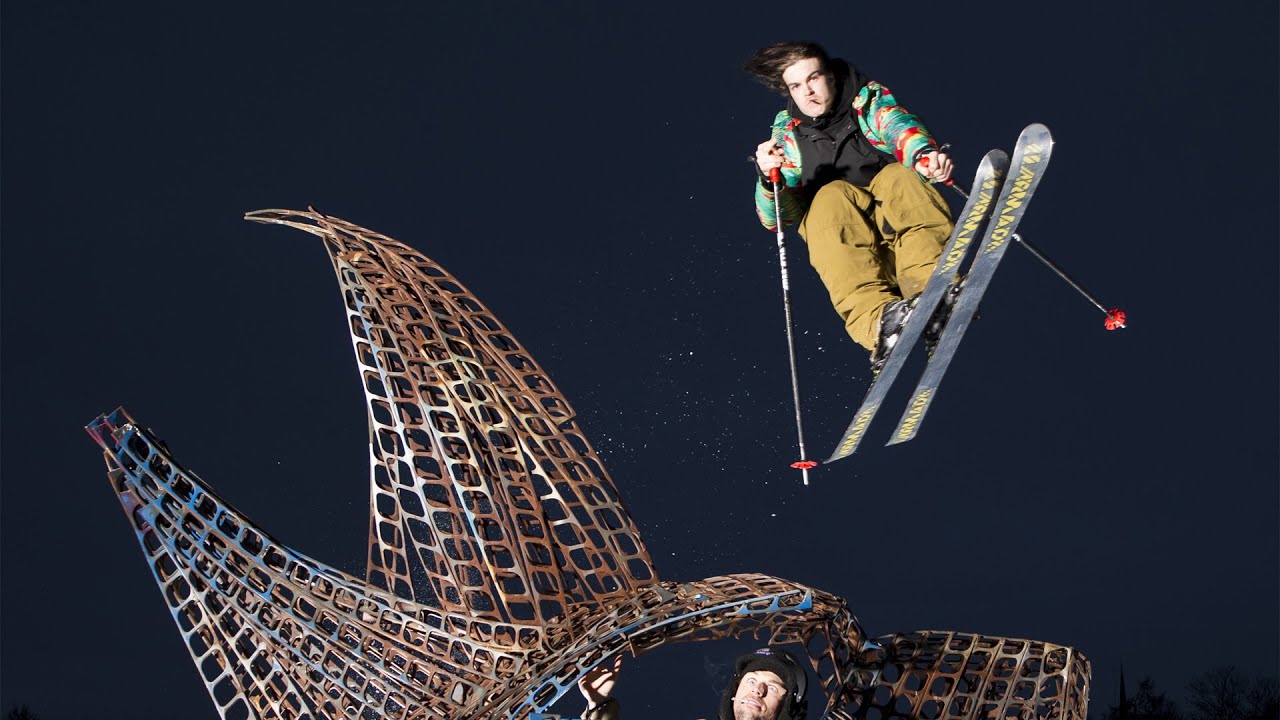
Whaley skis with deliberate economy. On rails, approaches square up early, shoulders stay stacked, and lock-ins look decisive rather than theatrical. Surface swaps resolve cleanly, presses carry visible shape, and exits protect enough speed to keep cadence for the next setup. On jumps, he favors measured spin speed with deep, functional grabs—safety, tail, or blunt—to stabilize axis so landings arrive over the feet instead of as last-second saves. Directional variety is part of the package—forward and switch, left and right—but never at the expense of pacing. The tell is spacing: each trick creates room for the next one, which is why his lines read clearly at normal speed without slow-motion rescue.
If you’re studying clips, track three cues that repeat across his skiing and editing. First, he treats the grab as a control input, not decoration. Second, he “finishes” tricks early enough to ride out centered, letting momentum feed the next feature. Third, his edits preserve that rhythm; cuts and sound design support the shape of the line rather than hiding imperfections.
Resilience, filming, and influence
Street seasons demand patience—shovels and salt, false starts, rebuilds, and the judgment to walk away when the approach won’t hold. Whaley leans into that process on both sides of the lens. As Child Labor’s editor, he’s responsible for translating months of winter into a watchable arc; as a skier, he contributes clips that hold up without tricked-out cuts. That consistency is why the crew’s output turns up on core channels year after year and why younger riders reference his work when they talk about “readable difficulty.” The films also show a teachable blueprint: map approach angles, pick tricks that use the obstacle end to end, and protect speed through the outrun so the next decision arrives on time.
His brand collaborations reinforce the same message. Pieces built with Vishnu Freeski emphasize durable, predictable platforms; resort projects at Mammoth Mountain and Timberline Lodge highlight honest speed and clean takeoff timing. The influence spreads because it’s practical: viewers can see why a line works and copy the habits without needing a contest bib or a mega-budget build.
Geography that built the toolkit
New England nights at Mount Snow built edge honesty and quick setups on compact in-runs. Utah supplied the urban syllabus—tight kinks, quick redirects, and landings that punish sloppy speed checks—alongside year-round reps through Woodward Park City. When the calendar flips to spring, Mammoth Mountain and Timberline Lodge add consistent lips and longer approaches that reward early grab timing and centered landings. Rotate those settings and the habits persist, which is why his segments feel coherent whether the background is a city staircase or a sun-softened rail garden.
Equipment and partners: practical takeaways
Whaley’s projects align with rider-run brands and durable tools. Collaborations with Vishnu Freeski reflect park-and-street priorities—reinforced edges, balanced swing weight, and mounts that keep presses comfortable without sacrificing takeoff stability. Many Child Labor films list support from labels such as Line and Arsenic, the kind of partners that value substance over spectacle. For skiers translating this to their own setup, think category fit over model names: symmetrical or near-symmetrical park skis; edges tuned to hold on steel but softened at contact points to avoid surprise bites on swaps; fast bases so cadence doesn’t depend on perfect weather; and lenses you can swap when light changes mid-session. Equipment won’t replace timing, but the right platform lets good habits repeat all winter.
Why fans and progressing skiers care
Garrett Whaley matters because he turns difficulty into clarity—and he does it in the scenes most riders actually experience. The Child Labor films he edits and skis in make modern rail skiing readable without slow motion; the resort projects reinforce that park lines can feel like sentences instead of word salads. For viewers, that means segments worth replaying. For developing skiers, it’s a blueprint you can apply on your next lap: square the approach early, use the grab to stabilize the axis, finish the trick with time to spare, and leave the feature with speed for the next decision.