Real Skifi
StudioFinland
Finnish freeski video crew and creative ski studio | Active since late 2010 | Known for: Real Skifi episodes, urban skiing, one-ski tricks, impossible surfaces, street features, visual gags, Warren Miller segments and DIY creativity | Focus: redefining what counts as skiing by turning cities, lakes, walls, rails, rooftops, playgrounds and everyday objects into freeski terrain.
Finland in 2010 and the crew that made skiing strange again
Real Skifi is not a ski manufacturer, outerwear brand or conventional film studio. It is a Finnish freeski crew and video label built around one of the most original ideas in skiing: take the sport out of its expected places and make the impossible feel playful. The group began producing ski videos in late 2010 and published its first Real Skifi film in early 2011.
The timing matters. Freeskiing already had park contests, big mountain films and street crews, but Real Skifi approached the sport from a different angle. Their clips were not only about bigger rails or cleaner spins. They were about imagination. A bench, a frozen lake, a wall, a tree, a tractor, a staircase, a roof, a doorway or a patch of snow could become the setup for a trick that looked like skiing, skateboarding, circus, slapstick and puzzle-solving at the same time.
That is why Real Skifi became globally recognizable despite remaining small and independent. The crew showed that progression does not always mean more rotation, more speed or more danger. Sometimes progression means looking at an ordinary object and asking what kind of ski trick nobody else would think to try there.
Juho Ilkka Verneri and the original creative engine
The early Real Skifi identity was built around skiers such as Juho Kilkki, Ilkka Hannula and Verneri Hannula, with directing, filming and editing from Janne Korpela and later work involving Anton Geier. The official site now presents a wider crew including Juho Kilkki, Ilkka Hannula, Elias Lajunen, Anton Geier, Janne Korpela, Verneri Hannula, Kalle Lajunen and Ossi Hanhikoski.
Each role matters because Real Skifi has never felt like a normal athlete edit. It is a group invention. Juho is described by the crew as the “MacGyver of freeskiing,” which fits the way many Real Skifi tricks are built: improvised, engineered, ridiculous and precise. Ilkka’s reputation comes from his ability to ski almost any surface or material, giving the crew one of its most surreal visual signatures.
Elias Lajunen brings a newer competitive and high-level freestyle dimension, while the filmers and editors give the project its rhythm. Real Skifi only works because the camera understands the joke, the trick and the reveal. A strange ski idea can fail on screen if the timing is wrong. Real Skifi’s best clips land because the setup, attempt, payoff and crash all feel part of the same comic-technical language.
Urban skiing without the usual street-ski formula
Real Skifi belongs to street skiing, but it does not follow the normal street-ski formula. A classic street segment is often built around rails, stairs, gaps, wallrides and urban handrails. Real Skifi uses those tools, but it also uses everything around them. A spot does not need to be a famous rail. It can be a tiny snowbank, a frozen parking lot, a playground object, a wall edge, a chair, a scooter, a tractor or a line that only makes sense after the crew has invented it.
This changes the feel of the skiing. The viewer is not only watching athletic execution. They are watching problem solving. How do you ski across a surface that is not meant for skis? How do you land when there is barely snow? How do you make a trick work with one ski, no slope, no speed or a ridiculous takeoff? The creativity is as important as the stomp.
That makes Real Skifi especially useful for freeski culture. It reminds skiers that style is not limited to big resorts or perfect parks. The sport can happen anywhere cold enough, weird enough or slippery enough. In that sense, Real Skifi turns limitation into the main feature.
50 plus videos and a cult archive of ski absurdity
The official Real Skifi site states that the crew has produced more than 50 videos and collected more than 10 million views. That archive matters because the project is not a single viral trick or one lucky edit. It is a long-running creative language built over 15 years.
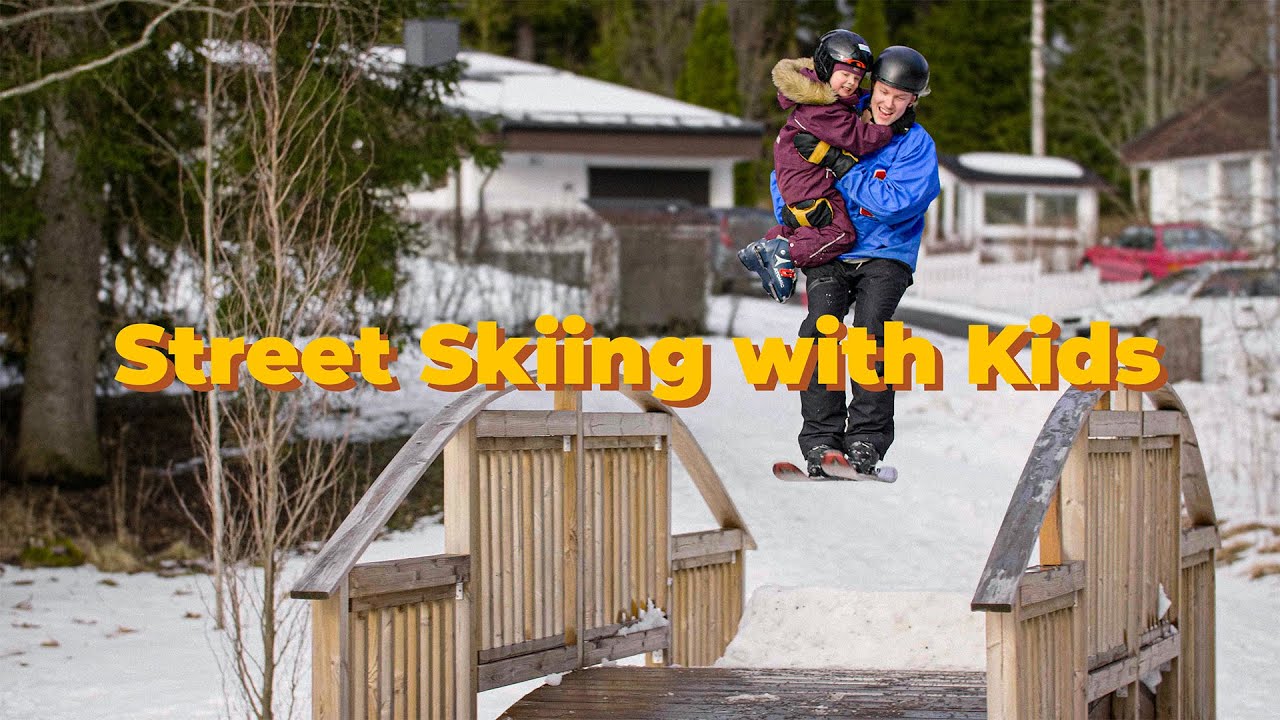
Episodes such as Episode 22 continue the tradition of playful reflection, strange terrain use and friendship-driven skiing. The crew’s more recent work also includes Street Skiing with Kids, their full segment from Warren Miller’s SNO-CIETY, released publicly in January 2026. That is significant because Warren Miller is one of the oldest names in ski film culture, and Real Skifi’s presence there shows how far their strange Finnish approach has traveled.
The crew has also produced work for larger ski-film contexts, including a segment for Level 1’s Partly Cloudy. This is the right kind of crossover. Real Skifi did not become important by copying larger studios. Larger studios noticed because Real Skifi already had a visual identity nobody else could fake.
Perspective and the documentary layer
Real Skifi’s official site highlights Perspective, a segment from a Warren Miller film, and explains that after graduating in 2019, Juho moved toward a full-time role as an all-around Real Skifi guy while Verneri began stepping back from street skiing. That kind of transition gives the crew a deeper story than a sequence of tricks.
In December 2022, a full-length documentary about Real Skifi premiered locally, with an online release in early 2024. That documentary context matters because Real Skifi is easy to underestimate if viewed only as short clips. The finished tricks may look playful, but the process requires planning, pain, repetition, trust, editing and a lot of failed attempts.
A documentary makes the hidden part visible: the cold sessions, the builds, the friendship, the injuries, the changing roles and the question of how a small crew keeps a strange idea alive for more than a decade. Real Skifi’s strongest cultural value sits there. It is not only “funny skiing.” It is a long-term creative practice inside freeskiing.
Jyväskylä roots and the Finnish advantage
Real Skifi is strongly connected to Finland, with skipowd.tv identifying Jyväskylä as the crew’s hub. That geography matters. Finland does not offer the same ski terrain as the Alps, British Columbia or Alaska. There are no endless heli-ski faces or huge freeride resorts in the Real Skifi origin story. Instead, the crew built a language around flatlands, urban snow, frozen surfaces, small hills and the inventive use of limited terrain.
This limitation became the advantage. If you cannot rely on vertical drop, you must find creativity elsewhere. Real Skifi found it in architecture, everyday objects, ice, urban spaces and the kind of winter environment most skiers would ignore. The Finnish setting gives the crew a visual identity that is completely different from standard mountain films.
That is also why Real Skifi has global appeal. Skiers everywhere understand limitation. Not everyone has a world-class terrain park or perfect powder. Real Skifi shows that the spirit of skiing can survive in small places, strange places and places that were never designed for the sport at all.
MacGyver builds one-ski tricks and DIY construction
For Real Skifi, construction does not mean ski cores or outerwear fabric. It means building ideas. A Real Skifi trick may require a custom takeoff, a hidden landing, a strange prop, a modified object, a risky timing cue or an edit that reveals the gag at the right moment. The crew’s technical skill is partly skiing and partly invention.
One-ski tricks, sliding surfaces, unusual transfers and improvised urban setups are central to the Real Skifi language. The skier often has to adapt to terrain that provides almost none of the normal support skiing expects. There may be no proper in-run, no clean landing, no predictable speed and no standard feature shape. That makes the success of a trick feel both athletic and engineered.
This DIY method is also part of the crew’s authenticity. Real Skifi does not need a massive film budget to be interesting. It needs a strange idea, enough snow or ice, friends willing to try, and a camera that understands how to make the trick readable. That makes the crew one of the clearest examples of low-resource creativity in skiing.
Why Real Skifi is not just a joke
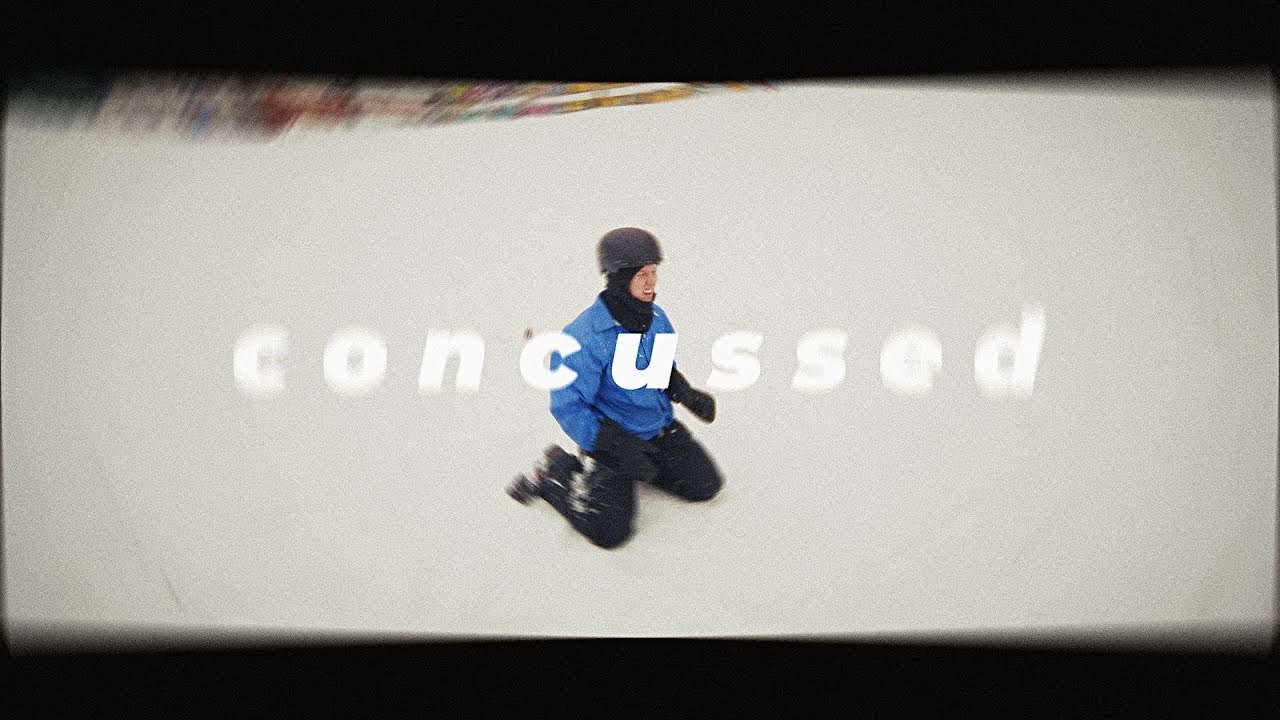
Real Skifi is funny, but it should not be dismissed as comedy skiing. The humor works because the skiing is real. The falls hurt. The balance is difficult. The timing is exact. The ideas are often absurd, but the execution requires deep ski skill. That combination is rare.
Many ski edits are serious because they depend on danger, speed or scale. Real Skifi can be serious through precision and creativity instead. A tiny trick on a weird object can be more memorable than another large jump if the idea is original enough. That is why the crew has stayed relevant for so long. Viewers return not only to see what they landed, but to see what they imagined.
This gives Real Skifi a special place in freeskiing. They expanded the sport’s emotional range. Skiing can be cinematic, dangerous, competitive and beautiful. Real Skifi proved it can also be clever, ridiculous, homemade and deeply creative without losing legitimacy.
Choosing Real Skifi as inspiration
For skiers, Real Skifi is not a product to buy. It is an approach to copy carefully. The lesson is not to go slide dangerous urban objects without thought. The lesson is to look differently at terrain. A skier watching Real Skifi can learn that creativity starts before the trick: spot selection, line imagination, surface reading, setup design and the willingness to fail many times before a clip works.
Park skiers can take inspiration from the crew’s precision and low-speed control. Street skiers can study the way they use architecture beyond obvious rails. Filmmakers can study timing, shot framing and payoff. Young skiers can learn that a good idea matters more than expensive travel.
The safest way to apply Real Skifi energy is in controlled sessions, legal spaces, supervised builds and small creative features where the risk is understood. Their videos look playful because the crew has spent years developing the skill to make them possible.
Why Real Skifi earns a 4 out of 5
Real Skifi deserves a 4 out of 5 importance rating because it is one of the most original creative crews in freeskiing. It has a verified 15-year history, more than 50 videos, millions of views, Warren Miller and Level 1 connections, a documentary, a clear Finnish identity and a style that is instantly recognizable.
It is not rated 5 out of 5 because its scale is narrower than institutions like Level 1, Matchstick Productions, Newschoolers or major ski manufacturers. Real Skifi does not define the entire industry, run a huge film-tour machine or manufacture equipment. Its influence is more specific: creative urban skiing, DIY tricks, experimental freeski video and the cultural proof that skiing can happen almost anywhere.
On skipowd.tv, Real Skifi belongs as a Finnish freeski studio and creative crew. Its value is the imagination it gives the sport: the idea that a staircase, a frozen lake, a wall, a tractor, a tiny snow patch or a backyard object can become skiing if the crew is strange enough, skilled enough and committed enough to make the impossible look fun.