Jacob Wester
Stockholm, Sweden | Active: mid-2000s-present | Focus: big air, freeride, steep skiing, ski films | Current: Rossignol Free Team, The Wester Experience AB
Trollvasstind In Blue Spring Light
Trollvasstind’s north face sat in blue spring light above Norway’s Lyngen Peninsula. Jacob Wester moved onto steep snow, edges scratching through wind skin, the camera quiet behind him as the old question returned: why go back? He had first skied the line in 2017, with little information, limited filming, and less experience than he carries now. Eight years later, the same wall became the core of Return To The Why, a 2025 film directed by Wester and produced by The Wester Experience AB. The project places him far from the scaffolding of big air contests, but the body language is still familiar: calm shoulders, exact timing, and a skier who reads takeoff, exposure, and landing as one continuous problem.
From Stockholm Jumps To X Games Big Air
Wester was born in Stockholm on November 17, 1987, and entered the international freeski conversation before FIS slopestyle became an Olympic pathway. Early profiles placed him with Armada Skis, Oakley outerwear and goggles, Dalbello boots, and Sweet Protection, a setup linked to the first generation of Swedish park skiers who treated big air as both contest and style laboratory. His 2009 Winter X Games bronze in Ski Big Air in Aspen placed him beside Simon Dumont, Jon Olsson, and P.K. Hunder during a period when double flips, switch double corks, Kangaroo flips, and large grabs were reshaping the event. FIS later listed him under Sweden with FIS Code 2529155 and a competition status of not active, a clean marker of how his career moved from judged runs into filmed terrain.
MSP Segments Before The Crampons
Before Chamonix became a recurring base, Wester had already built a media profile through Matchstick Productions and park-based filming. A 2009 interview described his goal of following up a Matchstick video part after a season split between city events, Colorado training, and ankle recovery. The setup mattered: park jumps, heli angles, repeated takes, and a crew skilled at making a few features feel large on screen. That period also shaped his technical vocabulary. Wester’s skiing carried the big-air habits of the time: strong pop, tweaked grabs, corked rotations, and landings held with a narrow margin. Those skills later transferred into backcountry filming, where a natural 540 off an overhanging cornice or a cork 360 in soft snow required the same air awareness with far less room for error.
Riksgränsen At Midnight
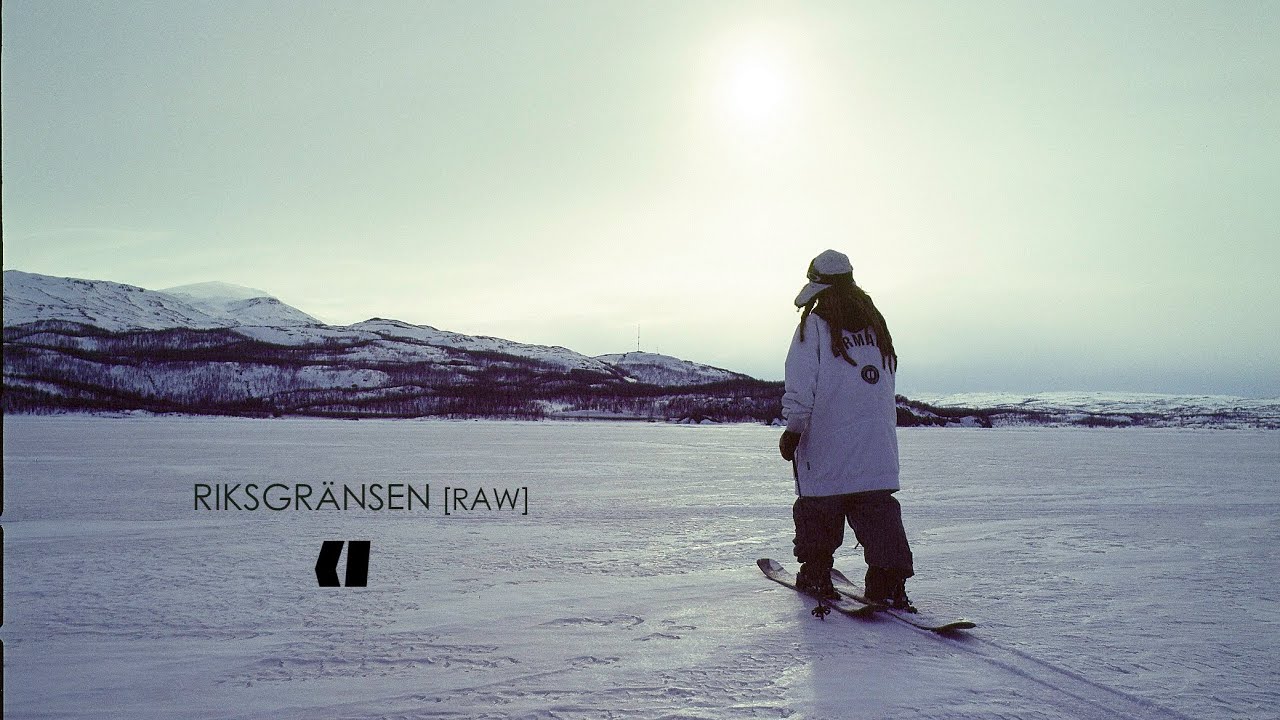
His 2014 X Games Real Ski Backcountry edit gives one of the clearest snapshots of the transition. Wester said he shot much of the part in Riksgränsen, the northern Swedish town near the Norwegian border, about a 17-hour drive from Stockholm. The plan had been to film in the Alps in April, but a bruised knee changed the schedule. Riksgränsen still had powder into late May, and the position above the Arctic Circle meant the sun stayed up nearly all night. Daniel Rönnbäck connected him with filmer Alric Ljunghager, who helped build features and edit the piece. Wester pointed to a double backflip for the mood of the edit, but named a natural 540 off a blind, overhanging cornice as one of the more technical shots.
Chamonix Changed The Scale
The deeper turn came through Chamonix and Telluride. Freeskier documented Wester trading contest starts for crampons, backcountry travel, and ski mountaineering practice in places such as Chamonix, France, and Telluride, Colorado. In 2013 he joined Seth Morrison on an Oakley trip to Telluride, then pushed into Chamonix classics with skiers including Tof Henry and Andreas Fransson. The change was not cosmetic. Wester learned rope work, cornice cuts, skinning technique, and movement through exposed couloirs where a fall could not be corrected with another run. Chamonix gave his skiing a different tempo: slower approaches, sharper decisions, and a direct relationship between technical confidence and mountain consequence.
Oscar Wester On The Aiguille Du Midi
Jacob Wester Adventures: Olympic Steep Skiing turned that Chamonix chapter into a family contrast. Oscar Wester, Jacob’s younger brother and a two-time Olympic slopestyle skier, took a break from his freestyle schedule to ski with him in terrain described as 50-degree north faces, chaotic glaciers, and no-fall zones. The episode placed Oscar on the 3,842-metre Aiguille du Midi before moving into bigger mountain skiing the following day. Jacob handled filming and editing with Oscar, keeping the project closer to personal documentation than a polished contest package. The episode works because the brothers’ paths are visibly different: Oscar comes from the technical run-building world, while Jacob shows how those tools behave when the landing is a glacier apron rather than a slopestyle deck.
The Wester Experience Takes Shape
By the 2020s, Wester’s work became increasingly tied to his own production identity. iF3 lists The Wester Experience AB as the production company behind Return To The Why, with Wester as director. The same festival page connects the film to earlier projects: Nouvelles Vues in 2021, A Part Of Us in 2022, Walk The Walk in 2023, and The Unknown Peak plus The Crown Jewel in 2024. The titles trace a clear creative line. Rather than presenting skiing as a reel of disconnected hits, Wester has built films around access, repetition, partnership, and the mental pressure of going back to a line with better knowledge than the first time.
Tromsø With Schirmer And The Pinnacle
Matchstick Productions brought Wester back into a larger ensemble with Im Kind Of Gripped, a 2026 segment from After The Snowfall. The setting moves to the Norwegian Arctic, from steep couloirs around Tromsø to a personal battle with “The Pinnacle” alongside Nikolai Schirmer. The athlete list around the segment includes Schirmer, Wester, Michelle Parker, Caite Zeliff, Coline Ballet-Baz, and Nadine Wallner, which places him among skiers who combine freeride, mountaineering judgment, and camera fluency. The terrain language is different from Aspen big air, but the visual problem remains similar: build enough speed, choose the axis, commit before the feature disappears, and exit with the skis running rather than surviving sideways.
Rossignol, Gear, And The Freeride Chapter
Wester’s current equipment story is tied to freeride rather than park specialization. Rossignol Group lists Jacob Wester under its Free athletes, alongside riders from freeride and mountain-focused backgrounds. That roster placement matches the skiing he now publishes: wider skis, touring bindings, skins, crampons, ice axes, and packs replacing the contest-day simplicity of bib, twin tips, and jump line. The older Armada years remain part of his history, especially because photographer and Armada co-founder Chris O’Connell credited him with input on models such as the AR7, Alpha, and Halo. The modern setup asks for different performance: edge hold on steep faces, float in cold snow, dependable landings in variable runouts, and a platform stable enough for both filming and ski-touring objectives.
Style After The Contest Bib
Wester’s skiing has kept one thread across every phase: he prefers a line to look solved rather than forced. In big air, that meant controlled grabs, clean takeoffs, and rotations that avoided frantic correction. In Riksgränsen, it meant choosing a cornice 540 for technicality over a bigger but less precise trick. In Chamonix and Lyngen, it means using park timing inside steep terrain, where a sluff pocket, rollover, or blind exit can change the decision mid-line. His style sits between freestyle and alpinism: less rail-based than urban skiers, more rotation-aware than many pure steep skiers, and more self-directed than athletes whose identity stayed attached to a single contest format.
The Current Screen Is Still Moving
The present chapter is already visible rather than promised. Return To The Why places Wester back on Trollvasstind with Jakob and Matthias Weger in spring 2025. Matchstick’s After The Snowfall brings him into a 2025 feature context, with the 2026 Im Kind Of Gripped release placing him beside Nikolai Schirmer in Tromsø terrain. Rossignol’s Free roster still lists him as a Swedish freeride athlete. The competition record is closed enough for FIS to mark him inactive, but the ski work is not historical. It now lives in films, steep approaches, and lines where the camera waits below the face instead of behind a judging table.