Mt. Baker
Washington
United States
North Cascades ski area near Glacier, Washington | Known for: 688 inch average snowfall, 1140 inch world record season, Shuksan Arm, Hemispheres, natural halfpipe terrain, and Legendary Banked Slalom culture | Season: winter to spring depending on storm cycles | Best for: powder skiers, natural-feature riders, backcountry-aware freeriders, and Pacific Northwest storm trips
Shuksan Snowfall At The End Of Highway 542
Mt. Baker Ski Area sits at the end of State Route 542 near Glacier, Washington, closer to Mount Shuksan than to the summit of Mount Baker itself. The official mountain stats explain the myth quickly: 1,000 acres, 1,500 feet of vertical rise, a 5,089 foot top elevation at Chair 8, and a 688 inch average annual snowfall based on the resort’s 15 year figure. The 1998-99 season total reached 1,140 inches, still the number that defines Baker in global snow conversations. This is not a village resort, a luxury base area, or a park-first destination. It is a storm mountain where snow depth, terrain texture, and local judgment matter more than polish.
White Salmon Heather Meadows And The Two Base Rhythm
The ski area works through two main base zones. White Salmon sits at 3,500 feet and gives lower access into the lift system, while Heather Meadows sits higher at 4,300 feet. The lifts are named by number rather than by marketing language, which fits the mountain’s practical character. Baker lists 8 quad chairs and 2 handle tows, and the terrain map spreads across Pan Dome, Chair 1, Chair 5, Chair 6, Chair 8, the Shuksan side, and beginner zones near the rope tows. The vertical looks modest compared with big destination resorts, but the mountain skis with more intensity than the numbers suggest. Short laps stack fast, storm refills can reset lines repeatedly, and natural gullies make even routine chairs feel like freeride terrain.
One Thousand Acres That Ride Bigger Than A Trail Count
Baker’s official trail map makes an important distinction: named runs are designated trails, while terrain bordering and between them may carry additional hazards. That sentence describes the resort better than a simple trail count. The mountain’s character is not built from long groomers alone. It comes from ribs, canyons, wind lips, tree lanes, banks, cliffs, pillows, rollovers, and natural halfpipe shapes that form when Pacific storms hit the North Cascades. A skier can use the map like a normal resort tool, but the best Baker days happen when the mountain is read three-dimensionally. Snow depth changes the line. A wind lip becomes a takeoff. A gully becomes a feature. A blue route can feel playful because the terrain around it keeps offering options.
Shuksan Arm Hemispheres And Boundary Discipline
Baker’s backcountry access is one of its biggest strengths and one of its clearest hazards. Hemispheres, Shuksan Arm, Table Mountain approaches, Artist Point surroundings, and the terrain beyond the ski area boundary are part of the mountain’s wider reputation, but they should never be written as casual sidecountry. The official backcountry policy is blunt: anyone leaving the ski area boundary or re-entering from the backcountry must carry required items or risk losing a ticket or pass. The policy also warns that rescue may not be possible and that rescue costs can be charged to the party. That language matters. Baker gives quick access to serious terrain, and the speed of that access is exactly why decision-making has to slow down.
No Mega Park Because The Mountain Is The Feature
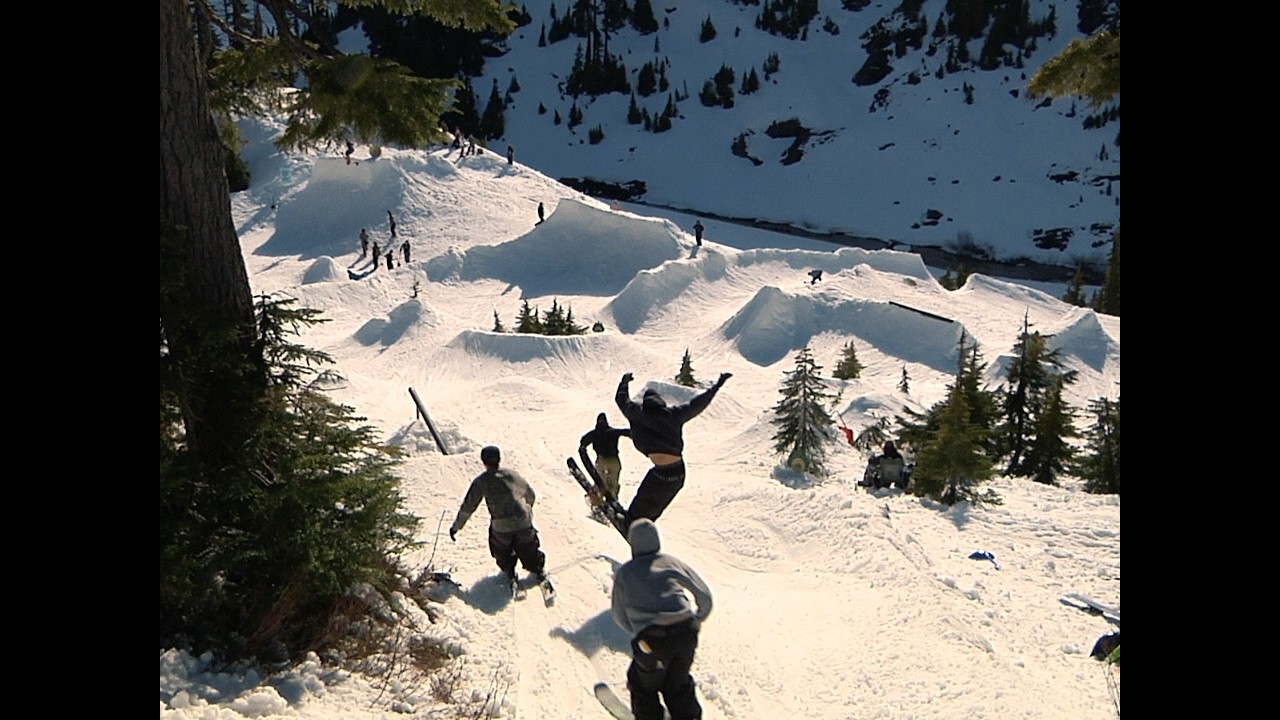
Mt. Baker is not a modern mega-park resort. It should not be framed like Whistler-Blackcomb, where huge terrain and major park infrastructure share the same destination footprint. Baker’s freestyle value is more natural and more Pacific Northwest. The mountain gives skiers banks, cliffs, wind lips, pillow drops, cornice-style takeoffs, road-shot imagination, and gullies that change shape after every storm. That does not replace a built slopestyle course for athletes who need exact jump geometry, but it creates a different kind of progression. Riders learn to adapt tricks to snow, speed, landing angle, and visibility. Baker rewards style that can survive outside a shaped lane.
Legendary Banked Slalom And The Natural Halfpipe
The Legendary Banked Slalom gives Baker its strongest event identity. The official event history places the first edition in 1985, when snowboarding was still young and the sport had not yet been absorbed into polished contest formats. Baker mattered because it was one of the few North American ski areas welcoming snowboarders at that time and because it had a natural halfpipe. Although the event is snowboard-centered, its influence reaches beyond snowboarding. It proves Baker’s terrain can shape culture without stadium architecture. The course, the banks, the duct-tape trophy tradition, and the gathering of local riders and global names all reinforce the same point: Baker’s freestyle identity comes from snow and terrain, not from manufactured spectacle.
Cascade Concrete And The Six Hundred Eighty Eight Inch Average
The phrase Cascade concrete is often used casually, but at Baker it helps explain how the mountain works. Pacific storms can bring dense, heavy snow that sticks to steep terrain, fills gullies, covers rocks, and builds supportive landings. That snow is not always blower powder. It can be deep, fast, surfy, and physically demanding. The 688 inch average creates huge opportunity, but it also creates hazards: tree wells, deep-snow immersion, sluff management, wet snow instability, and storm-day visibility problems. The world-record 1,140 inch 1998-99 season shows the ceiling, but normal Baker skiing is still about day-by-day reading. Too much new snow can close terrain. Rain lines can move high. Wind can build slabs. Great skiing here comes from patience as much as appetite.
Micah Evangelista And The Baker Film Language
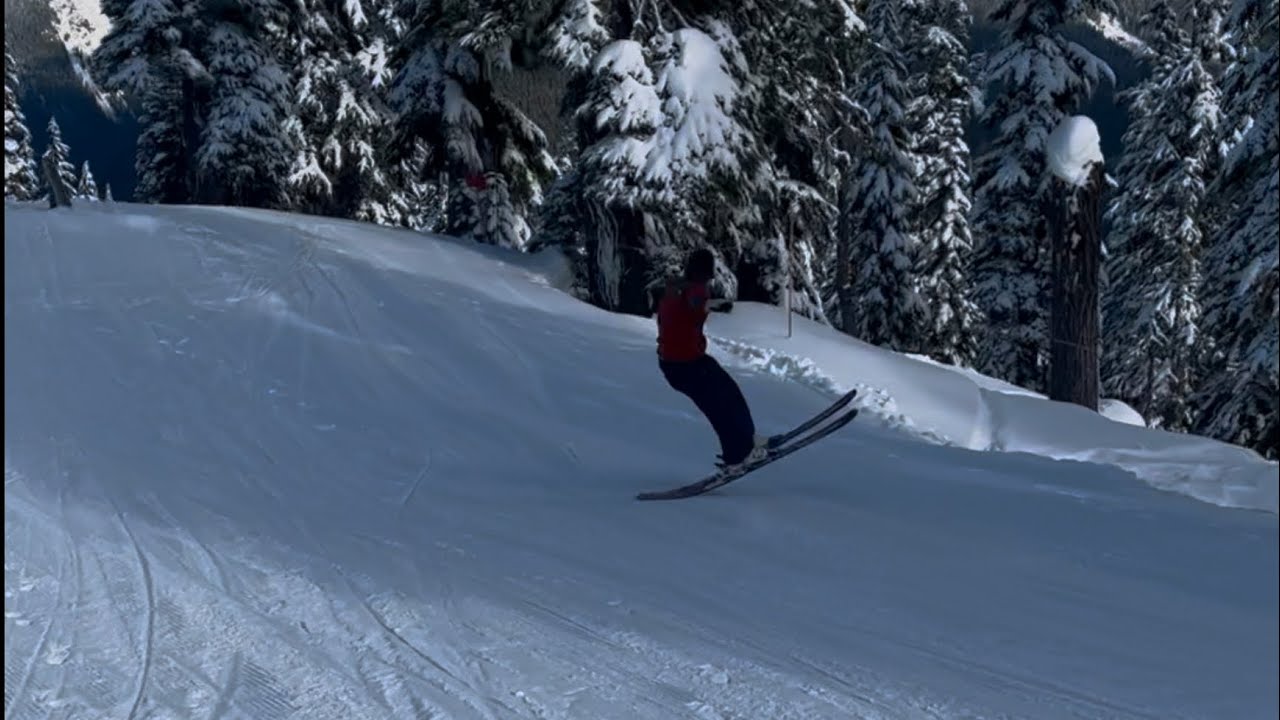
Micah Evangelista gives Mt. Baker a direct modern freeski connection inside the skipowd.tv ecosystem. His profile is rooted in Glacier, Washington, with Baker and the surrounding backcountry shaping a film-based style built around natural features, powder landings, family memory, and Pacific Northwest storm skiing. That matters because Baker’s freeski importance is not measured mainly by medals or federation results. It is measured by how the terrain appears on camera. A skier can use the mountain like a trick lab, but the features are never identical twice. Temperature, storm totals, landing depth, and who crossed the slope before you all change the line. Baker produces skiers who learn to build with the day rather than against it.
K2 Roots And Pacific Northwest Ski Design
K2 adds another Pacific Northwest layer. The brand’s Washington State roots and its long movement through freeride, freestyle, touring, and film-driven skiing fit the Baker environment closely. Baker is the kind of mountain that explains why skis need to handle more than one surface: heavy powder, chopped storm snow, hard groomer returns, wet landings, tree exits, and natural transitions. A playful powder ski, a directional freeride ski, and a touring setup can all make sense here depending on the day. The connection should not be forced into a sponsor claim about the resort. It is a regional design logic. Pacific Northwest skiing asks equipment to be versatile because the snow and terrain refuse to stay simple.
Between British Columbia Storms And Alaska Dreams
Baker sits in a useful geographic conversation. To the north, British Columbia expands the same storm-and-film language into Whistler, the Coast Mountains, the Interior, Revelstoke, and Rogers Pass. To the northwest, Alaska pushes big-mountain imagery into spines, heli zones, and exposed faces. Baker is smaller than those broader maps, but it works as a bridge between them. It has enough snowfall to feel unreal, enough terrain texture to train natural-feature judgment, and enough road access to keep a strong local community returning after every storm. For many skiers, Baker is the place where Pacific Northwest storm riding becomes understandable before the goals get bigger, steeper, or more remote.
Glacier Cabins Bellingham Access And No Village Buffer
Logistics are simple but unforgiving. Most visitors stage from Bellingham, Glacier, Maple Falls, or rental cabins along the Mt. Baker Highway. There is no large slopeside village at the ski area, no luxury pedestrian base, and no easy backup if the road becomes slow during a heavy storm. That is part of the identity. Baker is a day-use mountain at the end of a mountain road, where weather, parking, tire choice, chains, and timing can decide the quality of the session before the first chair. Once at the hill, the two base lodges keep the flow practical. Skiers come to ride, eat quickly, warm up, check the report, and head back into the snow. The absence of resort polish keeps attention on the mountain itself.
NWAC Mornings And The Beacon Park Habit
The safety culture around Baker is serious because the terrain demands it. The ski area’s Mountain Education Center promotes avalanche basics and beacon practice, and its beacon park language is direct: safety gear only matters if skiers have the skills to use it under pressure. That is the right mindset for the zone. A Baker day should begin with the official snow report, weather, road status, and the Northwest Avalanche Center forecast if there is any plan to leave controlled terrain. Beacon, shovel, probe, partner rescue practice, communication, and conservative terrain selection are not expert accessories here. They are the baseline for backcountry decisions. Inside the resort, the same respect applies to closures, deep snow hazards, and tree wells.
Why Mt. Baker Carries Freeride Weight
Mt. Baker earns a 4 level profile because its cultural and terrain importance is much larger than its infrastructure scale. The resort has 1,000 acres, 1,500 feet of vertical, 8 quad chairs, 2 handle tows, a 5,089 foot high point, a 688 inch average annual snowfall, and the 1,140 inch world-record 1998-99 season. It also has the Legendary Banked Slalom, natural halfpipe terrain, Shuksan Arm, Hemispheres, glacier-adjacent backcountry access, and a film language built from cliffs, pillows, wind lips, and storm light. It is not a park capital, not a luxury destination, and not a giant lift network. Its value is sharper than that. Baker is one of North America’s purest storm-riding references, where freeskiers learn that snow depth, terrain reading, and judgment can matter more than vertical feet on paper.