Big Sky
Rocky Mountains
United States
Montana big mountain resort in the Greater Yellowstone region | Known for: 5850 acres, Lone Peak Tram, Big Couloir, Headwaters, Madison 8, Explorer Gondola, six terrain parks, IFSA freeride events, and a December to April Rocky Mountain season | Best for: expert freeriders, tram lap crews, park progression, advanced all mountain skiers, and riders looking for scale without a dense resort-town feel
Lone Peak And The Montana Scale Problem
Lone Peak rises to 11166 feet above Big Sky Resort, giving the mountain one of the most recognizable summit profiles in the Northern Rockies. From the tram dock, the resort drops through alpine faces, exposed couloirs, bowls, trees, groomers, and long return routes toward Mountain Village and Madison Base. The official numbers are large without needing decoration: 5850 skiable acres, 4350 vertical feet, 320 named runs, 40 lifts and surface lifts, and 400 inches of annual snowfall.
Big Sky Resort has a different feel from many classic Rocky Mountain destinations because the terrain spreads wide instead of concentrating everything into one famous pod. The resort’s 50 and 50 beginner to advanced terrain split means families and intermediates have real space, but the freeski interest comes from the expert half of the map. Lone Peak, Headwaters, Challenger, Dakota, Shedhorn, and the Moonlight side give the mountain a serious in bounds identity that goes well beyond groomed cruising.
Big Couloir Headwaters And The High Exposure Rating
The Big Couloir gives Big Sky its most famous expert line. It drops from the summit shoulder of Lone Peak in a sustained, committing fall line, and the resort’s own terrain rating system separates high exposure terrain from normal expert runs. That rating matters because Big Sky’s steep skiing is not only difficult because of pitch. It involves exposure, changing snow, rocks, wind effect, route management, and the need to ski with control from the first turn.
The Headwaters and A to Z Chutes add a second expert identity on the Madison and Moonlight side. Resort safety material lists Headwaters and A to Z Chutes as hike-to routes accessed from Challenger or Headwaters, while Upper A to Z Chutes can be reached from Powder Seeker. These routes are part of the reason Big Sky is often compared with Jackson Hole and Snowbird. The comparison is not about identical snowpacks or culture. It is about in bounds terrain where strong skiers still need mountain judgment.
Powder Seeker To Shedhorn Storm Days
Big Sky’s snow is continental Rocky Mountain snow, often cold, dry, and wind affected at upper elevations. The resort’s 400 inch annual snowfall figure gives the mountain a strong baseline, but the best days still require reading aspect and wind. Upper Lone Peak can be chalky or stripped after strong wind, while lower trees and protected gullies may preserve soft snow. Powder Seeker, Shedhorn, Dakota, Challenger, Andesite, and Southern Comfort can all become better choices than the summit when visibility closes down.
The mountain’s size changes the powder strategy. On a smaller resort, everyone often chases the same two lifts after a storm. At Big Sky, skiers can spread across bowls, tree lines, benches, and long traverses. That makes the resort productive for crews filming multiple looks in one trip. One lap can be a technical tram descent. The next can be a wind lip near Powder Seeker, a tree shot below Andesite, or a long fast run toward the Madison side.
Six Parks From Wolf Pup To Swifty
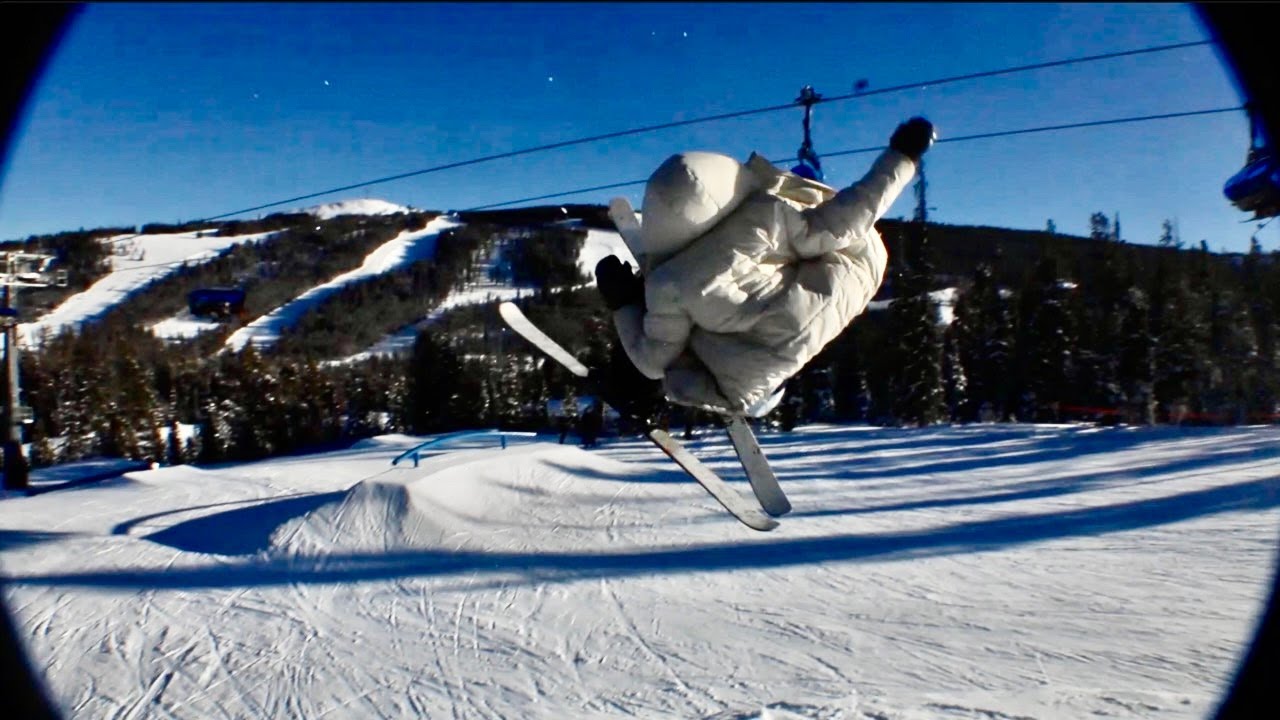
Big Sky’s freestyle program is structured around six terrain parks. The official mountain information places Wolf Pup, Cowpoke, and Explorer at the progression end of the ladder, with The Cache and Plain Jane adding more challenging features, and Swifty acting as the largest park with bigger jumps and more complex features. That gives the resort a park identity that is useful even if it is not the main reason most freeskiers travel to Montana.
The park setup matters because Big Sky’s scale attracts mixed crews. A skier working on rails does not need the same terrain as someone trying to ski the Big Couloir, but both can still use the same resort. Park riders can warm up through smaller features, step into medium lines, and use Swifty when speed and confidence are ready. Compared with Copper Mountain, Big Sky is less specialized as a freestyle training campus, but it has enough park depth to support rail jams, slopestyle practice, and everyday progression inside a much larger big mountain map.
IFSA Freeride And The Madison Side Test
Big Sky’s freeride competition signal is tied to IFSA events. The resort’s IFSA Freeride Junior Regionals page places athletes on venues accessed via Madison 8 and Stillwater Road, and IFSA listings identify Big Sky as a venue in the Northern region. This matters because junior and collegiate freeride events only work when the terrain can test line choice, control, technique, fluidity, and style in real snow.
The Madison side gives those events a natural home. Headwaters, Stillwater access, Moonlight terrain, and the wider north side of the resort have enough pitch and variation to make a judged line meaningful. The result is different from a stadium slopestyle contest. Big Sky’s event relevance comes from natural terrain, not scaffolding or one perfect jump line. For a freeski archive, that makes the location useful for IFSA clips, junior freeride development, expert POVs, storm skiing, and videos where line choice matters more than trick count.
Madison 8 Swift Current 6 And The New Base To Peak Corridor
Big Sky’s lift network is part of the modern story. Madison 8 replaced Six Shooter and is described by the resort as the world’s longest eight-place lift, with heated seats, weatherproof bubbles, and an 8 minute ride time. Swift Current 6 increased capacity out of Mountain Village and operates at a fast six meters per second. The Lone Peak Tram, replaced in 2023, travels at 10 meters per second and reaches the summit in just under four minutes.
The Explorer Gondola changes the visitor flow again. Extending from Mountain Village to the Bowl, it connects toward the lower terminal of the Lone Peak Tram and gives pedestrian summit access through Kircliff. For skiers, the practical benefit is cleaner movement from the base toward upper terrain and beginner areas. For advanced crews, it means the day’s friction is reduced: warm up, check weather, move toward Powder Seeker or the tram, then shift to Madison 8 or Challenger when the north side is skiing better.
Bozeman Access And The Gallatin Canyon Approach
Big Sky is usually accessed through Bozeman Yellowstone International Airport, then south through the Gallatin Canyon on US 191. The resort promotes nonstop air access through BZN, and the drive gives the destination a different mood from Colorado’s interstate corridor or Utah’s city-to-canyon rhythm. You arrive through river bends, ranch land, forest, and canyon walls before Lone Peak starts to dominate the view.
Mountain Village is the most efficient base for first-time visitors who want lift access, services, and park proximity. Madison Base works well for skiers focused on Moonlight terrain, Headwaters access, and the north side of the map. Big Sky town center and Meadow Village add lodging and food options away from the lift base. The planning rule is simple: choose the base according to the terrain goal. Park days and tram days start more smoothly from Mountain Village. Headwaters and Moonlight days reward staying closer to Madison access.
Avalanche Terrain Tree Wells And Patrol Culture
Big Sky’s safety profile is serious because the terrain is serious. Resort safety material states that alpine terrain carries real avalanche risk even inside a managed ski area, and that mitigation reduces but does not eliminate that risk. It also lists hike-to routes, backcountry gates from Lone Peak, tree well hazards, deep snow immersion risk, and the need to respect closures after new snowfall.
That should shape how freeskiers move. Ski Headwaters with a partner, clear communication, and enough ability to handle exposure. Treat Lone Peak terrain as consequential even when it is inside the boundary. Keep visual contact in trees and deep snow. In the parks, follow Park Smart behavior: start small, make a plan, look before dropping, respect other users, and take it easy when speed is uncertain. Big Sky rewards skiers who understand that modern lifts do not make steep terrain less real.
The Best Big Sky Window For Freeskiers
Mid-January through February is the strongest window for cold snow, consistent coverage, and protected powder in trees and gullies. March often brings better visibility, longer light, and a more forgiving surface cycle for park laps and alpine chalk. April can still work well on upper terrain when coverage holds, but spring conditions can change fast across Lone Peak, Andesite, and the Madison side.
A smart freeski trip should stay flexible. Start by checking wind, tram status, and upper mountain openings. Use lower parks or Andesite laps when the summit is closed. Move to Powder Seeker or Challenger when visibility improves. Save Lone Peak objectives for days when patrol, snow surface, and group confidence all line up. Big Sky’s concrete value is the combination: 5850 acres, 4350 vertical feet, 400 inches of snowfall, six terrain parks, 40 lifts, 320 named runs, a four minute tram, and a Montana terrain map where one resort can feel like several different mountains in the same week.