Hugo Burvall
Stockholm / Kläppen, Sweden | Active: 2013-present public ski record | Discipline: Slopestyle, Big Air and Creative Park Skiing | Known for: World Cup Big Air podiums, Beijing 2022, Jib League, Capeesh
Milan Under The Big Air Lights
The scaffolding jump in Milan rose above the city night, bright enough to flatten the landing and loud enough to turn every stomp into a public answer. Hugo Burvall dropped into the 2017 Big Air World Cup with Sweden’s next contest generation watching closely. He put down a nose-butter double cork 1260 safety, then followed with a switch double cork 1440 double Japan. Elias Ambühl won the event, but Burvall finished second ahead of Andri Ragettli. That night fixed his name on the World Cup map: a Swedish skier with enough technical jump range to score against the best big air riders in Europe.
Stockholm Born, Kläppen Shaped
Burvall’s official Olympic biography lists him as John Hugo Alexander Burvall, born on April 19, 1997 in Stockholm. His Movement Skis profile gives the skiing version of the story: home resort Kläppen, freestyle discipline, and a skier who started around age six before falling for the creative side of the sport. That mix of capital-city origin and Swedish park culture matters.
Kläppen is one of Sweden’s most important freestyle venues, with a park history that connects contests, edits, national training and spring sessions. Burvall’s skiing makes sense through that setting. He built the ability to ski jump lines, rails, transitions and soft spring features, but he never looked like a pure federation product. Even during his strongest World Cup period, the creative side of Swedish park skiing stayed close to the surface.
World Cup Podiums Before The Olympic Bib
The 2017-18 season remains the competitive peak of Burvall’s FIS record. FIS lists two individual World Cup podiums that season, both second places. Milan gave the first public image, and the wider big air campaign placed him inside a field that included Ambühl, Ragettli, Oscar Wester, Henrik Harlaut, Øystein Bråten and other skiers pushing the new Olympic-era jump standard.
Those podiums are the reason his profile sits above a simple creative-rider category. Burvall did not only appear in edits or local sessions. He reached World Cup big air podium level in the first years when big air was becoming central to freeskiing’s Olympic future. The trick package from Milan also shows the era clearly: nose-butter double corks, switch double cork 1440s, double Japan grabs, safety grabs and high-speed landings on scaffolding jumps.
Beijing And The Swedish Deep Field
Burvall represented Sweden at Beijing 2022 in both men’s freeski big air and slopestyle. The results were modest: 24th in big air qualification and 28th in slopestyle qualification. That honesty matters. He was not an Olympic finalist, and the article should not treat him as one. His Beijing value is contextual rather than medal-based.
Sweden’s 2022 men’s freeski group was stacked with Henrik Harlaut, Jesper Tjäder, Oliwer Magnusson and Burvall. Tjäder won slopestyle bronze, Magnusson nearly podiumed in big air, and Harlaut carried years of style influence into the Games. Burvall’s place on that team shows the depth of Swedish freeskiing at the time. He had earned the bib through years of big air and slopestyle work, even if the Olympic runs did not become his defining result.
Bakuriani And The Last FIS Championship Markers
The FIS record continues after Beijing. At the 2023 World Championships in Bakuriani, Georgia, Burvall qualified fifth in slopestyle, then finished 16th in the final ranking. He also competed in big air, placing 23rd. Those results give the later contest chapter a clear endpoint without forcing it into a false comeback story.
Bakuriani was useful because it showed him still present in formal competition after the Olympic season. The venue demanded full-course control, jump power and enough adaptability for Georgia’s variable mountain weather. Burvall did not leave with a medal, but the qualification result in slopestyle showed that he could still build a competitive run when the rails and jumps aligned.
How Burvall Keeps Tricks Playful
Burvall’s skiing sits between contest technique and session creativity. His Milan tricks show the technical side: nose-butter double cork 1260 safety and switch double cork 1440 double Japan. His later creative clips show the looser side: rails, side hits, SLVSH games, spring laps, park lines and features where style matters more than degree count.
The useful technical vocabulary is broad: nose butters, switch takeoffs, double corks, rail slides, grabs held through the rotation, pretzels, 270s, side-hit pop, pipe-style transition control and soft landing recovery. Compared with a pure big air specialist, Burvall’s skiing feels less obsessed with numbers. Compared with a pure street skier, it keeps more contest polish. That middle ground is his lane.
SLVSH At Kimbo And The Session Culture
One of the best public examples of Burvall’s creative side is his SLVSH game against Emil Granbom at Kimbo Sessions in Kläppen. The setup matters because Kimbo is not a standard contest. It is a gathering built around Swedish park creativity, strange features, style-heavy lines and tricks that might never appear in a World Cup strategy.
SLVSH rewards a different intelligence. A skier has to copy tricks, answer with variation, stay loose under friendly pressure and make small details visible. Burvall’s presence in that format connects him to the same Swedish scene that values Henrik Harlaut’s imagination, Jesper Tjäder’s feature invention, and Granbom’s park creativity. It also explains why his post-contest relevance has stayed more cultural than statistical.
Movement, Music And A Less Standard Athlete Frame
Movement Skis gives Burvall’s current sponsor profile the clearest public anchor. The brand describes him as a freeskier who competes and creates ski movies, while also noting his work as a music producer. That detail helps separate him from athletes whose public identity is only a results archive.
The music side fits the way his skiing is now framed. Creative park skiing depends on rhythm: speed into a rail, pop off a side hit, grab timing in a cork, body position through a butter and the cut of an edit. Burvall’s profile works because it has more than one creative outlet. He is not presented only as a former Olympic skier. He is a skier, filmer-scene participant and music-minded rider inside a wider European freestyle culture.
Capeesh, CATPISS And The Current Crew Map
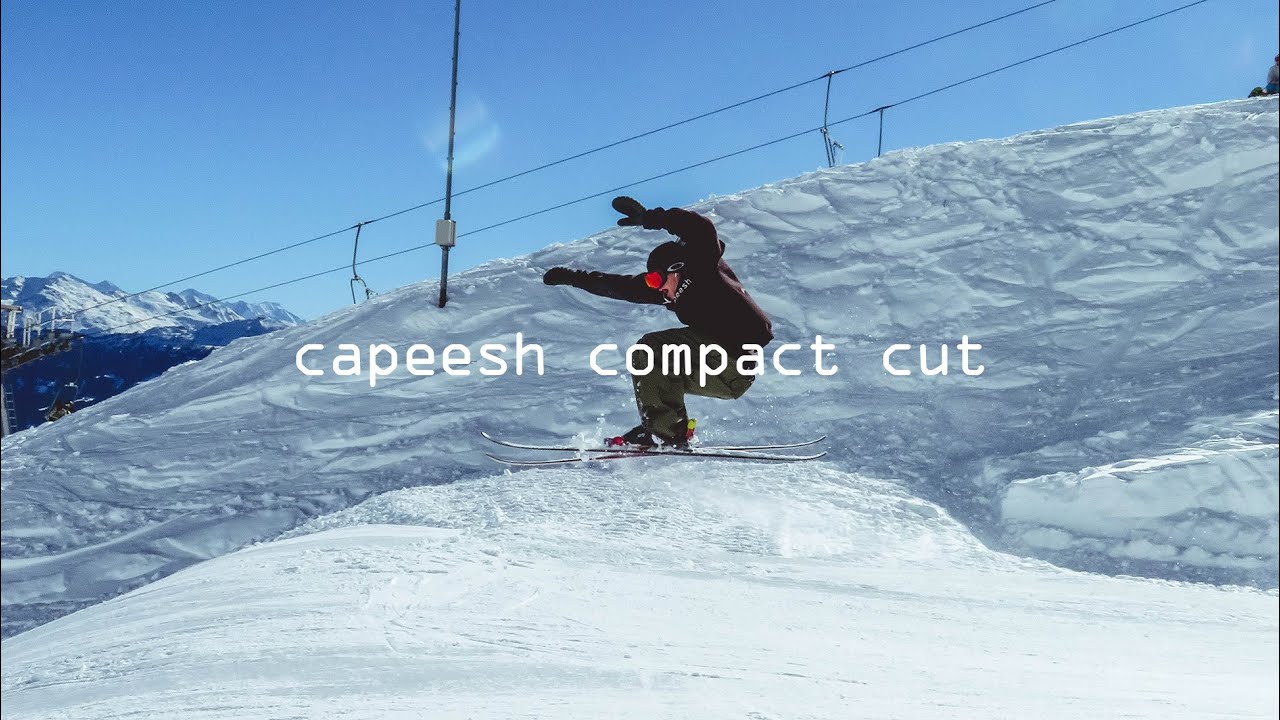
Burvall’s most current film marker is Capeesh. CATPISS, released in 2025 as the first full team movie from the Capeesh crew, listed him in a cast with Edouard Therriault, Tormod Frostad, Matěj Švancer, Wyatt Dorman, Jackson Jenkins, Trym Sunde Andreassen, Kai Mahler, Jackson Wells, Joona Kangas, Daniel Bacher and Ferdinand Dahl.
That crew context is important. Capeesh is not a nostalgia project for retired contest skiers. It sits at the center of modern creative freeskiing: rails with strange gaps, wallride ideas, backcountry tricks, park lines, street influence and a sense that the format can be as playful as the trick. Burvall’s inclusion places him among riders who are actively shaping how European freeski edits look now.
Jib League And The New Contest Language
Jib League gives another useful current reference. The format was built as an alternative to standard slopestyle, with skiers judging one another and valuing rail creativity, feature use and style. Burvall appears in that conversation as the kind of skier who understands both sides: formal contest pressure from World Cups and Olympics, then the looser peer-driven language of modern park skiing.
That is the accurate place for Hugo Burvall now. He is not a 5/5 legend and not a current Olympic medal contender, but his record is stronger than a niche edit profile: two World Cup podiums, Beijing 2022, Bakuriani 2023, Swedish national relevance, Movement support, Capeesh, CATPISS and Jib League presence. For skipowd.tv, the page should frame him as a Swedish freeskier who moved from big air podiums into a more creative, crew-based chapter without losing the technical base that put him on the World Cup podium in the first place.