Yu Sasaki
Japan / Revelstoke, British Columbia | Active: 2018-present public freeride record | Known for: FWT Hakuba, Revelstoke big-mountain skiing, KAMASE, Home From Home, Japanese freeride culture | Current: Peak Performance-backed freeride skier and Japan/BC mountain guide figure
Hakuba Powder Above The Leader’s Chair
The Hakuba face was soft under January sun, sixty centimeters of new snow still hanging in the Japanese Alps while Yu Sasaki pointed into the top air. He threw a large 360, touched a hand on landing, then kept the rest of the run fast and fluid enough to sit in the leader’s chair. That 2019 FWT Hakuba run did not end with a podium, but it gave Sasaki one of the clearest markers of his career: a Japanese rider using home-country terrain, creative line choice and big-mountain calm to stand beside Markus Eder, Tanner Hall and Tom Peiffer on the same result sheet.
Japan First, Revelstoke Second Home
Sasaki’s public profile is built between two snow worlds. Peak Performance lists him as born in 1986, from Japan, and now based in British Columbia, with Revelstoke named as his favorite mountain. That move matters because Revelstoke gives a skier a different education from Japan. Hokkaido and Hakuba offer deep storm snow, pillows, tree lines and short weather windows. Revelstoke adds bigger alpine faces, Canadian backcountry access, pillows with more vertical consequence, sled days, touring approaches and a freeride culture shaped by steep terrain. Sasaki’s skiing now carries both places: Japanese snow instinct and British Columbia scale.
FWQ Hakuba And The Wildcard Door
The official FWT record shows how quickly Hakuba changed his international visibility. Sasaki won the 2019 FWQ Freeride Hakuba men’s ski event, earning the pathway into the Freeride World Tour stop that followed. FWT Japan’s release around the Japanese selection event identified Yu Sasaki, Ayana Onozuka and Keita Yamazaki as the athletes who earned places in FWT Hakuba Japan 2019. That context is important because Sasaki was not only a local invite dropped into a show. He won his route into the event, then finished fourth in the main FWT stop a few days later.
Big Triangle And The Japanese Freeride Moment
FWT Hakuba 2019 ran on the Big Triangle venue, listed with a 1,720-meter start, 440 meters of vertical and a 46-degree pitch. The men’s ski result placed Markus Eder first, Tanner Hall second, Tom Peiffer third and Sasaki fourth. That top four says a lot about the moment. Eder was entering a world-title season, Hall brought freeski legend status into freeride, Peiffer represented Canadian big-mountain strength, and Sasaki gave Japan a rider inside the same conversation. His run did not need to imitate the others. It used a fast, readable line, a big top 360 and enough control to keep the score high despite the hand touch.
The 2020 Tour Across Four Stops
Sasaki’s 2020 FWT profile gives the fullest official contest chapter. He finished seventeenth overall in Ski Men, with results at Hakuba, Kicking Horse, Ordino Arcalís and Fieberbrunn. The strongest stop was Kicking Horse Golden BC, where he placed ninth, followed by twelfth in Andorra and fourteenth in Austria. Those results place him as a legitimate FWT competitor rather than a one-event Hakuba story. The tour also showed how different freeride faces test different skills. Hakuba rewards deep snow and local reading. Kicking Horse demands cliff choice, exposure and North American line speed. Andorra and Fieberbrunn add European terrain, variable snow and a stricter requirement for line construction.
Kicking Horse And The Radical Moment
Getty’s competition imagery from Kicking Horse 2020 captured Sasaki in the air above a rocky section during the second FWT stop, and his Peak Performance profile later emphasized huge tricks, creative line choices and massive 360s as part of his identity. Kicking Horse suits that description. The venue forces skiers to mix speed with control over exposed rocks, cliff bands and powder pockets. Sasaki’s skiing is strongest when the trick does not feel separated from the mountain. A 360 is not thrown as decoration. It sits inside the line, after the speed is set and before the landing has to become the next turn.
Achilles Rehab And A Different Winter
STEEP’s 2023 Madarao feature gave a more vulnerable view of Sasaki’s career. It reported that he ruptured his Achilles tendon in early January 2022, returned to snow in April after rehab, and was back in the backcountry by May, but not yet at full strength. For that season, he decided to distance himself from FWT competitions and focus more on photography and Japan-based riding. That decision makes sense for a big-mountain skier. Freeride competition demands full trust in the lower body: landing strength, edge reaction, sudden compression, recovery from backseat moments and confidence when the face starts moving fast underneath the skis.
Madarao, Shiga Kogen And The Teacher Role
Recent Japanese coverage shows Sasaki moving into a freeride-session role as well as athlete work. STEEP documented him enjoying Madarao Kogen powder after returning to Japan from Canada, then later promoted small-group freeride sessions with Sasaki at Madarao, Arai, Seki Onsen and Shiga Kogen. That does not turn him into only a coach, but it adds a current function to his profile. He is becoming one of the riders who can translate Japan’s freeride terrain for others: where to find speed, how to read trees, when snow quality changes, how to move safely through powder fields and when the best line is not the most obvious one.
KAMASE Beside Sammy Carlson
KAMASE placed Sasaki inside a different kind of global freeride film. The 2023 Sammy Carlson project featured Carlson with Vinzenz Keller, Todd Ligare, Yu Sasaki and Yoshiya “Bull” Urata, filmed in Japan, British Columbia and Alaska. For Sasaki, that cast matters because the film was not built around standard competition. Carlson’s skiing is backcountry freestyle at a high level, Ligare brings big-mountain speed, Keller adds European freeride style, and Urata connects the Japanese film culture. Sasaki’s presence in that group makes sense because his own skiing sits between all of those elements: freeride line choice, deep powder, big airs and Japan-to-BC fluency.
Home From Home Between Hakuba And Revelstoke
Home From Home, presented through Peak Performance and covered by Mountainwatch, made Sasaki’s dual geography explicit. The film follows Japanese freeride skiers including Sasaki through Hakuba and the Revelstoke backcountry, with the title pointing to the two places that shape his life. That is the most accurate frame for his current identity. Sasaki is not simply a Japanese skier living abroad, and he is not a Canadian-based freerider detached from home. His skiing works because both places stay visible. Japan gives snow memory and cultural origin. Revelstoke gives daily big-mountain scale. The film turns that split into the subject rather than hiding it behind action footage.
How Sasaki Skis Big Terrain
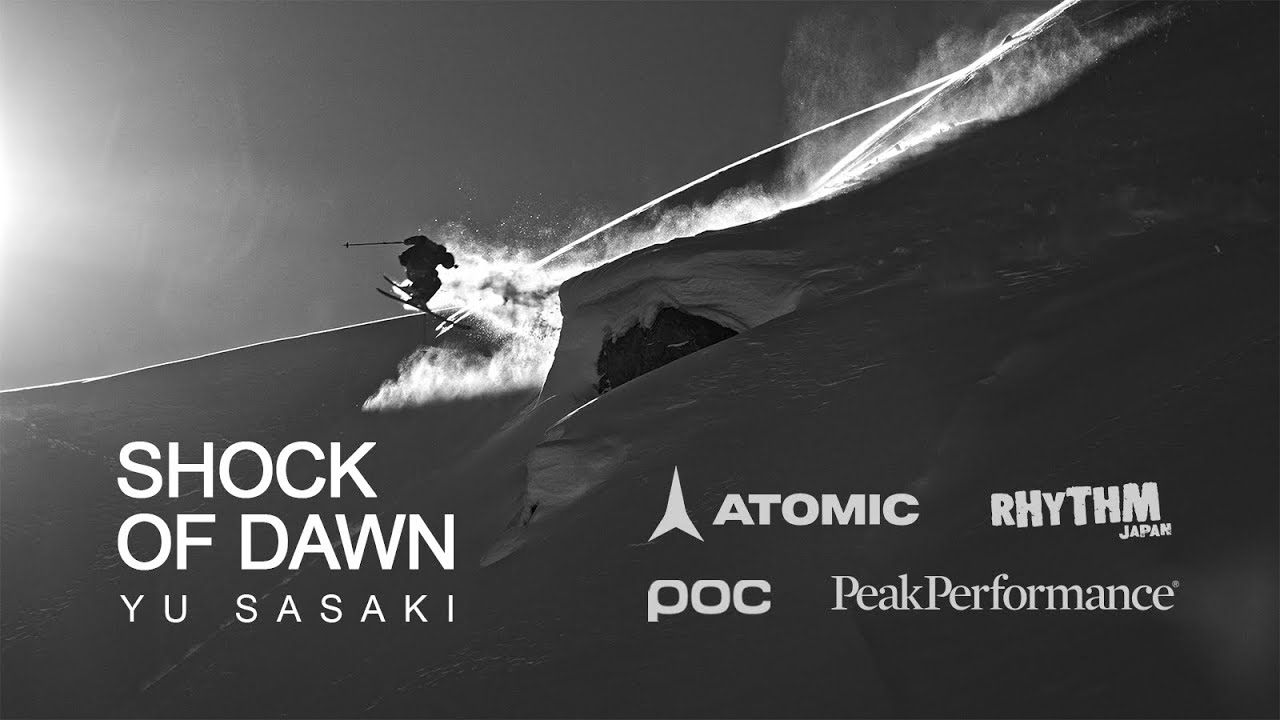
Sasaki’s technique is built around calm speed. He is comfortable carrying momentum into cliffs and natural takeoffs, then using measured air awareness rather than rushed body movement. His skiing uses powder slashes, big 360s, pillow drops, cliff exits, fast fall-line turns, tree spacing, deep landings and late pop when the face opens. The strongest trait is composure. In freeride, panic shows immediately: over-turning, sudden checks, loose upper body or landings that close the run. Sasaki’s best clips and competition runs look planned even when the terrain is changing under him.
Food Truck, Mountain Life And The Offseason
Peak Performance’s profile adds an unusual off-snow detail: Sasaki owns a food truck and drives around the Canadian Rockies in the offseason, cooking traditional Japanese food for mountain bikers. That detail matters because it gives his freeride life a grounded shape. Many ski profiles flatten athletes into winter-only images. Sasaki’s public identity is more specific: Revelstoke snow, Japanese food, bike-park afternoons, backcountry days, travel back to Japan, and a career that has moved through competition, recovery, filming and guiding-style sessions without losing the same mountain-centered rhythm.
The Yu Sasaki Lane Now
Yu Sasaki’s verified profile sits between competition, film and cultural bridge. The official results are clear: 2019 FWQ Hakuba win, fourth at FWT Hakuba 2019, a 2020 FWT season with Kicking Horse as his best stop, and a current FWT rider page. The film and media record adds KAMASE, Home From Home, Madarao, Shiga Kogen and Revelstoke. His importance is not measured by a world title or a long podium list. It comes from showing how Japanese freeride can stand on the FWT stage, then keep evolving through British Columbia backcountry, home-country powder, injury recovery and films that treat place as seriously as performance.