Yoshiya Urata
Hokkaido / Sapporo, Japan | Active: 2004-present public record | Known for: T-Crew, Armada Snowcieties: Sapporo, KAMASE, Hokkaido powder and street skiing | Current: Japanese film-first freeskier known as “Bull”
Sapporo Snowbanks Under City Light
The Sapporo street was buried deep enough that the rail almost looked natural. Snowbanks pushed against the sidewalks, cold light bounced off the city, and Yoshiya “Bull” Urata moved toward the feature with the calm of someone who knew the speed before the first push. That is where his skiing makes the most sense: not inside a standard competition story, but between Hokkaido storm snow, roadside powder, city rails and a Japanese crew language that visiting skiers could understand without many shared words. Urata’s public career is built around film, place and style.
The FIS Record Before The Film Identity
Urata does have an official competition record, but it is not the strongest way to read his career. FIS lists Yoshiya Urata as a Japanese freestyle skier born in 1986, with FIS Code 2440216 and inactive status. The results page shows starts in moguls and halfpipe during the 2004-05 period, including a third place in a FIS moguls event at Inawashiro in February 2005, a Park City Nor-Am halfpipe start in December 2004, and a Sapporo Bankei moguls result in March 2005. That record places him inside an earlier Japanese freestyle system before his public identity shifted toward freeride, street and video.
Hokkaido As The Main Character
Hokkaido is more than a location tag in Urata’s archive. It shapes the skiing. Sapporo’s heavy winters give crews deep city snow, roadside pillows, soft landings and short urban windows where a spot can work before plows or traffic change it. Resorts and sidecountry zones around the island add another layer: tree skiing, powder turns, wind lips, natural takeoffs and storm laps. Urata’s clips often carry that mixture. One moment is a city rail with a shoveled in-run; the next is soft snow, a backcountry feature, or a natural hit where the landing needs quiet skis and patient pressure.
T-Crew And The Local Language
T-Crew is central to Urata’s identity. Public video listings repeatedly place him with Yohei Maruyama, Shingo Sasaki, Daisuke Takano, Hiromi Sato, Toru Tachibana and visiting riders from the wider Armada orbit. That crew gave Japanese freeskiing a recognizable visual voice: playful edits, strong powder days, street spots, park laps, road trips, and a willingness to make Hokkaido feel both local and global. Urata’s nickname, “Bull,” also fits that setting. His skiing can look powerful, but it rarely looks rushed. He tends to enter features square, hold body position, and finish tricks with enough speed to keep the line alive.
T-Time Across Hokkaido And Niigata
The 2015 T-Crew season edit T-Time placed Urata in a cast with Yohei Maruyama, Shingo Sasaki, Daisuke Takano, Mike Hornbeck, Kim Boberg, Phil Casabon and Riley Leboe, with locations listed in Hokkaido and Niigata. That edit matters because it shows how Japanese crews were already blending local snow culture with outside style influences. Niigata and Hokkaido offer different winter textures: coastal storms, soft resort laps, city snow, park transitions and powder windows. Urata’s presence in that project helped frame him as a bridge between Japan’s own freeski rhythm and the North American / European skiers who came to study it.
Snowcieties: Sapporo And The Translation Line
Armada’s Snowcieties: Sapporo gave Urata his clearest international platform. The episode brought Phil Casabon, Mike Hornbeck, Kim Boberg and Riley Leboe into Sapporo with Japanese Armada counterparts from T-Crew. The premise was simple: show how one of the world’s snowiest cities becomes ski terrain. The most quoted line came from Urata himself, explaining that even when words did not translate well, ski styles did. That line became a useful summary of the episode. Casabon, Hornbeck and Boberg brought their own rail and style language, while Urata and T-Crew gave the city context, snow knowledge and local rhythm.
Get High And The Two-Rider Core
Get High, released by T-Crew in 2017, narrowed the frame around Urata and Yohei Maruyama. Freeride.cz described the film as a Japanese T-Crew movie built around the pair, with Hokkaido powder for Bull, a Kimbo Sessions connection through Maruyama, and a spring backcountry ending in Japan. The project is useful because it shows Urata outside the visiting-crew structure. Instead of serving only as a host for international skiers, he appears as one of the main creative engines. The footage moves through powder, park, street, jumps and backcountry, which matches the way his career avoids a single category.
KAMASE Beside Sammy Carlson
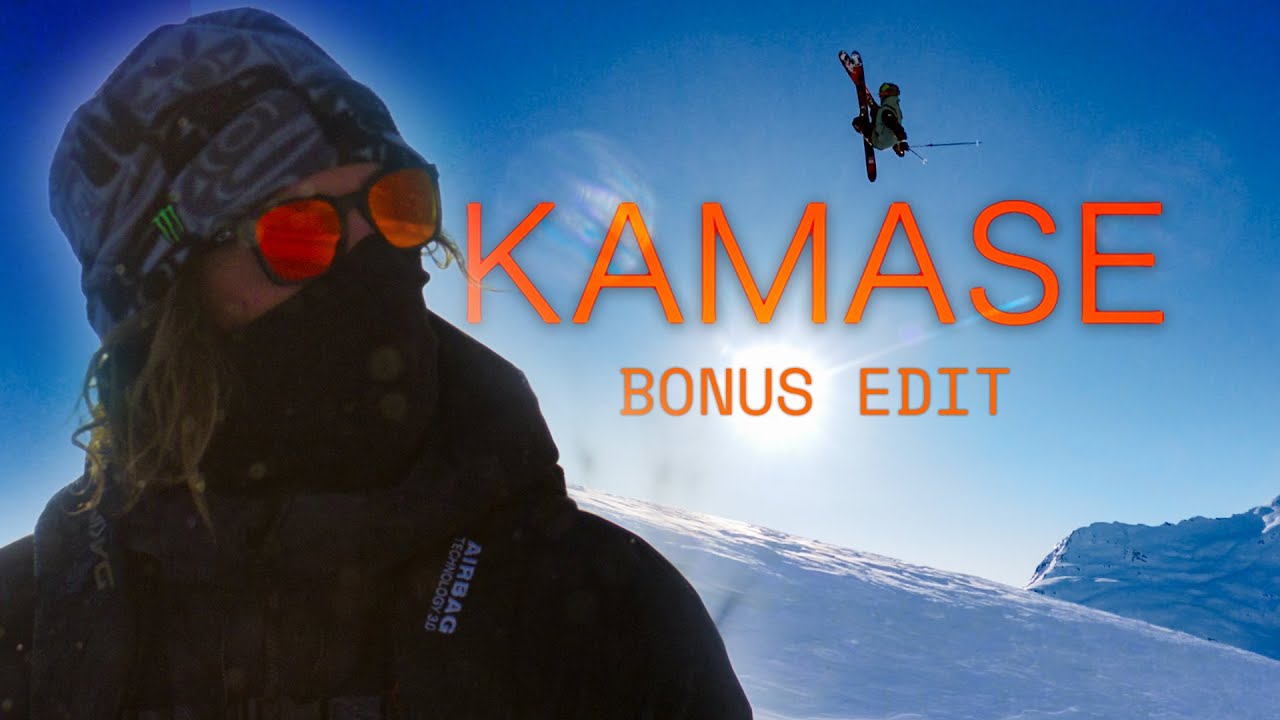
KAMASE gave Urata a later-career marker with a different scale. Sammy Carlson’s 2023 film, directed by Blake Vincent Kueny, featured Carlson with Vinzenz Keller, Todd Ligare, Yu Sasaki and Yoshiya “Bull” Urata. The film moved between Japan, British Columbia and Alaska, with deep powder, pillow lines and high-consequence mountain terrain. Urata’s presence in that cast matters because KAMASE is not a small local edit. It connects him to one of the strongest backcountry-freeski projects of the period, beside a skier whose style is studied frame by frame. Urata’s Japan chapter adds a local weight to that global route.
How Bull Makes Tricks Read Clean
Urata’s skiing is easiest to understand through economy. He does not need frantic movement to sell a trick. On rails, he uses calm entries, centered pressure, minimal arm swing and exits that preserve momentum. In powder and natural terrain, he sets rotation late, keeps the grab readable, and lands stacked rather than folded behind the tails. His skiing uses the vocabulary of park and street—presses, slides, butters, spins, grabs, switch control and natural takeoffs—but the strongest trait is pace. The trick has time to be seen. That makes his footage useful not only as entertainment, but as a study in how style becomes legible on camera.
The Japanese Freeski Bridge He Represents
Urata’s importance is cultural more than statistical. He is not defined by World Cup finals, Olympic results or X Games medals. He matters because his archive connects several parts of freeskiing that often stay separate: early FIS-era freestyle, Hokkaido powder, Sapporo street skiing, T-Crew edits, Armada’s global style network and Sammy Carlson’s backcountry film world. For an international audience, he helped make Japanese freeskiing feel specific rather than exotic. The snow, city, crew and trick language all stayed recognizable, but the rhythm remained local.
The Bull Urata Lane Now
Yoshiya “Bull” Urata’s verified profile is film-first and place-driven: FIS roots in the mid-2000s, T-Crew projects through Hokkaido and Niigata, Snowcieties: Sapporo with Armada, Get High with Yohei Maruyama, and KAMASE with Sammy Carlson’s crew. His career does not need a conventional contest arc to hold weight. The record is already clear: a Japanese freeskier whose strongest contribution is showing how Hokkaido storm snow, Sapporo streets and calm, powerful style can belong in the same part.