Micah Evangelista
Profile and significance
Micah Evangelista is a Pacific Northwest freeski and backcountry specialist whose entire approach to skiing is shaped by one mountain: Mt. Baker. Born and raised in the tiny town of Glacier, Washington, he grew up in the shadow of Baker’s storms, learning to move through deep snow, pillows and tight trees long before his name appeared in ski media. As he evolved from local kid to sponsored athlete, he stayed close to home, building his identity as both skier and filmmaker rather than chasing a conventional contest pathway. That choice gave his profile a different flavor: more “soul skier and storyteller” than podium hunter, with projects that feel rooted in place and community instead of tour calendars.
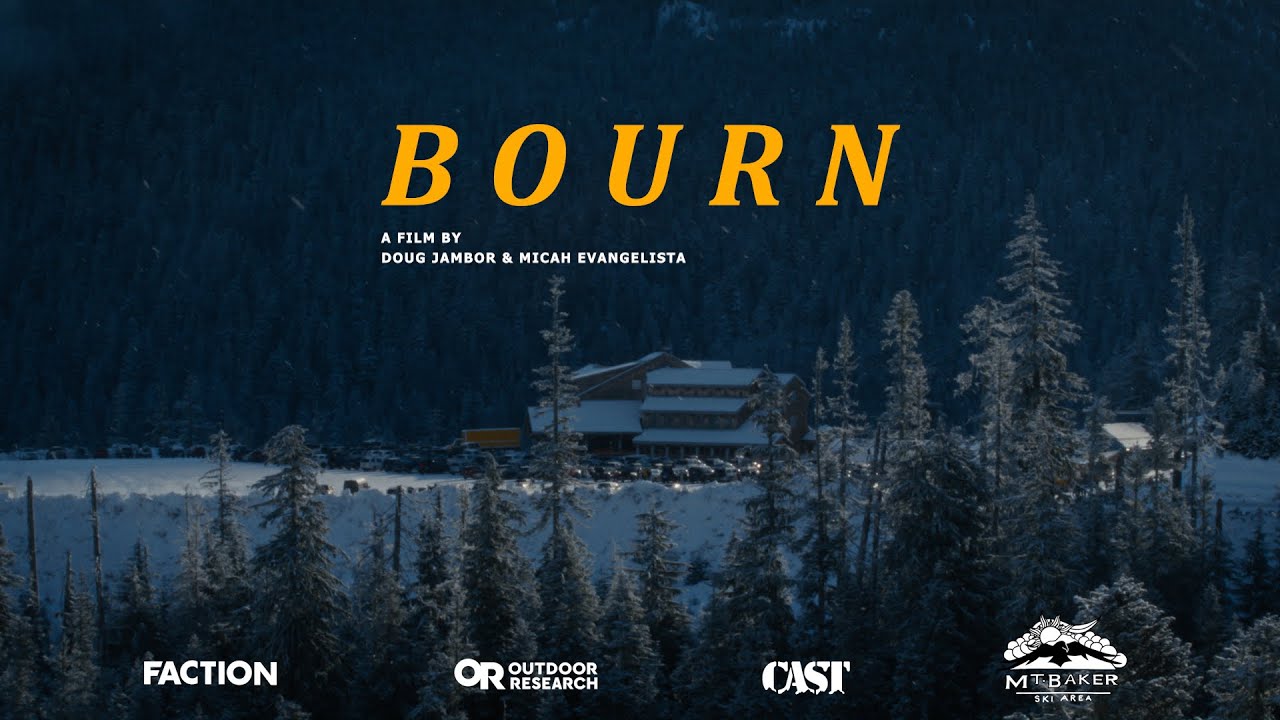
Today, Micah is widely recognized in core circles as the creative force behind films like “BOURN” and “Actual Air,” where his smooth, powerful skiing is inseparable from the way it is framed on screen. He has worked as both on-camera athlete and director, shaping the full narrative from line selection to final edit. For a ski video platform, he stands out as a rider whose importance comes less from medals and more from mood: he is one of the key modern voices showing what a life centered on one mountain, one valley and one tight-knit crew can look like when you fully commit.
Competitive arc and key venues
Evangelista’s story does not revolve around World Cup points or Freeride World Tour rankings. As a kid, his “competition” was mostly the daily challenge of keeping up with his family and friends at Mt. Baker, where big storms and big terrain set the bar high. Instead of following a race program or full-time big-mountain circuit, he gravitated early toward filming mission-style days: hiking to jumps with shovels on his back, building features in sidecountry zones and turning storm cycles into informal personal contests with his crew. That choice to focus on creative output rather than formal results is a big part of why he still feels fresh to many viewers even after years on snow.
The key “venues” in his career are film projects rather than competition stops. His breakout full-length movie, “BOURN,” is a two-year, fully foot-powered exploration of Baker’s backcountry, framed around the idea of home and the pull of returning to familiar terrain with new eyes. Later, “Actual Air,” shot entirely on 16mm film by his brother Mattias, pushed further into the artistic side of ski storytelling, blending voiceover, texture and dreamy powder footage. More recently, projects released with brands like K2 Skis and Outdoor Research have expanded his platform, but the pattern remains the same: Micah uses each season to dig deeper into the same North Cascades terrain rather than chasing an ever-changing tour calendar.
How they ski: what to watch for
Micah’s skiing is built for deep snow and complex terrain rather than manicured park lanes. The first thing to notice is his stance: strong, centered and relaxed, with his upper body quiet while his legs do most of the work. In classic Baker storm conditions he keeps his tips up and weight balanced to stay afloat in very deep snow, carving smooth arcs that make heavy powder look almost weightless. When he approaches features, he rarely slams on the brakes; instead, he uses the terrain to modulate speed, rolling over knuckles and pillows in a way that keeps his momentum alive from the top of the line to the bottom.
His trick selection is playful but thoughtful. In “BOURN” and later edits you see big, floated 360s, tweaked grabs and occasional corks thrown off natural takeoffs, always landed with enough control to flow straight into the next turn rather than stopping to celebrate. On smaller features he leans into butters, nose presses and slashes that read beautifully on camera, giving even medium-sized terrain a cinematic feel. Watch closely for how early he sets up landings: he often chooses exits that allow him to re-enter the fall line smoothly, keeping a run readable and satisfying for viewers even when it is filmed in tight trees or rolling, three-dimensional terrain.
Resilience, filming, and influence
Resilience shows up in Micah’s career less as dramatic comeback headlines and more as long-term commitment to a specific vision. He started filming ski videos around age eleven and later studied visual journalism at Western Washington University, giving him a formal storytelling toolkit to match his on-snow skills. That combination allowed him to take on ambitious multi-year projects like “BOURN,” where he handled much of the direction and editing in addition to starring in front of the lens. Balancing deep winter days, avalanche awareness and a heavy post-production workload demands patience and persistence; the finished films are the product of many unseen early mornings and late nights.
His influence is clearest in how other skiers and filmmakers talk about his work. In interviews and podcast episodes, he is often described as an “underground” or “soul” skier, someone whose low-key persona and refusal to chase mainstream fame actually amplifies his credibility within the core community. Films such as “BOURN” and “Actual Air” circulate widely precisely because they feel authentic: long approaches, real weather, and home terrain portrayed with affection rather than hype. Younger riders who dream about building their own projects rather than just joining contest teams see in Micah a very concrete example of how that path can look, from high school edits to fully realized backcountry films with global reach.
Geography that built the toolkit
Everything about Evangelista’s skiing and filming flows from the geography of Glacier, Washington and the North Cascades. The town sits just below Mt. Baker Ski Area, a resort famous for some of the deepest seasonal snow totals on the planet and a layout of gullies, pillows and cliff bands that reward creative line choice. Growing up there meant learning to handle storm days where visibility is low, snowpacks are changing quickly and the terrain is anything but flat. It also meant that many of his best features lie beyond the lifts, accessible only through skin tracks and bootpacks that demand fitness and patience before the camera even comes out.
Beyond the resort boundary, Baker’s backcountry is a maze of rolling glaciers, steep forested slopes and buried boulders that create natural jumps and blind rollovers. Projects like “BOURN” and his later shorts revisit a handful of these zones in different conditions, showing how the same spine, windlip or pillow stack can ski completely differently from one year to the next. For a viewer, understanding that this is his home terrain adds context: you are not just watching a visiting pro drop in on a one-time trip, but a local who has spent years exploring micro-features, weather patterns and snow behavior in a single, complex mountain environment.
Equipment and partners: practical takeaways
Micah’s sponsor list reads like a gear kit tailored for serious backcountry work. On his feet he rides for K2 Skis, favoring freeride shapes with enough width to float in deep Baker storms while staying nimble in tight trees. For touring and reliability on big days he uses systems from CAST Touring, paired with avalanche safety tools from Backcountry Access. Protection comes from POC Sports, while outerwear and technical clothing are supplied by Outdoor Research, whose athlete team he represents.
For skiers watching at home, the takeaway is that his setup is built as a complete system rather than a random collection of sponsor logos. Fat but responsive skis, a binding setup that can switch between touring and alpine performance, dependable avalanche gear and durable outerwear all serve the same goal: letting him hike, build, shoot and ski long lines in a volatile snow climate without constantly worrying about equipment. If you are inspired by his style, the most useful way to copy him is not to chase identical gear, but to think carefully about your own terrain and build a kit that you trust enough to focus on creativity and safety instead of survival.
Why fans and progressing skiers care
Fans gravitate to Micah Evangelista because his skiing and his films feel grounded, human and real. He is clearly capable of big tricks and fast lines, but his projects are just as focused on conversation, reflection and the quieter moments that make up a life at the base of a major mountain. Films like “BOURN” and “Actual Air” are highly watchable even for non-skiers because they are as much about place and memory as they are about airs and slashes, yet they still deliver the kind of deep-snow footage that core viewers replay before their own powder days.
For progressing skiers, his path offers a template for building a career or personal project around a home mountain instead of constant travel. He shows that you can specialize deeply in one region, learn its terrain in detail, and then share that knowledge through thoughtful filmmaking and carefully chosen lines. Whether you discover him through a short clip on social media or sit down for the full “BOURN” experience, watching Micah is an invitation to look at your own home hill differently: to see every storm as an opportunity, every pillow stack as potential and every season as a new chapter in a long, evolving story with the mountains.