Legs of Steel
StudioAustria
Brand overview and significance
Legs of Steel is a ski film production house and creative agency based in Innsbruck, Austria, born from a tight crew of European freeskiers who wanted to tell their own stories on snow. Originally formed around 2009 by Bene Mayr, Tobi Reindl, Thomas Hlawitschka and Paddy Graham, the crew started out as housemates and training partners, then quickly evolved into a full-fledged film company. Early on, they described themselves as a “rock band” of skiing rather than a traditional production company: four friends with a shared obsession for big features, heavy lines and loud soundtracks.
Their early full-length movies—“The Pilot” (2010), “Nothing Else Matters” (2011) and “Hurt So Good” (2012)—put Legs of Steel on the global freeski map. These projects showcased huge park builds, Austrian glacier sessions and big-mountain trips with a Europe-first perspective, at a time when much of ski media was still North-America-centric. Later films such as “The LOSt,” “Same Difference” and the award-winning travel epic “Passenger,” co-produced with Red Bull Media House, cemented the brand’s reputation for big production value without losing the feeling of a close-knit crew.
Today, under the banner of Legs of Steel, the company works as both a film production house and a creative agency. Their portfolio stretches from core ski movies to sports documentaries, commercial campaigns and cross-discipline projects, including headline works like Markus Eder’s “The Ultimate Run” and the Dennis Ranalter documentary “Descendance.” Both projects won Sports Emmy Awards for Outstanding Camera Work, a rare achievement for ski-focused films and a clear sign that Legs of Steel has crossed from niche freeski culture into the broader world of sports storytelling while staying rooted in the mountains.
For the skipowd.tv audience, Legs of Steel represents the European big-mountain and park scene at its most polished and imaginative. Their films are where you see Austrian glacier jump lines, Innsbruck-based street and park segments, and multi-continent trips stitched together with a cinematic eye and a rider-led perspective.
Product lines and key technologies
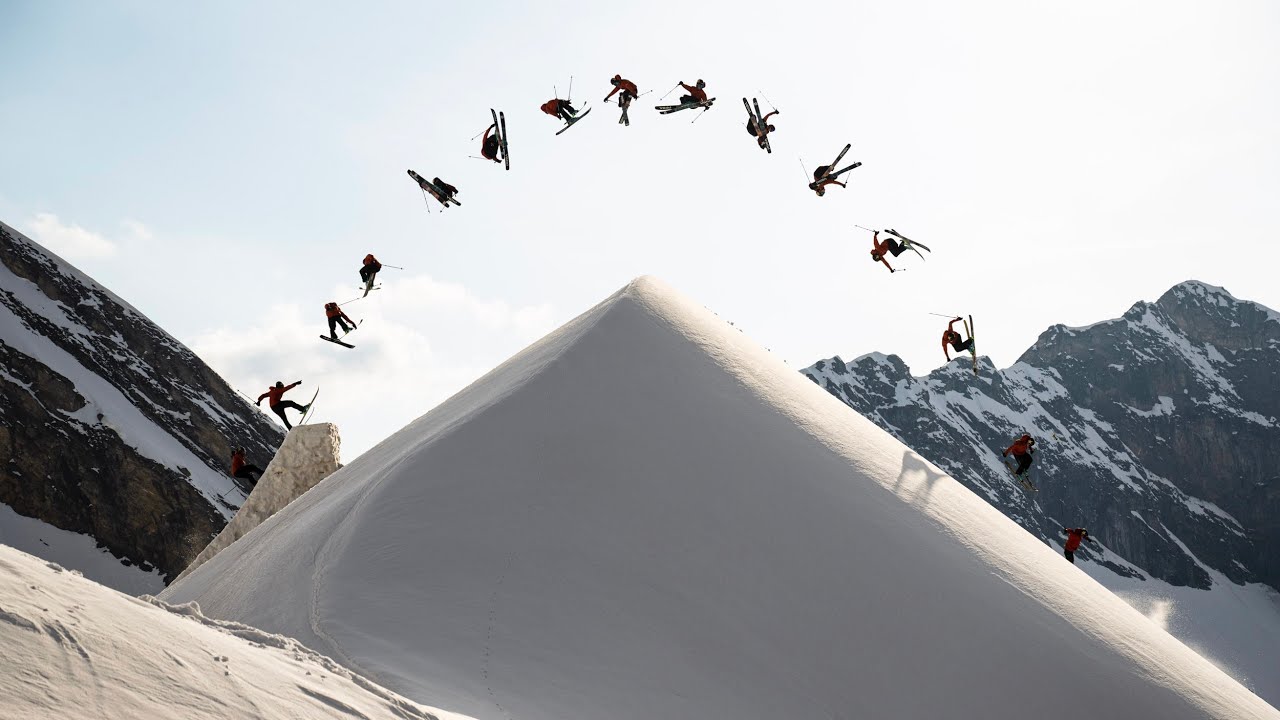
Instead of skis or boots, Legs of Steel’s “products” are films, shorts and campaigns that map out the evolution of modern freeskiing. The early era is defined by classic feature films: “The Pilot,” “Nothing Else Matters” and “Hurt So Good,” followed by projects like “The LOSt” and webisode series that circulated heavily on core platforms. These films combined big-budget park builds—such as the famous Kaunertal triple jump—with backcountry sessions and urban segments, anchored by a recurring cast of riders including Mayr, Graham, Hlawitschka, Reindl, Sven Kueenle and a long list of European and international guests.
The mid-era is dominated by “Passenger,” a two-year global project that followed the crew across four continents in partnership with Red Bull Media House. With a cast that included Paddy Graham, Bene Mayr, Thomas Hlawitschka, Sven Kueenle, Fabian Lentsch, Joss Christensen and others, the movie won multiple industry awards for cinematography and powder segments. More recent titles in the Legs of Steel catalog include shorts like “Action Men,” “One Two One,” “Long Days” and “Beauty Full Send,” plus special projects like “The Ultimate Run” and “Descendance,” which blend high-level skiing with documentary-style storytelling.
On the technical side, Legs of Steel’s “key technologies” are less about hardware and more about how they design and capture ski action. They are known for ambitious feature builds in parks and on glaciers, meticulous line-scouting for big-mountain sequences, and a rotating team of cinematographers and drone pilots chosen specifically for each project. Long-lens cameras, stabilised follow-cams, aerial shots and POV angles are combined to make sequences that feel fast and immersive without losing clarity. Partner brands—whether ski manufacturers, outerwear companies or drinks sponsors—are woven into this framework as functional parts of the trip, not as distracting product placements.
Ride feel: who it’s for (terrains & use-cases)
Legs of Steel doesn’t sell physical gear, but their films carry a strong “ride feel” that resonates with a specific kind of skier. If you are drawn to big faces above treeline, deep powder in steep trees, and the kind of snowpark features that only appear for a few days each season, you are squarely in their target audience. Their segments typically balance large-scale jump lines, spine walls, natural hits and pillow fields, with a constant undercurrent of speed and power.
For big-mountain and freeride fans, Legs of Steel movies show what it looks like when technically polished skiers bring competition-level skills into real terrain: stomping big airs into tracked-out snow, linking huge GS-style turns down exposed faces, and mixing tricks into natural transitions. If you lean more toward park and street, the earlier films—especially “Nothing Else Matters” and “Hurt So Good”—offer heavy park and urban segments that still hold up today, with a distinctly European flavour in spots, architecture and feature design.
For everyday resort skiers, the films act as inspiration and a kind of informal masterclass. You see how strong stance, speed control, sluff management and terrain reading play out when the stakes are high, and you also see the quieter parts of the day: digging in a landing, rebuilding a takeoff after a bomb hole, or backing down from a line when conditions aren’t right. That mix of high consequence and honest process makes the “ride feel” of Legs of Steel content both aspirational and grounded.
Team presence, competitions, and reputation
The original Legs of Steel roster—Bene Mayr, Paddy Graham, Tobi Reindl and Thomas Hlawitschka—set the tone for the brand: competition-proven skiers with strong personalities and a shared home base in Innsbruck. Over time, the crew expanded to include riders such as Sven Kueenle, Fabio Studer, Sam Smoothy, David Wise, Joss Christensen, Markus Eder, Dennis Ranalter and many others, giving the films a mix of slopestyle champions, Freeride World Tour riders and pure film specialists.
Many of these athletes arrived with serious competitive résumés: Olympic golds in halfpipe and slopestyle, World Championship medals, Freeride World Tour titles and long careers on the contest circuit. In Legs of Steel projects, those credentials serve as a foundation rather than the headline. The focus is on using competition-grade skill to unlock complex lines, integrate freestyle tricks into big-mountain terrain and push what’s possible in one continuous run, as showcased in Markus Eder’s “The Ultimate Run,” co-produced with Red Bull.
Within the industry, Legs of Steel enjoys a dual reputation. In the core freeski world, they’re seen as one of the most influential European crews of the last decade, responsible for a string of films that helped define modern big-mountain and park aesthetics. In the broader sports-media space, their Emmy-winning camera work on “The Ultimate Run” and “Descendance” has positioned them as a go-to partner for brands and broadcasters who want high-end storytelling and cinematography rooted in authentic mountain culture.
Geography and hubs (heritage, testing, venues)
Legs of Steel is anchored in Innsbruck, with the Austrian Alps functioning as both daily training ground and visual backbone. Classic Tyrolean venues—Stubai Glacier, Kaunertal, Nordkette, the Arlberg and surrounding valleys—show up repeatedly in their work, whether as park hubs for early-season jump lines or as stormy freeride zones later in the winter. It’s no accident that Austria, a country already profiled in depth on skipowd.tv at Austria, is one of the crew’s key canvases: dense resort networks, reliable lift access and serious terrain within a few hours’ drive make it ideal for fast-moving film schedules.
At the same time, Legs of Steel’s films rarely stay confined to one region. “Passenger” is built around a multi-continent itinerary, following storms to Japan, North America, New Zealand and beyond. “The Ultimate Run” brought the crew into Markus Eder’s home region in the Alps, threading one continuous line through couloirs, glaciers, cliffs, street-inspired features and resort terrain. “Descendance” tracks Dennis Ranalter from his home valley in Austria to Ghana, tying skiing into a wider story about identity and heritage.
For viewers planning their own trips, the geographic spread of Legs of Steel films doubles as a dream list of destinations: Tyrolean glaciers and sidecountry zones, deep Japanese forests, Canadian pillow fields and Italian freeride faces all appear as recurring characters. The crew’s long relationship with these places—rather than one-off film stops—adds an extra layer of insight into how winters unfold there over time.
Construction, durability, and sustainability
In the context of Legs of Steel, “construction” describes how a film project is built from concept to final cut. Typically, each major release starts with a broad idea—document a full winter with a tight crew, follow the forecast, explore a specific bioregion, or tell the story of a single skier—and then evolves as weather, logistics and injuries intervene. That flexible structure means the films feel robust and relevant years later, because they capture what a real winter actually looked like rather than chasing short-lived trends.
Durability also shows up in how the crew manages risk and portrayal of the mountains. Their films are not avalanche courses, but they regularly show avalanche bulletins, terrain assessments, digging, hiking, winch-cat operations and the many days when lines don’t happen. This honesty about conditions and decision-making helps keep the skiing grounded in reality, and it has become one of the reasons freeriders and guides respect the crew’s work.
On the sustainability side, Legs of Steel is not branded as an environmental NGO, but recent projects like “Descendance” foreground deeper human stories tied to place, community and identity, rather than treating mountains as a disposable backdrop. Practically, many of their largest projects focus on the Alps and nearby regions, which reduces long-haul travel compared with older models of constantly chasing exotic locations. The real sustainability contribution, however, comes from making films that people rewatch for years—content that doesn’t feel obsolete after one season and therefore justifies the resources used to make it.
How to choose within the lineup
Choosing where to start with Legs of Steel depends on what you want from a ski film night. If you’re into classic, high-energy freeski movies with big jumps and a heavy soundtrack, go first to “Nothing Else Matters” and “Hurt So Good.” These are the projects that defined the crew’s early style: massive park features, Austrian glacier sessions, urban segments and a deep roster of European and international pros skiing fast and big.
For a more modern, travel-driven narrative that still keeps skiing at the centre, “Passenger” is the obvious pick. It combines multi-continent storm chasing with strong character moments and award-winning cinematography, and it does a good job of showing what a two-year, big-budget film project looks like from the inside. If you want a compact, mind-blowing hit of what’s possible in a single line, watch Markus Eder’s “The Ultimate Run,” co-produced by Legs of Steel and Red Bull—a concentrated edit that strings together more terrain variety and trick diversity than many full-length movies.
Viewers who care about deeper stories and identity in skiing should move “Descendance” to the top of their list. It uses Dennis Ranalter’s life as a lens to talk about race, belonging and creativity in a predominantly white sport, earning major film-festival recognition and a Sports Emmy in the process. Once those pillars are covered, shorter pieces like “Action Men,” “Long Days,” “Beauty Full Send” and earlier webisodes provide extra context and show how the crew applies the same production values to smaller, more experimental formats.
Why riders care
Riders care about Legs of Steel because the crew has managed to grow from a four-rider house in Innsbruck into a globally recognised production company without losing its original DNA. The skiing is consistently world-class, but the people on screen still look like a crew of friends figuring winter out in real time: arguing about weather calls, rebuilding takeoffs after crashes, laughing in cramped vans and backing off lines when conditions don’t line up.
For the skipowd.tv community, Legs of Steel offers a reliable compass for where the sport is heading. Their projects map out key destinations, showcase how competition-proven skills translate into complex terrain and demonstrate that ski films can tell bigger human stories without sacrificing action. Whether you watch their classics on repeat before early-season laps in Austria or stream their latest documentary on a rest day, Legs of Steel has become one of the reference points for what high-level, rider-led ski filmmaking looks like in the modern era.