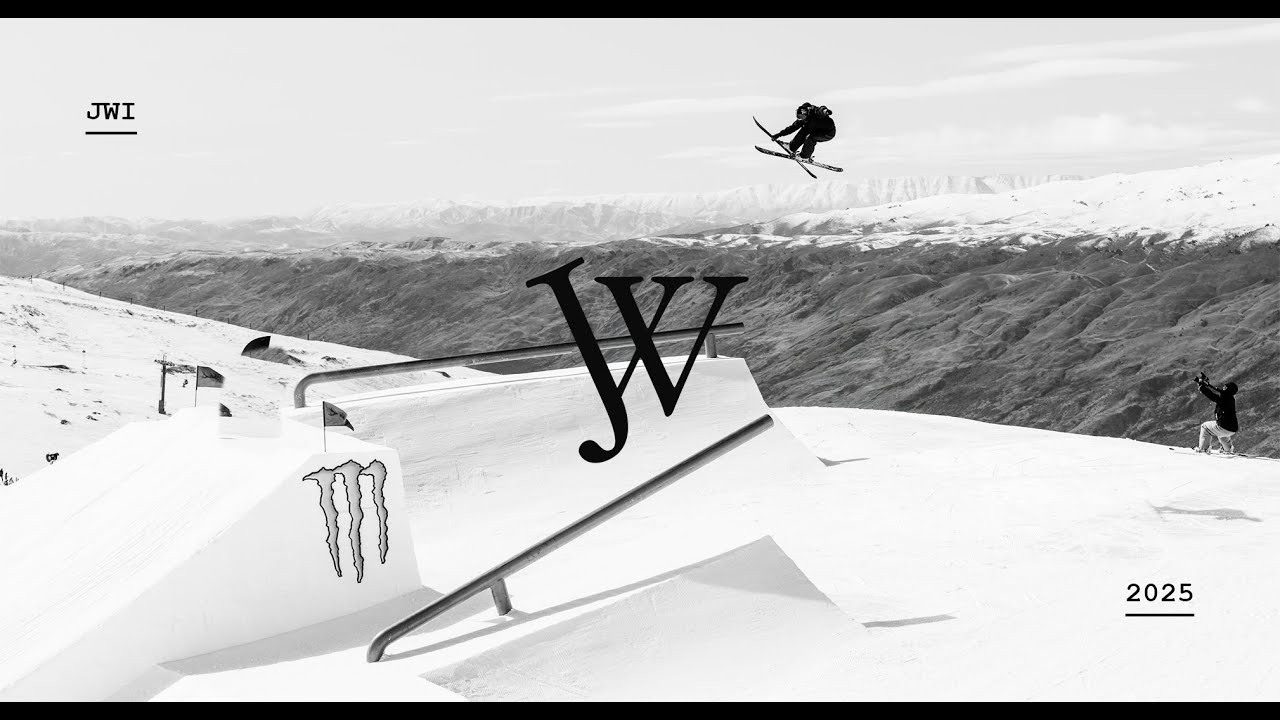
The Jossi Wells Invitational - 2025
📅 07/09/2025
📍 Cardrona Alpine Resort
The Jossi Wells Invitational 2025 was an open-format ski and snowboard invitational held at Cardrona, New Zealand in September 2025 | Disciplines: park skiing, big air, rails, creative snowboard and freeski sessions | Notable riders: Jossi Wells, Jackson Wells, Tom Wallisch, Henrik Harlaut, Alex Hall, Luca Harrington, Quinn Wolferman | Format: week-long athlete-judged session with rider votes and media releases
Cardrona Carried The Southern Hemisphere Session Week
The Jossi Wells Invitational 2025 brought the event back to Cardrona Alpine Resort in New Zealand during the September Southern Hemisphere season. The public promotion placed the week from September 7 to 14 2025, with Monster Energy backing the event and Jossi Wells again using his home snow culture as the frame. This was not a standard big-air contest with one final and a formal score sheet. It worked as a week-long park session where elite skiers and snowboarders could ride, film, vote and push each other inside the same terrain environment.
Rider Judging Kept The Event Away From Federation Logic
The Jossi Wells Invitational has always sat between contest, park shoot and rider gathering. The 2025 voting portal listed ski and snowboard award categories rather than a conventional ranking table, including Rider of the Week for women’s ski and men’s ski, Style Master of the Week for ski, and snowboard-specific rider and style awards. That structure explains the event’s value. A trick does not need to fit a federation slopestyle run to matter. It can matter because the riders in the room decide it carried style, creativity, risk or a better use of the feature than anything else that week.
Verified 2025 Archive Record
The Jossi Wells Invitational 2025 — September 2025
Host location: Cardrona Alpine Resort, New Zealand
Public event window: September 7 to 14 2025
Format: athlete-judged invitational session week
Award structure: rider-vote categories for ski and snowboard
Verified public podium: not available as a complete official results table
No full podium should be attached to the 2025 edition unless JWI, Cardrona or Monster Energy publishes a clear official results list. The safe record is the event identity, the location, the September window, the athlete-voted format and the documented roster environment. That restraint matters because JWI does not present itself like X Games, FIS or Dew Tour. The result is partly the footage, partly the rider vote, and partly the way the week enters ski culture through clips and edits.
Wells Family Gravity Around The Event
The event’s identity still comes from Jossi Wells and the wider Wānaka freestyle scene. Jossi’s contest history gives the invitational credibility, but the event works because it does not feel trapped by that history. Jackson Wells also belongs naturally in the 2025 story, with the Wells family connection giving the event a local anchor rather than a generic sponsor-tour feeling. Cardrona is not just a hired venue. It is part of the Wells brothers’ development map, New Zealand’s freestyle identity and the Southern Hemisphere training rhythm that draws northern athletes south every year.
Tom Wallisch Harlaut Hall And The Global Ski Roster
The 2025 recap material lists a heavy ski field around the event, including Tom Wallisch, Henrik Harlaut, Alex Hall, Luca Harrington, Quinn Wolferman, Beau-James Wells, Evan McEachran and Fin Melville Ives. That spread is the clearest proof of the invitational’s reach. Wallisch brings an older slopestyle and street-film reference. Harlaut brings big-air creativity and long-form style influence. Hall and Harrington connect the event to current Olympic and World Cup-level park skiing. Wolferman and Beau-James Wells pull the week back toward video-first, creative freeski culture. The same park can hold all those references because the event is not asking every skier to solve one standardized run.
Big Air Day Gave The Week A Public Center
Cardrona promoted the Monster Energy Jossi Wells Invitational Big Air on September 10 2025, giving the week a clear public-facing peak. That matters because open-format invitationals can be hard to archive if every session is informal. A big-air day creates a visible anchor: riders, spectators, one jump, one weather window and a shared moment that can be clipped and replayed. The surrounding week still matters, but the big-air session gives the edition a sharper event identity. It also fits Cardrona’s park reputation, where high-level jump training and Southern Hemisphere timing already bring international freeskiers into the same place.
Cardrona And Treble Cone Framed The Modern JWI Map
The current official Cardrona event listing describes the Jossi Wells Invitational as a seven-day competition across Cardrona and Treble Cone. That wider Cardrona-Treble Cone structure is important when reading the 2025 edition, even if the most visible ski clips stayed centered on Cardrona park. Cardrona gives the event rails, jumps, park laps and the clear freestyle stage. Treble Cone adds the Wānaka-region mountain identity: steeper terrain, freeride texture and a different visual language. Together, the two resorts explain why JWI is more than a one-jump invitational. It is a New Zealand snow week built around the full local scene.
Monster And Hotlaps Shaped The Media Trail
Monster Energy gave the 2025 edition its main sponsor frame, while HOTLAPS and other media crews helped translate the week into clips. That media layer is essential because JWI is judged as much by replay value as by award text. The event does not leave behind a clean Olympic-style data table. It leaves behind a set of edits, highlight reels, rider posts and short-form clips where the strongest moments can keep circulating after the New Zealand spring ends. For skipowd.tv, that makes the event especially useful: the archive value is video-first by design.
Where The 2025 Edition Fits In The Archive
The Jossi Wells Invitational 2025 should be indexed as a major alternative freeski and snowboard invitational, not as a standard slopestyle or big-air contest. Its permanent facts are clear enough: Cardrona, September 2025, Monster Energy, Jossi Wells, open-format athlete judging, ski and snowboard voting categories, and a high-level international rider list. Its missing piece is a complete official results table, so the article should avoid invented podiums. The importance of the edition comes from the format itself: a Southern Hemisphere park week where elite skiers and snowboarders measure progression through style, feature use, peer respect and footage rather than through a conventional score sheet.