Richard Permin
Lyon / La Clusaz, France | Active: 2000s-present public record | Known for: MSP film segments, freeride, freestyle, Good Morning rooftops, Dynastar pro-model development | Current: Creative freeride and film skier
Avoriaz Rooftops After The Injury
The roofs of Avoriaz were white, sharp-edged and high above the resort streets when Richard Permin clicked into his skis again. The project had already cost him both heels in January 2016, after a heavy landing on the same rooftop concept. Three years later, Good Morning turned that unfinished crash site into a full ski line: bedroom, balcony, wooden façades, backflips, rails, roof gaps and bread run, all inside a French resort village. The edit worked because it felt comic and dangerous at the same time, a clean summary of Permin’s career: film skiing with real consequence, freestyle timing, freeride confidence and a taste for ideas most skiers would never try twice.
Lyon Beginnings And The Freestyle Switch
Permin’s background starts away from the usual alpine village myth. Vuarnet’s interview with him identifies him as a professional skier from Lyon who started skiing at age two with his stepfather, then moved toward professional skiing after an early path through instructor training. FIS lists him as Richard PERMIN of France, born in 1985, attached to La Clusaz, with FIS code 2469653 and a current status marked not active. That database only catches a thin part of the story, but it gives the official competitive footprint. His wider identity came from leaving the standard pathway for freestyle, then carrying that air awareness into steeper, faster, less predictable terrain.
La Clusaz On The Official Sheet
FIS attaches Permin to La Clusaz, which makes sense even though his personal story is often told through Lyon, Avoriaz, Alaska and film locations. La Clusaz belongs to the French freeski imagination because it sits close to the transition between park, freeride and creative mountain skiing. Permin’s small FIS record should not be exaggerated into a contest career. The more useful reading is geographic and cultural: French freestyle training, Alpine resort access, a generation that moved from moguls and park jumps toward backcountry tricks, and a scene where riders like Candide Thovex helped prove that filmed skiing could become as important as scored skiing.
MSP And The Non-American Breakthrough
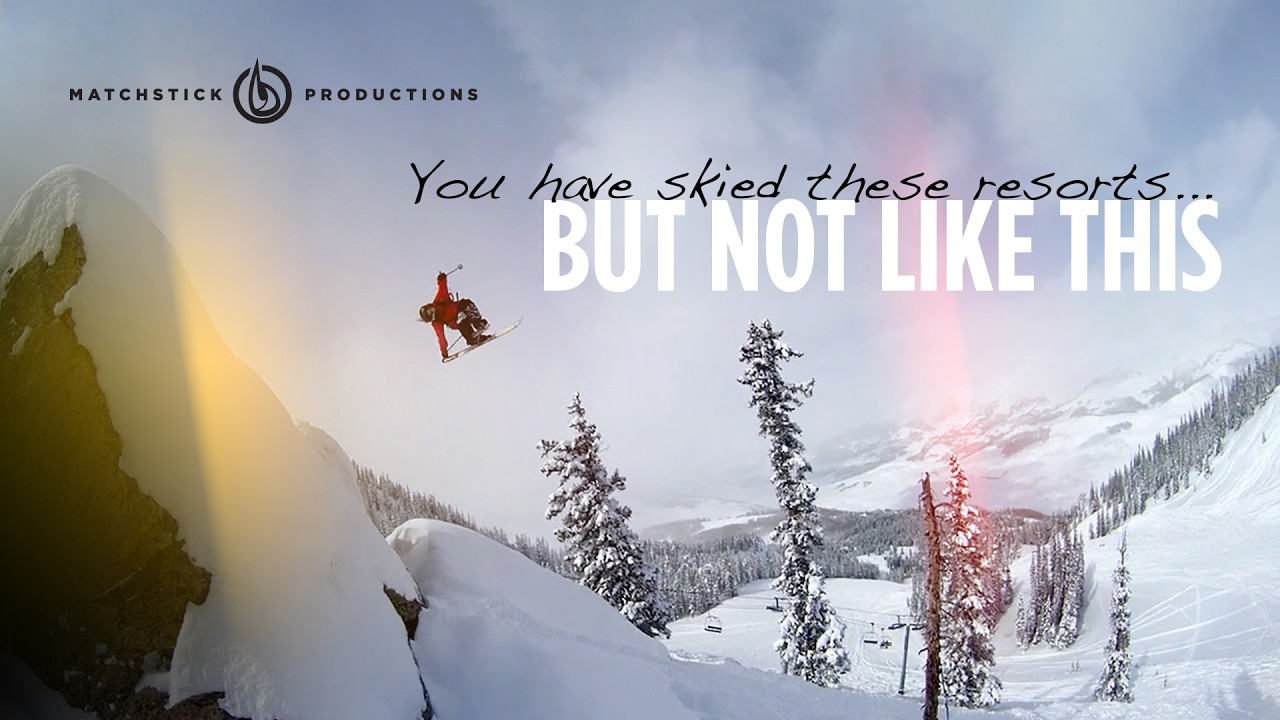
Permin’s international reputation sharpened through Matchstick Productions. MK Sport describes him as the first non-American to film with MSP over multiple years, while Matchstick’s own archives place him in Superheroes of Stoke and Days of My Youth. That position mattered in the 2010s. MSP was not a minor web channel; it was one of the production houses defining big-mountain freeski imagery for a global audience. For a French skier, appearing repeatedly inside that cast meant stepping into a North American film system built around Alaska, huge cameras, helicopter logistics, heavy landings and segments that had to stand beside the sport’s strongest names.
Superheroes Of Stoke And The Fast European Style
Matchstick later described Superheroes of Stoke as a film celebrating twenty years of skiing progression, with Permin included as one of the icons inside that history. His segment fit because he did not ski like a pure big-mountain charger or a pure park skier. He brought a European freestyle rhythm into larger terrain: spins sent fast, strong edges before takeoff, quick direction changes, and landings where speed was not killed immediately after the trick. That mix made him valuable on screen. He could make a face look playful without making it look small, and he could make freestyle tricks feel natural inside exposed mountain terrain.
Days Of My Youth And The Big Cast Standard
Days of My Youth gave Permin another major film reference. Matchstick’s trailer lists him in a cast with Mark Abma, Bobby Brown, James Heim, Cody Townsend, PK Hunder, Russ Henshaw, Michelle Parker, Gus Kenworthy, Markus Eder and Sam Anthamatten. FREESKIER’s later Movie Monday listing also named him among the starring athletes. That cast matters because it covered several languages of skiing at once: X Games freestyle, big-mountain film skiing, freeride, park and backcountry. Permin’s role sat in the middle of those worlds. He had enough freestyle heritage to rotate naturally, enough freeride strength to ski fast, and enough screen presence to stay visible in a film full of established names.
Alaska And The Bigger Mountain Education
The Alaska chapter is central to how Permin should be understood. MK Sport frames his move toward Alaska as a major step after early freestyle success, and his MSP work placed him inside the big-mountain film environment where the state acts as a proving ground. Alaska does not reward casual tricks. Snow texture, sluff, spine entries, helicopter timing and long runouts all decide whether a line remains possible. Permin’s value was that he could bring freestyle instinct into that scale without reducing the terrain to a park jump. His skiing became less about contest tricks and more about using tricks when the mountain gave him permission.
Red Bull, Linecatcher And The Project Mindset
Red Bull became one of the media structures around Permin’s later public identity. Red Bull’s own archive connects him to Superheroes of Stoke clips, Fastwood, Linecatcher-related material and Good Morning. The relationship made sense because Permin’s skiing translated well into athlete-led film concepts. He was not only useful in a standard segment. He could carry a visual idea: backcountry speed through forests, rooftop skiing in Avoriaz, or a project built around one impossible-looking daily routine. Red Bull’s ski media has often worked best when an athlete’s personality can justify the production, and Permin’s combination of risk, humor and control fit that model.
Good Morning And The Avoriaz Recovery Story
Good Morning is the most self-contained example of Permin as author and athlete. Red Bull TV describes the edit as a 2018 Avoriaz project made after he broke both heels in January 2016. Skipass added that the production required forty shooting days and a crew of more than ten people across the 2017-2018 winter. Those details matter because the final edit feels effortless: wake up, ski out, cross rooftops, collect bread. Behind that simplicity was recovery, location control, construction, choreography, weather waiting and a willingness to return to the exact kind of feature that had already injured him seriously.
Dynastar And The M-Free Direction
Dynastar gives Permin’s equipment story a concrete technical layer. FREESKIER reported that in 2017 Dynastar and Permin worked on the Menace PROTO, a stiff 24-meter-radius freeride ski that helped lay groundwork for the M-Free series. Vuarnet’s interview also quotes him discussing the development of his Dynastar pro model. That product context is important because Permin’s skiing demands a difficult balance. He needs enough stability for speed, variable snow and freeride landings, but enough freestyle looseness to slash, rotate, pivot and use terrain creatively. The ski story mirrors the career: freeride power without abandoning freestyle movement.
Oakley, Vision And The Image Of Speed
Oakley appears in older sponsor listings around Permin and fits the visual side of his skiing. This should not be overstated as a current contract unless confirmed by a current official roster, but historically the connection makes sense. Permin’s footage is often about reading terrain at speed: Avoriaz rooftops, Alaska faces, backcountry trees, resort lines and fast natural takeoffs. In that kind of skiing, vision is not a secondary detail. Flat light, roof shadows, takeoff edges, landing texture and sudden speed changes all decide whether a creative line is still skiable.
How Permin Reads Terrain
Permin’s technical signature is not one trick. It is the conversion of terrain into a filmable line. Good Morning uses backflips, wall rides, roof drops, snow-covered balconies and wooden façades. MSP segments show bigger faces, fast turns, cliffs, and airs where the trick has to match the mountain. Fastwood pushed forest and drone imagery into high-speed skiing. The common skills are precise takeoff timing, strong legs on high-impact landings, a centered freestyle stance, quick speed checks, and the confidence to commit before the landing is fully visible. His skiing works when the feature looks like it should not belong to skiing at all.
The Injuries Behind The Clean Edits
Permin’s public career also carries a serious injury thread. The Avoriaz heel fractures are the most documented because they became part of the Good Morning story, but several profiles describe him as a skier who repeatedly returned after heavy impacts. That matters because his films can look playful enough to hide the cost. Rooftop skiing, canyon-style gaps, backcountry speed and freestyle tricks in exposed terrain are not only creative decisions. They require months of recovery, physical rebuilding and the mental choice to step back into a feature that already proved it could go wrong.
The Current Frame Is Film Legacy
Permin should not be written as a current FIS competitor. His official FIS status is not active, and his importance comes from film, freeride and creative projects rather than a modern results sheet. The verified pillars are stronger: French freestyle origins, La Clusaz on the official record, years inside Matchstick Productions films, Superheroes of Stoke, Days of My Youth, Alaska big-mountain footage, Red Bull-backed concepts, Good Morning in Avoriaz, and Dynastar product development. That gives him a major place in modern freeski culture: a French skier who helped make film segments feel faster, riskier and more cinematic without losing the mischief that made freestyle skiing fun.