Banks Gilberti
Sun Valley / Ketchum, Idaho, United States | Active: 2000s-present public record | Known for: Adventures in Transition, Days of My Youth, The Stomping Grounds, Sun Valley style, creative resort skiing | Current: Big Mountain Program Director at SVSEF and creative freeski figure
Baldy When The Pitch Never Let Up
Bald Mountain does not need a park lane to feel playful when Banks Gilberti is skiing it. The fall line rolls long, steep and fast above Ketchum, with enough sustained pitch to turn a normal resort lap into a full-speed sketchbook. Gilberti’s public identity belongs to that feeling: less podium accounting, more terrain imagination. He came through park and pipe competition, but his best-known work is built from home-mountain skiing, friends, web episodes, film segments and a decision to make skiing look joyful without making it look easy.
Denver Birth, Ketchum Childhood, Sun Valley Gravity
Sun Valley Magazine reports that Gilberti was born in Denver and moved with his family to Ketchum when he was four. His father had competed in aerials and moguls at Lake Placid, and the family’s move to Idaho placed Banks directly on Baldy, the Sawtooths and the Boulder Mountains. That early geography matters. Sun Valley shaped him before he became a recognizable film skier: steep groomers, Idaho snow, local skiers with high standards, and a mountain where sustained speed is part of the daily language.
CVA And The Competition Years He Outgrew
The official FIS profile lists him as Banks Gilberti of the United States, born in 1989, with FIS code 2485248 and Carrabassett Valley Academy attached to the record. Sun Valley Magazine adds the wider story: after his family moved to Burlington, Vermont, he attended CVA for his junior and senior years and traveled through the park and pipe circuit. That period included elite-level pipe competition, X Games and Dew Tour starts, and enough time in the contest system for him to understand what he did not want skiing to become.
Breckenridge Before The Reset
After high school, Gilberti moved to Breckenridge and focused on making skiing a career. Newschoolers’ 2013 Surface Skis interview described him then as an Idaho-born Breckenridge local, comfortable on skis, snowboard and skateboard, and already a repeat Windells summer presence. That era matters because it built the movement base behind his later style. Competition gave him pipe and park discipline. Breckenridge gave him density: other pro skiers, spring sessions, park laps, sponsor pressure, and the feeling that skiing could become crowded with expectations.
Adventures In Transition And The Home-Mountain Turn
The real turning point came when Gilberti moved back to Idaho. Sun Valley Magazine describes him leaving the corporate-feeling ski environment, returning home and launching Adventures in Transition with Jake Strassman in 2014. FREESKIER’s 2019 “Going Home” profile frames the series as a personal reset: smooth, simple, fun skiing in the Sun Valley area, built around his own sensibility rather than contest formulas. That web-series choice changed the public frame around him. Gilberti stopped chasing points and started showing why a mountain, a group of friends and a camera could be enough.
Level 1, Partly Cloudy And Less
Crosson’s athlete profile lists Gilberti with film segments in Level 1’s Partly Cloudy and Less. That detail helps bridge the gap between his competition past and MSP-era film presence. Level 1’s world was closer to creative freeski culture than a standard contest broadcast: urban clips, park style, personality, music and athletes who could make a small feature feel specific. Gilberti’s fit there makes sense. His skiing had enough freestyle vocabulary to belong in that crew, but he was already drifting toward a broader definition of what a ski segment could show.
Days Of My Youth And The Resort Segment
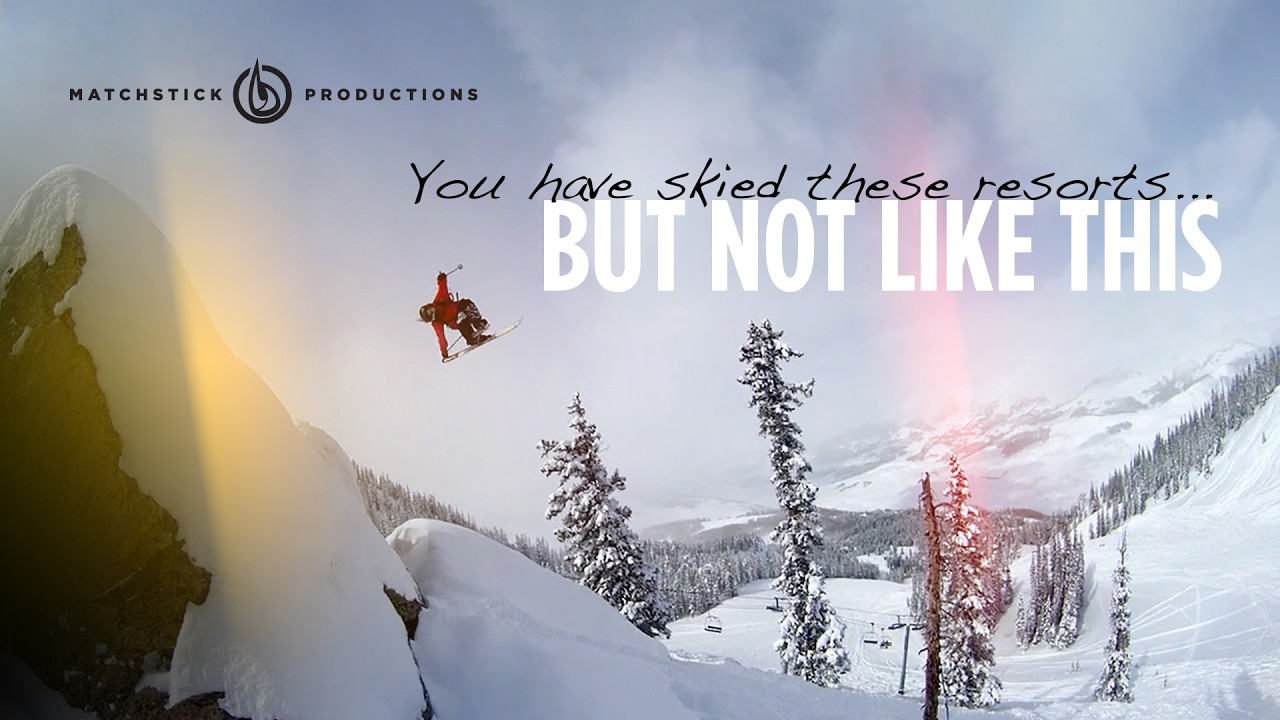
His most widely shared film context is the resort segment from Days of My Youth. FREESKIER describes the 2014 Matchstick / Red Bull segment with Cody Townsend, Banks Gilberti, Richard Permin and Sander Hadley skiing inbounds terrain at Crested Butte, Revelstoke and Snowbird. That segment worked because it made resort skiing feel cinematic without pretending it was inaccessible. Matchstick Productions did not need a remote expedition to show Gilberti’s value. His style came through in speed, side hits, transitions, friends pushing friends, and the kind of inbounds creativity that makes viewers want to ski immediately.
Revelstoke, Snowbird And Playful Speed
The resort segment also showed why Gilberti belongs in a creative-freeride category. At Revelstoke BC, Snowbird and Crested Butte, the skiing was not pure park, not pure big mountain and not a formal freeride competition. It was terrain use. Gilberti could take a groomer roller, natural bank, chopped landing, wind lip or steep side feature and make it read like a deliberate line. His background in park and pipe did not disappear. It became a tool for moving through resort terrain with more angles than most skiers see on the first pass.
The Stomping Grounds And The Idaho Return
Matchstick’s athlete short for The Stomping Grounds calls Gilberti a Sun Valley legend and describes him skiing with Idaho locals during some of the deepest days of the year on home turf. That project brought the story back to the place that shaped him. The Stomping Grounds was not only another film credit. It gave Gilberti’s Idaho return a larger production frame: resort laps, backcountry days, local riders, powder, and an older version of the same idea that started Adventures in Transition. Skiing at home could still be enough for a major segment.
Orage, Crosson And Longevity Over Hype
Gilberti’s sponsor story is best written through longevity rather than trend. Sun Valley Magazine says he has been with Orage since he was sixteen. Crosson lists him as a professional skier from Sun Valley and connects him to the brand’s ski development, including his favorite Crosson models and his role from the beginning of the project. Because Crosson is a commercial ski company, the official external reference should be treated as a sponsor source: Crosson athlete profile. The useful point is not that he collected logos. It is that his career stayed visible through changing ski-media eras.
How Gilberti Reads A Mountain
Gilberti’s technical signature is terrain imagination, not a single trick list. His contest years gave him halfpipe courage, air awareness, switch comfort and park control. His Sun Valley years sharpened speed, flow, high-speed turns, natural features, and the ability to make a sustained pitch feel playful. His film work adds the missing piece: camera sense. A Gilberti line often works because he does not over-explain it with tricks. He lets the mountain shape the rhythm, then adds just enough freestyle movement to make the run feel loose.
SVSEF And Coaching The Next Sun Valley Cycle
The current public frame is not only athlete footage. Sun Valley Magazine reports that Gilberti became Big Mountain Program Director for the Sun Valley Ski Education Foundation, coaching youth on the same mountain system that shaped him. That role makes sense inside his career arc. He spent years competing, left to recover joy, built a self-directed media identity, returned to Sun Valley, then moved into helping younger skiers understand fluidity, strength, line choice and control in difficult terrain. For a skier whose best work came from reconnecting with home, the coaching role is not a footnote. It is the latest version of the same return.
The Current Frame Is Creative Freeski Culture
Banks Gilberti should not be framed as an active FIS athlete or a results-first competitor. His official FIS record is inactive, and his importance comes from the path after competition: Adventures in Transition, Level 1, Days of My Youth, The Stomping Grounds, Sun Valley, long-term Orage support, Crosson, and his SVSEF coaching role. He sits in the same broad creative-freeride world as skiers who proved that resort terrain, home mountains and everyday joy could carry real ski-film weight. The best way to read him is simple: a skier who left the chase for points and built a longer career by making skiing feel worth doing again.