Cody Townsend
Tahoe City, California, United States | Active: 2000s-present | Known for: Alaska big-mountain lines, Matchstick Productions films, The Fifty, human-powered ski mountaineering | Current: Salomon freeride athlete and The FIFTY+ creator
The Crack In The Tordrillos
The Alaska wall looked almost closed from above: two rock faces, a white slit, and no obvious place to slow down. Cody Townsend pointed his skis into the Tordrillo Mountains line in Days of My Youth and straight-lined through a couloir so narrow it became known simply as “The Crack.” The clip did not need narration. Wind, speed, rock, and the sound of skis on steep snow carried the whole scene. That descent turned Townsend from a respected big-mountain film skier into one of the most replayed images in modern freeskiing.
Tahoe City, Squaw Valley, And The McConkey Shadow
Townsend’s skiing grew out of the Tahoe big-mountain ecosystem. Salomon lists his hometown as Tahoe City, and its athlete biography describes him being pulled into the freeski revolution around Squaw Valley, now Palisades Tahoe. The names around that era matter: Shane McConkey, Kent Kreitler, and the generation that blurred extreme skiing, film skiing, humor, and technical risk. Townsend did not arrive as a ski mountaineer. He came from a culture of fast descents, chairlift-accessed steeps, competition energy, and film crews waiting for the next line to look impossible on screen.
Salomon From The Freeride Years To The Touring Pivot
Salomon has been the constant commercial through-line in Townsend’s public career. The brand lists him as a freeride skier, American, Tahoe City-based, born March 13, 1983, and with Salomon since 1999. That timeline is unusually long in modern ski sponsorship terms. It covers his early film years, the Alaska segments, the ski-mountaineering pivot, and the lighter touring equipment era of The Fifty. For external attribution, his official Salomon athlete profile remains the cleanest sponsor source.
Matchstick Productions And The Film-Skier Identity
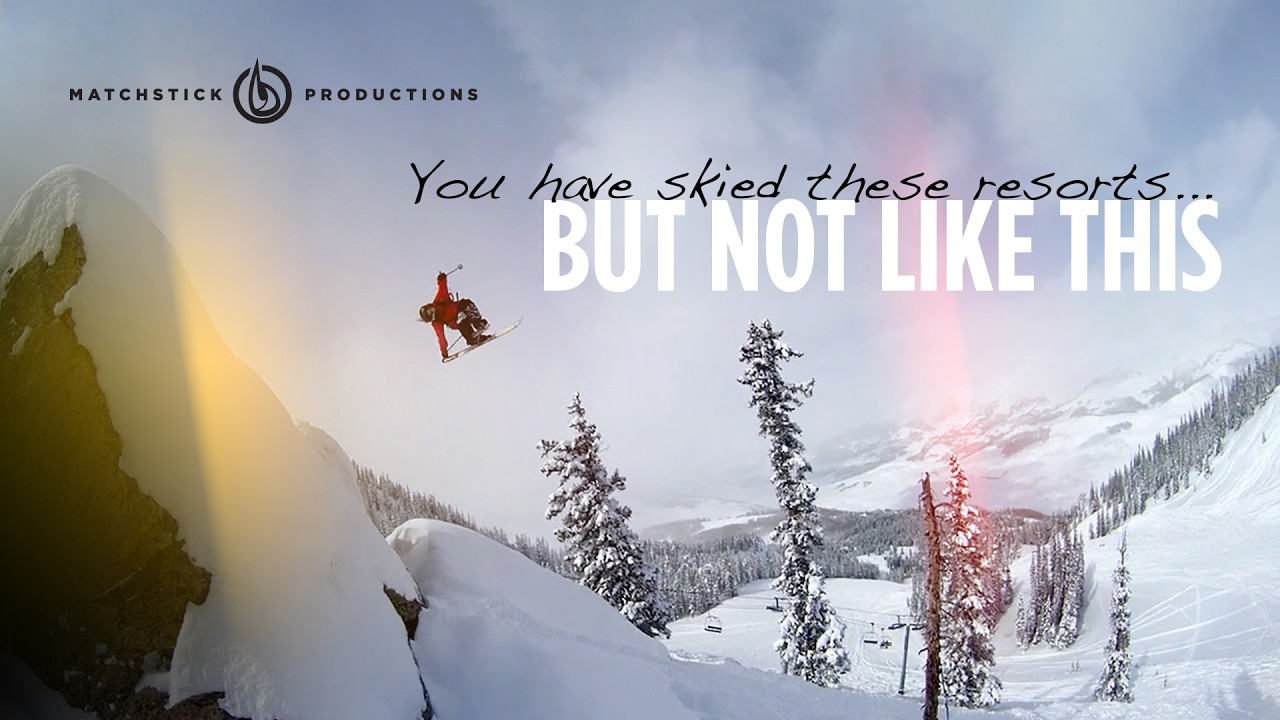
Townsend’s reputation was built heavily through Matchstick Productions. Powder’s profile archive links him with Matchstick titles such as The Way I See It, All In, Drop Everything, Days of My Youth, and the solo feature Conquering the Useless. Park City Film’s listing for Drop Everything also places him in a cast with Mark Abma, Markus Eder, Eric Hjorleifson, Michelle Parker, Sammy Carlson, Elyse Saugstad, Tanner Rainville, Chris Rubens and Aaron Blunck. Those films show the older Townsend identity: fast, strong, funny, physical, and comfortable turning consequential terrain into something that still read as playful.
Alaska Speed And The 2014 Powder Awards
The Alaska segment in Days of My Youth remains the defining image. Adventure Sports Journal wrote that Townsend straight-lined a vertical chute in the Alaska Tordrillos and earned Best Line at the 15th annual Powder Awards, along with Best Male Performance and Full Throttle. That matters because the award was not only for danger. The line condensed several qualities into one clip: commitment, trust in snow texture, clean body position, no visible hesitation, and an exit speed that made the feature look almost unreal. Alaska had already shaped big-mountain ski cinema, but Townsend’s Crack line became a standalone cultural reference.
Conquering The Useless And The Self-Aware Turn
Conquering the Useless gave Townsend a different kind of authorship. Rather than appearing only as one athlete in a larger film, the 2015 solo project sharpened the voice that later made The Fifty work: jokes, doubt, ambition, logistics, and an honesty about the strange psychology behind chasing difficult ski objectives. That tone separated him from the silent-action archetype of big-mountain skiing. Townsend could ski a serious line, then talk about why the whole exercise was both meaningful and absurd. That self-awareness became essential when he later asked viewers to follow not only the descent, but also the planning, failure, waiting and retreat.
Mount Superior And The Beginning Of The Fifty
The Fifty began as a simple idea with complicated consequences: attempt to climb and ski the lines from Fifty Classic Ski Descents of North America. The official project site frames it as a five-year adventure unfolding in real time, built around the book’s classic North American objectives. Early episodes included Messner Couloir on Denali and Mount Superior above Little Cottonwood Canyon, near Snowbird. The shift was dramatic. Townsend moved from helicopter-accessed big-mountain filming toward human-powered climbing, avalanche assessment, partner systems, lightweight gear, alpine starts, and the humility of learning skills publicly.
Forty-Six Lines And The Decision To Stop
The most important ending is also the most honest. Townsend did not finish all fifty lines under the original project pressure. The official The Fifty site states that after successfully skiing 46 of them, he announced the end of the project in 2024. It also explains the reason clearly: the remaining four lines were among the most challenging in the world, and removing public pressure gave him freedom to approach them on his own time. That decision strengthened the project rather than weakening it. The Fifty became less about checking a list and more about showing what responsible mountain judgment looks like when ambition is already famous.
Bjarne Salén, Partners, And The Camera That Climbed
The Fifty worked because the camera suffered with the skier. Bjarne Salén became a central collaborator, climbing, filming, waiting, turning around, and helping shape the series into something more intimate than traditional ski cinema. The project repeatedly showed partners digging pits, discussing timing, watching weather, carrying heavy packs, and managing uncertainty. That changed how Townsend’s audience understood skill. The descent still mattered, but so did the approach, the bootpack, the transition, the decision to back off, and the conversation in the car afterward. The project made ski mountaineering process visible to a much wider freeski audience.
From Jackson Hole Classics To Baffin Island Scale
The Fifty’s map gave Townsend’s career a continental scale. The list moved through the Sierra, Wasatch, Tetons, Cascades, Canadian ranges, Alaska and Baffin Island. Places such as Jackson Hole sit close to the classic North American steep-ski imagination, while remote objectives forced a different type of patience and technical learning. Backcountry Magazine’s 2023 reflection described late-stage Fifty objectives including Split Couloir and Baffin Island’s Polar Star Couloir, emphasizing how the project required repeated attempts, complex timing and technical progression. Townsend’s best later work was not about looking invincible. It was about showing how much uncertainty remained.
Gear Evolution From Powder Boards To Pin Bindings
Townsend’s equipment story mirrors his career change. His earlier film identity was built around big skis, speed, and snowmobile or helicopter access in terrain where the descent was the product. The Fifty required lighter touring setups, skins, pin bindings, crampons, ice axes, ropes, satellite communication, and clothing systems that could handle both uphill suffering and exposed descents. GQ’s profile noted that the series showed him nerding out on gear and learning carbon touring skis and pin-binding systems. That gear shift matters for skiing culture because Townsend helped make technical backcountry details interesting to viewers who first knew him for going fast in Alaska.
The Fifty+ And The Next Version Of A Classic
After The Fifty, Townsend did not simply return to old-format ski movies. The FIFTY+ became the next public platform, built around writing, behind-the-scenes material, gear discussion and new classic-line questions. The official FIFTY+ site was still active in May 2026, with recent posts on winter camping, gear deep dives, High Sierra travel, risk tolerance and line evaluation. That current work keeps Townsend inside the conversation as more than an athlete with a famous past. He has become an interpreter of modern backcountry skiing: part skier, part host, part gear tester, part risk communicator, part storyteller.
How Townsend Changed Freeride Storytelling
Townsend’s influence is not limited to one line or one project. The early film career proved he could deliver high-speed big-mountain action. The Crack gave him a viral image before ski media was fully reorganized around algorithmic clips. The Fifty then turned process into the main event, showing that a modern ski audience could care about planning, retreat, snow science and mountain ethics if the storytelling was good enough. That is his unusual place in freeskiing: he connected the MSP era of cinematic big-mountain skiing with a newer, self-produced, human-powered, risk-aware media model.
The Current Frame Is Legacy Still In Motion
Townsend should be treated as a top-tier freeride and ski-mountaineering figure, not as a slopestyle competitor or a results-table athlete. The verified pillars are clear: Tahoe roots, long-term Salomon support, major Matchstick Productions film history, the 2014 Alaska Powder Awards sweep, Conquering the Useless, The Fifty’s 46-line arc, and the ongoing FIFTY+ platform. His profile remains active because the story did not stop with the famous chute. It evolved into a broader question: how far can ski media move from pure spectacle toward judgment, partnership, patience and still keep people watching?