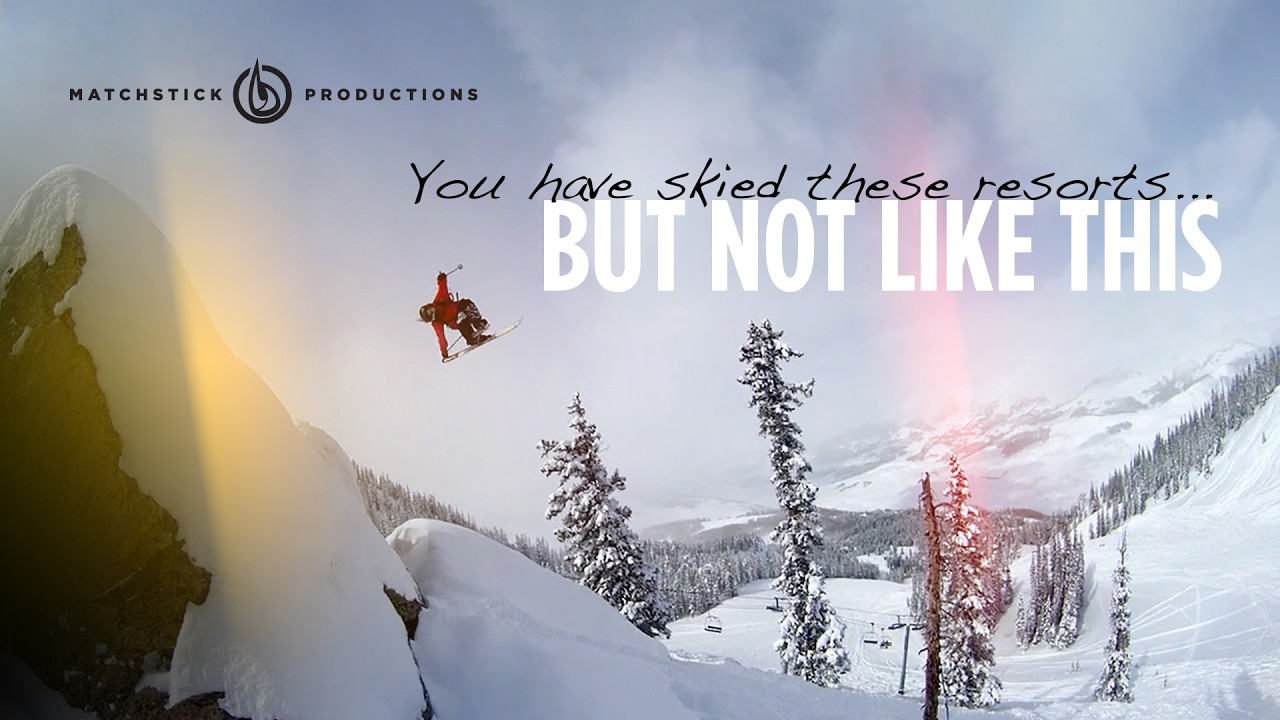
Crested Butte
Colorado
United States
Colorado freeride resort in Gunnison County | Known for: North Face, High Lift, Extreme Limits, Rambo, Headwall, Teocalli Bowl, 561 acres of expert terrain, 150+ named extreme zones, Ten Peaks Progression Park and a deep U.S. extreme skiing history | Season: late November to early April depending on operations | Best for: advanced freeriders, steep-skiing crews, POV skiers, technical all-mountain riders and Colorado resort-discovery edits
North Face And The Birthplace Of Inbounds Extreme Skiing
Crested Butte Mountain Resort sits above Mt. Crested Butte in western Colorado, far enough from the I-70 corridor to keep its own sharper identity. The official mountain stats list 1,547 skiable acres, 15 lifts, 165 trails, a 12,162 foot high point, a 9,375 foot base and 236 inches of average annual snowfall. Those numbers do not make Crested Butte the largest resort in Colorado. They make it one of the most concentrated steep-skiing mountains in the state.
Crested Butte Mountain Resort calls itself the birthplace of inbounds extreme skiing, and that label is not empty marketing. The resort lists 561 acres of expert terrain, 37 percent expert terrain overall, and more than 150 uniquely named zones inside the Extreme Limits. For freeskiers, the mountain’s value is obvious: this is a resort where steep, technical terrain is central to the brand rather than hidden at the edge of the trail map.
High Lift Headwall And Teocalli Bowl
The High Lift is one of the resort’s most important freeski references. It opens terrain that feels different from normal resort skiing: Headwall, Teocalli Bowl, Teo 2, Big Chute, Figure 11 and nearby technical lines that require confidence, visibility and real edge control. The lift does not serve casual black-diamond cruising. It serves terrain where entry, snow texture and exit planning decide whether the lap feels clean or chaotic.
That is why Crested Butte works so well for POV footage. A good line here has a clear beginning, a technical middle and a consequence-based exit. The skier is constantly making small decisions: where to set the first turn, whether the choke is clean, how fast to leave the apron, and when to pull out of the fall line before the terrain tightens again. The mountain’s best clips are rarely about one giant air. They are about keeping a line together through rough, narrow, exposed terrain.
North Face T-Bar And The Extreme Limits Map
The North Face T-Bar gives Crested Butte its other major expert-terrain spine. It serves steep double-black terrain with named zones that have become part of the resort’s local vocabulary: Hard Slab, Old Pro, Hawk’s Nest, The Glades, Tower 11 and other lines where rocks, trees, bumps, cliffs and variable snow demand attention. The North Face is compact compared with a huge Alpine freeride face, but the density of decisions is high.
This is the key to understanding Crested Butte. The mountain does not need massive acreage to feel serious. It stacks terrain problems close together. A skier can move from groomers into extreme zones quickly, then return to the lift system without a long valley exit. That creates a high-intensity freeride day: short approaches, technical drops, repeated terrain reading and a constant need to respect patrol status.
Rambo And The Steep Tree-Cut Myth
Rambo gives Crested Butte one of its most memorable terrain names. The resort promotes it as the steepest lift-served tree-cut trail, with a 55 degree average pitch. That number makes Rambo useful for SEO, but the skiing itself is more important. It represents the resort’s personality: short, steep, direct and slightly absurd in the best possible way.
Rambo is not a long big-mountain descent. It is a concentrated pitch that forces commitment immediately. For video, it works as a quick signal that Crested Butte is not soft. For skiers, it works as a test of edge hold, body position and comfort on very steep snow. The run should not be oversold as the whole mountain, but it belongs in the profile because it captures the Crested Butte habit of turning compact terrain into serious skiing.
U.S. Extreme Skiing Championships And The Freeski Origin Story
Crested Butte’s importance goes beyond terrain. The first U.S. Extreme Skiing Championships were held here in 1992, shortly after the first Valdez extreme contest in Alaska. That period helped move skiing’s public imagination away from groomers and moguls toward steep faces, cliffs, exposure and judged line choice. Crested Butte became one of the places where American extreme skiing learned how to perform in front of a crowd.
That history matters for skipowd.tv because it connects modern freeride edits to an older competition language. Today’s Freeride World Tour, IFSA events, GoPro POV culture and backcountry film segments all inherit something from that early extreme-ski era. Crested Butte’s terrain was not only skied; it helped teach audiences how to watch steep skiing.
Ten Peaks And Lower Twister Park Support
Crested Butte is not a park-first resort, but it does have structured freestyle terrain. The official terrain-park page lists Ten Peaks Progression Park and Lower Twister Terrain Park, with the resort emphasizing Park SMART-style safety: start small, make a plan, look before dropping, respect other users and take it easy.
That park setup should be treated as support, not as the headline. Crested Butte will not replace Copper Mountain for pipe and park training, and it does not have the same park-and-town identity as Breckenridge. Its freestyle value is more natural. Park laps can help a skier build rail timing, small-jump confidence and balance, but the mountain’s best freeski expression remains the transition from controlled features to natural steeps, wind lips and technical in-bounds lines.
Aaron Blunck And The Crested Butte Halfpipe Thread
Crested Butte also has a modern freeski athlete signal through Aaron Blunck. U.S. Ski and Snowboard lists Blunck as a Crested Butte, Colorado athlete on the Stifel U.S. Freeski Team, which gives the resort a direct connection to elite American halfpipe skiing even though Crested Butte itself is not primarily known as a halfpipe venue.
That contrast is useful. The mountain is famous for extremes, but skiers from Crested Butte can still move into global freestyle formats. A small, steep, technical home mountain can build the balance, toughness and mountain sense that later supports competition skiing elsewhere. Crested Butte’s athlete value is therefore broader than one discipline. It can produce freeride awareness, park adaptability and the kind of skiing that travels well.
Gunnison Valley Access And The Town Shuttle Rhythm
Crested Butte is more remote than Summit County or the Front Range resorts, and that distance shapes the trip. Gunnison-Crested Butte Regional Airport sits in Gunnison, with the valley road leading north toward Crested Butte and Mt. Crested Butte. The official resort parking page places the Main Lot at 32 Emmons Road near the base area, while the free Mountain Express bus connects Crested Butte and Mt. Crested Butte through the winter season.
That shuttle matters for a ski-video trip. Staying in the town of Crested Butte gives access to restaurants, shops and the old mining-town atmosphere, while staying in Mt. Crested Butte keeps skiers closer to lifts. A smart crew should avoid wasting energy on parking logistics, especially on powder mornings. Use the bus when it makes sense, check lift status early, and build the day around whether the extreme terrain is open.
Colorado Context Away From The I-70 Machine
Crested Butte’s Colorado role is different from Copper, Breckenridge, Aspen, Vail or Steamboat. It is not the most efficient training center, not the biggest destination resort and not the easiest weekend drive from Denver. Its value is character. The mountain has a sharper edge, a smaller footprint, a stronger expert percentage and a history that ties it directly to the rise of extreme skiing in the United States.
That makes the page useful for a specific kind of skipowd.tv content: POV, extreme terrain, steep in-bounds laps, Colorado resort discovery, technical skiing, old-school freeski history and clips where the mountain itself is the main feature. If the content is about polished park progression, Copper or Breckenridge may be stronger tags. If the content is about steep lift-served in-bounds skiing, Crested Butte deserves priority.
Rocks Patrol Work And Continental Snowpack Discipline
Crested Butte’s extreme terrain requires patience. The resort’s steep zones often need enough snowpack to cover rocks, fill entries and let patrol manage terrain safely. High Lift and North Face openings can be staged, delayed or limited depending on conditions. A closure here is not a minor inconvenience. It is part of how the mountain keeps extreme terrain skiable inside a resort boundary.
Beyond the ski area, Crested Butte sits in serious Colorado avalanche country. Backcountry skiers should check the Crested Butte Avalanche Center and the Colorado Avalanche Information Center, carry beacon, shovel and probe, and travel with partners who know rescue. Inside the resort, the same mindset applies at smaller scale: respect ropes, ski one at a time in tight terrain, avoid stopping under blind entries and do not treat the Extreme Limits like a casual side hit zone.
The Crested Butte Use Case For Freeskiers
Crested Butte matters because it gives freeskiers one of the clearest lift-served extreme-terrain identities in the United States. The concrete pieces are strong: 1,547 acres, 15 lifts, 165 trails, 12,162 ft high point, 561 acres of expert terrain, 37 percent expert terrain, 150+ named Extreme Limits zones, Rambo’s 55 degree average pitch, North Face, High Lift, Headwall, Teocalli Bowl, Ten Peaks Progression Park and a historic role in American extreme skiing.
January and February are the best months for cold snow, patrol openings and technical chalk when coverage builds. March can be excellent for clearer light, more reliable extreme-terrain access and spring-style filming if the snowpack is strong. For skipowd.tv, the strongest tags are Crested Butte, Crested Butte Mountain Resort, Mt. Crested Butte, Colorado, Gunnison County, North Face, High Lift, Extreme Limits, Rambo, Headwall, Teocalli Bowl, Teo 2, Big Chute, Ten Peaks Progression Park, Lower Twister Terrain Park, U.S. Extreme Skiing Championships, Aaron Blunck, freeride, POV, extreme skiing, steep skiing, powder, rocks, chutes and Colorado ski resort discovery.