Shawinigan
Québec
Canada
Urban freeski city in Quebec Mauricie | Known for: B-Dog Off The Leash, Parc de la Rivière-Grand-Mère, Phil Casabon roots, Vallée du Parc park access and winter street filming | Season: December to March for street and resort laps | Best for: Quebec street skiers, jib crews, event riders and park-to-urban progression
Grand-Mère Steel And A City Built Beside The Saint-Maurice
Parc de la Rivière-Grand-Mère, at the corner of 11e Rue and 7e Rue, gives Shawinigan its clearest freeski marker. The city sits on the Saint-Maurice River in Quebec’s Mauricie region, about 90 minutes from both Montreal and Quebec City according to the municipal portrait, with more than 800 square kilometers of rural and urban territory. That mix matters for street skiing. Shawinigan is not a dense metropolis, but it has winter streets, public parks, industrial edges, stairs, rails, snowbanks and nearby forested terrain in the same municipal frame.
The city’s freeski identity is tied to constraint. Smaller Quebec cities create different street logic than downtown Montreal or Quebec City. Spots are shorter, run-ins are tighter, and crews often work around neighborhoods where visibility, cleanup and respect matter as much as trick selection. That scale fits Shawinigan. It gives riders a place where urban skiing can be public, community-facing and still technical, especially when an event build turns ordinary park furniture into a temporary freestyle course.
B-Dog Off The Leash At Parc De La Rivière-Grand-Mère
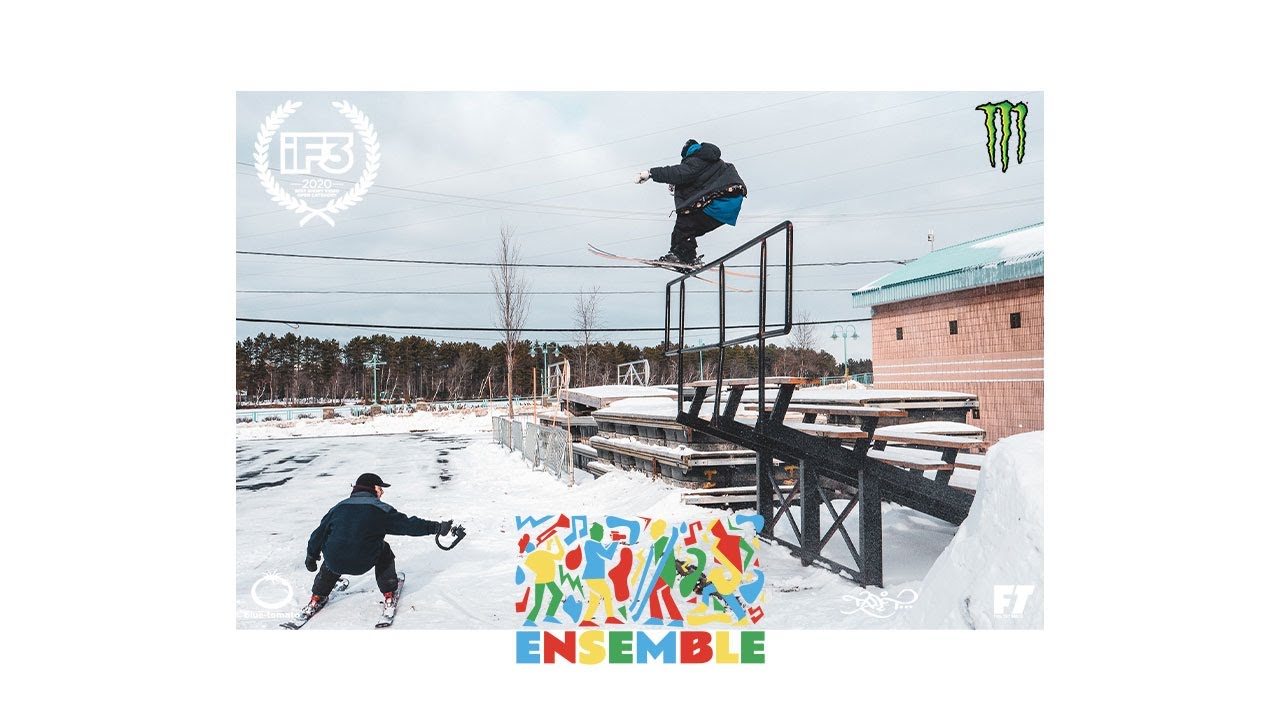
B-Dog Off The Leash is the reason Shawinigan now reads as a freeski location rather than only a city near a ski hill. Tourisme Shawinigan describes the event as a chance to see around thirty top Quebec and international skiers and snowboarders using static structures at Parc de la Rivière-Grand-Mère for freestyle tricks. The same page credits Phil Casabon, a globally recognized freeski athlete and Shawinigan native, as the origin of the event.
That origin gives the gathering a different tone from a standard contest. The event is not built around a permanent resort park, a federation ranking or a big-air scaffold. It is a city park session shaped by one of street skiing’s most influential riders, then opened to younger skiers, snowboarders and spectators. Newschoolers described the 2024 edition as a three-hit street-inspired setup, with options including a fire hydrant, flat rails, a down rail, a picnic table box and a closeout ledge. The result is Shawinigan’s strongest current ski image: a hometown street jam where the obstacle design reflects B-Dog’s style-first language.
Phil Casabon And The Shawi Origin Point
Philip Casabon - B-Dog is the key proper name in any Shawinigan ski profile. His verified skipowd.tv profile places his origin around Shawinigan, Vallée du Parc and Grand-Mère, with a career built through street skiing, creative park riding, X Games Real Ski gold in 2018 and 2019, B&E, Keynote Skier, Nuance and Armada ski design. For the location, the important point is not only that a famous skier came from here. It is that his style makes Shawinigan legible as terrain.
Casabon’s skiing is built on slow pressure, rails, wall touches, rhythm, low-speed difficulty and the ability to make a modest feature feel intentional. That language fits a place like Shawinigan better than a giant mountain would. A short rail, a banked snow pile, a hand-built drop or a flat park structure can become meaningful when the skier values timing over amplitude. B-Dog Off The Leash brings that philosophy back to the city. It turns local scale into an advantage instead of apologizing for it.
Vallée Du Parc As The Local Park Base
Vallée du Parc is the resort anchor behind Shawinigan’s urban identity. Tourisme Shawinigan lists the ski area with 33 trails, including two family trails, eight glades and two snow parks, supported by five lifts including two quadruple chairlifts. That is not mega-resort infrastructure, but it is enough to build real repetition. A local skier can learn balance, switch approaches, rail basics, landing control and speed management on snow before taking those movements into a street setting.
The relationship between Vallée du Parc and Shawinigan is practical. Street skiers need controlled mileage somewhere, especially when weather ruins a city spot or a crew needs clean park reps before filming. The hill gives that base. The city gives the architectural layer. For younger riders, the combination is powerful because it keeps progression local. They do not need to leave Mauricie to understand the path from a snow park line to a hand-built urban feature. That local loop is exactly how many Quebec street skiers develop a personal style.
Quebec Winter Conditions And Street Timing
Shawinigan’s usable street window depends on Quebec winter rhythm: cold spells, snowbanks, plowed corners, freeze-thaw surfaces and the timing of municipal cleanup. The city’s official portrait emphasizes a territory mixing urban sectors, lakes, forests and the Saint-Maurice River, which explains why winter surfaces can vary quickly from one neighborhood to another. A rail beside a park may hold snow longer than a downtown ledge. A staircase exposed to sun can turn from useful to dangerous in a single warm afternoon.
For crews, the best street timing usually sits between December and March, when repeated snowfall can build in-runs and landings. January and February are the most reliable months for cold snow and slower melt. March can be productive when banks are deep and temperatures soften landings, but slush, ice and road grit become bigger variables. Shawinigan’s advantage is not guaranteed snow depth alone. It is the number of small-scale urban features that can be reworked when crews are patient, respectful and willing to adapt.
From Shawi To The Wider Quebec Street Map
Shawinigan belongs inside the broader Québec street skiing ecosystem. The province has a long freeski memory built around urban video parts, independent crews, rail-heavy edits and winter cities where snow sticks to architecture long enough to film. Shawinigan’s role is more focused: it is the B-Dog hometown point, the Off The Leash setting and a smaller-city canvas for riders who understand how to build without overproducing.
Tchad Lemay is one example of the current Quebec street layer connected to Mauricie and Shawinigan-style terrain. His skipowd.tv profile frames him as a Quebec-born street skier and filmmaker working across Mauricie and the Quebec City area, with projects built around real-world spots and respectful urban practice. That detail matters for Shawinigan because the city’s value is cultural as much as geographic. It supports a way of skiing where the edit, the spot, the neighborhood and the cleanup all shape the final trick.
Spot Etiquette In A Public Park Setting
Shawinigan’s strongest freeski space is public-facing, so etiquette is part of the terrain. B-Dog Off The Leash can work because it formalizes the setup, gathers riders in one place and makes the session visible to families and spectators. Normal street filming is different. Crews need to avoid damaging property, blocking pedestrians, creating unsafe runouts or leaving snow and debris behind. The best Quebec street skiing has always depended on a practical social contract: build clean, communicate clearly and leave the spot better than it looked during setup.
That point is especially important in a smaller city. A respectful crew can build trust quickly, but a careless one can burn a spot for everyone. Shawinigan rewards riders who think like builders, not only performers. Test speed slowly, keep shovels and salt under control, manage traffic lines, clear landings and avoid blind takeoffs near public paths. The most useful trick in a place like Parc de la Rivière-Grand-Mère is often not the hardest one. It is the one that lets the crowd understand urban skiing without turning the city against it.
The Reason Shawinigan Matters For Freeski Video
Shawinigan matters because it shows how a local place can become part of freeski culture through one athlete, one park, one city event and one repeatable winter logic. It does not need the vertical of a major resort or the density of a large city. Its value comes from specificity: Phil Casabon’s hometown language, Grand-Mère’s event setup, Vallée du Parc’s two snow parks and a Quebec winter street grid that can still be shaped by hand.
For skipowd.tv, Shawinigan should be treated as an urban freeski location with a resort support system nearby. The best clips from here are likely to be rail-driven, community-built and style-heavy rather than big-mountain or contest-course oriented. The city’s strongest fact is concrete: a Shawinigan native who changed street skiing now brings freestyle back to Parc de la Rivière-Grand-Mère, giving local kids a visible bridge between hometown snow and global ski culture.