Copper mountain
Colorado
United States
Colorado resort in Summit County | Known for: Woodward Copper, 22 foot superpipe, Toyota U.S. Grand Prix, 2507 acres, Tucker Mountain, naturally separated terrain, and I 70 access | Season: November to spring depending on snowpack | Best for: park riders, halfpipe athletes, mixed crews, advanced bowl skiers, and Colorado progression trips
Tenmile Range Progression At Twelve Thousand Feet
Copper Mountain Resort sits in Summit County, Colorado, directly on the I 70 corridor between Frisco and Vail Pass. Current public mountain data places the resort at 2507 acres, 150 trails, 24 lifts, a 9715 foot base, a 12441 foot summit, and 2738 feet of vertical drop. Those numbers explain the scale, but not the main reason Copper matters. Its freeski value comes from the way terrain, parks, pipe, race training, and expert bowls are organized into one unusually efficient mountain. Copper is a place where a beginner can stay west, a park crew can stay focused near Woodward terrain, and advanced skiers can move east or backside without crossing the whole resort at random.
West To East Terrain That Actually Makes Sense
Copper’s famous layout is more than marketing language. The easier terrain sits mostly toward the west, intermediate terrain builds through the center, and the more advanced terrain grows toward the east side and the backside. That natural separation gives the resort a clean progression logic. West Village and Union Creek work for learners, Woodward and Center Village hold much of the park-and-pipe gravity, and East Village gives strong skiers fast access toward Super Bee, Alpine, Resolution, and steeper upper-mountain zones. For a mixed freeski crew, that layout is valuable. One skier can work park features, another can chase groomer speed, and another can move toward bowls without forcing the entire group into terrain that does not match the day.
Woodward Copper And The Mountain Park System
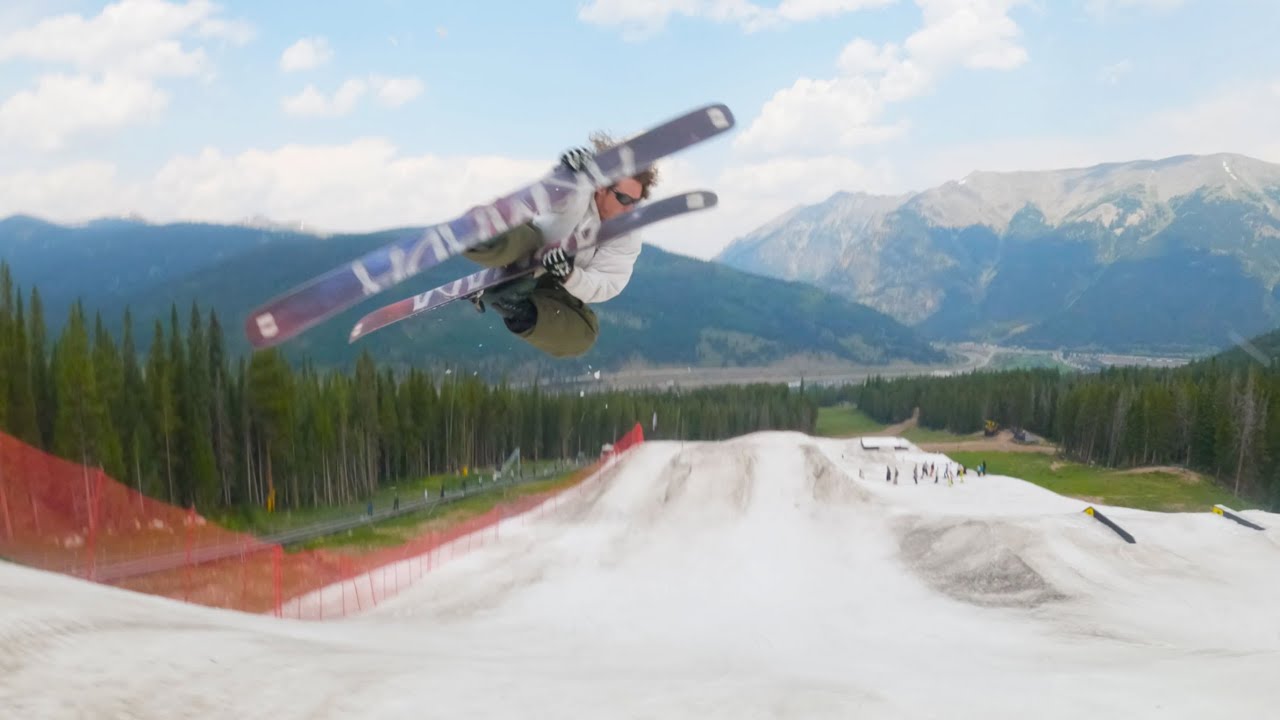
Woodward Copper is the resort’s central freestyle engine. Copper’s official Woodward Mountain Parks page frames the system around progression, with learning, flow, park and pipe terrain designed for skiers and snowboarders at different levels. The best-known zones include Central Park, Pipe Dream, Peace Park, beginner and progression parks, and lower-consequence spaces that let riders build skills before stepping into larger terrain. The important point is not simply that Copper has park features. It is that the park system is tied to Woodward’s broader training culture, indoor progression, summer camp identity, and a competition-grade snow venue. Few resorts in North America make park riding feel this integrated into the mountain’s daily purpose.
Main Vein Superpipe And Early Season Halfpipe Gravity
The Woodward Copper Superpipe on lower Main Vein is one of the mountain’s defining features. U.S. Ski & Snowboard describes the pipe as 22 feet tall, nearly 550 feet long, about 70 feet wide, and pitched at 18 degrees. The same event material says the Woodward Copper halfpipe is the first Olympic-size halfpipe to open in North America every season. That gives Copper a specific place in the freeski calendar. Early winter pipe access is rare, and elite riders need repeatable walls before the contest season gets crowded. When the pipe is cut cleanly, Copper becomes more than a resort with parks. It becomes a technical halfpipe training venue where amplitude, transitions, five-hit runs, speed checks, and wall maintenance define the session.
Toyota U.S. Grand Prix And World Cup Pipe Pressure
The Toyota U.S. Grand Prix gives Copper its strongest recurring competition identity. U.S. Ski & Snowboard lists the 2025 Copper Mountain stop as a FIS Freeski and Snowboard World Cup halfpipe event from December 17 to 20, with snowboard qualifiers, freeski qualifiers, snowboard finals, and freeski finals. That matters for skipowd.tv because Copper is not only a recreational park mountain. It is part of the performance pipeline. The best pipe skiers and snowboarders arrive early, test new tricks, manage speed, and use Copper as a first major North American measuring point. Event weeks change the resort atmosphere: more athlete traffic, more attention around Center Village, more focus on the pipe, and a stronger sense that Copper is built for training as much as vacation skiing.
Central Park Jumps And Rev Tour Development
Copper also has a development-competition role below the World Cup level. U.S. Ski & Snowboard’s Revolution Tour material has described Copper as the Athlete’s Mountain, with freeski and snowboard athletes competing in Woodward Mountain Park venues such as Central Park and the 22 foot Superpipe. That layer matters because it connects junior, NorAm, and development riders to the same infrastructure used by top athletes. A young skier can watch the line between local progression and elite competition become visible on the same snow. Central Park-style jump lanes, pipe sessions, and structured contest venues turn Copper into a training hill for riders who are not only skiing for fun, but trying to understand the rhythm of judged runs, inspection, warmups, finals, and feature maintenance.
Tucker Mountain And The Expert Backside Edge
Copper is not only park and pipe. Tucker Mountain gives the resort a serious expert identity, with high alpine terrain that feels very different from the lower park system. The Three Bears lift improved access to terrain that had previously required more hiking or snowcat-dependent timing, and the backside still demands respect. Copper Bowl, Spaulding Bowl, Union Peak, Resolution Bowl, and Tucker zones can hold wind-buffed snow, chalk, powder pockets, and variable surfaces that change fast with visibility. This is why Copper works well for strong all-mountain skiers who also care about freestyle. A trip can include pipe watching, park laps, groomer speed, and alpine bowl terrain without leaving the same resort. The mountain’s challenge is choosing the right sector for the weather, not finding enough options.
American Eagle Super Bee And Village Based Flow
The lift network supports three distinct village rhythms. Center Village revolves around American Eagle, American Flyer, Main Vein, the pipe zone, dining, lodging, and the easiest spectator access for events. East Village uses Super Bee as the fast gateway to steeper and race-oriented terrain. West Village and Union Creek keep beginner and family progression separated from the faster traffic elsewhere. That village structure makes Copper easier to use than many resorts of similar size. Park riders can stay near Center or Woodward access. Strong skiers can start at East Village if Super Bee terrain is the target. Families can use West Village without immediately being dragged into advanced terrain. On busy weekends, this structure is one of Copper’s strongest hidden advantages.
Rosi’s Run And The Athlete’s Mountain Label
Copper’s athlete identity also reaches beyond freestyle. The resort has long been tied to race training, and the Rosi’s Run name connects the mountain to World Cup history. That race layer matters for freeskiers because strong park and pipe skiing still depends on speed discipline. A skier entering a pipe wall, slopestyle jump, or fast approach needs edge pressure, body position, and confidence that often come from race-style fundamentals. Copper’s best identity is therefore not only “terrain park resort.” It is a broader athlete mountain: pipe athletes, slopestyle riders, race teams, strong recreational skiers, and development crews all share one high-altitude system. That mix gives the resort a more serious tone than a normal destination-village park hill.
Summit County Links From Breck To Vail
Copper sits in a powerful Summit County and I 70 ski network. Breckenridge brings five peaks, Freeway Terrain Park, superpipe history, town access, and a different high-alpine park tradition. Vail brings huge scale, Back Bowls, Blue Sky Basin, and a larger destination-resort identity. Aspen sits farther away but anchors Colorado’s X Games and Buttermilk competition profile. Copper’s role is sharper: less town-based than Breck, less sprawling than Vail, less luxury-event oriented than Aspen, but stronger as a daily athlete-training machine. That makes it one of the most useful Colorado stops for skiers who want park, pipe, bowls, and I 70 logistics in one package.
Altitude Wind And Colorado Snowpack Discipline
Copper’s high elevation is a gift and a constraint. The summit zone sits above 12000 feet, and even the base is high enough for altitude fatigue to affect visitors arriving from sea level. Hydration, pacing, and warm layers matter. Wind can close upper lifts or turn soft snow into chalk and slabby texture. Flat light can make alpine bowls harder to read. Inside controlled terrain, skiers still need to respect closures, patrol work, and staged openings. Outside resort boundaries or in any backcountry objective near Summit County, the Colorado Avalanche Information Center forecast is the baseline safety reference. Copper feels accessible from I 70, but the snowpack is still continental Colorado snowpack, with persistent weak layers possible during many seasons.
Park Etiquette At A High Performance Mountain
Copper’s park and pipe culture only works when riders behave predictably. In beginner parks, that means starting small and clearing landings. In Central Park or larger Woodward features, it means inspecting every jump and rail, calling drops clearly, keeping filming crews out of blind zones, and respecting rebuild closures. In the Superpipe, riders should understand the drop order, avoid hiking across active walls, and stay out of the flat bottom unless they are riding the pipe. Copper attracts first-time park riders, visiting families, elite athletes, race teams, and spectators in the same general zones. The mountain can handle that mix because the infrastructure is strong, but only if users treat the venues like shared training spaces rather than private content sets.
Why Copper Mountain Carries Freeski Weight
Copper Mountain earns a 4 level profile because it combines major Colorado resort scale with one of North America’s strongest park-and-pipe training identities. The key facts are clear: 2507 acres, 150 trails, 24 lifts, more than 2700 feet of vertical in current public mountain data, naturally separated terrain, Woodward Copper, Central Park, Peace Park, Pipe Dream, a 22 foot Olympic-standard Superpipe, Toyota U.S. Grand Prix halfpipe competition, Revolution Tour development use, Tucker Mountain, Copper Bowl, and direct I 70 access. It is not a global freeride capital like Chamonix and not a pure event stage like Aspen Buttermilk during X Games, but it is one of the most dependable progression mountains in North America. Copper gives freeskiers a rare blend: elite pipe, serious parks, real alpine terrain, race energy, and a layout that lets every kind of rider find the correct lane.