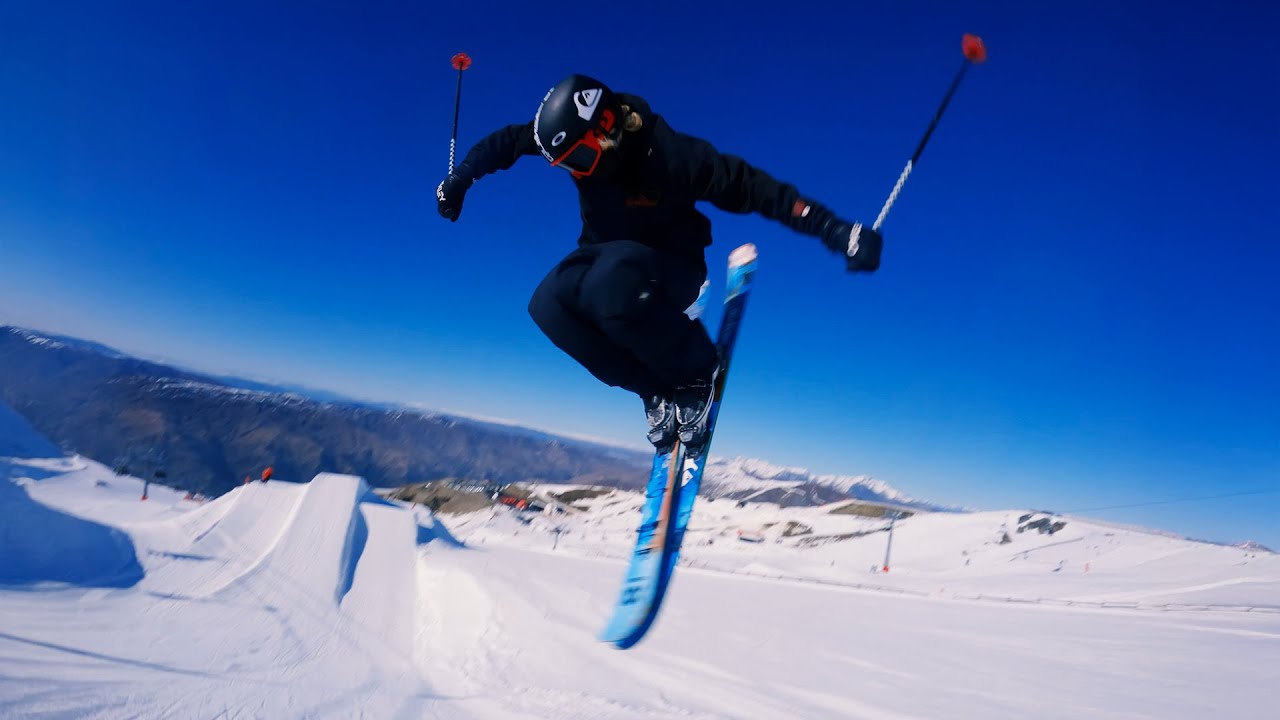
Torin Yater-Wallace
Profile and significance
Torin Yater-Wallace is one of the defining halfpipe skiers of his era, an American prodigy from Aspen, Colorado, who turned early X Games superstardom into a long, unlikely career that spans Olympic finals, World Championship medals and a second life as a backcountry film rider. Born in 1995 and raised between Aspen and nearby Basalt, he exploded onto the scene as a teenager when he won superpipe silver at Winter X Games XV, becoming the youngest medalist in Winter X Games history at just 15 years old. Over the next decade he stacked multiple X Games gold, silver and bronze medals, a FIS World Championship silver in halfpipe, and World Cup wins on classic venues from La Plagne to Sochi, placing him firmly in the top tier of pipe specialists worldwide.
What makes Yater-Wallace especially significant is the way his story extends beyond results. A near-fatal bacterial infection in 2015 put him into a medically induced coma and left him learning to walk again before he returned to X Games podiums, a journey documented in the Red Bull Media House film “Back to Life.” At the same time, he shifted his focus from pure competition to creative projects with Deviate Films and Armada Skis, exploring backcountry, street and all-mountain skiing in movies like “Deviate,” “Good Luck,” “Chameleon” and “Plug & Play.” Between his early contest dominance, his comeback from life-threatening illness and his later film work, Torin has become a touchstone for what long-term progression and resilience can look like in modern freeskiing.
Competitive arc and key venues
Yater-Wallace’s competitive arc is unusually dense for someone who is still relatively young. After climbing quickly through U.S. freeski ranks, he made his X Games debut while he was still in his mid-teens and immediately began collecting medals: early silvers and bronzes in Aspen superpipe, then golds at Winter X Games Europe in Tignes and later at Oslo, where his massive amplitude and innovative trick selection set him apart from a stacked field. Those results coincided with a dominant run on the FIS World Cup circuit, including wins at La Plagne, Cardrona, Sochi and Mammoth, and a silver medal in halfpipe at the 2013 World Championships in Voss, Norway.
On the Olympic stage, Torin represented the United States twice in men’s ski halfpipe. He arrived at Sochi 2014 still recovering from a collapsed lung and broken ribs, yet still lined up at Rosa Khutor’s debut Olympic halfpipe. Four years later in PyeongChang he qualified third into the final and finished inside the top ten at Phoenix Snow Park, skiing on the same walls where he had previously won the World Cup test event. Aspen’s Buttermilk halfpipe, site of the Winter X Games, remained his competitive home base, but his résumé also includes major starts and podiums at Copper Mountain, Park City, Tignes and Cardrona. Those venues collectively trace an arc from teenage phenom to seasoned veteran who has seen almost every configuration of a modern superpipe under pressure.
How they ski: what to watch for
Torin Yater-Wallace’s skiing is built around a combination that is rare even at the highest level: huge amplitude, complex trick difficulty in both directions and a flowing, almost understated style. In halfpipe, his hallmark has always been how far above the deck he is willing to go while still keeping his body language quiet. His biggest runs are filled with switch hits, left- and right-spinning double corks, flatspins and alley-oops that are linked together with almost no visible speed checks. Rather than muscling rotations with his upper body, he relies on a strong pop off the wall and precise timing, letting his lower body generate rotation while his shoulders remain relatively calm—a technique that makes even high-consequence tricks look smooth rather than frantic.
Technically minded viewers should pay attention to his line down the pipe and his landings. Torin is known for dropping deep into the transitions and staying locked on his edges, which allows him to carry speed without drifting toward the decks. When he lands, his skis usually touch down very close to the sweet spot in the transition, absorbing the impact in a stacked, athletic stance that sets up the next hit. In earlier contests he helped push the envelope by bringing tricks like the first switch 1800 in competition to big-stage events, and that mentality of controlled progression shows up again in his recent backcountry films, where you see him applying the same precision to natural takeoffs, windlips and step-downs.
Resilience, filming, and influence
Resilience is the backbone of Yater-Wallace’s story. Even before his illness, he endured a collapsed lung from a dry-needling treatment gone wrong, broken ribs, repeated crashes and the normal wear-and-tear of life as an elite halfpipe skier. The turning point came in late 2015, when a rare bacterial infection attacked his organs and left him in a medically induced coma with fluid-filled lungs. For days his life was in the balance; he lost significant weight and had to rebuild basic strength just to stand. The fact that within a year he was not only skiing again but winning X Games gold in Oslo is one of the most remarkable comebacks in the history of the sport, and “Back to Life” uses his family’s struggles—his father’s imprisonment, his mother’s cancer diagnosis, the financial stress behind the scenes—to frame just how unlikely that return really was.
In the years since, Yater-Wallace has shifted more of his energy into filming and creative projects, without fully abandoning competition. Together with Jossi Wells and the Deviate crew he has produced a run of well-received films—“Deviate,” “Good Luck,” “Chameleon” and, more recently, “Plug & Play,” a collaboration with Red Bull and The Lodge Collective that follows the team through backcountry zones in British Columbia, Colorado and beyond. These projects show Torin increasingly comfortable outside the pipe, sending natural booters, backcountry step-downs and even street-inspired features while maintaining the same precise trick execution that defined his halfpipe career. His influence now stretches across two generations: the pipe specialists who grew up watching his early X Games runs, and the all-mountain skiers who see in his films a blueprint for transitioning from contests to long-form storytelling.
Geography that built the toolkit
Torin’s skiing is inseparable from his home mountains. Growing up in Aspen meant access to one of the most famous halfpipes in the world at Buttermilk, where the Winter X Games superpipe rises above town each January. From a young age he was lapping that pipe and the terrain parks around Aspen Snowmass, learning how different snow conditions, wall shapes and weather patterns affect speed and transition. Basalt and the Roaring Fork Valley gave him a small-town base with big-mountain access, and as he progressed he split his time between local laps and national team camps at U.S. training venues across Colorado and Utah.
Beyond Colorado, his geographic map widened quickly. Seasons spent at Mt. Hood and Windells Camp in Oregon gave him summer snow to test new tricks, while trips to New Zealand’s Cardrona Alpine Resort exposed him to Southern Hemisphere winters and early World Cup starts. World Cup and X Games stops added classic halfpipe venues in France, Norway and Korea to the list, each with subtle differences in wall height, length and snow quality that he had to adapt to. More recently, filming with Deviate has pushed him deeper into the backcountry of British Columbia and the American West, where he has learned to apply his pipe instincts—speed management, transition reading, compression control—to natural terrain, sled-accessed zones and heli drops. Together, these landscapes have created a skier who can thread a perfect line through a sculpted halfpipe or improvise high-level freeride and freestyle in big mountains.
Equipment and partners: practical takeaways
Yater-Wallace’s long-standing partnerships tell you a lot about how he approaches equipment. Introduced to the world as a teenage member of the Armada Skis team, he has spent most of his career on progressive twin-tips designed for pipe and park, gradually incorporating wider, more backcountry-oriented models for his Deviate projects. His current setups lean on Armada’s ARV and freeride lines for all-mountain and film work, complemented by bindings from Look, outerwear and packs from brands such as Dakine, and helmets and goggles from companies like Giro. Energy and project support from Red Bull has helped fund his documentary and film transitions, while collaborations with technical partners highlight his interest in gear that can withstand the violence of pipe impacts and the variability of backcountry snow.
For skiers taking practical cues from his choices, the headline is balance rather than hyper-specialisation. In the pipe, Torin favors skis that are stiff and responsive enough to hold a clean edge up the wall and through heavy compressions, yet light and symmetrical enough to spin multiple directions with full grabs. In the backcountry, you see him on shapes with more waist width and rocker, but still with a platform underfoot that feels familiar when he sets a spin or stomps into deep landings. Bindings are set to hold through high-impact tricks without locking him into dangerous pre-release territory, and his boots are tuned for a progressive, supportive flex rather than sheer stiffness. Recreational skiers do not need the same models or DIN settings, but they can learn from his emphasis on trust: a coherent system that lets him focus entirely on line choice and trick execution, whether the “pipe” is a perfect Olympic venue or a natural windlip in the trees.
Why fans and progressing skiers care
Fans care about Torin Yater-Wallace because his career feels both larger than life and deeply human. On one side are the highlight reels: record-breaking amplitude in Aspen, gold medals in Tignes and Oslo, World Cup wins, Olympic finals and video parts that show him floating big spins in powder and threading creative features in the backcountry. On the other side is the narrative revealed in “Back to Life” and later interviews—a childhood marked by financial hardship and his father’s imprisonment, a young adulthood shaped by his mother’s cancer battle, and a brush with death that could easily have ended his career. That contrast between vulnerability and performance makes his skiing resonate far beyond the contest scoreboard.
For progressing skiers, Torin offers several clear lessons. He demonstrates how deep fundamentals—edge control, amplitude built slowly over years, a strong sense of line—can support the biggest tricks in the sport. He shows that it is possible to reinvent yourself, pivoting from contest specialist to filmmaker and backcountry rider without abandoning your roots. And perhaps most importantly, his story underscores the value of patience and persistence: learning to ski again after a coma, rebuilding strength after injuries, and continuing to chase new ideas on snow even after ticking off most of the goals his teenage self once dreamed about. Whether viewers are watching old X Games runs, the “Back to Life” documentary or the latest Deviate film, following Torin Yater-Wallace is a way to understand how modern freeskiing blends risk, creativity, storytelling and long-term dedication into a single, evolving career.