CopenHill
Scandinavia
Denmark
CopenHill is an urban ski slope in Copenhagen, Denmark | Type: rooftop artificial ski venue on Amager Bakke | Terrain: synthetic ski slope, freestyle park, slalom course, children’s area | Best known for: year-round city skiing, Neveplast surface, rooftop views, Scandinavian Team Battle and urban mountain design
A Rooftop Ski Hill Above Copenhagen Harbor
CopenHill is a year-round urban ski slope built on the roof of Amager Bakke, the waste-to-energy plant in Copenhagen, Denmark. The recreational slope and rooftop area opened in fall 2019, turning an industrial building into one of Europe’s most unusual ski venues. Instead of natural snow, the hill uses a synthetic Neveplast surface, allowing skiers and snowboarders to ride in a city with no alpine elevation and limited winter snow. For freeski viewers, the place matters because it turns skiing into an urban session: short laps, visible tricks, city transport, rooftop après-ski and a skyline backdrop rather than chairlift valleys and mountain bowls.
Black Red Upper Pitch And Blue Green Lower Laps
The slope is compact, but it is not completely flat or uniform. CopenHill describes the upper part as black/red, while the middle and lower parts are graded blue/green. That layout gives the venue a real progression structure: beginners and casual riders can stay lower on the hill, while stronger skiers can work on speed control and synthetic-surface carving from the steeper top. The lift system also supports that split. CopenHill lists four lifts, with three magic carpet lifts serving the lower sections and a plate lift accessing the steeper upper section. For a city venue, that creates a surprisingly practical training rhythm: choose your zone, repeat the same lap, and refine one technical goal at a time.
Neveplast Changes The Way Skis Behave
CopenHill is not snow skiing with a different view. The surface is Neveplast, a green synthetic mat that requires a more deliberate style. The venue advises riders to grease skis on silicone mats before each run because friction builds differently than on snow, and ski edges wear faster on the artificial surface. That detail is important for anyone arriving with brand-new travel skis: CopenHill is better approached with durable park skis or a dedicated dry-slope setup. The reward is repetition. Once a skier adapts to the glide, the hill becomes a useful place to work on balance, clean pressure, short turns, switch approaches and basic freestyle takeoffs without waiting for winter.
Freestyle Park In The Lower Section
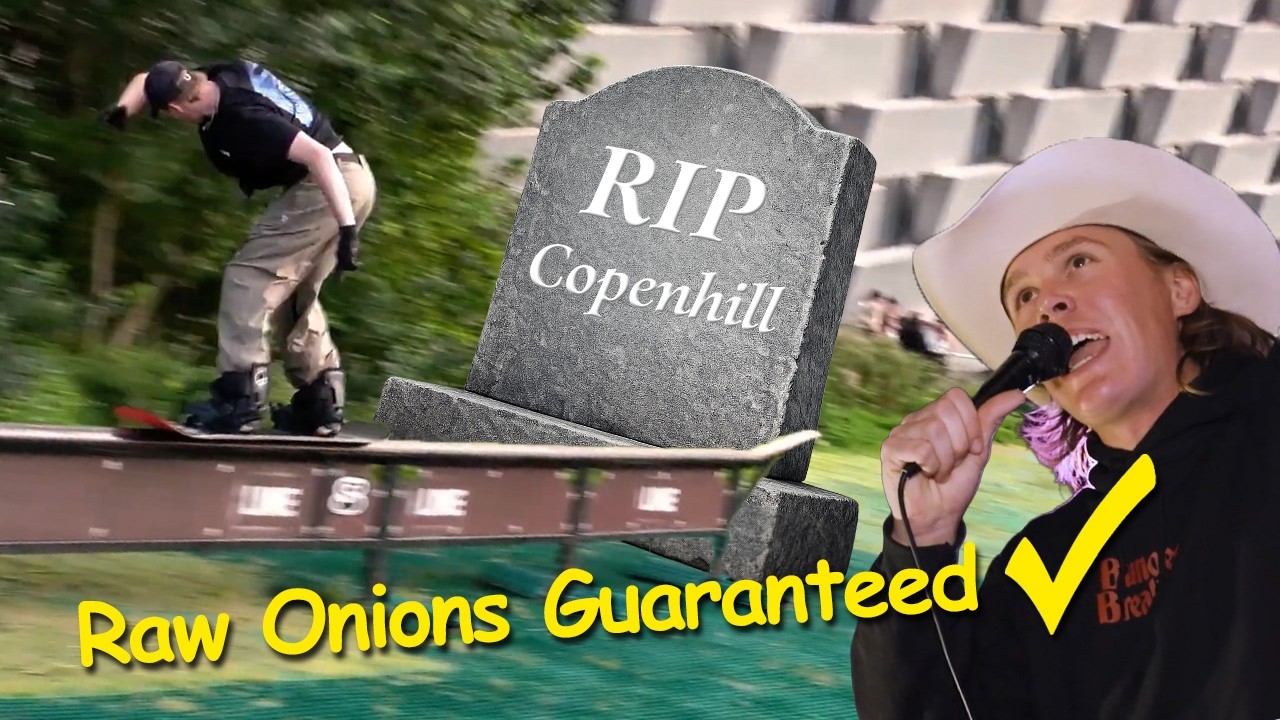
The freestyle identity at CopenHill is concentrated rather than oversized. The venue states that the slope includes a slalom course, a freestyle park and an area for children, with the park naturally fitting the lower part of the hill. That makes sense for progression: lower speed, shorter lift loops and a more controlled outrun are better for rail learning than a high-consequence alpine park. For freeskiers, the value is not a huge jump line. It is repetition on compact features, quick feedback and the ability to film or train in a place where the entire session is visible. A rider can build confidence on straight airs, presses, small spins, switch entries and rail timing before taking the same movements back to snow parks.
Scandinavian Team Battle And Rooftop Spectators
CopenHill becomes most interesting for ski culture when the rooftop turns into a contest stage. The venue promotes Scandinavian Team Battle as a summer freestyle ski competition and festival on the green slope, with an open qualifier and a pro contest format. The 2026 event page names Jesper Tjäder and Emil Granbom among the announced pro-team riders, reinforcing the slope’s role as more than a novelty tourist stop. The format suits the building: spectators can see the full line, riders stay close to the crowd, and the urban setting gives rail tricks a different visual language from a mountain resort park.
Copenhagen Access And Session Based Skiing
Access is one of CopenHill’s strongest advantages. The address sits at Vindmøllevej 6, 2300 København S, inside Copenhagen rather than outside the city. VisitCopenhagen presents the site as Copenhagen’s first ski destination, and the official CopenHill site frames the venue as an urban mountain-sports hub with skiing, hiking, running, climbing, food and events. That mixed-use identity matters for planning. A visit works less like a full resort day and more like a booked session: arrive, collect rental gear if needed, adapt to the surface, ride your time block, then use the café, rooftop or city connections around the slope. For travelers, it is one of the rare ski experiences that can fit into a Copenhagen city itinerary.
Architecture Gives The Hill Its Global Identity
The reason CopenHill is known far beyond Denmark is not only the skiing. The project combines architecture, energy infrastructure and outdoor sport in one building. Amager Bakke opened as a power plant in 2017, while the recreational slope and hiking area arrived later, making the building a symbol of Copenhagen’s attempt to combine urban design with public recreation. VisitCopenhagen describes it as a ski slope and recreational hill on top of a new resource handling center. For ski media, that architecture changes the meaning of the clip: every turn and rail trick carries the visual tension of skiing on an industrial roof above a flat coastal city.
Where CopenHill Fits In Freeski Culture
CopenHill should not be described like a classic alpine resort. It has no powder field, no long chairlift zone, no natural winter terrain and no backcountry access. Its importance is different. It gives Copenhagen a year-round ski habit, offers a controlled place for technique and park repetition, and provides a recognizable stage for summer freestyle events. In the Skipowd.tv ecosystem, the location also connects naturally with urban park edits and brands such as capeesh fashion house, whose video culture fits the short-lap, rail-focused environment. CopenHill is best indexed as an urban ski venue, artificial ski slope, Copenhagen freestyle park and rooftop skiing landmark.
Best Use For Skiers And Filmers
The best CopenHill session has a narrow goal. First-time visitors should spend early laps learning the surface before pushing speed or park tricks. Park skiers should treat the lower features as a repetition lab rather than a high-risk show line. Filmers benefit from the venue’s geometry: the slope is short, open and easy to cover from a small number of angles, with Copenhagen in the background instead of trees or lift towers. That makes CopenHill valuable for quick edits, brand clips, summer ski content and technique pieces. The permanent appeal is simple: it keeps skiing visible in the city even when winter is nowhere near Denmark.